The Insurance Question Every Tesla Buyer Is Asking
If you've researched the total cost of owning an electric vehicle, you've likely encountered sticker shock at insurance quotes. The search for Tesla reducing car insurance rates reflects a real frustration: Teslas have historically cost 20–40% more to insure than comparable gas-powered SUVs. But in 2026, the landscape is shifting. Tesla's own insurance product has expanded, repair networks have matured, and the refreshed Model Y (codenamed "Juniper") brings design changes that may influence claim severity.
This review examines the 2026 Tesla Model Y through the lens of insurance economics — and delivers the full EV profile you need to make a purchase decision: range, charging, pricing, tax credits, and how it stacks up against rivals like the Hyundai Ioniq 5 and Ford Mustang Mach-E.
2026 Tesla Model Y: Core Specs at a Glance
| Spec | Value |
|---|---|
| EPA Range | 320 miles (Long Range AWD) |
| Battery Capacity | ~78.1 kWh usable (NMC chemistry) |
| Efficiency | 122 MPGe combined / 27 kWh per 100 mi |
| Drivetrain | Dual-motor AWD |
| Horsepower | 384 hp (combined) |
| 0–60 mph | 4.8 seconds |
| Peak DC Fast Charge | 250 kW (V3 Supercharger) |
| 10–80% DC Charge Time | ~25 minutes |
| Level 2 Home Charging | 11.5 kW (~37 miles/hr) |
| Cargo Volume | 34.3 cu ft (rear seats up) / 76.2 cu ft (folded) |
| Rear Legroom | 39.4 inches |
| Base MSRP | $44,990 (Long Range AWD) |
| As-Tested (w/ FSD) | ~$52,990 |
| Battery/Drive Unit Warranty | 8 years / 120,000 miles |
| Basic Vehicle Warranty | 4 years / 50,000 miles |
Source: fueleconomy.gov and Tesla's official specifications.
Real-World Range: What the EPA Sticker Doesn't Tell You
Real-World Expectation: ~260–285 miles at sustained 70–75 mph highway speeds; ~230–255 miles in sub-30°F winter conditions.
The 2026 Model Y Long Range's 320-mile EPA figure is competitive, but efficiency-minded buyers should plan around real-world physics. At highway speeds above 70 mph, aerodynamic drag erodes range by roughly 10–15%. In freezing temperatures, the battery's thermal management system and cabin heating can reduce effective range by 20–30%, even with the Model Y's heat pump — a significant improvement over resistive heating.
For daily commuters covering under 60 miles round-trip, the real-world gap is largely academic. For road-trippers crossing the Mountain West in January, it means planning Supercharger stops every 200–220 miles rather than stretching for 300. The Model Y's navigation system factors in elevation, temperature, and traffic when projecting range at your destination — one of the more accurate trip-planning tools in the EV market.
Charging Speed and Infrastructure: Where Tesla Still Leads
| Charging Level | Power | Speed / Notes |
|---|---|---|
| Level 1 (120V household) | ~1.4 kW | ~3–5 miles/hr — emergency only |
| Level 2 (240V home) | 11.5 kW | ~37 miles/hr; full charge in ~8 hours |
| DC Fast Charge (V3 Supercharger) | Peak 250 kW | 10–80% in ~25 min; tapers sharply above 80% |
| DC Fast Charge (NACS adapter at CCS stations) | Varies | Access to Electrify America, EVgo networks |
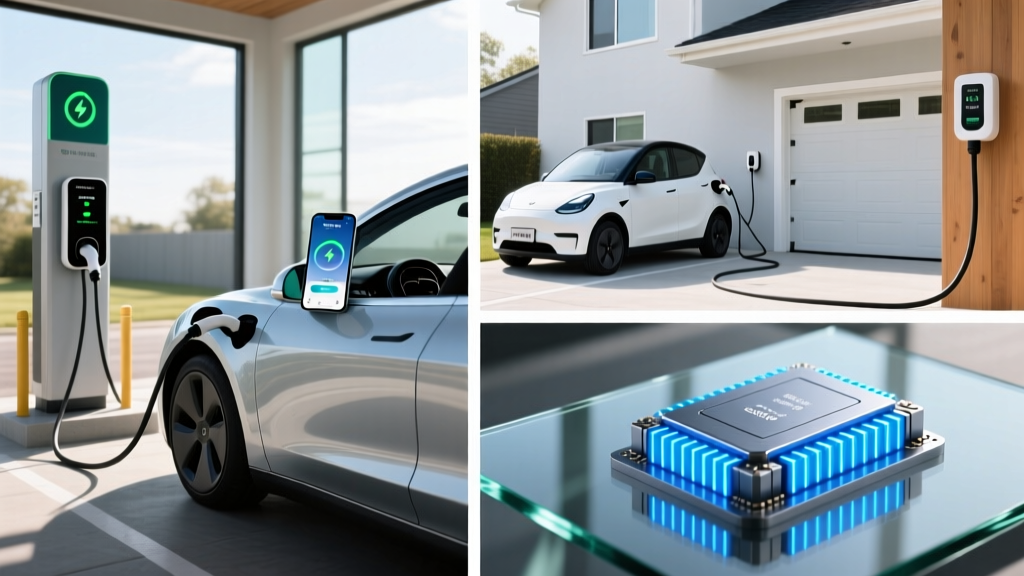
The Model Y's native NACS (North American Charging Standard) connector is now the industry standard adopted by Ford, GM, Rivian, and others. This means Tesla owners charge natively at over 50,000 Supercharger stalls globally — the most reliable and geographically complete DC fast-charging network in North America. Third-party networks like Electrify America and EVgo now accept NACS connectors as well, though reliability at non-Tesla stations remains a documented pain point.
The 250 kW peak charge rate is impressive but not sustained. Expect peak rates between 10–40% state of charge (SoC), tapering to ~100 kW by 60% and ~40 kW by 80%. This charge-curve taper is why Tesla (and every EV maker) quotes 10–80% times rather than 0–100%. For home Level 2 charging, a 48-amp Wall Connector on a 60-amp circuit delivers the full 11.5 kW — enough to replenish a day's driving overnight. Installation costs for a Level 2 home setup typically range from $800–$2,000 depending on panel proximity and local permitting, per Energy.gov.
Tesla Insurance: Is It Actually Reducing Rates?
The short answer: it depends heavily on your state, driving record, and coverage level. Here's what's changed by 2026:
Tesla's Own Insurance Product
Tesla Insurance, available in most U.S. states, uses real-time driving behavior (via the vehicle's telemetry) to calculate monthly premiums. Safe drivers who avoid hard braking, late-night driving, and Autopilot disengagement events can see premiums 20–30% below traditional carriers. However, aggressive drivers or those in high-claim ZIP codes may see little savings — or even higher rates than the open market.
Why Teslas Have Been Expensive to Insure
- Repair costs: Tesla's integrated casting ("gigacastings") and proprietary body panels mean minor collisions can result in expensive structural replacements rather than patch repairs.
- Parts availability: Tesla controls its supply chain tightly; body shops outside the Tesla-certified network may face longer wait times for parts.
- High vehicle value: A $45K–$55K vehicle simply costs more to replace than a $28K gas crossover.
- Performance profile: A 4.8-second 0–60 time and instant torque correlate with higher-speed claim severity in actuarial models.
2026 Trends Working in Buyers' Favor
Tesla's expanding network of third-party certified collision centers, improved parts logistics, and the maturation of the Model Y platform (now in its second major refresh) are gradually reducing claim severity. Industry data from the Insurance Institute for Highway Safety (IIHS) continues to rate the Model Y as a Top Safety Pick+, which helps suppress premiums with carriers that weight crash-test performance heavily.
Realistic 2026 premium ranges (full coverage, good driver, $45K vehicle):
- Tesla Insurance (Safety Score >90): $130–$180/month
- Traditional carriers (Progressive, GEICO, State Farm): $180–$280/month
- High-cost states (Michigan, Louisiana, Florida): $280–$400+/month
Price, Tax Credits, and Total Cost of Ownership
| Trim | MSRP | Est. After §30D Credit |
|---|---|---|
| Long Range AWD | $44,990 | ~$37,490 (if eligible) |
| Performance AWD | $49,990 | ~$42,490 (if eligible) |
| Long Range RWD (if available) | ~$42,990 | ~$35,490 (if eligible) |
The federal EV tax credit under IRS §30D offers up to $7,500 for qualifying new EVs, but eligibility is far from automatic. Key 2026 requirements:
- MSRP cap: The vehicle must have a manufacturer's suggested retail price at or below $55,000 for SUVs (the Model Y qualifies as an SUV per IRS classification).
- Buyer income cap: Modified adjusted gross income must not exceed $150,000 (single), $225,000 (head of household), or $300,000 (joint filers).
- Battery sourcing: A percentage of critical minerals and battery components must be sourced from the U.S. or free-trade-agreement countries. Tesla's shifting supply chain means eligibility can change mid-year — always verify current status on the IRS clean vehicle credit page before purchasing.
- Point-of-sale transfer: Buyers can transfer the credit to the dealer at purchase, reducing the purchase price directly rather than waiting for a tax refund.
When the full $7,500 credit applies, the Model Y Long Range AWD drops to approximately $37,490 — a price point that competes directly with well-equipped Toyota RAV4 Hybrids and undercuts many gas-powered compact SUVs once fuel savings are factored in. Over five years, the Model Y's estimated electricity cost (~$550/year at the national average of $0.16/kWh) versus a 25-MPG gas SUV (~$2,100/year at $3.50/gallon) yields roughly $7,750 in fuel savings, partially offset by higher insurance premiums (~$3,000–$5,000 more over five years depending on your carrier).
Interior, Technology, and Driver Assistance
The 2026 Model Y's cabin follows Tesla's minimalist philosophy: a single 15.4-inch center touchscreen handles navigation, media, climate, and vehicle settings. The Juniper refresh introduced ambient lighting, ventilated front seats, a rear-seat touchscreen, and improved acoustic glass — addressing long-standing complaints about cabin noise and rear-seat comfort.
Notable tech features:
- Over-the-air (OTA) software updates that add features post-purchase
- Tesla app integration (preconditioning, Sentry Mode alerts, location tracking)
- Sentry Mode (360° dashcam recording when parked)
- HEPA air filtration with bioweapon-defense mode
- 15.4 cu ft front trunk (frunk) plus 34.3 cu ft rear cargo
Autopilot and FSD (Supervised): Every Model Y includes basic Autopilot (lane-keeping, adaptive cruise). Full Self-Driving (Supervised) is a $8,000 add-on (or $99/month subscription) that adds automatic lane changes, traffic-light recognition, and city-street navigation. However, FSD remains an SAE Level 2 driver-assistance system — the driver must remain fully engaged, hands on or near the wheel, and eyes on the road at all times. It is not autonomous driving.
Pros and Cons: The Honest Scorecard
Pros
- Supercharger network — the most reliable DC fast-charging infrastructure in North America
- 320-mile EPA range covers most commutes and road trips with minimal stops
- OTA updates continuously improve the vehicle post-purchase
- Class-leading cargo space (76.2 cu ft) for a compact electric SUV
- Strong resale value relative to most EV competitors
- Heat pump standard — better cold-weather efficiency than resistive heating
Cons
- Insurance premiums remain 15–35% higher than comparable gas SUVs in most states
- No physical buttons or stalks — all controls via touchscreen (turn signals on steering wheel)
- Repair costs after collisions remain high due to gigacasting and proprietary parts
- FSD (Supervised) at $8,000 is expensive for a Level 2 system with no autonomy guarantee
- Ride quality on 20-inch wheels can be firm on rough pavement
- Limited dealer/service center density in rural areas
Who Should Buy the 2026 Tesla Model Y?
- You have access to home Level 2 charging and want the lowest-friction road-trip experience via Superchargers
- You value OTA updates, app integration, and tech-forward ownership
- Your commute is under 200 miles round-trip and you want to eliminate gas stops
- You can qualify for the §30D tax credit, bringing the effective price below $40K
- Insurance costs in your state push your total ownership cost above a PHEV like the Toyota RAV4 Prime
- You prefer physical controls, a traditional instrument cluster, or dealer-based service
- You need a third row (look at the Kia EV9 or Tesla Model X)
- You tow frequently — the Model Y's 3,500-lb rating is adequate but not class-leading
Frequently Asked Questions
Is Tesla reducing car insurance rates in 2026?
Tesla's own insurance product offers lower premiums for safe drivers (Safety Score >90), with some owners reporting 20–30% savings versus traditional carriers. However, industry-wide Tesla insurance rates remain higher than average due to repair costs and vehicle value. The trend is downward but varies significantly by state and driver profile.
What is the real-world range of the 2026 Model Y?
Expect 260–285 miles at highway speeds and 230–255 miles in freezing weather, versus the 320-mile EPA estimate. City driving with regenerative braking recovers more energy, often exceeding the EPA figure in stop-and-go traffic.
Does the 2026 Model Y qualify for the $7,500 federal tax credit?
It can, but eligibility depends on your income (under $150K single / $300K joint), the vehicle's MSRP (under $55K for SUVs), and current battery-sourcing compliance. Tesla's eligibility status can shift — verify on the IRS clean vehicle credit page before purchasing. The credit can be transferred at point of sale to reduce your purchase price immediately.
How much does it cost to charge a Model Y at home?
At the U.S. average electricity rate of ~$0.16/kWh, a full charge of the 78.1 kWh battery costs approximately $12.50 for ~300 miles of range — roughly $0.04 per mile. Compare that to a 25-MPG gas SUV at $3.50/gallon: $0.14 per mile.
How does the Model Y compare to the Hyundai Ioniq 5 or Ford Mustang Mach-E?
The Ioniq 5 offers faster 800V charging (~18 min 10–80%) and a more conventional interior with physical buttons, but its charging network access is less seamless. The Mach-E provides a more traditional driving feel and Ford dealer service, but trails in range and efficiency. The Model Y's Supercharger network and OTA updates remain its strongest differentiators.
What is the battery warranty on the 2026 Model Y?
Tesla covers the battery and drive unit for 8 years or 120,000 miles, whichever comes first, with a minimum 70% capacity retention guarantee. If the battery degrades below 70% of its original capacity within that period, Tesla will repair or replace it at no cost.