Tesla's Infotainment Ecosystem: Beyond Just Driving
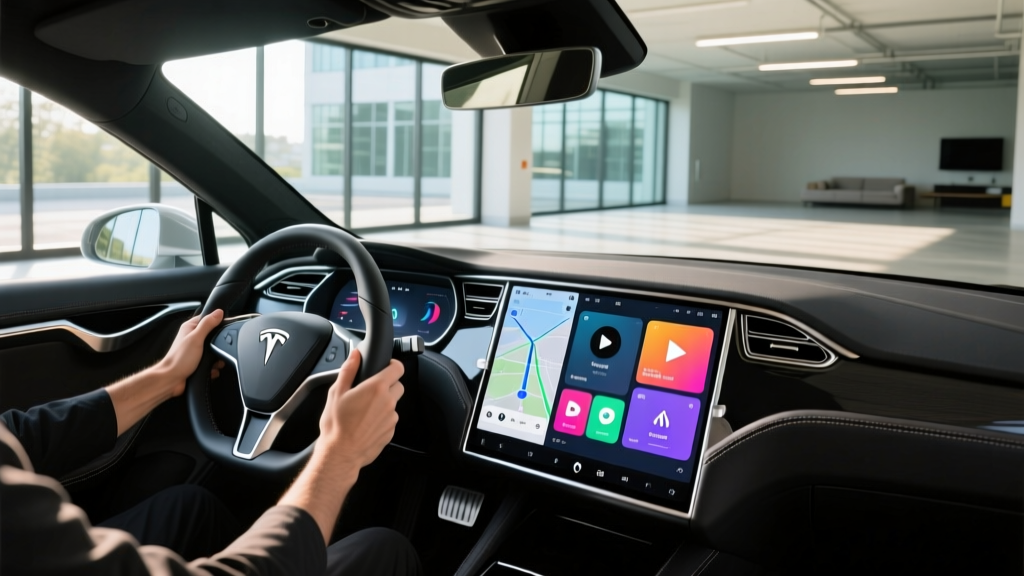
Tesla's in-car app ecosystem has evolved from a minimalist interface into a comprehensive entertainment and productivity platform. Whether you're waiting at a Supercharger, parked at home, or navigating daily commutes, Tesla apps in car transform the vehicle into a mobile living space. This guide examines the full app suite available across the 2026 Tesla lineup while providing the critical EV specs buyers need.
Available Tesla Apps in Car: Entertainment & Productivity
Tesla's infotainment system runs a custom Linux-based OS supporting native apps and web-based services. Here's what's available in 2026 models:
Streaming & Media
- Netflix, YouTube, Disney+, Twitch: Full video streaming (parked only)
- Spotify, Apple Music, Tidal: Music streaming with offline cache
- TuneIn, iHeartRadio: Live radio and podcasts
Gaming
- Tesla Arcade: Cyberpunk 2077, Stardew Valley, Cuphead, Beach Buggy Racing 2
- Browser Games: HTML5 games via built-in browser
- Controller Support: USB and Bluetooth gamepads
Navigation & Utility
- Tesla Navigation: Real-time traffic, Supercharger routing, elevation profiles
- Google Maps integration: Points of interest, business hours
- Dashcam & Sentry Mode: Continuous recording with cloud backup
- Tesla Profiles: Driver-specific settings, app preferences
Productivity
- Calendar: Syncs with phone, shows meeting locations
- Theater Mode: Watch content while charging
- Camp Mode: Climate control, USB power, screen on
- Dog Mode: Pet-safe climate with display message
2026 Tesla Model Lineup: Core EV Specifications
Tesla's app experience is consistent across models, but range, charging, and pricing vary significantly. Here's the complete spec breakdown:
| Model | EPA Range | Battery (kWh) | Chemistry | DC Fast Charge | 10-80% Time | Level 2 Rate | 0-60 mph | HP | Base MSRP |
|---|---|---|---|---|---|---|---|---|---|
| Model 3 RWD | 272 mi | 60 | LFP | 170 kW | ~25 min | 11.5 kW / 44 mi/hr | 5.8 sec | 283 | $38,990 |
| Model 3 Long Range AWD | 363 mi | 82 | NMC | 250 kW | ~18 min | 11.5 kW / 44 mi/hr | 4.2 sec | 346 | $42,490 |
| Model Y Long Range AWD | 330 mi | 82 | NMC | 250 kW | ~18 min | 11.5 kW / 44 mi/hr | 4.8 sec | 384 | $47,740 |
| Model S Long Range | 402 mi | 100 | NMC | 250 kW | ~20 min | 16.5 kW / 52 mi/hr | 3.1 sec | 670 | $79,990 |
| Model X Long Range | 348 mi | 100 | NMC | 250 kW | ~20 min | 16.5 kW / 52 mi/hr | 3.8 sec | 670 | $84,990 |
Real-World Range: What to Actually Expect
- Highway driving (75 mph): Expect 85-90% of EPA range
- Cold weather (below 40°F): Range drops 20-30% without preconditioning
- Mountain driving: Regenerative braking recovers 15-25% on descents
- City driving: Often exceeds EPA due to regen efficiency
Charging Speed & Infrastructure
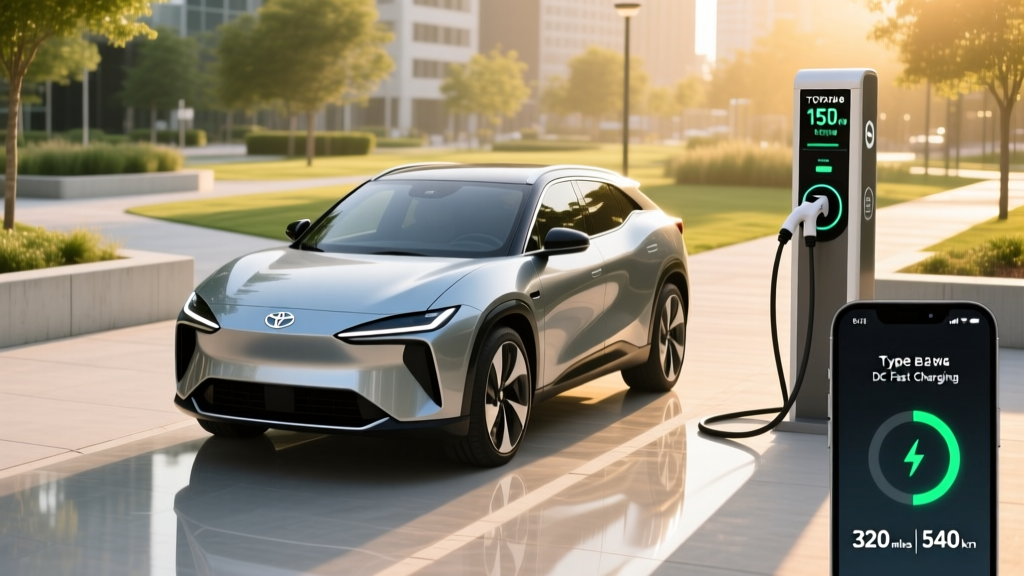
Tesla's Supercharger network remains the most reliable DC fast-charging ecosystem, with over 6,000 U.S. locations. Here's charging performance across scenarios:
| Charging Type | Power (kW) | Miles Added/Hour | Use Case |
|---|---|---|---|
| Level 1 (120V outlet) | 1.4 kW | 3-5 mi/hr | Emergency/overnight trickle |
| Level 2 (240V, 48A) | 11.5 kW | 44 mi/hr | Home/workplace daily charging |
| DC Fast (V2 Supercharger) | 150 kW | ~450 mi/hr peak | Road trips, older stations |
| DC Fast (V3 Supercharger) | 250 kW | ~750 mi/hr peak | Latest Superchargers |
| DC Fast (V4 Supercharger) | 350 kW | ~1,000 mi/hr peak | Cybertruck/next-gen (limited) |
Charging curve reality: Peak kW only applies between 10-30% State of Charge. Above 80%, charging slows dramatically to protect battery health. A 10-80% charge takes 18-25 minutes; 80-100% can take an additional 30+ minutes.
Federal Tax Credit Eligibility (2026 Rules)
Under IRS §30D rules, Tesla eligibility varies by model and buyer income:
| Model | MSRP Cap | Income Cap (Single/Joint) | Credit Amount | Battery Sourcing |
|---|---|---|---|---|
| Model 3 RWD | $55,000 ✓ | $150k/$300k | $3,750 | Partial (LFP cells from CATL) |
| Model 3 Long Range | $55,000 ✓ | $150k/$300k | $7,500 | Meets critical minerals + components |
| Model Y Long Range | $80,000 ✓ | $150k/$300k | $7,500 | Meets critical minerals + components |
| Model S/X | $80,000 ✗ | $150k/$300k | $0 | Exceeds MSRP cap |
Point-of-sale transfer: As of 2024, you can transfer the credit to the dealer for an immediate price reduction rather than waiting for tax filing. Verify eligibility at fueleconomy.gov before purchase.
Interior Space & Practicality
Tesla's minimalist interior maximizes cabin space, though cargo dimensions vary by model:
- Model 3: 23 cu ft trunk + 3 cu ft frunk; 42" front legroom, 35" rear
- Model Y: 34 cu ft cargo (rear seats up) + 4 cu ft frunk; 41" front, 37" rear
- Model S: 28 cu ft trunk + 5 cu ft frunk; 42" front, 35" rear
- Model X: 88 cu ft cargo (seats folded) + 7 cu ft frunk; 41" front, 37" rear
The Model Y's hatchback design offers superior cargo flexibility for families, while the Model 3's sedan profile suits commuters prioritizing efficiency.
Battery Warranty & Longevity
Tesla provides industry-leading battery coverage:
- Model 3/Y: 8 years / 100,000 miles (Long Range: 120,000 miles)
- Model S/X: 8 years / 150,000 miles
- Capacity retention: Warranty covers degradation below 70% of original capacity
Real-world data shows Tesla batteries typically retain 85-90% capacity after 100,000 miles. LFP chemistry (Model 3 RWD) offers longer cycle life but lower energy density than NMC.
Driver Assistance: Autopilot & FSD
Tesla's driver-assist features are sophisticated but require constant supervision:
Who Should Buy a Tesla in 2026?
- Value Supercharger network reliability for road trips
- Want best-in-class infotainment and app ecosystem
- Prioritize over-the-air updates adding new features
- Have home Level 2 charging access
- Prefer minimalist interior with large touchscreen
- Need traditional button/knob controls (Hyundai Ioniq 5, Ford Mustang Mach-E)
- Want longer EPA range at lower price (Chevrolet Equinox EV, 319 mi from $33k)
- Require third-row seating (Kia EV9, Rivian R1S)
- Prefer luxury interior materials (BMW i4, Mercedes EQB)
Pros & Cons
- Supercharger network: 6,000+ U.S. locations, 99% uptime
- Over-the-air updates continuously improve the car
- Comprehensive app ecosystem (streaming, gaming, productivity)
- Best-in-class efficiency (Model 3: 132 MPGe combined)
- Strong resale value and brand recognition
- No Apple CarPlay/Android Auto support
- Build quality inconsistencies reported (panel gaps, paint)
- Touchscreen-only controls distract while driving
- FSD subscription expensive with limited capability
- Insurance premiums 20-30% higher than competitors
Frequently Asked Questions
Can I use Tesla apps while driving?
Video streaming (Netflix, YouTube) and gaming are disabled while the vehicle is in motion. Music, navigation, and phone calls remain accessible. The driver should never interact with touchscreen apps while driving.
Do Tesla apps require a subscription?
Basic connectivity (navigation, music streaming via Bluetooth) is free. Premium Connectivity ($10/month) enables live traffic, satellite maps, video streaming, and Caraoke. Third-party apps (Spotify, Netflix) require their own subscriptions.
Can I install third-party apps on Tesla?
No. Tesla's OS is closed — only Tesla-approved apps are available. The built-in web browser can access some web apps, but performance is limited. This contrasts with Android Automotive (Polestar, Volvo) which supports Google Play Store apps.
How much data do Tesla apps use?
Premium Connectivity includes unlimited data for Tesla apps. Without it, the car uses your phone's hotspot. Streaming video at 1080p consumes ~1.5 GB/hour; music streaming uses ~100 MB/hour.
Does the Tesla app work without internet?
Navigation requires internet for real-time traffic and Supercharger availability. Downloaded music/podcasts play offline. Games work without connection. Dashcam and Sentry Mode store video locally on USB drive.