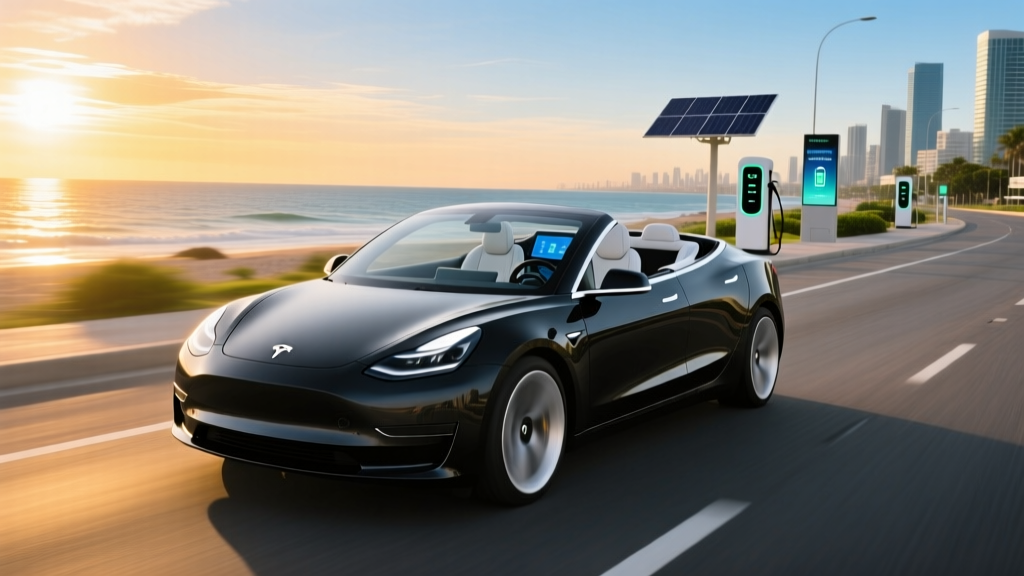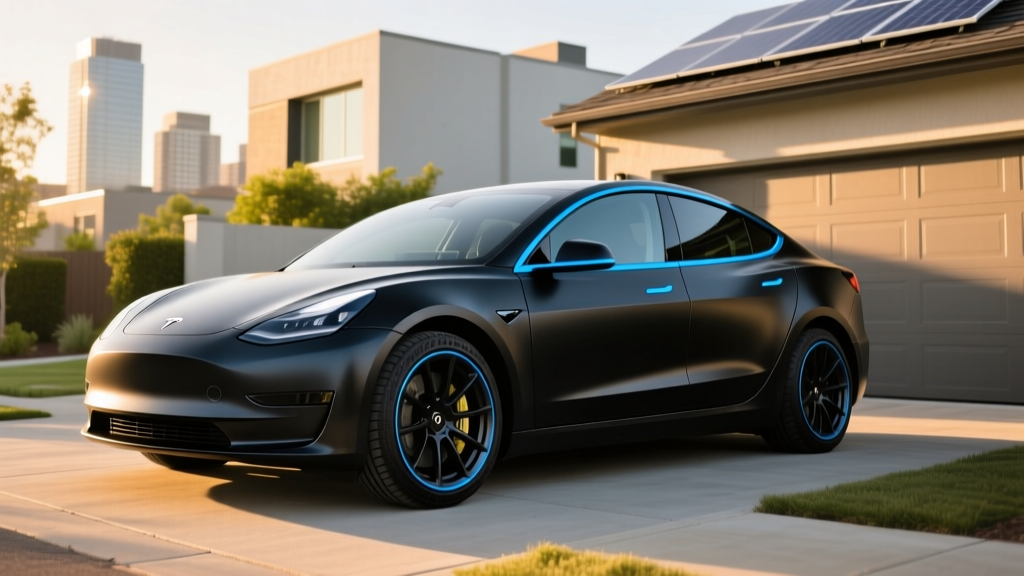
If you own or are shopping for a Tesla Model 3, you have likely encountered the term Tesla approved tires for Model 3 — tires carrying Tesla's T0, T1, or T2 marking that the automaker co-engineered with manufacturers like Michelin, Hankook, and Pirelli. But tires are only part of the ownership equation. This profile covers the 2026 Model 3 lineup end-to-end: EPA range, charging performance, battery chemistry, tax credit eligibility, and which tires actually preserve the range and ride quality Tesla engineered into the car.
2026 Tesla Model 3 at a Glance: Key Specs by Trim
The current Model 3 (Highland refresh and subsequent updates) is offered in three primary trims in the US market. Below is a consolidated spec table to anchor your research before we get into tires and real-world ownership.
| Spec | RWD (Standard Range) | Long Range AWD | Performance |
|---|---|---|---|
| EPA Range | 272 mi | 341 mi | 315 mi |
| Battery (usable) | ~60 kWh (LFP) | ~79 kWh (NMC) | ~79 kWh (NMC) |
| 0-60 mph | 5.8 sec | 4.2 sec | 2.9 sec |
| Horsepower | 271 hp | 346 hp | 510 hp |
| Drivetrain | RWD (single motor) | AWD (dual motor) | AWD (dual motor) |
| Max DC Fast Charge | 170 kW | 250 kW | 250 kW |
| 10-80% DCFC Time | ~25 min | ~22 min | ~22 min |
| Level 2 Home Charge | 11.5 kW (~44 mi/hr) | 11.5 kW (~44 mi/hr) | 11.5 kW (~44 mi/hr) |
| MPGe (combined) | 132 MPGe | 125 MPGe | 118 MPGe |
| Base MSRP | $38,990 | $47,740 | $54,990 |
What Are Tesla Approved Tires and Why Do They Matter?
Tesla does not manufacture tires. Instead, it works with tire makers to develop compounds, tread patterns, and sidewall constructions that meet specific targets for rolling resistance, noise, load rating, and grip. Tires that pass Tesla's validation receive a T0, T1, or T2 marking on the sidewall — this is what "Tesla approved tires for Model 3" actually means.
The Model 3 is a heavy vehicle by compact-sedan standards (roughly 3,860-4,065 lbs depending on trim), and instant electric torque places unique demands on tire rubber. Non-approved tires may fit the wheel but can reduce range by 5-10 miles, increase cabin noise, and alter regenerative braking behavior.
Common Tesla-Approved Tire Options for Model 3
| Tire | Type | Tesla Marking | Typical Size | Best For |
|---|---|---|---|---|
| Michelin Pilot Sport 4S | Summer UHP | T0/T1 | 235/40R19 | Performance trim, warm climates |
| Hankook Ventus S1 evo3 EV | Summer | T0 | 235/45R18 | Long Range, efficiency focus |
| Michelin Pilot Sport All Season 4 | All-Season UHP | T0 | 235/40R19 | Year-round, moderate climates |
| Pirelli P Zero (PZ4) Elect | Summer | T0 | 235/35R20 | Performance trim, track use |
| Continental CrossContact RX | All-Season Touring | T0 | 235/45R18 | Comfort, wet weather |
Tires marked with Tesla's acoustic foam lining (often noted as "PNCS" by Pirelli or "Acoustic" by Michelin) reduce road noise transmitted into the cabin — a critical factor since the Model 3 has no engine noise to mask tire roar.
Range, Efficiency, and How Tires Affect Both
The Model 3 remains one of the most efficient EVs on the market. Per fueleconomy.gov, the Long Range AWD achieves 125 MPGe combined, translating to roughly 27 kWh per 100 miles. The RWD trim is even more efficient at 132 MPGe (about 25 kWh/100 mi).
But these figures assume OEM-equivalent rolling resistance. Switching to a non-Tesla-approved tire with a higher rolling-resistance coefficient can increase energy consumption by 3-8%, which on a Long Range model means losing 10-25 miles of practical range per charge. T0-marked tires from Hankook and Michelin are specifically tuned for low rolling resistance while maintaining wet-grip ratings that satisfy Tesla's safety benchmarks.
For maximum range, stick with the 18-inch Photon wheels and the Hankook Ventus S1 evo3 EV (235/45R18). The 19-inch Nova wheels look sharper but reduce EPA range by roughly 15-20 miles on the Long Range trim due to wider contact patches and increased aerodynamic drag from the wheel design.
Charging Performance: DC Fast and Home Level 2
Charging speed remains a Model 3 strong suit. The Long Range and Performance trims peak at 250 kW on a V3 or V4 Tesla Supercharger, while the RWD (with its LFP battery) peaks at around 170 kW.
| Charging Level | Power | RWD (LFP) | Long Range / Performance (NMC) |
|---|---|---|---|
| Level 1 (120V household) | ~1.4 kW | ~5 mi/hr | ~5 mi/hr |
| Level 2 (240V home) | 11.5 kW | ~44 mi/hr | ~44 mi/hr |
| DC Fast Charge (peak) | 170-250 kW | 10-80% in ~25 min | 10-80% in ~22 min |
Important nuance: the 250 kW peak on NMC trims is not sustained. The charge curve tapers significantly above 60% State of Charge (SoC), and by 80%, you are typically pulling under 80 kW. This is normal for lithium-ion thermal management. For road trips, plan charging stops around the 10-80% window to minimize time at the stall.
For home charging, Tesla's Wall Connector delivers up to 11.5 kW on a 60-amp circuit (48-amp continuous draw). A full overnight charge from 20% to 100% takes about 7 hours on the Long Range — easily within an off-peak electricity window. Installation costs for a dedicated 60-amp circuit typically range from $500 to $1,800 depending on panel proximity and local permitting, though older homes may require a panel upgrade ($1,500-$3,000+).
Performance, Ride Quality, and the Tire Connection
The Performance trim's 2.9-second 0-60 mph time is supercar territory, but that acceleration is only fully realized with tires that can transfer torque to pavement. The OEM Michelin Pilot Sport 4S (T0) offers a treadwear rating of 300 and exceptional dry grip, but it is a summer tire — it hardens and loses grip below approximately 45°F.
If you live in a region with real winters, consider a dedicated set of Tesla-approved winter tires on a second set of wheels. The Pirelli Winter Sottozero 3 (T0-marked, 235/45R18) is a common choice. Swapping to winter tires preserves the OEM summer tires' lifespan and ensures consistent regenerative braking performance on cold, wet roads.
Ride quality in the Highland-refreshed Model 3 improved significantly over pre-2024 models, with new frequency-selective dampers and additional acoustic insulation. The right tire amplifies this improvement; the wrong tire undermines it. Owners who switched to non-T0 touring tires frequently report increased road noise and harsher impact absorption over expansion joints.
Pricing, Tax Credits, and Total Cost
As of the 2026 model year, here is how the Model 3 lineup prices out before options, delivery fees, or incentives:
| Trim | Base MSRP | Federal §30D Credit | Effective Price (est.) |
|---|---|---|---|
| RWD (Standard Range) | $38,990 | Up to $7,500* | ~$31,490 |
| Long Range AWD | $47,740 | Up to $7,500* | ~$40,240 |
| Performance | $54,990 | Up to $7,500* | ~$47,490 |
*Federal EV tax credit eligibility under IRS §30D depends on multiple factors:
- MSRP cap: Sedans must be at or below $55,000. The Performance trim at $54,990 qualifies, but adding certain options could push it over.
- Buyer income cap: Modified AGI must not exceed $150,000 (single), $225,000 (head of household), or $300,000 (joint).
- Battery sourcing: Critical minerals and battery component requirements phase in annually. Check the latest IRS/Fueleconomy.gov guidance for current-year compliance status of specific Model 3 battery packs.
- Point-of-sale transfer: As of 2024+, eligible buyers can transfer the credit to the dealer at purchase, reducing the upfront price rather than waiting for a tax refund.
Consult a tax professional before relying on credit eligibility, as rules continue to evolve. State and utility incentives may stack on top — check AFDC's state incentive database for your area.
Interior, Cargo, and Daily Livability
The Model 3 cabin is minimalist by design. A 15.4-inch center touchscreen controls virtually all vehicle functions, including climate, mirrors, and glovebox release. There is no traditional instrument cluster — a slim LED strip above the dash displays speed and navigation (in newer builds).
Cargo volume totals approximately 23 cubic feet (trunk + front trunk/frunk). Rear legroom measures 35.2 inches, adequate for adults on shorter trips but tighter than a midsize sedan like the Hyundai IONIQ 6. The glass roof creates an airy cabin but does not open, and solar heat gain in summer is noticeable without aftermarket tinting.
Tech highlights include:
- Tesla Autopilot (SAE Level 2 driver assist) standard — adaptive cruise, lane centering, automatic emergency braking
- Full Self-Driving (Supervised) available as a $8,000 add-on or $99/month subscription — still Level 2, requires active driver supervision
- Sentry Mode dashcam recording, dog mode, camp mode
- Over-the-air updates that periodically add features and refine performance
Warranty Coverage
Tesla's warranty structure is straightforward:
| Coverage | RWD | Long Range / Performance |
|---|---|---|
| Basic Vehicle | 4 yr / 50,000 mi | 4 yr / 50,000 mi |
| Battery & Drive Unit | 8 yr / 100,000 mi | 8 yr / 120,000 mi |
| Battery Capacity Threshold | 70% retention | 70% retention |
The 70% capacity retention threshold means Tesla will repair or replace the battery if it degrades below 70% of original capacity within the warranty window. Real-world data from fleet analytics suggests most Model 3 packs retain 85-90% capacity at 100,000 miles, with LFP packs showing particularly strong longevity due to their chemistry's inherent cycle-life advantage.
Pros, Cons, and Who Should Buy
Pros
- Class-leading efficiency (25-27 kWh/100 mi)
- 250 kW DC fast charging on LR/Perf trims
- Access to Tesla Supercharger network (17,000+ US stalls)
- Strong resale value relative to EV segment
- OTA updates keep the car current post-purchase
- LFP battery on RWD offers excellent longevity
Cons
- Minimalist interior not for everyone (no physical buttons)
- Rear seat space tighter than competitors
- No Apple CarPlay or Android Auto
- Insurance costs 15-25% higher than gas equivalents
- FSD is expensive and still Level 2
- Service center wait times in some metro areas
Choose the Long Range AWD if: You take regular road trips, need all-weather traction, or want 341 miles of EPA range as a buffer against cold-weather losses.
Choose the Performance if: Track days and sub-3-second acceleration matter more than maximum range, and you are willing to pay the insurance premium that comes with 510 hp.
Look elsewhere if: You need a large back seat for child seats, prefer physical controls, or want Apple CarPlay integration. Consider the Hyundai IONIQ 6 or BMW i4 instead.
Frequently Asked Questions
What is the real-world range of the Tesla Model 3?
The EPA rates the Long Range AWD at 341 miles, but expect approximately 290-310 miles in real-world highway driving at 70-75 mph. In cold weather below freezing, reduce that by 15-20% for NMC trims and 25-30% for the LFP-equipped RWD. Preconditioning and seat heaters help preserve range in winter.
How fast does the Model 3 charge at home and on the road?
On a Level 2 home charger (11.5 kW), the Model 3 gains about 44 miles of range per hour — a full charge overnight. On a V3/V4 Tesla Supercharger, the Long Range and Performance trims peak at 250 kW, reaching 10-80% in roughly 22 minutes. The RWD peaks at 170 kW with a 10-80% time of about 25 minutes.
How much does a 2026 Model 3 cost after tax credits?
The RWD starts at $38,990 and can drop to approximately $31,490 if you qualify for the full $7,500 federal §30D credit (subject to income caps, MSRP caps, and battery sourcing rules). The Long Range at $47,740 nets around $40,240 after credit. Always verify current-year eligibility on IRS.gov and with a tax professional.
Do I need Tesla approved tires for my Model 3?
You do not legally need T0/T1-marked tires, but they are strongly recommended. Tesla-approved tires are engineered for the Model 3's weight, torque delivery, and noise profile. Non-approved tires may fit but often result in reduced range (5-10 miles), increased cabin noise, and altered handling characteristics. For warranty-adjacent concerns, check your tire warranty terms.
Is the Model 3 worth buying vs. competitors?
Against the Hyundai IONIQ 6 (361 mi range, $42,500), BMW i4 (307 mi, $52,200), and Polestar 2 (276 mi, $49,900), the Model 3 Long Range offers a compelling mix of efficiency, Supercharger network access, and price. Its main weaknesses are the touchscreen-only interface and rear-seat space. If charging infrastructure and software ecosystem matter to you, the Model 3 remains the segment benchmark.
Does the Model 3 qualify for the federal EV tax credit?
As of the 2026 model year, all three Model 3 trims fall within the $55,000 sedan MSRP cap for §30D eligibility. However, buyer income limits ($150K single / $300K joint), critical-mineral sourcing requirements, and battery-component rules all affect whether you receive the full $7,500, a partial credit, or none. Check the latest guidance at fueleconomy.gov and irs.gov before purchasing.