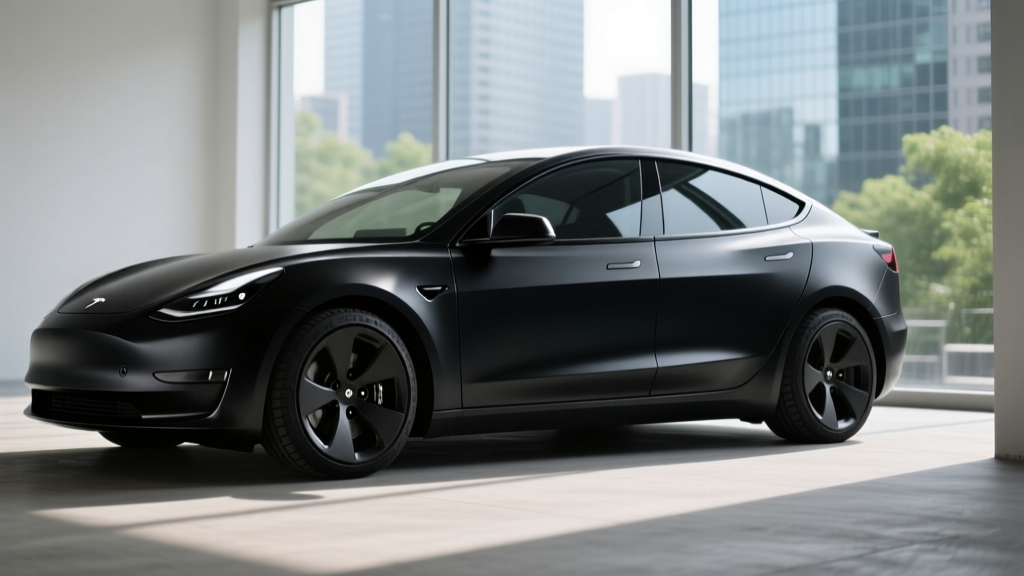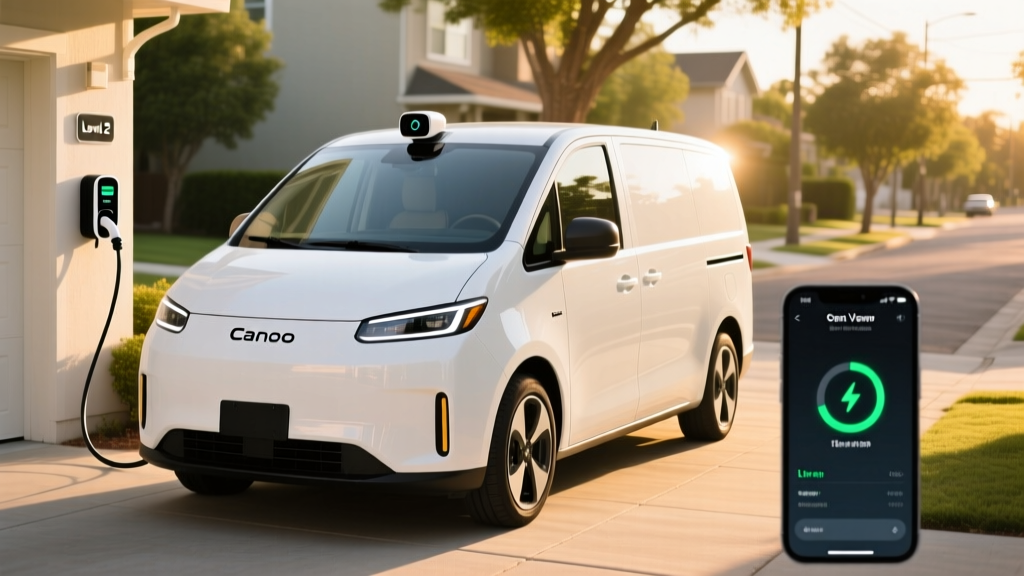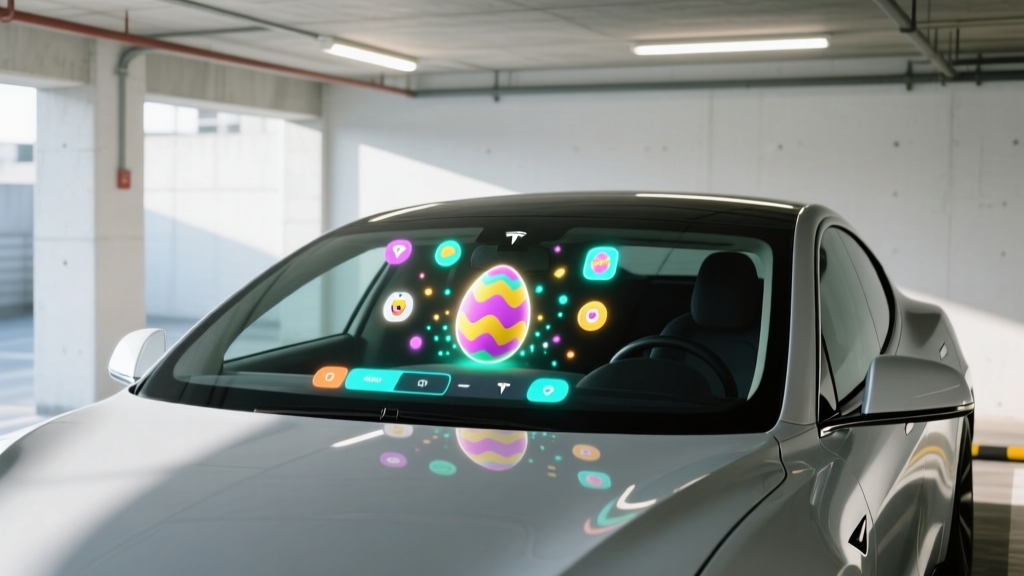
If you have spent any time in Tesla owner forums or scrolling through EV TikTok, you have likely encountered the term Tesla app loot box. It is not an official Tesla product or a purchasable add-on. Instead, it is community shorthand for the randomized Easter eggs, software surprises, and gamified features that Tesla pushes through over-the-air (OTA) updates to its vehicles and companion app. Think of it like a video game loot crate: you never know exactly which hidden feature, animation, or novelty you will unlock next — from a fart noise triggered by your turn signal to a full-blown light show synchronized to music.
But beyond the memes and social-media buzz, what does the Tesla app loot box phenomenon actually mean for buyers evaluating a Tesla in 2026? And more importantly, does the underlying vehicle — in this case the 2026 Tesla Model Y Long Range AWD — hold up on the metrics that matter: range, charging speed, price, and daily usability? This review breaks down the real numbers while addressing the Easter-egg culture that makes Tesla ownership feel different from every other EV on the road.
2026 Model Y Long Range AWD: Core Specifications
| Spec | 2026 Model Y Long Range AWD |
|---|---|
| EPA Range | 320 miles |
| Battery Capacity | 78.1 kWh usable (NMC chemistry) |
| Drivetrain | Dual-Motor AWD |
| Horsepower | 384 hp (combined) |
| 0–60 mph | 4.8 seconds |
| Peak DC Fast Charge | 250 kW |
| 10–80% DC Charge Time | ~27 minutes |
| Level 2 Home Charge Rate | 11.5 kW (~44 mi/hr) |
| Efficiency | 122 MPGe combined / 28 kWh/100 mi |
| Cargo Volume | 76.2 cu ft (rear seats folded) |
| Rear Legroom | 41.6 inches |
| Base MSRP | $44,990 |
| Battery Warranty | 8 years / 120,000 miles |
Real-World Range vs. EPA Sticker
Real-World Expectation: ~270–290 miles on mixed highway driving (70–75 mph); ~240–260 miles in sustained sub-30°F winter conditions with cabin heating.
The EPA rates the 2026 Model Y Long Range AWD at 320 miles on its 78.1 kWh (usable) NMC battery pack. That figure is achievable in moderate-temperature city and suburban driving where regenerative braking recaptures energy frequently. On highway road trips at 75 mph, expect roughly 270–290 miles before you need to stop — Tesla's trip planner tends to be conservative and will route you to Superchargers with 10–15% buffer remaining.
Cold weather is the great equalizer. In temperatures below 30°F, the battery's internal resistance increases and cabin heating draws significant power. Owners in northern climates should plan for 240–260 miles of usable range in deep winter. Preconditioning the battery while plugged in — a feature accessible from the Tesla app — mitigates some of this loss by warming the pack before you depart, preserving energy that would otherwise go to heating on the road.
According to fueleconomy.gov, the Model Y Long Range AWD achieves 122 MPGe combined, translating to 28 kWh per 100 miles. That efficiency figure is among the best in the compact electric SUV segment and a key reason the Model Y remains a benchmark despite intensifying competition.
Charging Speed: DC Fast and Home Level 2
| Charging Level | Power | Miles Added per Hour | Notes |
|---|---|---|---|
| Level 1 (120V) | 1.4 kW | ~5 mi/hr | Emergency/trickle only |
| Level 2 (240V, 48A) | 11.5 kW | ~44 mi/hr | Full charge overnight (~8 hrs) |
| DC Fast (V3 Supercharger) | 250 kW peak | — | 10–80% in ~27 min; tapers sharply above 80% |
| DC Fast (V4 Supercharger) | Up to 350 kW peak* | — | *Model Y currently limited to ~250 kW by onboard architecture |
Tesla's Supercharger network remains the gold standard for public DC fast charging in the United States. On a V3 Supercharger (250 kW peak), the Model Y Long Range AWD charges from 10% to 80% in approximately 27 minutes under ideal conditions — meaning a warm battery preconditioned via navigation to the charger.
The critical nuance that spec sheets omit is the charge curve. The 250 kW peak only holds between roughly 10% and 30% state of charge (SoC). By 50% SoC, the rate drops to approximately 150 kW; by 80%, it falls below 60 kW. Charging from 80% to 100% on DC fast charging can take nearly as long as the 10–80% session, which is why Tesla and every other manufacturer recommend fast-charging only to 80% on road trips and topping off the last 20% on Level 2 at home or at your destination.
For home charging, the Model Y's onboard charger accepts up to 11.5 kW on a 240V/48A Level 2 circuit. That translates to roughly 44 miles of range per hour of charging — enough to fully replenish the 78.1 kWh pack in about 8 hours overnight. A typical home Level 2 installation (Tesla Wall Connector or equivalent) runs $500–$1,500 depending on whether your electrical panel needs an upgrade. Always consult a licensed electrician for a site-specific quote.
What Is the Tesla App Loot Box — and Does It Matter?
The Tesla app loot box is not a literal product you buy. It is an informal label the Tesla community has applied to the unpredictable stream of Easter eggs, novelty features, and software surprises that arrive via OTA updates. Some recent examples that have fueled the "loot box" meme include:
- Light Show: The car's headlights, turn signals, and mirrors choreograph a dance sequence to music — customizable via the app.
- Emissions Testing Mode: A whoopee-cushion sound effect triggered by the turn signal or via the app, aimed at a specific seat.
- Sketch Mode: A drawing canvas on the center touchscreen accessible while parked.
- Holiday Themes: Seasonal animations, such as Santa mode that replaces the vehicle avatar with a sleigh on the navigation screen.
- Arcade Games: Titles like Stardew Valley, Cyberpunk 2077 (demo), and Cuphead playable on the touchscreen while parked or via a connected controller.
Why does this matter for a purchase decision? Because these features contribute to what Tesla owners describe as a software-defined ownership experience. Unlike legacy automakers whose vehicles are functionally static after purchase, Teslas demonstrably change — gaining features, UI improvements, and entertainment options months or years after delivery. The "loot box" framing captures the anticipation and delight of not knowing what the next update will bring.
That said, these are novelty features, not substitutes for core vehicle quality. Tesla's panel-gap consistency, ride refinement, and service-center accessibility remain areas where competitors like the Hyundai Ioniq 5 and BMW iX have closed the gap or surpassed Tesla. The loot-box culture is a differentiator, but it should be the frosting — not the cake.
Pricing, Trim Levels, and Federal Tax Credit
| Trim | MSRP | Est. Federal Credit (§30D) | Effective Price |
|---|---|---|---|
| Long Range AWD | $44,990 | Up to $7,500* | ~$37,490* |
| Performance AWD | $48,990 | Up to $7,500* | ~$41,490* |
The 2026 Model Y Long Range AWD starts at $44,990 (including destination), placing it under the IRS §30D MSRP cap of $80,000 for SUVs. The Performance trim starts at $48,990.
Federal tax credit eligibility under IRS §30D is not automatic. Buyers must meet several requirements:
- Income caps: Modified adjusted gross income (MAGI) must not exceed $150,000 (single), $225,000 (head of household), or $300,000 (joint filers).
- MSRP cap: Vehicle base MSRP must be ≤ $80,000 for SUVs — both Model Y trims qualify.
- Battery sourcing: A percentage of critical minerals and battery components must be sourced from the US or free-trade-agreement countries. Tesla has worked to localize its supply chain, but exact eligibility can shift — always verify current sourcing compliance on the IRS qualified vehicle list before purchasing.
- Point-of-sale transfer: As of 2024, buyers can transfer the credit to the dealer at purchase, reducing the upfront cost rather than waiting to claim it on their tax return.
*Credit eligibility varies by individual tax situation and current-year sourcing rules. Consult a tax professional and verify on irs.gov before relying on the $7,500 figure.
Driver Assistance: Autopilot and FSD Supervised
Every 2026 Model Y includes Basic Autopilot — adaptive cruise control with lane centering — at no extra cost. Tesla's optional Full Self-Driving (Supervised) package, priced at $8,000 (or $99/month subscription), adds automatic lane changes, navigate-on-Autopilot, traffic-light and stop-sign recognition, and the controversial city-street driving capability.
Despite the "Full Self-Driving" name, FSD remains an SAE Level 2 system. NHTSA continues to scrutinize Tesla's Autopilot and FSD engagement data, and the driver is legally responsible for all vehicle operation. Compare this to Level 4 robotaxi services like Waymo, which operate without a human driver in geofenced areas — a fundamentally different capability. Buyers should weigh the $8,000 FSD cost against the current utility, not the future promise.
Interior, Cargo, and Technology
The 2026 Model Y interior follows Tesla's minimalist ethos: a single 15.4-inch center touchscreen controls virtually all vehicle functions, with no physical instrument cluster or secondary displays (a rear touchscreen was added for the Juniper refresh). Rear-seat passengers get 41.6 inches of legroom — competitive with the Hyundai Ioniq 5 and slightly less than the Ford Mustang Mach-E.
Cargo capacity is a strong suit: 30.2 cubic feet behind the second row and 76.2 cubic feet with the 60/40 rear seats folded. The front trunk (frunk) adds 4.1 cubic feet — useful for charging cables or a small bag. A power liftgate is standard.
Infotainment runs on Tesla's proprietary OS with built-in navigation, streaming (Netflix, YouTube, Spotify while parked), and the arcade-game library that feeds the loot-box culture. There is no Apple CarPlay or Android Auto — a dealbreaker for some buyers accustomed to phone-mirroring interfaces.
Who Should Buy the 2026 Model Y — and Who Shouldn't?
- You want access to the most reliable DC fast-charging network (Supercharger) in North America.
- Software updates and the Tesla app ecosystem (including Easter eggs and the "loot box" experience) appeal to you.
- You prioritize efficiency (122 MPGe) and strong real-world range in a compact SUV.
- You need practical cargo space and the option for a 5-seat family hauler.
- You require Apple CarPlay/Android Auto or physical buttons for climate/media controls.
- You want a luxury-grade interior with premium materials (consider BMW iX or Genesis GV70 Electrified).
- You live far from a Tesla Service Center and need dealer-based maintenance infrastructure.
- Ride comfort on rough roads is a top priority — the Model Y's firm suspension transmits more impacts than the Ioniq 5.
Pros and Cons
- 320-mile EPA range with best-in-class efficiency (122 MPGe)
- 250 kW DC fast charging; Supercharger network reliability
- Continuous OTA updates and Tesla app Easter eggs ("loot box" culture)
- Spacious cargo area (76.2 cu ft) and practical frunk
- Strong §30D tax-credit eligibility at $44,990 base MSRP
- No Apple CarPlay or Android Auto
- Firm ride quality on broken pavement
- FSD Supervised ($8,000) remains Level 2, not autonomous
- Minimalist interior polarizing — no physical climate controls
- Service-center access varies significantly by region
Frequently Asked Questions
What is the real-world range of the 2026 Tesla Model Y Long Range AWD?
The EPA rates it at 320 miles. In real-world mixed highway driving at 70–75 mph, expect 270–290 miles. In sub-30°F winter conditions, plan for 240–260 miles. Preconditioning while plugged in helps recover some cold-weather loss.
How fast does the Model Y charge at home and on the road?
On a Level 2 home charger (240V/48A), the Model Y charges at 11.5 kW, adding roughly 44 miles of range per hour — a full charge takes about 8 hours. On a V3 Supercharger (250 kW peak), it charges from 10% to 80% in approximately 27 minutes, though the charge rate tapers significantly above 80% SoC.
Does the 2026 Model Y qualify for the $7,500 federal EV tax credit?
The Model Y Long Range AWD ($44,990 MSRP) falls under the $80,000 SUV cap and is listed on the IRS qualified vehicles page as of early 2026. However, buyer income caps ($150K single / $300K joint) and battery-sourcing requirements apply. Verify current eligibility on irs.gov and consult a tax professional.
What is the Tesla app loot box?
It is a community term — not an official Tesla product — describing the unpredictable Easter eggs and novelty features Tesla delivers through over-the-air updates. These range from light shows and arcade games to seasonal animations and sound effects. They contribute to a software-defined ownership experience but do not affect the vehicle's core performance or range.
Is the Model Y worth buying over the Hyundai Ioniq 5 or Ford Mustang Mach-E?
The Model Y wins on Supercharger network access, efficiency (122 MPGe), and software ecosystem. The Ioniq 5 offers faster peak charging (up to 350 kW on 800V architecture), a more comfortable ride, and Apple CarPlay. The Mach-E provides a more traditional SUV driving feel and broader dealer service access. Your decision should hinge on charging-network priority, interior preferences, and whether the Tesla software experience matters to you.
What is the battery warranty on the 2026 Model Y?
Tesla covers the Model Y battery and drive unit for 8 years or 120,000 miles (whichever comes first), with a minimum 70% capacity retention guarantee during that period. This is competitive with the segment standard, though some competitors offer 10-year/100,000-mile battery coverage.