Why Everyone Is Searching for a 'Tesla Aircraft'
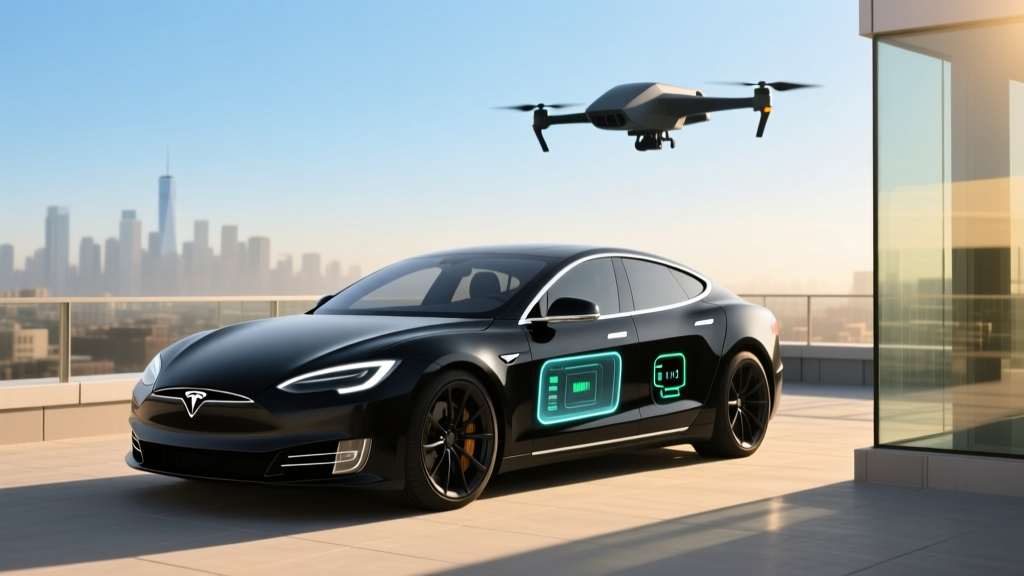
If you have typed Tesla aircraft into a search bar recently, you are not alone. Social media reels, AI-generated concept art, and speculative YouTube thumbnails have fueled a persistent rumor that Tesla is building an electric airplane or eVTOL (electric vertical takeoff and landing) vehicle. The search volume is real; the vehicle is not.
As of early 2026, Tesla has no aircraft program in development, no FAA filings, no patent pipeline for aviation propulsion, and zero announcements from Elon Musk regarding an electric plane. What Tesla does have is a mature lineup of ground-based electric vehicles with industry-leading efficiency, an expanding Supercharger network, and a Full Self-Driving (Supervised) stack that remains strictly SAE Level 2.
This article separates the aviation fantasy from the asphalt reality — and gives you the exact specs, pricing, and ownership data you need if you came here researching Tesla's actual 2026 vehicles.
The 2026 Tesla Lineup: Real Vehicles, Real Specs
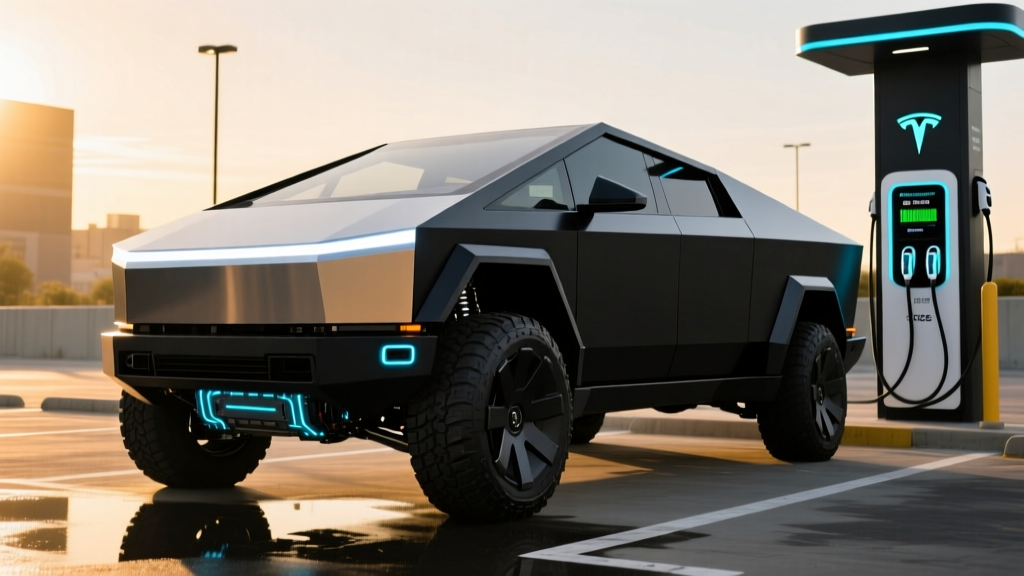
Since there is no Tesla aircraft to review, here is the comprehensive spec breakdown of every consumer Tesla you can actually buy in 2026. These are the vehicles sharing Tesla's battery, motor, and software architecture — the real engineering output that aviation rumor-mills mistakenly project onto a nonexistent airframe.
| Spec | Model 3 LR AWD | Model Y LR AWD | Model S LR | Cybertruck AWD |
|---|---|---|---|---|
| EPA Range | 363 mi | 320 mi | 402 mi | 340 mi |
| Battery (usable) | ~75 kWh NMC | ~75 kWh NMC | ~95 kWh NMC | ~123 kWh NMC |
| Peak DC Charge | 250 kW | 250 kW | 250 kW | 250 kW (800V arch) |
| 10–80% DC Time | ~25 min | ~27 min | ~30 min | ~28 min |
| Level 2 Rate | 11.5 kW / 44 mi/hr | 11.5 kW / 42 mi/hr | 11.5 kW / 41 mi/hr | 11.5 kW / 37 mi/hr |
| 0–60 mph | 4.2 sec | 4.8 sec | 3.1 sec | 3.9 sec |
| Horsepower | 346 hp | 384 hp | 670 hp | 600 hp |
| Drivetrain | Dual-Motor AWD | Dual-Motor AWD | Dual-Motor AWD | Tri-Motor AWD |
| Efficiency | 132 MPGe / 25 kWh/100mi | 122 MPGe / 28 kWh/100mi | 120 MPGe / 28 kWh/100mi | ~70 MPGe / 48 kWh/100mi |
| Base MSRP | $47,740 | $49,990 | $79,990 | $79,990 |
Sources: fueleconomy.gov, Tesla.com — 2026 model year. Prices exclude destination fee.
Real-World Range: What the EPA Sticker Doesn't Tell You
EPA sticker: 363 miles. Real-world highway at 75 mph: expect ~290–310 miles. Cold-weather (below 32°F / 0°C) combined driving: expect ~240–270 miles due to battery resistance and cabin heating load. Tesla's heat pump mitigates this better than resistive heaters, but physics always wins in winter.
Range is the number one question from prospective Tesla buyers, and the EPA estimate is only the starting point. The EPA test cycle blends city and highway driving at moderate speeds with climate control at 72°F. Your actual experience depends heavily on three variables:
- Speed: Aerodynamic drag increases with the square of velocity. A Model 3 at 65 mph may achieve 340+ real miles; at 80 mph, that drops to ~280 miles. The Model Y, being taller and less aero-efficient, loses range faster at highway speed.
- Temperature: Lithium-ion cells lose efficiency below ~40°F. Cold-soaked batteries also regenerate less energy during braking, compounding the loss. Preconditioning while plugged in recovers some of this penalty.
- Terrain & payload: Mountain passes with sustained climbs can cut range by 30–40% on the ascent. Regenerative braking recovers a portion on the descent, but not all. A fully loaded Cybertruck towing near its 11,000-lb capacity may see range halved.
The Model S Long Range remains the range king of the lineup at an EPA-rated 402 miles, owing to its larger ~95 kWh pack and sedan aerodynamics. But even the Model S will deliver roughly 320–340 miles on a flat 75-mph highway run in mild weather.
Charging Speed: Supercharger Network and Home Level 2
| Charging Level | Power (kW) | Miles Added per Hour | Best For |
|---|---|---|---|
| Level 1 (120V outlet) | ~1.4 kW | 3–5 mi/hr | Emergency / overnight trickle |
| Level 2 (240V, 48A) | 11.5 kW | 37–44 mi/hr | Daily home charging |
| DC Fast (V3 Supercharger) | Up to 250 kW peak | ~1,000 mi/hr (peak) | Road trips, 10–80% in ~25 min |
| DC Fast (V4 Supercharger) | Up to 350 kW (Cybertruck) | ~1,200 mi/hr (peak) | 800V vehicles only; 10–80% ~20 min |
Tesla's Supercharger network remains the gold standard for public DC fast charging in North America, with over 6,500 stalls across the U.S. as of 2026. The key nuance most buyers miss: peak kW is not sustained kW. A Model 3 Long Range may peak at 250 kW between roughly 10–30% state of charge (SoC), then taper progressively. The 10–80% time of ~25 minutes reflects this charge curve taper. Pushing from 80–100% can add another 20+ minutes — which is why Tesla's navigation system typically routes you to arrive at chargers at low SoC and depart at 80%.
For home charging, a Tesla Wall Connector on a 60A circuit (48A continuous) delivers 11.5 kW, adding roughly 44 miles of range per hour to a Model 3. Most owners with a daily commute under 60 miles will fully replenish overnight in 3–5 hours. Installation costs range from $500 (simple run near the panel) to $2,500+ if a panel upgrade or long conduit run is required — consult a licensed electrician for your specific situation.
Note: With the North American Charging Standard (NACS) now adopted by Ford, GM, Rivian, Hyundai, and others, Tesla Superchargers are opening to non-Tesla EVs via built-in adapters. Tesla owners retain native plug-and-charge simplicity with no adapter required.
Pricing, Tax Credits, and Total Cost of Ownership
| Model / Trim | Base MSRP | §30D Credit Eligibility | Effective Price (if eligible) |
|---|---|---|---|
| Model 3 RWD | $38,990 | Up to $7,500 (battery sourcing dependent) | ~$31,490 |
| Model 3 LR AWD | $47,740 | Up to $7,500 (battery sourcing dependent) | ~$40,240 |
| Model Y LR AWD | $49,990 | Up to $7,500 (battery sourcing dependent) | ~$42,490 |
| Model S LR | $79,990 | Not eligible — exceeds $55K sedan cap | $79,990 |
| Cybertruck AWD | $79,990 | Not eligible — exceeds $80K truck/SUV cap | $79,990 |
The federal EV tax credit under IRS §30D is not a blanket $7,500 for every Tesla buyer. Eligibility for 2026 depends on a matrix of requirements:
- MSRP caps: Sedans (Model 3) must be ≤$55,000. SUVs/trucks/vans (Model Y, Cybertruck) must be ≤$80,000.
- Buyer income caps: Modified AGI ≤$150,000 (single), ≤$225,000 (head of household), ≤$300,000 (joint).
- Battery sourcing: The credit splits into two halves — $3,750 for critical-minerals sourcing and $3,750 for battery-component manufacturing. Tesla's U.S.-built packs with varying mineral supply chains mean the full $7,500 is not guaranteed for every build month. Check the DOE/FuelEconomy credit lookup for your specific VIN eligibility.
- Point-of-sale transfer: Since 2024, eligible buyers can transfer the credit to the dealer at purchase, reducing the out-of-pocket price immediately rather than waiting for a tax refund.
On total cost of ownership, the Model 3 RWD at ~$31,490 effective price (with full credit) undercuts comparably equipped BMW 3-Series and Mercedes C-Class sedans while delivering roughly $1,200–$1,800/year in fuel savings versus a 25 MPG gas car (assuming 12,000 miles/year and $0.13/kWh home charging). Insurance remains 15–25% higher than ICE equivalents for most Tesla models, which partially offsets the fuel savings.
Autopilot, FSD, and the Tech That Actually Ships
Tesla Autopilot and Full Self-Driving (Supervised) are Level 2 driver-assistance systems, not autonomous driving. The driver must remain attentive, keep hands available, and be prepared to take over at any moment. Tesla's camera-only vision stack processes the environment in real time, but it does not replace the driver. Only Level 4 services like Waymo operate without a human driver — and only in geofenced areas.
Every 2026 Tesla ships with hardware capable of running Tesla's latest FSD (Supervised) software. The current vision-only system (no lidar, no radar on new builds) uses a suite of cameras and a neural network trained on billions of miles of driving data. In practice, FSD handles highway lane-keeping, on-ramp/off-ramp transitions, and many urban scenarios competently — but it still makes errors at complex intersections, construction zones, and unusual road geometries that require immediate driver intervention.
Standard Autopilot (included) provides adaptive cruise control and lane-centering on highways. FSD (Supervised) is available as an $8,000 one-time purchase or $99/month subscription and adds city-street navigation, traffic light/stop sign recognition, and autosteer on non-highway roads. Neither system is "self-driving" — the "Supervised" label is deliberate and legally meaningful.
Beyond driving assist, Tesla's tech stack includes:
- 15.4" center touchscreen (Model 3/Y) or 17" touchscreen (Model S/X) with integrated navigation, streaming, and gaming
- Over-the-air updates that regularly add features and refine performance
- Sentry Mode — 360° camera recording when parked, with phone alerts
- Dog Mode / Camp Mode — climate control presets for pets and overnight camping
- Tesla app integration — remote preconditioning, location tracking, charging management, and Summon (low-speed parking lot maneuvering)
Who Should Buy a Tesla in 2026 (And Who Shouldn't)
- You want access to the most reliable, widespread DC fast-charging network in North America
- You prioritize software integration, OTA updates, and tech-forward features
- You want class-leading efficiency (kWh/100mi) that maximizes real-world range per kWh
- You value strong performance (sub-5-second 0–60 across the lineup) without a performance-car price
- You need physical buttons, a traditional instrument cluster, or Apple CarPlay/Android Auto (Tesla uses its own UI exclusively)
- You want a dealership experience with in-person service — Tesla's service model is mobile-ranger and service-center based, with wait times that vary by region
- You need a proven Level 3 or Level 4 autonomous system — no consumer Tesla offers this
- You want a luxury interior at the Model S/X price point — competitors like the Lucid Air, BMW iX, and Mercedes EQS offer more traditional luxury materials and ride refinement
Pros and Cons at a Glance
- Best-in-class Supercharger network (6,500+ U.S. stalls)
- Industry-leading efficiency — Model 3 at 25 kWh/100mi
- Strong OTA update cadence adds real features post-purchase
- Competitive pricing after §30D credit (Model 3 from ~$31.5K)
- Spacious cargo: Model Y offers 76 cu ft with seats folded
- 8-year/120,000-mile battery & drive unit warranty
- No Apple CarPlay / Android Auto — Tesla-only infotainment
- FSD (Supervised) remains Level 2 despite the "Full Self-Driving" name
- Service center availability varies; some regions have long wait times
- Insurance premiums 15–25% above comparable ICE vehicles
- Minimalist interior feels sparse at Model S/X price points
- Model S/X/Cybertruck ineligible for federal tax credit (MSRP cap)
Frequently Asked Questions
Is Tesla actually building an electric airplane?
No. As of 2026, Tesla has no aircraft division, no FAA type-certificate applications, and no announced plans for an electric plane or eVTOL. Tesla's entire product lineup consists of ground vehicles (Model 3, Y, S, X, Cybertruck, Semi) and energy products (Powerwall, Megapack, solar). Companies like Joby Aviation and Archer Aviation are developing electric aircraft, but they have no affiliation with Tesla.
What is the real-world range of the Tesla Model 3 Long Range?
The EPA rates it at 363 miles. In real-world highway driving at 70–75 mph in mild weather, expect 290–310 miles. In cold weather (below freezing), combined range drops to approximately 240–270 miles. Preconditioning the battery while plugged in helps mitigate cold-weather losses.
How fast does a Tesla charge at home and on the road?
At home on a Level 2 Tesla Wall Connector (11.5 kW), you gain roughly 37–44 miles of range per hour — enough to fully recharge overnight. On a V3 Supercharger (250 kW peak DC), a Model 3 charges from 10–80% in approximately 25 minutes. The Cybertruck on a V4 Supercharger can peak higher but is still bound by the same charge-curve taper above 50% SoC.
Does the Tesla Model Y qualify for the $7,500 federal tax credit?
It can, but eligibility is not automatic. The Model Y's MSRP is under the $80,000 SUV cap, so it passes the price test. You must also meet income limits (≤$300K joint AGI) and the vehicle's battery must satisfy critical-mineral and component-sourcing thresholds defined by the IRS. Check the fueleconomy.gov database for your specific configuration and build date, as sourcing requirements shift periodically.
Is Tesla's Full Self-Driving actually self-driving?
No. FSD (Supervised) is an SAE Level 2 driver-assistance system. The driver must remain fully attentive and ready to intervene at all times. Tesla's naming convention has drawn scrutiny from NHTSA and consumer advocates. True autonomous driving (Level 4) is currently offered only by robotaxi services like Waymo in limited geofenced areas — and Waymo vehicles have no steering wheel.
Should I wait for a rumored Tesla aircraft or buy a Tesla vehicle now?
A Tesla aircraft does not exist and is not on any announced roadmap. If your transportation needs are ground-based — commuting, family hauling, road trips — the 2026 Tesla lineup offers proven, efficient, and well-supported electric vehicles. Waiting for a Tesla aircraft would mean waiting indefinitely for a product that may never materialize.
For the latest Tesla pricing and credit eligibility, consult Tesla.com and the IRS clean vehicle credits page. Safety ratings available at NHTSA.gov and IIHS.org.