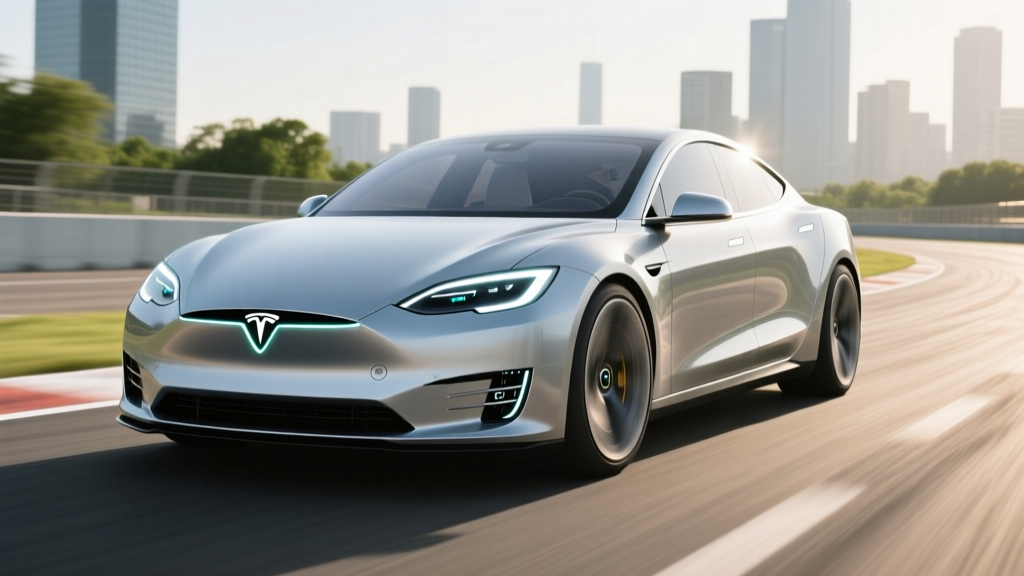
Tesla's AI5 hardware represents the company's most significant compute-platform leap since the transition from Hardware 3 to Hardware 4. While Tesla has not announced a specific vehicle called the "AI5" — the term refers to the fifth-generation Full Self-Driving computer and the vehicle architectures it will enable — the design progress surrounding this chip has major implications for range, efficiency, charging speed, and autonomous capability across the entire Tesla lineup. Here is everything confirmed, estimated, and still speculative about Tesla's AI5 platform as of early 2026.
What Is Tesla AI5 and Why It Matters
AI5 (also referred to as Hardware 5 or HW5) is Tesla's next-generation FSD computer, succeeding the current Hardware 4 (HW4) platform that debuted in early 2023. Elon Musk has stated that AI5 will deliver roughly a 5x improvement in compute performance over HW4, with a focus on neural-network inference speed — the backbone of Tesla's vision-only autonomous driving stack.
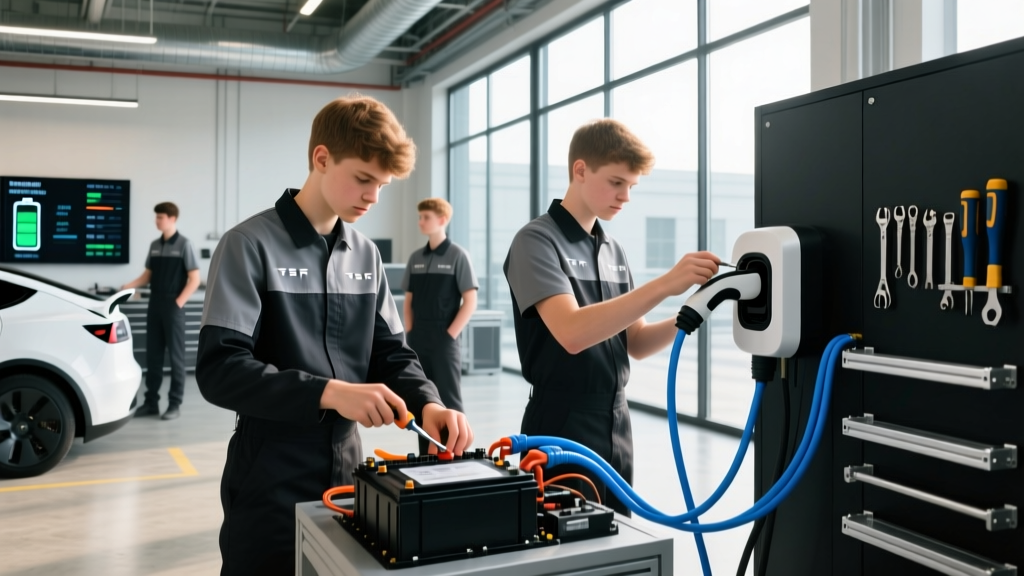
This is not just a chip upgrade. AI5 design progress encompasses the broader electrical architecture, thermal management, sensor suite, and powertrain integration that will debut alongside it. Vehicles built on the AI5 platform are expected to feature:
- Higher-resolution camera arrays (potentially 5+ megapixel sensors with improved low-light performance)
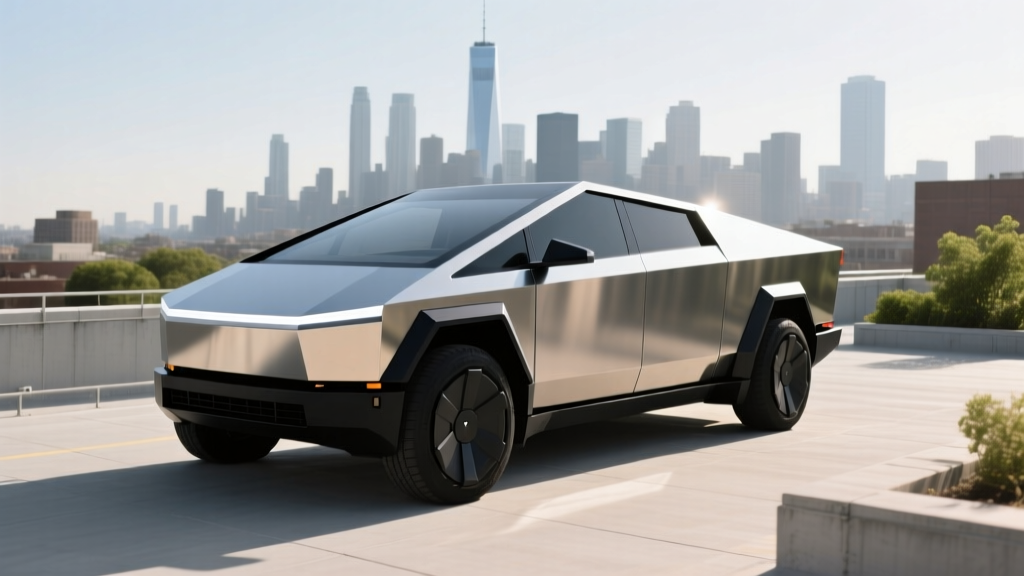
- A redesigned 48-volt low-voltage architecture (expanding on the Cybertruck's pioneering use)
- Next-generation battery packs with potential cell-chemistry and structural improvements
- Enhanced thermal management for sustained high-speed compute without throttling
Expected Vehicle Specs: Range, Battery, and Efficiency
Because AI5 is a platform-level technology, its specs will vary by vehicle model. However, Tesla's engineering trajectory and supply-chain signals point to the following expectations for the first AI5-equipped vehicles (likely a refreshed Model Y or the next-generation compact platform):
| Specification | Estimated (AI5 Platform) | Current HW4 Baseline |
|---|---|---|
| EPA Est. Range | 330–380 mi (Long Range variants) | 310–330 mi (2025 Model Y LR) |
| Battery Capacity | ~78–85 kWh usable | ~75–82 kWh usable |
| Battery Chemistry | NMC (Long Range) / LFP (Standard) | NMC / LFP (by trim) |
| Efficiency | ~120–130 MPGe / 25–27 kWh/100mi | ~115–122 MPGe |
| 0–60 mph | 4.8s (LR AWD) / 3.1s (Performance) | 5.0s / 3.5s |
| Drivetrain | Dual-motor AWD / RWD options | Dual-motor AWD / RWD |
| Horsepower | ~380–500 hp (by trim) | ~346–456 hp |
Tesla's shift toward LFP (lithium iron phosphate) chemistry for Standard Range trims continues with the AI5 generation. LFP offers superior cycle life (3,000+ cycles vs. ~1,500 for NMC), lower cost, and no cobalt — but trades off ~15–20% lower energy density, meaning heavier packs for the same range. NMC remains the choice for Long Range and Performance variants where energy density is critical.
Charging Speed and Infrastructure
Charging remains a top purchase concern, and Tesla's AI5 platform is expected to push DC fast-charge performance further. The 48-volt architecture reduces current for the same power, enabling thinner wiring and potentially faster charge acceptance.
| Charge Level | Power / Rate | Speed |
|---|---|---|
| Level 1 (120V) | ~1.4 kW | ~3–4 mi/hr |
| Level 2 (240V, 48A) | ~11.5 kW | ~35–40 mi/hr |
| DC Fast Charge (Peak) | ~270–325 kW (est.) | 10–80% in ~15–18 min |
| Tesla Supercharger V4 | Up to 350 kW capable | Sustained ~200 kW avg to 80% |
Charging-curve reality check: Peak kW figures are not sustained. A 300 kW peak rate typically applies only between 10–30% State of Charge. Above 50%, the curve tapers significantly, and above 80%, charging slows dramatically to protect battery health. Expect an average rate of roughly 180–210 kW across the full 10–80% session, which is why the 10–80% time (not peak kW) is the meaningful metric.
All AI5-platform vehicles will ship with the NACS (North American Charging Standard) connector natively, giving access to the full Tesla Supercharger network — now the largest and most reliable DC fast-charging network in North America with over 25,000 stalls.
FSD and AI5 Compute Capabilities
The primary driver behind AI5 design progress is Tesla's ambition in autonomous driving. The AI5 chip is expected to feature:
- ~5x inference throughput over HW4, enabling more complex neural networks to run simultaneously
- Dedicated transformer-model accelerators for Tesla's occupancy-network and end-to-end driving models
- Higher-bandwidth memory to handle larger camera-resolution inputs without latency
- Improved redundancy with dual-chip failover for safety-critical scenarios
In practical terms, this means FSD (Supervised) should handle edge cases — construction zones, unprotected left turns, complex intersections — with fewer disengagements. However, Tesla's FSD remains a Level 2 system requiring active driver supervision. The NHTSA continues to monitor Tesla's Autopilot and FSD systems through its Standing General Order for crash reporting.
Pricing, Tax Credits, and Ownership Cost
Exact pricing for AI5-platform vehicles will depend on the specific model. Using the next-generation compact Tesla (often referred to as the "Model 2" or "Redwood" platform) and a refreshed Model Y as reference points:
| Variant | Est. Base MSRP | §30D Credit Eligibility | Effective Price |
|---|---|---|---|
| Standard Range (LFP, RWD) | ~$25,000–$30,000 | Up to $7,500 (if sourcing rules met) | ~$17,500–$22,500 |
| Long Range (NMC, AWD) | ~$38,000–$45,000 | Up to $7,500 (subject to battery sourcing) | ~$30,500–$37,500 |
| Performance (NMC, AWD) | ~$48,000–$55,000 | Up to $7,500 (SUV MSRP cap: $80K) | ~$40,500–$47,500 |
Federal tax credit rules are strict and specific. Under IRS §30D, the full $7,500 credit requires:
- MSRP caps: ≤$55,000 for sedans; ≤$80,000 for SUVs/trucks/vans
- Buyer income limits: AGI ≤$150,000 (single) / ≤$300,000 (joint) / ≤$225,000 (head of household)
- Battery sourcing: Critical minerals and battery components must meet escalating domestic/free-trade-agreement thresholds (increasing annually through 2032)
- Final assembly: Must occur in North America
- Point-of-sale transfer: Eligible buyers can apply the credit as an instant dealer discount rather than waiting for tax filing
Tesla's US-built vehicles typically qualify for at least partial credits, but battery-sourcing compliance — particularly critical-mineral thresholds for China-processed lithium and graphite — remains the most volatile variable. Consult a tax professional before relying on credit eligibility for your purchase decision.
Warranty, Reliability, and Longevity
Tesla's standard warranty structure is expected to carry forward to AI5-platform vehicles:
- Basic vehicle warranty: 4 years / 50,000 miles
- Battery and drive unit: 8 years / 100,000 miles (Standard Range) or 8 years / 120,000 miles (Long Range / Performance)
- Battery retention threshold: Warranty covers replacement if capacity drops below 70% during the warranty period
Real-world battery degradation data from Tesla's fleet shows most NMC packs retain 85–90% capacity after 100,000 miles. LFP packs demonstrate even slower degradation, with many owners reporting 92%+ retention at similar mileage. The AI5 platform's improved thermal management should further reduce degradation rates by keeping cells in their optimal temperature window more consistently.
Who Should Wait for AI5 — and Who Should Buy Now
- You prioritize maximum FSD compute and want the latest autonomous-driving hardware
- You're targeting the next-gen compact platform at the ~$25,000 price point
- Your current vehicle serves you well and you can wait 12–18+ months
- You want 48V architecture benefits (faster charging, lighter wiring, better efficiency)
Buy a current HW4 Tesla now if:
- You need a vehicle within the next 3–6 months
- Current Model Y or Model 3 range (310–363 mi EPA) meets your daily and road-trip needs
- You're satisfied with HW4 FSD performance (which is already capable for most highway and city driving)
- Current pricing and confirmed tax-credit eligibility fit your budget today
Pros
- 5x compute leap enables meaningfully better FSD edge-case handling
- 48V architecture improves efficiency and charge performance
- Expected range bump to 330–380 mi EPA on Long Range variants
- LFP option offers exceptional battery longevity for Standard Range buyers
- Native NACS access to the industry's best charging network
- Potentially class-leading pricing on the compact platform
Cons
- Not yet available — timeline remains uncertain (late 2026 at earliest for first vehicles)
- FSD remains Level 2 despite the "Full Self-Driving" name
- Tax-credit eligibility depends on evolving battery-sourcing rules
- First-generation hardware may have early-production teething issues
- No confirmed specs — all figures above are estimates based on Tesla's trajectory
- Tesla's build-quality consistency remains a known variable vs. legacy OEMs
FAQ: Tesla AI5 Design Progress
What is the real-world range of Tesla AI5-platform vehicles?
Based on Tesla's efficiency trajectory, expect 280–310 miles at highway speeds in moderate weather from a Long Range variant with an EPA estimate of ~350 miles. Cold weather (below freezing) will reduce this to roughly 220–260 miles. Standard Range LFP models will likely deliver 220–250 miles real-world.
How fast will AI5-platform Teslas charge?
Estimated peak DC fast-charge rates of 270–325 kW should deliver a 10–80% charge in approximately 15–18 minutes on a V4 Supercharger. Home Level 2 charging at 11.5 kW (48A, 240V) adds roughly 35–40 miles per hour, fully replenishing overnight.
How much will AI5-platform Teslas cost after tax credits?
If the full $7,500 §30D credit applies, a Standard Range compact could land near $17,500–$22,500, a Long Range around $30,500–$37,500, and a Performance variant near $40,500–$47,500. Eligibility depends on MSRP caps, buyer income limits, and battery-sourcing compliance — verify with a tax professional before purchasing.
Does it qualify for the federal EV tax credit?
Tesla's US-assembled vehicles generally qualify, but the full $7,500 credit depends on battery-component and critical-mineral sourcing thresholds that tighten annually. Point-of-sale transfer is available for eligible buyers. Check current rules at IRS.gov.
Is it worth waiting for AI5 vs. buying a current Tesla?
If you need a car now and current HW4 specs meet your needs, buy now — HW4 FSD is highly capable and current vehicles benefit from confirmed pricing and tax-credit eligibility. If you can wait 12–18 months and want the latest compute, efficiency, and potentially a lower-priced compact model, waiting for AI5 makes sense.
Will AI5 make Tesla vehicles self-driving?
No. AI5 enhances FSD (Supervised), which remains an SAE Level 2 driver-assist system. The driver must remain attentive and engaged at all times. True self-driving (Level 4) requires regulatory frameworks and operational domains that do not yet apply to consumer Tesla vehicles.