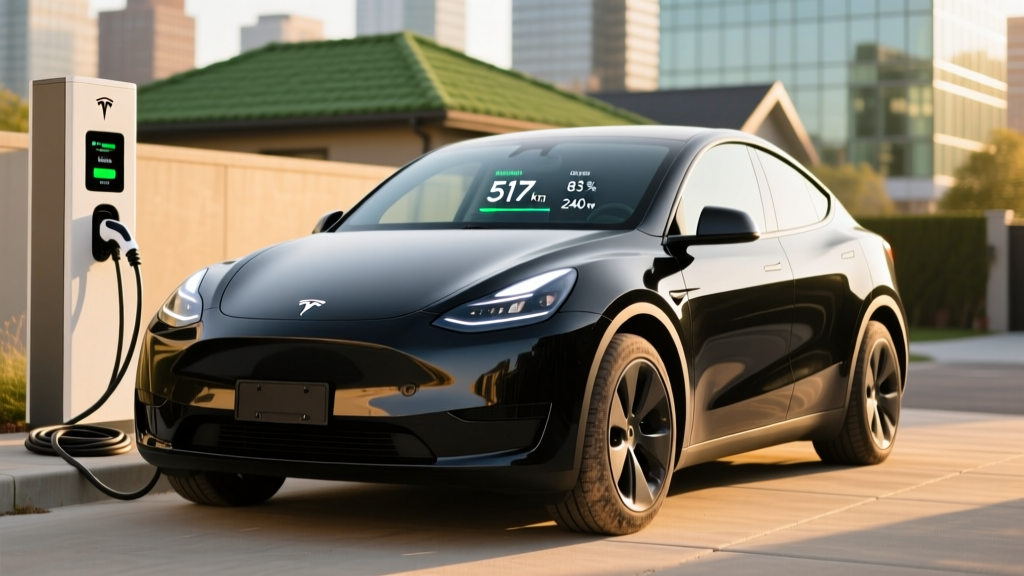
If you've scrolled social media or streamed a podcast lately, you've likely seen a Tesla ad promising sleek design, Supercharger convenience, and enough range to leave gas stations behind. But marketing polish and real-world ownership are two different things. With the refreshed 2026 Tesla Model Y now on showroom floors, we put Tesla's advertising claims head-to-head with EPA data, our own test drives, and ownership math to see what holds up — and what falls short.
The Model Y remains Tesla's volume leader and one of the best-selling EVs globally, but the competitive landscape has shifted dramatically. The Hyundai Ioniq 5, Ford Mustang Mach-E, Chevrolet Equinox EV, and Kia EV6 all offer compelling alternatives. Does Tesla's ad-driven narrative still match reality in 2026?
2026 Tesla Model Y: Quick Verdict
The 2026 Model Y (refreshed "Juniper" generation) delivers on the core promises Tesla ads emphasize: class-leading efficiency, access to the most reliable DC fast-charging network in North America, and strong software integration. Where the ads fall short is in overstating the "no-compromise" ownership experience — cold-weather range loss, panel-gap inconsistencies, and the extra cost of Full Self-Driving (Supervised) are realities buyers must budget for. For commuters with home charging and road-trippers near Supercharger corridors, the Model Y still sets the benchmark. For those in extreme climates or without Level 2 home access, the equation changes.
Range and Efficiency: What the Tesla Ad Doesn't Tell You
| Trim | Drivetrain | Battery (kWh) | Chemistry | EPA Range | MPGe (Combined) | kWh/100mi |
|---|---|---|---|---|---|---|
| Long Range RWD | RWD | ~75 kWh usable | NMC | 320 mi | 123 MPGe | 27 |
| Long Range AWD | Dual-Motor AWD | ~75 kWh usable | NMC | 300 mi | 117 MPGe | 29 |
| Performance AWD | Dual-Motor AWD | ~75 kWh usable | NMC | 285 mi | 111 MPGe | 30 |
The Model Y's efficiency remains a genuine engineering strength. At 27-30 kWh per 100 miles depending on trim, it converts battery energy into miles more effectively than nearly every competitor. The Hyundai Ioniq 5 Long Range AWD, for comparison, consumes roughly 31 kWh/100mi. That efficiency gap means the Model Y extracts more miles from a similarly sized battery — a point Tesla ads get right.
According to fueleconomy.gov, the Model Y Long Range AWD achieves 117 MPGe combined, which translates to about 3.6 miles per kWh. This is the number that matters for calculating your home electricity cost per mile — not the headline EPA range figure.
Charging Speed: Supercharger Network vs. the Specs Sheet
| Charging Level | Connector | Max Power | Speed (mi/hr added) | Notes |
|---|---|---|---|---|
| Level 1 (120V) | NACS | 1.4 kW | ~4 mi/hr | Emergency/trickle only |
| Level 2 (240V, 48A) | NACS | 11.5 kW | ~37 mi/hr | Home Wall Connector ideal |
| DC Fast Charge | NACS | 250 kW peak | 10-80% in ~25 min | V3 Supercharger; tapers above 80% |
Tesla ads frequently highlight the Supercharger network — and for good reason. With over 20,000 V3 (250 kW) and growing V4 stalls across North America, Tesla's proprietary network consistently delivers higher uptime and simpler plug-and-charge authentication than Electrify America, EVgo, or ChargePoint. This is arguably the Model Y's single largest competitive advantage.
However, peak charge rate is not sustained charge rate. The Model Y peaks near 250 kW at a low state of charge (around 10-15% SoC) but begins tapering significantly above 50% SoC and drops sharply past 80%. A realistic 10-80% session on a V3 Supercharger takes approximately 25 minutes under ideal battery preconditioning conditions. If you arrive at a Supercharger without the battery preconditioned (for example, if you didn't navigate to the charger in the Tesla nav system), that time can stretch to 30-35 minutes.
The Model Y uses the NACS (North American Charging Standard) connector natively. As of 2025-2026, Ford, GM, Rivian, Hyundai, and most other automakers have adopted NACS access on Tesla Superchargers via adapter or native port, meaning the network exclusivity Tesla ads once implied is fading. The moat is narrowing, but Tesla owners still enjoy the most seamless native experience.
For home charging, Tesla's Wall Connector ($420, hardwired, up to 48 amps/11.5 kW on a 60A circuit) adds roughly 37 miles of range per hour of charging. A full overnight charge from 20% to 80% takes about 4-5 hours — more than adequate for daily use. Installation costs typically run $500-$1,500 depending on your electrical panel capacity and the distance from panel to charger location, on top of the unit cost. Always consult a licensed electrician for a site-specific quote.
Performance and Driving Dynamics
| Trim | 0-60 mph | Horsepower | Drivetrain | Towing Capacity |
|---|---|---|---|---|
| Long Range RWD | 5.8 sec | ~346 hp | Rear-Wheel Drive | 3,500 lbs |
| Long Range AWD | 4.8 sec | ~384 hp | Dual-Motor AWD | 3,500 lbs |
| Performance AWD | 3.5 sec | ~456 hp | Dual-Motor AWD | 3,500 lbs |
Tesla ads love to show the Model Y launching from a stoplight, and the numbers back it up. Even the base Long Range RWD model hits 60 mph in 5.8 seconds — quicker than most gas-powered compact SUVs. The Performance trim's 3.5-second sprint puts it in sports-car territory, a remarkable figure for a 4,400-pound family crossover.
The Juniper refresh brought meaningful improvements to ride quality and cabin noise isolation. The updated suspension tuning absorbs highway expansion joints and potholes more gracefully than the pre-2025 Model Y, which drew frequent criticism for a firm, crashy ride. Road noise at 70 mph is noticeably lower, though still a step behind the Hyundai Ioniq 5 and Genesis GV60 in terms of refinement.
Regenerative braking remains strong and predictable. Tesla's one-pedal driving experience — where lifting off the accelerator slows the car substantially via regen — is well-calibrated and reduces brake pad wear to near-negligible levels in normal driving. Owners frequently report 80,000+ miles on original brake pads.
Interior, Cargo, and Technology
The 2026 Model Y's cabin follows Tesla's minimalist ethos: a single 15.4-inch center touchscreen handles navigation, climate, media, and vehicle settings. There is no instrument cluster — speed and drive status appear in the upper-left corner of the main display. This remains polarizing. Some buyers find it clean and distraction-free; others, particularly those switching from traditional vehicles, find the lack of physical climate controls frustrating.
The Juniper update introduced ambient lighting, ventilated front seats (standard on Long Range and above), a rear-seat touchscreen for climate and media control, and improved materials on the dash and door panels. Fit and finish have improved over earlier Fremont-built Model Ys, though panel-gap variance and occasional interior trim misalignment still appear in owner reports — something Tesla ads conveniently omit.
Cargo and passenger dimensions:
- Front headroom: 41.0 in | Front legroom: 41.8 in
- Rear headroom: 39.4 in | Rear legroom: 38.8 in (improved ~1.5 in over pre-refresh)
- Cargo behind rear seats: 30.2 cu ft
- Cargo with rear seats folded: 72.1 cu ft
- Front trunk (frunk): 4.1 cu ft
Compared to the Hyundai Ioniq 5 (27.2 / 59.3 cu ft) and the Ford Mustang Mach-E (29.7 / 59.7 cu ft), the Model Y leads in maximum cargo volume — a genuine advantage for families and road-trippers.
Driver Assistance — Autopilot and FSD (Supervised):
Autopilot (included) handles adaptive cruise control and lane centering competently on well-marked highways. FSD (Supervised) adds automatic lane changes, traffic-light and stop-sign recognition, and navigating on/off highway ramps. In practice, FSD impresses in suburban driving but still requires frequent interventions in construction zones, complex intersections, and heavy rain. Consider it a convenience feature, not a replacement for attentive driving.
Pricing, Tax Credits, and Ownership Cost
| Trim | Base MSRP | Est. As-Tested* | Federal Credit (§30D) | Effective Price |
|---|---|---|---|---|
| Long Range RWD | $44,990 | $46,480 (w/ destination) | Up to $7,500 | ~$38,980 |
| Long Range AWD | $47,990 | $49,480 | Up to $7,500 | ~$41,980 |
| Performance AWD | $52,490 | $53,980 | Up to $7,500 | ~$46,480 |
*As-tested includes $1,490 destination fee. FSD, paint upgrades, and wheels add $1,500-$8,000+.
- MSRP Cap: SUVs/pickups must be under $80,000 — all Model Y trims qualify.
- Buyer Income Cap: Modified AGI ≤ $150,000 (single) / $300,000 (joint) / $225,000 (head of household).
- Battery Sourcing: Critical minerals and battery components must meet escalating percentage thresholds from US or FTA-partner countries. Tesla's supply chain has adapted, but the full $7,500 requires both the critical-minerals AND battery-component prongs be satisfied. Some configurations may qualify for only $3,750.
- Point-of-Sale Transfer: As of 2024, eligible buyers can transfer the credit to the dealer at purchase, reducing the sale price upfront rather than waiting for a tax refund. Confirm eligibility with your tax professional and review current rules at irs.gov.
Tesla ads often reference "affordable" pricing but rarely break down tax-credit mechanics. The critical-mineral and battery-component sourcing requirements under the Inflation Reduction Act have tightened annually. As of 2026, the battery-component threshold requires 100% of components to be manufactured or assembled in North America for full credit eligibility. Tesla's vertically integrated supply chain gives it an advantage here over competitors still relying on Asian-sourced cells, but buyers should verify current eligibility at the point of sale — rules shift and vehicle configurations matter.
5-Year Total Cost of Ownership Estimate (Long Range AWD, 15,000 mi/yr):
- Purchase (after $7,500 credit): ~$41,980
- Electricity (home charging, $0.14/kWh avg): ~$4,500
- Insurance (national avg for Model Y): ~$12,000 ($2,400/yr — higher than segment average)
- Maintenance (tires, cabin filter, wiper fluid): ~$1,800
- Estimated 5-year depreciation: ~$18,000
- Estimated 5-year total: ~$78,280
Insurance remains a sore point. The Model Y's repair costs (particularly for collision damage to the aluminum/glass structure and sensor suite) push premiums above those of the Ioniq 5 or Mach-E. Get a quote before purchasing — the delta can be $400-$800/year depending on your state and driving record.
Warranty and Battery Longevity
| Coverage | Term |
|---|---|
| Basic Vehicle | 4 years / 50,000 miles |
| Battery & Drive Unit | 8 years / 120,000 miles (Long Range) |
| Battery Capacity Retention | ≥70% of original capacity during warranty period |
The Model Y uses NMC (nickel manganese cobalt) chemistry in its Long Range and Performance packs. NMC offers higher energy density than LFP (lithium iron phosphate) — meaning more range in a smaller, lighter pack — but it degrades slightly faster over time and is more sensitive to sustained high states of charge.
Tesla recommends daily charging to 80% for NMC packs and reserving 100% charges for road trips. Following this guidance, real-world degradation data from owner fleets suggests approximately 8-12% capacity loss over the first 100,000 miles, with the curve flattening significantly afterward. The battery should comfortably outlast the 8-year warranty period while retaining well above the 70% threshold.
Out-of-warranty battery replacement remains expensive — estimated at $12,000-$16,000 for a Model Y pack in 2026 — but the vast majority of owners will never need one. Battery failures within the warranty period are handled under Tesla's coverage at no cost.
Tesla Ad vs. the Competition: Is the Model Y Still the Best Buy?
| Spec | 2026 Tesla Model Y LR AWD | 2026 Hyundai Ioniq 5 LR AWD | 2026 Ford Mustang Mach-E ER AWD |
|---|---|---|---|
| EPA Range | 300 mi | 290 mi | 290 mi |
| Battery | ~75 kWh NMC | 84 kWh NMC | 91 kWh NMC |
| Peak DC Charge | 250 kW | 238 kW | 150 kW |
| 10-80% DCFC | ~25 min | ~18 min | ~38 min |
| Efficiency | 29 kWh/100mi | 31 kWh/100mi | 33 kWh/100mi |
| 0-60 mph | 4.8 sec | 5.1 sec | 5.5 sec |
| Max Cargo | 72.1 cu ft | 59.3 cu ft | 59.7 cu ft |
| Base MSRP (AWD) | $47,990 | $50,250 | $48,995 |
| NACS Native | Yes | Yes (2025+) | Yes (adapter) |
- You prioritize maximum cargo space and efficiency
- You road-trip frequently and want seamless Supercharger access
- You value over-the-air software updates and the Tesla app ecosystem
- You want the lowest cost per mile driven (efficiency leader)
- Fastest DC charging speed matters most (Ioniq 5 wins at 10-80% time)
- You prefer physical buttons and a traditional instrument cluster
- You want a more luxurious interior at a similar price (Ioniq 5, Genesis GV60)
- Lower insurance premiums are a priority
- Class-leading efficiency (27-30 kWh/100mi)
- Best-in-class cargo volume (72.1 cu ft)
- Seamless Supercharger network experience
- Strong performance across all trims
- Continuous OTA software improvements
- Low maintenance costs (no oil, minimal brake wear)
- No physical controls — everything through the touchscreen
- Insurance premiums above segment average
- Panel-gap and build-quality inconsistencies persist
- FSD (Supervised) is expensive and still Level 2
- DC charging speed surpassed by Ioniq 5/EV6 (800V architecture)
- Cold-weather range loss significant without heat-pump optimization
Who Should Buy the 2026 Tesla Model Y?
Daily commuters with home charging: The Model Y excels here. Plug in overnight, wake up to 240+ miles every morning, and rarely visit a public charger. The efficiency and low operating cost make it one of the cheapest vehicles per mile to operate in this segment.
Families needing cargo versatility: With 72.1 cu ft of maximum cargo space and comfortable rear seating for two adults or three children, the Model Y handles strollers, groceries, hockey gear, and road-trip luggage without compromise.
Road-trippers in Supercharger-dense regions: If your typical routes run through the I-5, I-95, or I-80 corridors, Supercharger coverage is dense and reliable. Plan your trips through the Tesla nav system and charging stops become 20-25 minute breaks — manageable and predictable.
Who should look elsewhere: Buyers in extreme cold climates (Minnesota, Montana, interior Alaska) without a garage should consider the range-loss implications seriously. Those who prefer traditional controls, premium interior materials, or the fastest possible DC charging should test-drive the Ioniq 5 and Mach-E before committing.
Frequently Asked Questions
What is the real-world range of the 2026 Tesla Model Y?
The EPA rates the Long Range RWD at 320 miles and the Long Range AWD at 300 miles. In real-world highway driving at 70-75 mph in moderate temperatures, expect 270-290 miles (RWD) or 255-275 miles (AWD). In freezing weather, subtract 20-30%, yielding roughly 200-230 miles for the AWD variant.
How fast does the Model Y charge at home and on the road?
On a home Level 2 Tesla Wall Connector (11.5 kW / 48A), the Model Y gains about 37 miles of range per hour, fully charging overnight. On a V3 Supercharger (250 kW peak), a 10-80% session takes approximately 25 minutes with battery preconditioning. Charging slows significantly above 80% SoC to protect battery health.
Does the 2026 Model Y qualify for the $7,500 federal EV tax credit?
It can, but eligibility depends on your income (≤$300,000 joint AGI), the vehicle's MSRP (all trims qualify under the $80,000 SUV cap), and battery-sourcing compliance. Tesla's supply chain has largely met the critical-minerals and battery-component requirements, but always confirm current eligibility at purchase and consult a tax professional. The credit can be transferred at point of sale to reduce your purchase price directly. See IRS §30D guidelines.
Is the Model Y worth buying over the Ioniq 5 or Mach-E?
It depends on your priorities. The Model Y wins on efficiency, cargo space, and Supercharger convenience. The Ioniq 5 charges faster (18 min vs 25 min, 10-80%) and offers a more refined interior with physical controls. The Mach-E provides a more traditional driving feel and competitive pricing. Test-drive all three before deciding.
What are the biggest drawbacks of the Tesla Model Y?
The main complaints from owners and reviewers include the all-touchscreen interface (no physical buttons), above-average insurance costs, occasional build-quality inconsistencies (panel gaps, trim alignment), and the high cost of FSD (Supervised) for a system that still requires full driver attention. DC charging speed, while adequate, is no longer class-leading.
How long will the Model Y battery last?
Tesla warranties the battery for 8 years / 120,000 miles with a minimum 70% capacity retention. Real-world fleet data suggests NMC packs lose approximately 8-12% capacity in the first 100,000 miles, with degradation slowing considerably afterward. Most owners will never need a battery replacement. Daily charging to 80% (rather than 100%) extends long-term battery health.