Finding a three-row electric SUV narrows the field fast. Tesla offers two paths to Tesla 7 seats: the flagship Model X, purpose-built with a usable third row, and the more affordable Model Y with an optional third-row seat that transforms it from a five-passenger crossover into a compact family hauler. Both configurations carry real trade-offs in range, cargo flexibility, and third-row comfort that buyers need to understand before signing a purchase agreement.
This review breaks down both 7-seat Teslas side by side — EPA range versus real-world expectations, DC fast-charge curves, home charging economics, and the 2026 federal tax credit landscape under IRS §30D. Whether you're hauling kids to school or planning a six-person road trip, the data below will tell you which configuration actually works.
Tesla 7-Seat Lineup at a Glance: Model X vs Model Y
Tesla sells 7-seat capability across two very different vehicles. The Model X is a full-size premium SUV with a dedicated third row designed for adults on shorter trips. The Model Y's optional third row is best suited for children or compact adults on brief drives. Here's how the numbers stack up for the 2025–2026 model year:
| Specification | Model X Long Range (7-seat) | Model Y Long Range AWD (7-seat option) |
|---|---|---|
| EPA Range | 335 miles | 303 miles (5-seat); ~290 mi est. 7-seat) |
| Battery (usable) | ~100 kWh, NMC | ~75 kWh, NMC |
| Drivetrain | Dual Motor AWD | Dual Motor AWD |
| Horsepower | 670 hp | 384 hp |
| 0–60 mph | 3.8 seconds | 4.8 seconds |
| Max DC Fast Charge | 250 kW (peak) | 250 kW (peak) |
| 10–80% DCFC Time | ~32 minutes | ~27 minutes |
| Level 2 Home Charge | 11.5 kW (~34 mi/hr) | 11.5 kW (~44 mi/hr) |
| MPGe (combined) | 102 MPGe | 122 MPGe |
| Efficiency | 33 kWh/100 mi | 28 kWh/100 mi |
| Cargo (behind 3rd row) | ~15 cu ft (seats up) | ~10 cu ft (seats up, est.) |
| Cargo (all seats folded) | ~85 cu ft | ~72 cu ft |
| Base MSRP (7-seat) | $94,990 (incl. destination) | $51,490 (incl. destination + 7-seat option) |
| Battery Warranty | 8 yr / 150,000 mi | 8 yr / 120,000 mi |
| Vehicle Warranty | 4 yr / 50,000 mi | 4 yr / 50,000 mi |
Real-World Range: What the EPA Sticker Doesn't Tell You
Model X Long Range AWD: EPA 335 miles. Real-world highway (70–75 mph): ~270–290 miles. Cold weather (below 30°F): ~230–260 miles with preconditioning.
Model Y Long Range AWD (7-seat): EPA ~290 miles (estimated with third-row weight/aero penalty). Real-world highway: ~240–260 miles. Cold weather: ~200–230 miles.
Tesla's EPA range figures assume a mix of city and highway driving at moderate temperatures. In practice, the Model X's large frontal area and heavier curb weight (~5,100 lbs) penalize it at sustained highway speeds. On a 300-mile interstate run at 75 mph with climate control active, expect to arrive with roughly 10–15% state of charge remaining — enough buffer, but not generous.
The Model Y, being lighter (~4,400 lbs) and more aerodynamic, holds its range better at speed but starts from a smaller battery. Adding the third-row option adds approximately 75–100 lbs of seat hardware and slightly reduces cargo-area aerodynamics, trimming an estimated 10–15 miles off the 5-seat variant's EPA figure. Neither vehicle uses LFP chemistry in its Long Range AWD configuration — both rely on NMC (nickel manganese cobalt) cells optimized for energy density, which means you should plan to charge to 80% for daily use and 100% only before long trips.
Cold weather is the bigger equalizer. Below freezing, lithium-ion cells lose efficiency, cabin heating draws heavily from the pack, and regenerative braking is limited until the battery warms. Both vehicles include heat pumps (standard since 2021), which recover waste heat and reduce the HVAC penalty — but you should still budget 20–25% range loss in sustained winter conditions according to fueleconomy.gov data and independent cold-weather testing.
Charging Speed: DC Fast Charging and Home Level 2
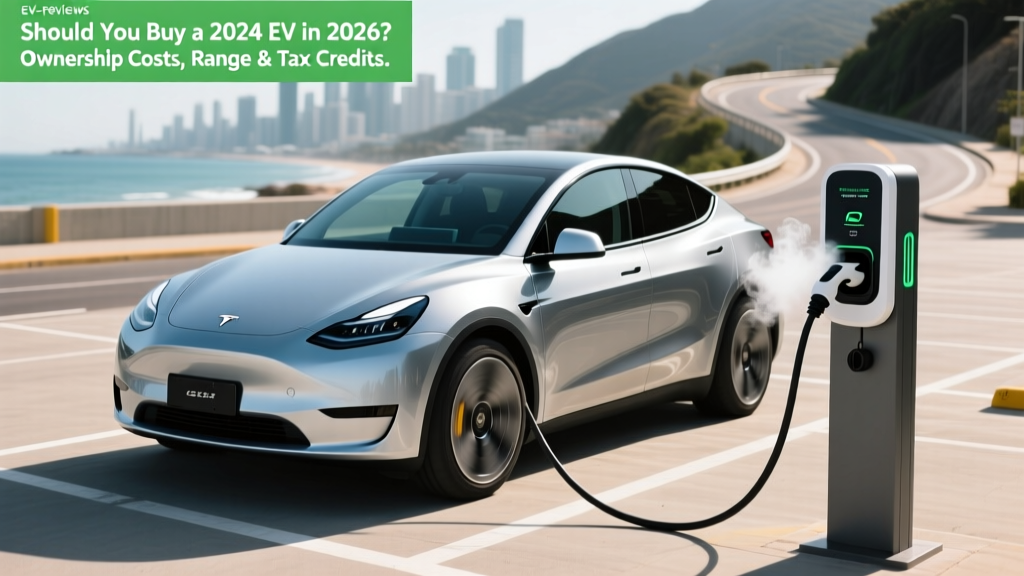
Tesla's Supercharger network remains the most reliable public DC fast-charging ecosystem in North America, with over 6,000 V3 and V4 stalls delivering up to 250 kW. Both the Model X and Model Y peak at 250 kW on V3 Superchargers, but sustained speeds differ due to battery size and thermal management.
| Charging Method | Model X LR AWD | Model Y LR AWD |
|---|---|---|
| DC Fast Charge (peak) | 250 kW | 250 kW |
| 10–80% DCFC Time | ~32 min | ~27 min |
| Miles added in 15 min (DCFC) | ~175 miles | ~185 miles |
| Level 2 Home (Wall Connector) | 11.5 kW / ~34 mi/hr | 11.5 kW / ~44 mi/hr |
| Level 1 (120V outlet) | ~3–4 mi/hr | ~3–4 mi/hr |
The charge curve matters more than peak kW. Both vehicles ramp quickly to peak rate between 10–30% state of charge, then begin tapering. The Model X, with its larger 100 kWh pack, sustains higher absolute kW for longer but takes more total minutes to reach 80%. The Model Y's smaller pack charges through the curve faster, making it the quicker pit-stop vehicle despite identical peak rates.
Above 80% SoC, charging slows dramatically — a physics-driven taper to protect cell longevity. Plan your road-trip stops around 10–80% charges and skip the final 20% unless you need the range to reach your destination or next charger. Tesla's onboard navigation automatically preconditions the battery when a Supercharger is set as your destination, warming the cells to optimal temperature for maximum charge acceptance. Skipping preconditioning in cold weather can add 10–15 minutes to your charge session.
At home, Tesla's Wall Connector on a 60-amp circuit delivers 11.5 kW (48 amps continuous). The Model Y adds ~44 miles of range per hour of charging; the Model X adds ~34. An overnight charge from 20% to 80% takes roughly 5–6 hours for either vehicle — well within a typical overnight window. Installation costs for a dedicated 240V/60A circuit typically range from $800 to $2,500 depending on panel proximity and local permitting, according to industry electrician surveys.
Third-Row Space, Cargo, and Daily Usability
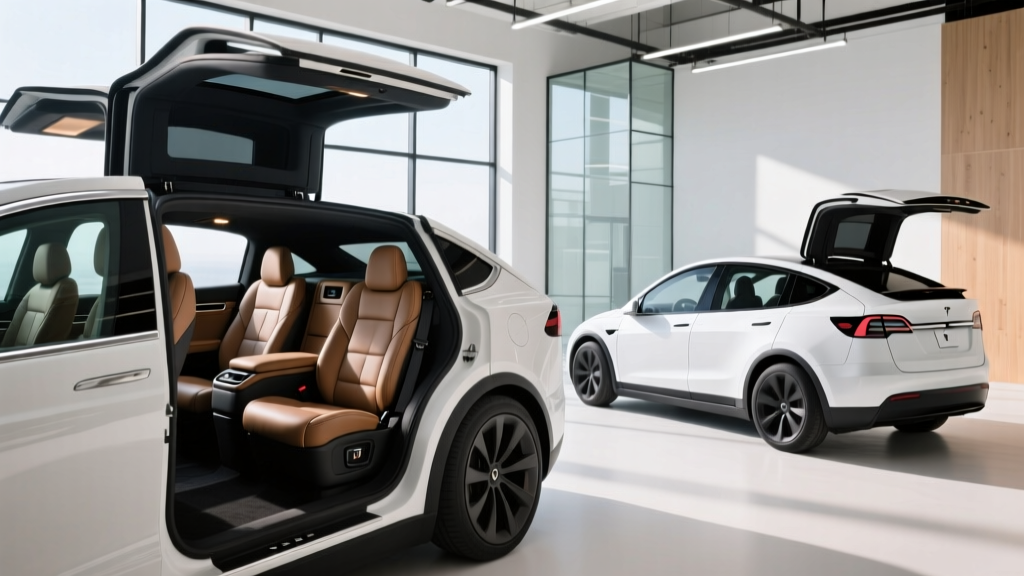
The Model X's third row is a legitimate seating position. Headroom and legroom accommodate adults up to about 5'10" on trips under an hour. The second-row seats slide and recline independently, and the panoramic windshield creates an airy cabin that reduces claustrophobia for third-row passengers. Behind the third row, you get approximately 15 cubic feet of cargo space — enough for a couple of carry-on bags or a week's groceries. Fold the third row flat and cargo capacity jumps to roughly 42 cubic feet; fold both rows and you access up to 85 cubic feet.
The Model Y's optional third row is a different proposition entirely. It's designed primarily for children or compact adults on short trips. Legroom is tight (roughly 26–28 inches), headroom is compromised by the sloping roofline, and access requires folding and sliding the second row. Behind the raised third row, cargo space drops to approximately 10 cubic feet — barely enough for a stroller and a diaper bag. This configuration works for school runs and weekend errands but isn't a road-trip solution for seven people with luggage.
Both vehicles include a front trunk (frunk), though the Model X's is larger (~6.5 cu ft vs ~4.1 cu ft on the Model Y). The Model X also features falcon-wing rear doors, which open vertically and make third-row access significantly easier in tight parking spaces — a genuine functional advantage, not just a styling flourish.
Pricing, Trim Levels, and Federal Tax Credit Eligibility
The cost gap between Tesla's two 7-seat options is substantial. Here's the current pricing landscape:
| Model / Trim | Base MSRP (incl. destination) | §30D Federal Credit | Effective Price (if eligible) |
|---|---|---|---|
| Model Y Long Range AWD + 7-Seat Option | $51,490 | Up to $7,500 (point-of-sale) | ~$43,990 |
| Model X Long Range AWD (7-Seat) | $94,990 | $0 (exceeds MSRP cap) | $94,990 |
| Model X Plaid (7-Seat) | $109,990 | $0 (exceeds MSRP cap) | $109,990 |
Under current IRS §30D rules, the Model Y Long Range AWD may qualify for up to $7,500 in federal tax credits — but only if several conditions are met:
- MSRP cap: The vehicle must have an MSRP at or below $80,000 for SUVs. The Model Y qualifies.
- Buyer income cap: Modified adjusted gross income must not exceed $150,000 (single), $225,000 (head of household), or $300,000 (joint filing).
- Battery sourcing: The credit is split into two halves — $3,750 for critical minerals and $3,750 for battery component sourcing. Tesla's supply chain has shifted significantly, and the exact credit amount varies by production batch. Verify current eligibility on the IRS qualified vehicles list before purchasing.
- Point-of-sale transfer: As of 2024, eligible buyers can transfer the credit to the dealer at purchase, reducing the out-of-pocket price immediately rather than waiting for a tax refund.
The Model X exceeds the $80,000 SUV MSRP cap and does not qualify for the federal purchase credit under any income scenario. Buyers in states like California, Colorado, or Massachusetts may still access state-level rebates or HOV lane perks, but these vary by jurisdiction — check your local DMV or energy office for current programs.
Performance, Efficiency, and Driving Dynamics
Both 7-seat Teslas deliver the instant torque and low center of gravity that define the EV driving experience, but they target different performance envelopes.
The Model X Long Range produces 670 horsepower from its dual-motor setup and sprints to 60 mph in 3.8 seconds — remarkable for a 5,100-pound SUV. The Plaid variant (three motors, 1,020 hp, 2.5-second 0–60) exists for buyers who want supercar acceleration with three rows, though at a steep price premium and further range reduction. The Model X's air suspension adjusts ride height automatically, lowering at highway speeds for efficiency and raising for rough roads or steep driveways.
The Model Y Long Range AWD makes 384 hp and reaches 60 mph in 4.8 seconds. It's the more efficient vehicle at 28 kWh per 100 miles versus the Model X's 33 kWh/100 mi, translating directly to lower per-mile electricity costs. The Model Y rides on a conventional coil-spring suspension (no air suspension option), which is slightly firmer but simpler to maintain long-term.
Both vehicles come standard with Tesla's Autopilot, an SAE Level 2 driver-assistance system that provides adaptive cruise control and lane-centering on highways. It is not self-driving — the driver must keep hands on the wheel and eyes on the road at all times. Tesla's Full Self-Driving (Supervised) package, available as a $8,000 add-on or subscription, extends capability to city streets and stoplights but remains Level 2 and requires full driver attention. For context, only fully driverless robotaxi services like Waymo operate at Level 4.
Standout Tech and Notable Drawbacks
Pros
- Access to Tesla's Supercharger network — the most reliable DCFC ecosystem in North America
- Over-the-air updates continuously add features and improve performance
- Model X falcon-wing doors ease third-row access in tight spaces
- Class-leading efficiency for both vehicles in their respective size segments
- Heat pump standard on both models improves cold-weather range and cabin comfort
- Strong safety ratings from NHTSA (5-star overall for both vehicles)
Cons
- Model X price exceeds $80K MSRP cap — no federal tax credit eligibility
- Model Y third row is cramped; unsuitable for adults or long trips
- Minimal physical controls — all vehicle functions routed through touchscreen
- No Apple CarPlay or Android Auto integration
- Model X charge speed limited to 250 kW peak (some competitors exceed 350 kW on CCS/NACS chargers)
- Insurance premiums run 15–25% above comparable gas-powered SUVs
The Tesla infotainment system is powerful and responsive — a 17-inch landscape touchscreen (Model X) or 15-inch (Model Y) handles navigation, media, climate, and vehicle settings. A rear-seat entertainment screen in the Model X keeps passengers occupied. Netflix, YouTube, and gaming are available while parked. However, the absence of Apple CarPlay and Android Auto frustrates buyers who prefer their phone's ecosystem for maps and music.
Build quality has improved markedly since 2022, with tighter panel gaps and fewer interior rattles, but some owners still report wind noise from the falcon-wing door seals on the Model X at highway speeds. The Model Y's cabin is simpler and more consistent, benefiting from the Fremont and Austin production lines' maturation.
Who Should Buy a 7-Seat Tesla?
Choose the Model X if: You regularly carry more than five passengers, need adult-usable third-row space, want premium features like air suspension and falcon-wing doors, and the ~$95K+ price fits your budget without a federal credit. It's the right pick for large families who road-trip together.
Choose the Model Y with 7-seat option if: You mostly carry five or fewer but occasionally need two extra seats for children, you want to maximize federal tax credit savings, you prioritize efficiency and lower running costs, and your cargo needs are moderate. It's the pragmatic family commuter.
Look elsewhere if: You need seven full-size seats with generous cargo behind them — consider the Rivian R1S (EPA 352 mi, starting ~$79,900) or the Kia EV9 (EPA 304 mi, starting ~$54,900 with NACS adapter access to Superchargers).
For households that only occasionally need seven seats, the Model Y's third-row option at roughly $44,000 after the potential federal credit is one of the most cost-effective electrified family vehicles on the market. For those who need genuine seven-passenger capability daily, the Model X delivers — but at nearly double the price and without federal incentive help.
Frequently Asked Questions
What is the real-world range of the Tesla Model X with 7 seats?
The Model X Long Range AWD carries an EPA rating of 335 miles. In real-world highway driving at 70–75 mph, expect 270–290 miles. In cold weather below 30°F, plan for 230–260 miles even with the heat pump and battery preconditioning active.
How fast does the Model Y 7-seat charge at home and on the road?
On a Tesla V3 Supercharger, the Model Y peaks at 250 kW and charges from 10–80% in approximately 27 minutes. At home on a Level 2 Wall Connector (11.5 kW), it adds roughly 44 miles of range per hour, fully replenishing overnight on a standard 60-amp circuit.
Does the Tesla Model X qualify for the federal EV tax credit?
No. The Model X's MSRP exceeds the $80,000 SUV cap set by IRS §30D, making it ineligible regardless of buyer income. The Model Y, with an MSRP under $80,000, may qualify for up to $7,500 depending on battery sourcing, buyer income, and current IRS qualified vehicle listings.
Is the Model Y third row practical for adults?
No. The Model Y's optional third row is best suited for children or compact adults on trips under 30 minutes. Legroom is roughly 26–28 inches and headroom is limited by the roofline. For regular adult passengers in the third row, the Model X or a competitor like the Rivian R1S is a better choice.
How does Tesla's 7-seat offering compare to the Rivian R1S or Kia EV9?
The Rivian R1S offers a more spacious third row, up to 352 miles of EPA range, and starts around $79,900 — potentially qualifying for the federal credit. The Kia EV9 provides three usable rows at a lower entry price (~$54,900) and now supports NACS charging. The Tesla advantage remains the Supercharger network and over-the-air software maturity, but the competition has closed the gap significantly.
What's the battery warranty on a 7-seat Tesla?
The Model X battery and drive unit are warrantied for 8 years or 150,000 miles (whichever comes first), with a guaranteed minimum 70% capacity retention. The Model Y's battery warranty is 8 years or 120,000 miles at the same 70% threshold. Both cover defects and excessive degradation but not damage from accidents or improper charging.