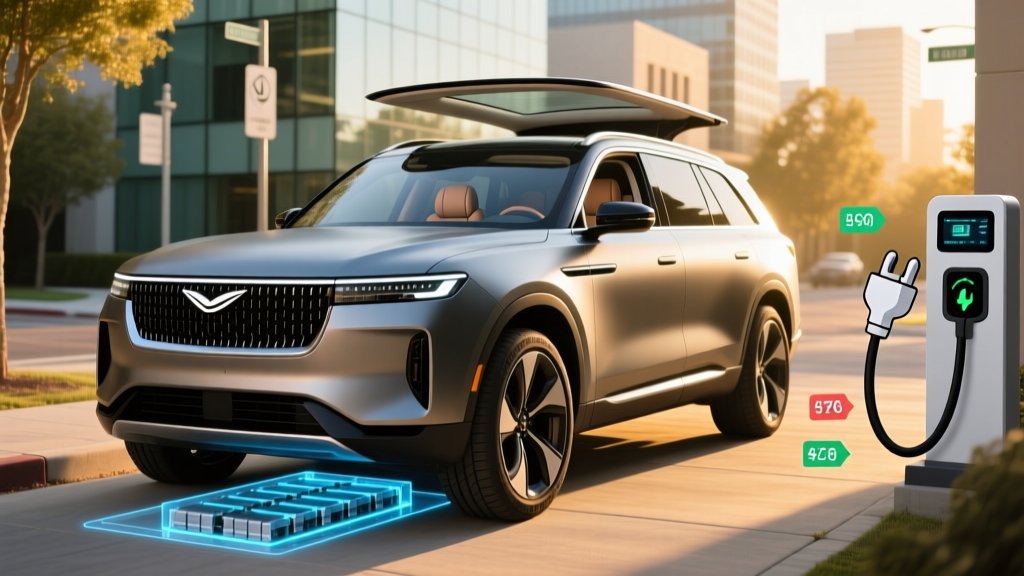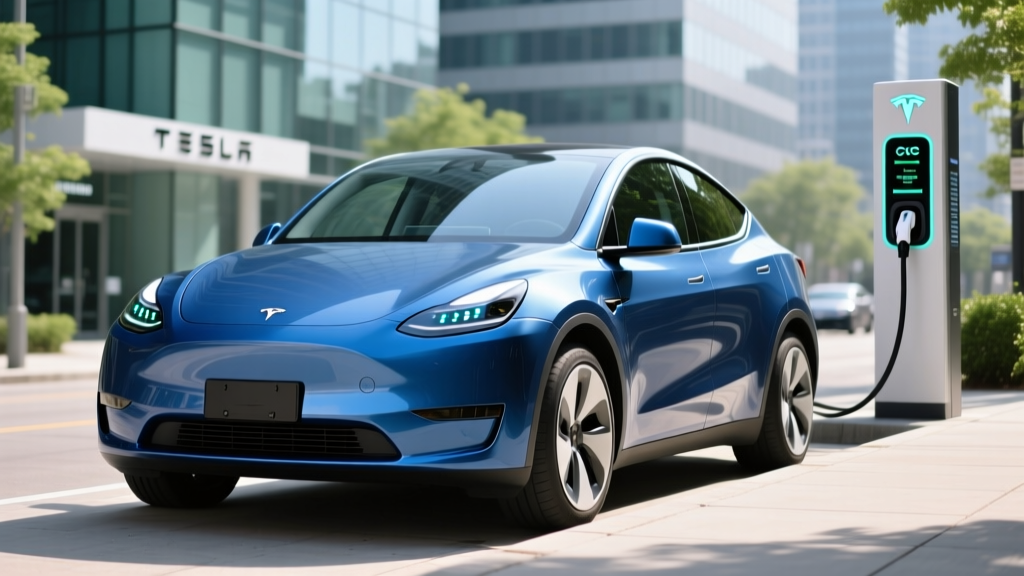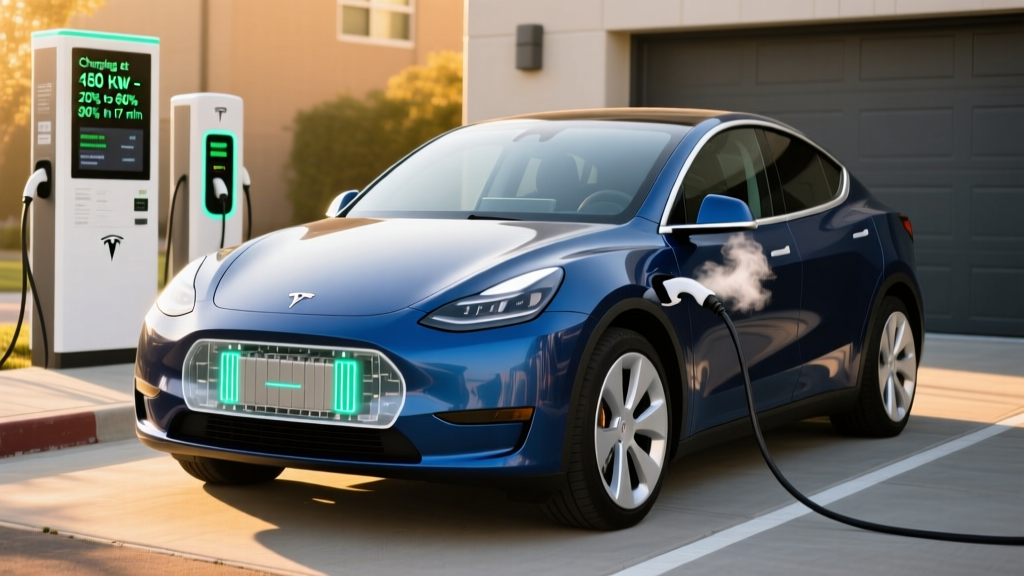
If you've followed Tesla's battery evolution, you've heard the promise: larger-format cells that cut manufacturing cost, boost energy density, and charge faster. The Tesla 4680 cells — named for their 46 mm diameter and 80 mm height — have been rolling off the Austin Gigafactory line and into select Model Y vehicles since 2023. By the 2026 model year, they remain a niche but important part of Tesla's battery strategy, powering the Long Range AWD variant built in Texas. But what does that actually mean for buyers? Below, we dissect real-world range, charging behavior, ownership economics, and whether the 4680-equipped Model Y earns its place in your garage.
2026 Tesla Model Y Long Range AWD (4680) Core Specs
| Attribute | 2026 Model Y Long Range AWD (4680) |
|---|---|
| EPA Range | 320 miles |
| Battery (usable) | ~75 kWh, NMC (Nickel Manganese Cobalt) |
| Cell Format | 4680 cylindrical, tabless electrode design |
| Drivetrain | Dual Motor AWD |
| Horsepower | 384 hp (combined) |
| 0–60 mph | 4.8 seconds |
| Top Speed | 135 mph |
| Max DC Fast Charge | 250 kW (peak) |
| 10–80% DC Charge Time | ~25 minutes |
| Level 2 Home Charge Rate | 11.5 kW (~44 mi/hr) |
| MPGe (city / hwy / combined) | 122 / 105 / 114 MPGe |
| Efficiency | 29 kWh / 100 mi |
| Cargo (behind 2nd row / max) | 30.2 cu ft / 72.1 cu ft |
| Rear Legroom | 40.5 in |
| Battery Warranty | 8 years / 120,000 miles (min 70% retention) |
| Base MSRP | $47,990 (before destination) |
What Are Tesla 4680 Cells and Why Do They Matter?
The 4680 cell is roughly five times larger by volume than the 2170 cells used in most Model 3 and Model Y vehicles. Tesla's stated goals for the format include a 5× increase in energy capacity per cell, a 16% range improvement from form-factor efficiency gains, and a significant reduction in $/kWh at scale. The tabless electrode design reduces internal electrical resistance, which improves thermal management during fast charging and sustained high-power discharge.
In practice, the 2026 Model Y Long Range AWD with 4680 cells uses a structural battery pack — the cells are bonded into a monolithic pack that also serves as a structural floor element. This reduces vehicle weight and part count but makes out-of-warranty pack replacement more complex and costly. The chemistry remains NMC (nickel manganese cobalt), not LFP (lithium iron phosphate), which means higher energy density but also a recommendation to charge to 80% for daily use rather than 100%.
The EPA rates the 4680 Model Y Long Range at 320 miles. In real-world mixed driving at moderate temperatures (65–75°F), expect 285–310 miles. On sustained highway trips at 75 mph, plan for 255–275 miles of usable range. In freezing conditions (below 32°F), range can drop to 220–250 miles due to battery heating demands and cabin HVAC load. Tesla's heat pump mitigates this somewhat compared to resistive heating, but cold-weather loss of 20–30% is typical for NMC packs.
Charging Speed: DC Fast Charging and Home Level 2
The 4680 cell's tabless design was engineered partly for faster charging. The 2026 Model Y Long Range AWD peaks at 250 kW on a V3 Supercharger or compatible CCS/NACS DC fast charger. However, peak rate is not sustained rate — understanding the charge curve is essential for road-trip planning.
| Charging Level | Power / Rate | Time or Miles Added |
|---|---|---|
| Level 1 (120V, 12A) | ~1.4 kW | ~3–4 miles per hour |
| Level 2 (240V, 48A) | 11.5 kW | ~44 miles per hour; full charge in ~7.5 hours |
| DC Fast (peak) | 250 kW | ~175 miles in 15 minutes |
| DC Fast 10–80% | Avg ~160 kW sustained | ~25 minutes |
| DC Fast 80–100% | Tapers sharply to <40 kW | ~30+ additional minutes |
The 4680 pack's thermal characteristics allow it to sustain higher charge rates deeper into the session compared to older 2170 packs, but you'll still see significant taper above 80% state of charge. For road trips, plan your stops around the 10–80% window — charging beyond 80% at a DC fast charger is rarely time-efficient. Preconditioning the battery (which the navigation system initiates automatically when a Supercharger is set as your destination) is critical to achieving peak charge rates, especially in cold weather.
At home on a Tesla Wall Connector or equivalent Level 2 unit at 48 amps, the 4680 Model Y adds roughly 44 miles of range per hour — enough to fully replenish overnight for most commuters.
Performance, Efficiency, and Driving Impressions
The dual-motor AWD powertrain delivers 384 horsepower and a 4.8-second 0–60 mph time. That's brisk for a family crossover and sufficient for confident highway merging. The structural battery pack lowers the center of gravity, and the 4680 Model Y feels planted through corners with minimal body roll. Ride quality has improved over earlier Model Y generations, though it remains firmer than competitors like the Hyundai Ioniq 5 or Ford Mustang Mach-E.
Efficiency is a strong suit. At 29 kWh per 100 miles (combined), the 4680 Model Y is among the most efficient AWD electric crossovers available. For context, that translates to roughly $0.04–0.06 per mile on home electricity (at $0.14/kWh national average) versus $0.12–0.15 per mile for a 28 MPG gas crossover at $3.50/gallon. The 114 MPGe combined rating, per fueleconomy.gov, reflects this efficiency advantage.
Pricing, Trims, and Federal Tax Credit Eligibility
The 2026 Model Y Long Range AWD with 4680 cells starts at $47,990 (plus $1,390 destination, totaling $49,380). This sits below the IRS §30D MSRP cap of $80,000 for SUVs, making it potentially eligible for the full $7,500 federal tax credit — but eligibility is not automatic. Buyers must navigate income caps, battery-sourcing requirements, and critical-mineral thresholds that shift annually.
| Item | Amount |
|---|---|
| Base MSRP (Long Range AWD) | $47,990 |
| Destination Fee | $1,390 |
| As-Tested (with FSD, red paint, 20" wheels) | ~$60,380 |
| Potential §30D Credit (if eligible) | –$7,500 |
| Effective Price After Max Credit | ~$41,880 (base) / ~$52,880 (as-tested) |
§30D Eligibility Checklist (2026 tax year):
- Income caps: Modified AGI ≤ $150,000 (single) / $300,000 (married filing jointly)
- MSRP cap: Vehicle MSRP must not exceed $80,000 (SUV classification)
- Battery sourcing: Increasing percentages of critical minerals and battery components must be sourced from the US or FTA partners — thresholds tighten each year through 2032
- Point-of-sale transfer: Eligible buyers can apply the credit as a down-payment reduction at purchase rather than waiting for tax filing
- Filing: IRS Form 8936 required; consult a tax professional for your specific situation
As of early 2026, Tesla's 4680 cells are manufactured in the US, but the critical-mineral and component sourcing percentages determine whether the full $7,500 or a partial $3,750 credit applies. Check Tesla's website and IRS.gov §30D guidance at the time of purchase, as these requirements are updated annually.
Tech, Interior, and Driver Assistance
The Model Y's interior remains minimalist: a 15.4-inch center touchscreen handles all infotainment, climate, and vehicle controls. There is no instrument cluster — speed and navigation appear on the main screen. A rear 8-inch screen serves second-row passengers. Wireless phone charging, ventilated front seats, and a panoramic glass roof are standard.
Standout features:
- Tesla Supercharger network access (17,000+ stalls in North America) — the most reliable DC fast-charging ecosystem available
- Over-the-air software updates that add features post-purchase
- Sentry Mode dashcam recording and remote climate/preconditioning via app
- Frunk (front trunk) plus 30.2 cu ft rear cargo (72.1 cu ft with seats folded)
Notable drawbacks:
- No physical buttons or stalks — turn signals are on the steering wheel rim, which draws polarized reactions
- Panel-gap consistency has improved but still lags legacy automakers
- Regenerative braking is not adjustable — Tesla enforces strong one-pedal driving with no creep mode customization
- No Apple CarPlay or Android Auto — Tesla's proprietary OS only
Driver assistance (SAE Level 2):
Tesla Autopilot and Full Self-Driving (Supervised) are SAE Level 2 systems. They provide steering, acceleration, and braking assistance but require the driver to remain fully attentive with hands on the wheel (or torque applied). They are not self-driving. Only Level 4 robotaxi services like Waymo operate without a human driver. FSD (Supervised) costs $8,000 upfront or $99/month and adds automated lane changes, traffic-light recognition, and city-street navigation — but driver vigilance is legally and practically mandatory at all times.
Warranty, Longevity, and Battery Degradation
Tesla covers the 4680 battery pack and drive units for 8 years or 120,000 miles (whichever comes first), with a minimum 70% capacity retention guarantee. If the pack degrades below 70% within that window, Tesla will repair or replace it at no cost.
Early data on 4680 degradation is still limited compared to the well-studied 2170 cells. The structural pack design means individual cell replacement is not practical — if a cell fails, the entire pack must be replaced. Out-of-warranty replacement costs for a Model Y pack currently range from $12,000 to $16,000 including labor, though this is expected to decline as 4680 production scales. For daily-use longevity, follow Tesla's recommendation: charge to 80% for routine driving, use 100% only for road trips, and avoid leaving the vehicle at very low or very high state of charge for extended periods.
Who Is the 4680 Model Y Best For?
- You want access to the Supercharger network for hassle-free road trips
- You value top-tier efficiency (29 kWh/100 mi) in an AWD crossover
- You charge primarily at home and need ~44 mi/hr Level 2 replenishment
- You're comfortable with a screen-centric, minimalist interior
- You want a softer ride, physical controls, or Apple CarPlay (Hyundai Ioniq 5, Kia EV6)
- You need 3-row seating (Kia EV9, Rivian R1S)
- You prefer LFP chemistry for daily 100% charging without degradation concern (base Model Y RWD with CATL cells)
Pros and Cons at a Glance
- 320-mile EPA range; real-world efficiency among the best in class
- Supercharger network — unmatched DC charging reliability
- 250 kW peak DC fast charging; 10–80% in ~25 min
- Spacious cargo area (72.1 cu ft max) with usable frunk
- Strong OTA update track record adds features over time
- Below $80K MSRP cap — potential $7,500 §30D credit
- Firm ride quality compared to Hyundai/Kia competitors
- No physical buttons, turn-signal stalks, or CarPlay
- Structural pack complicates out-of-warranty repair
- FSD (Supervised) is expensive ($8,000) and still Level 2
- Cold-weather range loss of 20–30% remains a factor for NMC
- Credit eligibility depends on evolving sourcing rules
Frequently Asked Questions
What is the real-world range of the Tesla 4680 Model Y?
The EPA rates it at 320 miles. In mixed real-world driving at moderate temperatures, expect 285–310 miles. Highway driving at 75 mph drops that to roughly 255–275 miles, and freezing weather can reduce range to 220–250 miles.
How fast does the 4680 Model Y charge?
On a 250 kW DC fast charger (Supercharger V3 or NACS-compatible), it charges from 10–80% in approximately 25 minutes with proper battery preconditioning. At home on a 48A Level 2 charger, it adds about 44 miles of range per hour.
How much does the 4680 Model Y cost after tax credits?
The base MSRP is $47,990 plus destination. If you qualify for the full $7,500 §30D credit (income, sourcing, and MSRP requirements met), the effective price drops to approximately $41,880. Eligibility is not guaranteed — check current IRS rules at purchase time.
Does the 4680 Model Y qualify for the federal EV tax credit?
It potentially qualifies, as its MSRP is below the $80,000 SUV cap. However, the credit amount ($7,500 full or $3,750 partial) depends on battery critical-mineral and component sourcing percentages, which tighten annually. Your personal income must also fall under §30D caps ($150K single / $300K joint). Consult IRS §30D guidance and a tax professional.
Is the 4680 Model Y worth buying vs. competitors?
If Supercharger access, top-tier efficiency, and cargo space are priorities, yes. If you want a softer ride, physical controls, or CarPlay, the Hyundai Ioniq 5 or Kia EV6 are strong alternatives. The 4680 pack's structural design is a long-term durability unknown compared to the more proven 2170 format, which is worth factoring into your decision.
Can I charge the 4680 Model Y to 100% daily?
Tesla recommends against it. NMC chemistry (used in the 4680 cells) degrades faster when held at 100% state of charge. Set your daily charge limit to 80% and reserve 100% for road trips. This is different from LFP-equipped Tesla models, which Tesla recommends charging to 100% regularly.