What "Tesla 2027" Actually Means for Buyers Right Now
If you're researching a "Tesla 2027" vehicle, you're likely encountering a mix of forward-looking model-year speculation, next-generation platform announcements, and the current 2026 lineup that Tesla is actively selling. As of mid-2026, Tesla has not opened orders for any 2027 model-year vehicle. What exists are announced and estimated details about upcoming platforms and refreshes, alongside the mature 2026 Model 3, Model Y, Model S, Model X, and Cybertruck lineups that represent the closest buyable reference points.
This article separates confirmed 2026 specs (which will largely carry into early 2027 production) from what Tesla has publicly signaled about its next-generation, lower-cost platform — often referred to in earnings calls as the "next-gen" or "Redwood" architecture. All projected figures are labeled as such. Confirmed numbers come from EPA / fueleconomy.gov and Tesla's official specification pages.
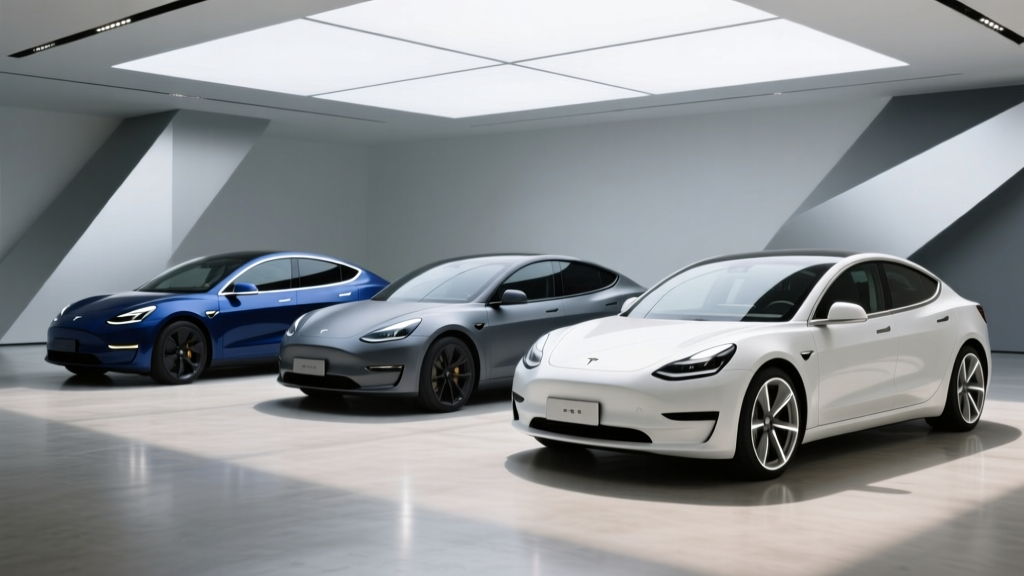
Current Tesla Lineup: The 2026 Baseline Heading Into 2027
Before speculating on 2027 changes, here's where Tesla's production vehicles stand today. These 2026 figures anchor any realistic expectation for 2027 carryover or refresh models.
| Model / Trim | EPA Range | Battery (kWh usable) | Chemistry | Peak DC kW | 10–80% Time | 0–60 mph | HP | Base MSRP |
|---|---|---|---|---|---|---|---|---|
| Model 3 RWD | 272 mi | ~57.5 | LFP | 170 kW | ~25 min | 5.8 s | 271 | $38,990 |
| Model 3 Long Range AWD | 341 mi | ~75 | NMC | 250 kW | ~22 min | 4.2 s | 346 | $42,490 |
| Model Y Long Range AWD | 320 mi | ~75 | NMC | 250 kW | ~23 min | 4.8 s | 384 | $44,990 |
| Model Y Performance | 285 mi | ~75 | NMC | 250 kW | ~23 min | 3.5 s | 510 | $48,990 |
| Model S LR / Plaid | 402 / 396 mi | ~95 | NMC | 250 kW | ~27 min | 3.1 / 1.99 s | 670 / 1,020 | $74,990 / $89,990 |
| Cybertruck AWD | 340 mi | ~123 | NMC | 250 kW (est.) | ~30 min | 4.1 s | 600 | $79,990 |
Sources: fueleconomy.gov, Tesla.com spec sheets. Prices exclude $1,390 destination fee. Specs subject to mid-year adjustments.
The Next-Generation Tesla Platform: Announced Details for 2027–2028
Tesla's most significant upcoming product is the next-generation platform, which CEO Elon Musk has referenced repeatedly in quarterly earnings calls and shareholder meetings. This architecture is designed to underpin a smaller, more affordable vehicle — widely expected to be a compact crossover or hatchback positioned below Model Y in both size and price.
What Tesla Has Publicly Confirmed
- Production timeline: Tesla has targeted initial production of next-gen vehicles at Gigafactory Texas, with early builds anticipated in late 2026 or 2027. Volume production is expected to ramp through 2028.
- Manufacturing approach: The platform uses an "unboxed" assembly process that Tesla claims will reduce factory footprint by ~40% and cut production costs significantly compared to the Model Y line.
- Target price point: Tesla has suggested a starting price around $25,000, though final MSRP at launch may differ based on battery costs, trim configuration, and market conditions.
- Robotaxi variant: Tesla has announced a dedicated "Cybercab" robotaxi built on this platform, featuring no steering wheel or pedals — targeted for SAE Level 4 operation in geofenced areas, pending regulatory approval.
Projected Specs (Preliminary — Not Confirmed)
Based on supply-chain reporting, patent filings, and Tesla's engineering trajectory, industry analysts project the following for the entry-level next-gen vehicle:
- Battery: ~50–55 kWh usable, likely LFP chemistry for the base trim to control cost and maximize cycle life.
- EPA range (estimated): 250–280 miles for the base RWD variant.
- Charging: NACS connector standard, with peak DC fast-charge rates likely in the 170–200 kW range given the smaller pack size and LFP chemistry constraints.
- Performance: Single-motor RWD, ~250 HP, 0–60 mph in approximately 6.0–6.5 seconds.
Real-World Range: What EPA Stickers Don't Tell You
Tesla's EPA range figures are among the most scrutinized in the industry — and for good reason. Real-world results depend heavily on driving style, climate, and route profile.
Model 3 Long Range AWD (EPA 341 mi): Expect ~280–300 mi on sustained highway driving at 70–75 mph. In winter conditions (below 32°F), range drops to ~240–270 mi due to battery resistance and cabin heating demands. City driving with regen braking can exceed the EPA figure, reaching 350+ mi in mild weather.
Model Y Long Range AWD (EPA 320 mi): Highway real-world: ~265–290 mi. Cold weather: ~230–260 mi. The Model Y's taller, less aerodynamic profile costs it ~20–30 mi vs. the mechanically similar Model 3 at highway speeds.
Cybertruck AWD (EPA 340 mi): Highway real-world: ~270–300 mi at 65 mph, but drops sharply above 70 mph due to the truck's flat-panel aerodynamics. Towing a 5,000-lb trailer cuts range roughly in half — expect ~160–180 mi.
Tesla's heat pump (standard on all current models) mitigates cold-weather losses better than resistive heating, but physics still applies: lithium-ion cells lose efficiency below freezing, and cabin heating draws 2–5 kW continuously in deep cold. Preconditioning the battery while plugged in — using the Tesla app's scheduled departure feature — recovers meaningful range by warming the pack before you drive.
Charging Speed: DC Fast, Level 2, and the Supercharger Advantage
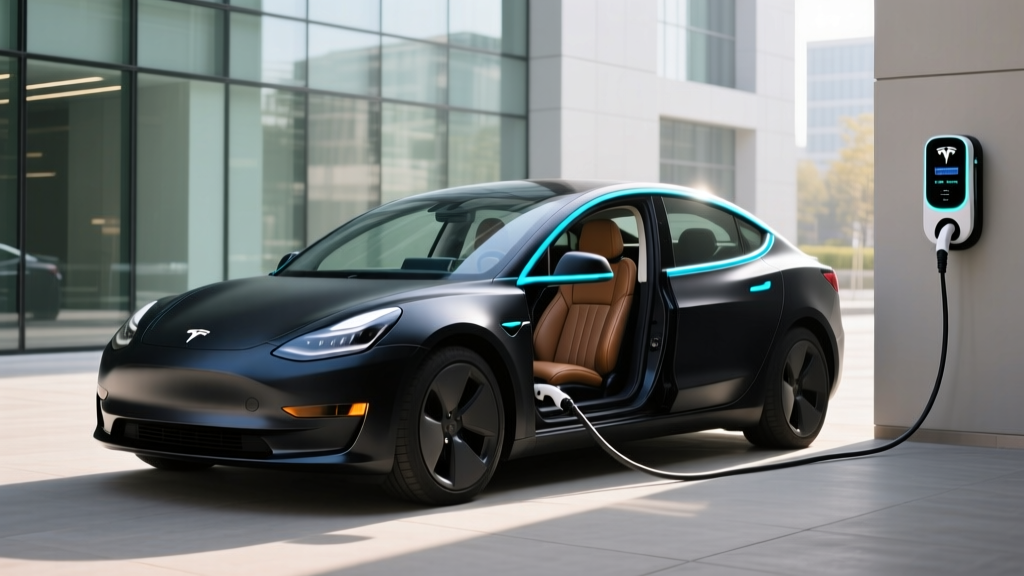
Charging speed remains Tesla's strongest competitive moat. The Supercharger network — now open to non-Tesla EVs via the NACS standard — delivers consistently reliable DC fast charging with minimal downtime compared to third-party networks.
| Charging Level | Power | Typical Miles Added/Hour | Use Case |
|---|---|---|---|
| Level 1 (120V household) | ~1.2 kW | 3–5 mi/hr | Overnight trickle; emergency top-ups |
| Level 2 (240V home, 48A) | ~11.5 kW | 35–44 mi/hr | Daily home charging; full overnight refill |
| DC Fast — V3 Supercharger | Up to 250 kW | ~1,000 mi/hr (peak) | Road trips; 10–80% in ~22–27 min |
| DC Fast — V4 Supercharger | Up to 350 kW (announced) | Higher peak rates | Next-gen stations rolling out 2025–2026 |
Understanding the Charge Curve
Peak kW ratings are not sustained rates. A Model 3 Long Range hitting 250 kW at 10% SoC will taper progressively — dropping to ~150 kW by 50% SoC and ~70 kW by 80%. This is why Tesla quotes 10–80% times rather than 0–100%. Charging past 80% at a DC fast charger is painfully slow; plan to unplug at 80% on road trips and only charge to 100% when you can do so at home on Level 2 overnight.
LFP vs. NMC charging note: Tesla's LFP-equipped vehicles (Model 3 RWD, some Model Y RWD) can — and should — be charged to 100% regularly, as LFP chemistry tolerates full SoC without accelerated degradation. NMC vehicles benefit from daily charging limits of 80–90%, reserving 100% for road-trip departures.
Pricing, Trims, and Federal Tax Credit Eligibility
Tesla's pricing has fluctuated frequently over the past two years. Below are the 2026 base MSRPs and how the federal EV tax credit applies.
| Model / Trim | Base MSRP | MSRP Cap Eligible? | Est. Credit | Effective Price (if eligible) |
|---|---|---|---|---|
| Model 3 RWD | $38,990 | Yes (under $55K sedan cap) | Up to $7,500* | ~$31,490 |
| Model 3 Long Range | $42,490 | Yes | Up to $7,500* | ~$34,990 |
| Model Y LR / Perf | $44,990 / $48,990 | Yes (under $80K SUV cap) | Up to $7,500* | ~$37,490 / $41,490 |
| Model S / X | $74,990+ | Yes (under $80K SUV cap for X; S may exceed sedan cap depending on trim) | Varies* | Check IRS rules |
| Cybertruck | $79,990 | Yes (under $80K truck cap) | Up to $7,500* | ~$72,490 |
*Credit amount depends on battery component and critical mineral sourcing requirements per IRS §30D rules. As of 2026, the credit is split: $3,750 for battery components manufactured in North America and $3,750 for critical minerals sourced from the U.S. or FTA partners. Many Tesla vehicles qualify for the full $7,500, but eligibility can change with supply-chain shifts. Buyer income caps also apply: $150K single / $300K joint modified AGI. The credit can now be transferred to the dealer at point of sale as an instant discount.
- ✅ Vehicle MSRP is under the cap ($55K sedans / $80K SUVs, vans, trucks)
- ✅ Your modified AGI is below $150K (single) or $300K (joint)
- ✅ Battery components meet North American manufacturing threshold
- ✅ Critical minerals meet U.S./FTA sourcing threshold
- ✅ Vehicle is assembled in North America (all U.S.-built Teslas qualify)
- ✅ You have sufficient tax liability to use the credit (or transfer it at point of sale)
Tech, Driver Assistance, and the FSD Conversation
Tesla's technology stack remains a key purchase driver — and a source of confusion. Here's what's standard and what costs extra:
Infotainment & Connectivity
All current Teslas feature a 15.4-inch (Model 3/Y) or 17-inch (Model S/X/Cybertruck) center touchscreen running Tesla's proprietary OS. There is no Apple CarPlay or Android Auto — Tesla's native navigation, Spotify, Netflix (parked), and gaming suite are the only options. Over-the-air updates add features regularly, though some updates have also removed functionality (e.g., ultrasonic sensor visualization was deprecated during the Tesla Vision transition).
Driver Assistance — SAE Level 2, Not Self-Driving
Tesla Autopilot (standard) and Full Self-Driving Supervised ($8,000 add-on or $99/month subscription) are both SAE Level 2 driver-assistance systems. They provide adaptive cruise control, lane centering, and automated lane changes — but the driver must remain fully engaged, hands on or near the wheel, and eyes on the road at all times.
This is not autonomous driving. Tesla FSD does not replace the driver. Only SAE Level 4 services like Waymo One (available in Phoenix, San Francisco, Los Angeles, and Austin as of 2026) operate without a human driver in defined geofenced areas. Confusing Level 2 assist with Level 4 autonomy is a safety risk and a common buyer misconception.
On practical merit, Tesla's Autopilot is among the smoothest and most reliable Level 2 systems available, with consistent lane-keeping and natural-speed adaptive cruise. FSD Supervised adds automated city-street navigation, stop-sign/light recognition, and turn execution — it works well in many scenarios but still requires intervention in construction zones, unusual intersections, and adverse weather. The NHTSA continues to monitor Tesla's driver-monitoring compliance, and buyers should evaluate FSD as a convenience feature, not a replacement for attentive driving.
Interior Space, Cargo, and Daily Practicality
Tesla's minimalist interiors maximize cabin and cargo space through skateboard-platform packaging and the absence of a transmission tunnel.
| Model | Rear Legroom | Cargo (rear seats up) | Cargo (rear seats folded) | Frunk |
|---|---|---|---|---|
| Model 3 | 33.4 in | 23 cu ft | ~56 cu ft (est.) | 3.1 cu ft |
| Model Y | 41.6 in | 30 cu ft | 72 cu ft | 4.1 cu ft |
| Model S | 35.4 in | 28 cu ft | ~63 cu ft (est.) | 5.3 cu ft |
| Cybertruck | ~38 in (est.) | Bed: 6×4 ft | N/A (truck bed) | Front trunk: 7.1 cu ft |
The Model Y is the clear practicality winner for families — its tall roofline, generous rear legroom, and 72 cu ft of flat-load cargo space rival midsize SUVs. The Model 3's 23 cu ft trunk is adequate for a sedan but tighter than competitors like the Hyundai Ioniq 6. Cybertruck's 6-foot bed and 11,000-lb towing capacity serve truck buyers, though its stainless-steel exoskeleton limits aftermarket accessory options.
Battery Warranty, Longevity, and Replacement Costs
Tesla's battery and drive unit warranty is competitive with the industry standard:
- Model 3 / Model Y: 8 years or 120,000 miles (whichever comes first), with a minimum 70% capacity retention guarantee.
- Model S / Model X: 8 years or 150,000 miles, 70% retention.
- Cybertruck: 8 years or 150,000 miles, 70% retention.
In practice, Tesla's NMC and LFP packs have demonstrated strong longevity. Data aggregated from fleet telemetry and owner reports suggests average degradation of ~8–12% over the first 100,000 miles, with the curve flattening significantly thereafter. LFP packs in particular show minimal degradation when regularly charged to 100%, making them well-suited for high-mileage commuters.
Replacement cost context: Out-of-warranty battery replacement for a Model 3/Y currently runs $12,000–$16,000 including labor at Tesla service centers. Model S/X packs run $18,000–$22,000. These costs have been trending downward as cell prices decline, but they remain a material long-term ownership consideration for buyers planning to keep their vehicle past the warranty period.
Pros and Cons: The Honest Tesla Scorecard
- Supercharger network — most reliable DC fast-charging infrastructure in North America
- Industry-leading energy efficiency (Model 3 LR: ~25 kWh/100mi)
- Over-the-air updates continuously add features and refinements
- Strong resale value relative to most EV competitors
- Minimal maintenance: no oil changes, brake wear reduced by regen
- LFP options offer 100% daily charging without degradation anxiety
- No Apple CarPlay / Android Auto — Tesla-only infotainment ecosystem
- Panel gaps and paint quality inconsistency still reported on some builds
- FSD Supervised ($8,000) remains Level 2 — expensive for what it delivers
- Service center wait times can stretch weeks in high-population areas
- Minimalist interior lacks physical controls for climate, wipers, glovebox
- Insurance premiums run 15–30% higher than comparable ICE vehicles
Who Should Buy a Tesla in 2026–2027?
Choose Tesla (Model 3/Y) if:
- You have access to home Level 2 charging and want the lowest per-mile fuel cost
- Road-trip charging reliability is a priority — Supercharger access is unmatched
- You value OTA feature updates and a tech-forward ownership experience
- You want a proven EV platform with extensive real-world reliability data
- You want Apple CarPlay, physical buttons, or a more traditional interior layout
- You need 800V ultra-fast charging (Ioniq 5/EV6: 10–80% in ~18 min at 350 kW chargers)
- You prefer a dealership service model over Tesla's mobile-ranger / service-center approach
- Local Tesla service capacity is limited in your area
- Your budget is under $30,000 and you want a new Tesla specifically
- You're interested in a compact EV with Tesla's software stack at a lower price point
- You can wait 12–24 months for production ramp and early-build quality to stabilize
Frequently Asked Questions
What is the real-world range of a Tesla in 2026?
Real-world range depends on the model, conditions, and driving style. For the Model 3 Long Range (EPA 341 mi), expect ~280–300 mi on highway trips in mild weather and ~240–270 mi in winter. The Model Y Long Range (EPA 320 mi) delivers ~265–290 mi highway. City driving with regenerative braking can exceed EPA estimates by 10–15% in warm conditions.
How fast does a Tesla charge at home and on the road?
At home on a 240V / 48A Level 2 charger (like the Tesla Wall Connector), Teslas add 35–44 miles of range per hour — enough for a full overnight charge. On DC fast charging, V3 Superchargers deliver up to 250 kW, achieving a 10–80% charge in approximately 22–27 minutes depending on the model and battery temperature.
How much does a Tesla cost after the federal tax credit?
A 2026 Model 3 RWD at $38,990 MSRP could cost as low as ~$31,490 after the full $7,500 §30D federal tax credit, assuming you meet income caps ($150K single / $300K joint) and the vehicle meets battery-sourcing requirements. Model Y Long Range drops from $44,990 to ~$37,490 under the same conditions. Always verify current eligibility on IRS.gov before purchasing.
Is a Tesla worth buying versus competitors like the Ioniq 5 or EV6?
Tesla wins on charging infrastructure (Supercharger reliability), energy efficiency, and software. Hyundai/Kia win on charging speed at compatible 350 kW stations (800V architecture), interior ergonomics (physical controls, CarPlay), and dealership service accessibility. The right choice depends on your priorities: if road-trip charging confidence is paramount, Tesla's network advantage is significant. If interior quality and ultra-fast charging matter more, the Ioniq 5 is a strong alternative.
Will the next-gen Tesla platform be available in 2027?
Tesla has targeted initial production for late 2026 or 2027, but volume deliveries may not materialize until 2028. Final specs, pricing, and availability have not been confirmed. Buyers who need a vehicle now should evaluate the current 2026 lineup, which offers strong range, charging, and value — particularly the Model 3 RWD with the federal tax credit.
Does Tesla's FSD make the car self-driving?
No. Tesla FSD (Supervised) is an SAE Level 2 driver-assistance system. The driver must remain fully engaged — hands near the wheel, eyes on the road — at all times. It assists with highway and city-street driving but does not replace the driver. True self-driving (Level 4) is currently only available through robotaxi services like Waymo in select cities.