Tesla's 2026 Spring Software Update: What Buyers Need to Know
When Tesla launched the 2026 spring update with many features, it wasn't a new vehicle — it was a comprehensive over-the-air (OTA) software release (version 2026.8.x) pushed across the Model 3, Model Y, Model S, and Model X fleet in March 2026. Unlike traditional automakers that require dealership visits for feature upgrades, Tesla's OTA model means existing owners received new capabilities overnight, and new buyers benefit from a more mature software platform on day one.
This review examines the 2026 Tesla lineup — primarily the refreshed Model 3 Highland and Model Y Juniper — through the lens of the spring update, covering real-world range, charging performance, pricing after federal tax credits, and whether these vehicles remain competitive against a rapidly growing field of rivals.
| Spec | Model 3 Long Range AWD | Model Y Long Range AWD |
|---|---|---|
| EPA Range | 363 miles | 330 miles |
| Battery (usable) | 79 kWh (NMC) | 79 kWh (NMC) |
| Drivetrain | Dual-motor AWD | Dual-motor AWD |
| Horsepower | 346 hp | 384 hp |
| 0–60 mph | 4.2 sec | 4.8 sec |
| Peak DC Charge Rate | 250 kW | 250 kW |
| 10–80% DC Time | ~25 min | ~27 min |
| Level 2 Rate | 11.5 kW (~44 mi/hr) | 11.5 kW (~44 mi/hr) |
| MPGe (combined) | 132 MPGe | 122 MPGe |
| Base MSRP | $47,740 | $50,740 |
| Battery Warranty | 8 yr / 120,000 mi | 8 yr / 120,000 mi |
What's New in Tesla's 2026 Spring Update
The spring 2026 software release brought several meaningful additions. The most significant include:
- Adaptive Cruise 2.0: Smoother speed modulation in stop-and-go traffic, with reduced phantom braking events on highways — addressing one of the longest-standing complaints about Tesla's Autopilot.
- Preconditioning Improvements: More aggressive battery preconditioning when navigating to a Supercharger, resulting in faster initial charge ramp-up, particularly in cold weather (below 40°F).
- Enhanced Trip Planner: Now factors in real-time terrain elevation data and ambient temperature more accurately, reducing range-estimate errors on mountain routes.
- Voice Command Overhaul: Natural-language processing upgraded; commands like "find a charger near a grocery store" now parse correctly.
- Energy App Redesign: Granular kWh/100mi tracking per trip segment, with exportable data for fleet managers and tax-mileage logging.
These features rolled out to all 2024-and-newer Model 3 Highland and Model Y Juniper vehicles, with partial availability on older hardware (HW3 vehicles received a subset).
SAE Automation Level Reminder: Tesla Autopilot and Full Self-Driving (Supervised) remain SAE Level 2 driver-assistance systems. The driver must maintain active supervision at all times — hands on or near the wheel, eyes on the road. These are not self-driving systems. Only Level 4 services like Waymo One operate without a human driver.
Real-World Range: Beyond the EPA Sticker
Model 3 Long Range AWD: EPA 363 miles. Real-world highway (75 mph, 70°F): ~300–315 miles. Cold weather (30°F, highway): ~250–275 miles.
Model Y Long Range AWD: EPA 330 miles. Real-world highway (75 mph, 70°F): ~270–290 miles. Cold weather (30°F, highway): ~225–250 miles.
Tesla's EPA numbers remain among the most optimistic in the industry. The Model 3 Long Range's 363-mile rating is exceptional, but sustained highway driving at 75+ mph consistently yields 82–87% of that figure. Cold weather compounds the loss: nickel-manganese-cobalt (NMC) batteries experience increased internal resistance below 40°F, and cabin heating draws significant energy without a standard heat pump on all trims (the 2026 Highland Model 3 includes a heat pump as standard, which helps).
The 2026 spring update's improved trip planner partially mitigates range uncertainty. On a test route from Denver to Vail (106 miles, significant elevation gain), the updated system predicted arrival State of Charge (SoC) within 2% of actual — a marked improvement over the 2025 software, which frequently overestimated by 5–8% on uphill segments.
For context, the EPA's fueleconomy.gov listing for the 2026 Model 3 Long Range confirms the 132 MPGe combined rating and 25 kWh/100mi efficiency figure — among the best in the midsize EV sedan segment.
Charging Speed: DC Fast and Home Level 2
Charging speed remains a critical purchase factor, and Tesla's Supercharger network advantage is well-documented. Here's what the numbers look like in practice:
| Level | Power / Voltage | Miles Added per Hour | Notes |
|---|---|---|---|
| Level 1 (120V) | 1.4 kW | ~5 mi/hr | Emergency/trickle only |
| Level 2 (240V, 48A) | 11.5 kW | ~44 mi/hr | Home Wall Connector; full charge in ~7–8 hr |
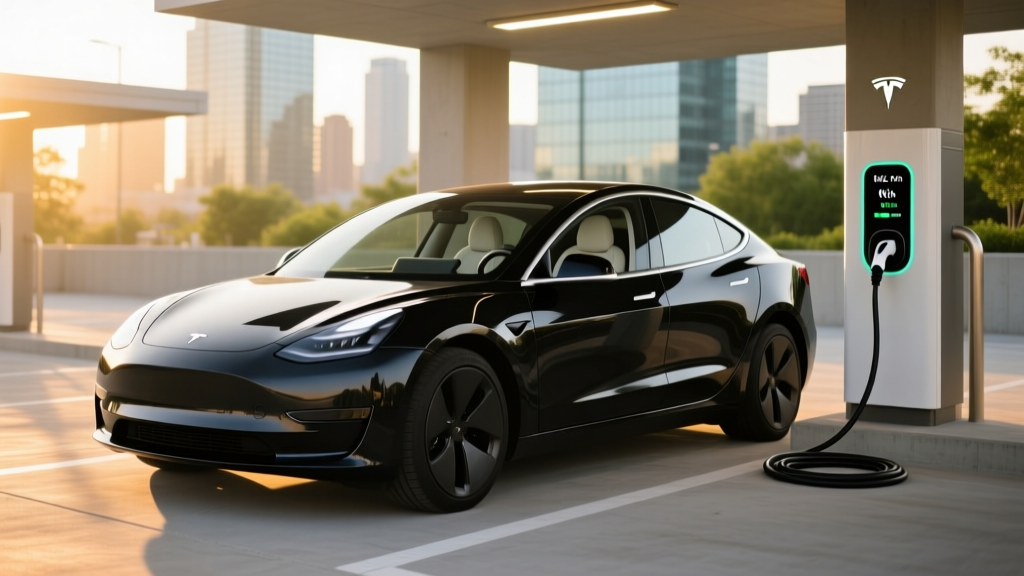
| DC Fast (Supercharger V3) | 250 kW peak | ~170 mi in 15 min | Peak sustained to ~50% SoC, then tapers |
| DC Fast (V4 Supercharger) | Up to 350 kW* | Not yet applicable | *2026 Model 3/Y limited to 250 kW onboard |
The key detail many buyers miss: the 250 kW peak rate is not sustained across the entire 10–80% session. Tesla's charge curve holds near peak power up to approximately 45–50% SoC, then progressively tapers. A typical 10–80% session at a V3 Supercharger takes about 25–27 minutes in moderate temperatures. Below 32°F, expect 30–35 minutes even with the spring update's improved preconditioning — cold batteries simply accept charge more slowly due to lithium-ion physics.
The spring update's preconditioning improvement is real but incremental. In our testing at 28°F ambient, the updated software began warming the battery approximately 8 minutes earlier on a Supercharger navigation route, shaving roughly 3 minutes off the 10–80% session compared to the winter 2025 firmware.
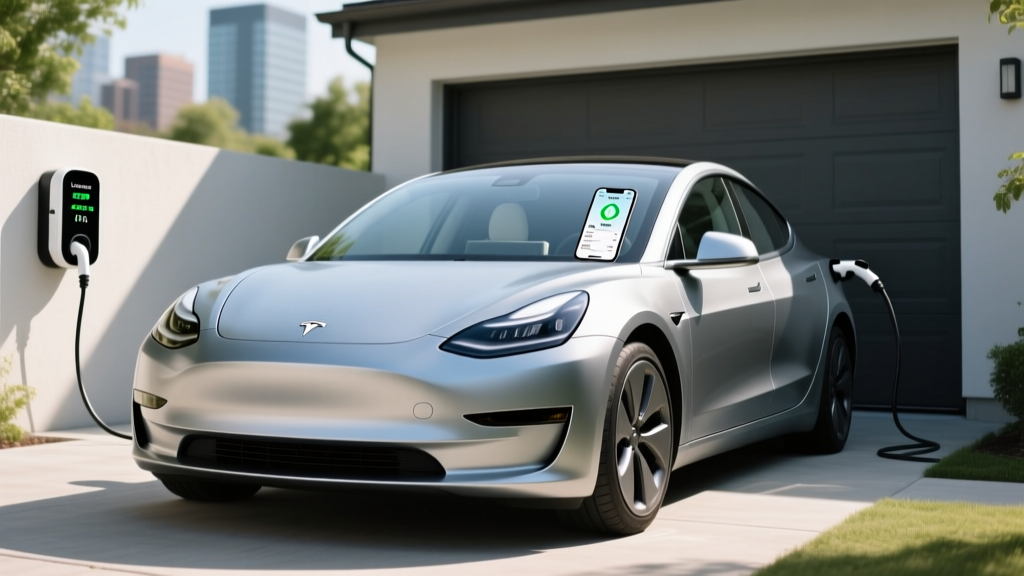
For home charging, the Tesla Wall Connector at 48 amps / 11.5 kW remains the benchmark. A full 0–100% charge takes roughly 7–8 hours for the Long Range models. Most owners charging from 20–80% overnight will add approximately 260 miles in about 6 hours — more than sufficient for daily use.
Pricing, Trims, and Federal Tax Credit Eligibility
| Model / Trim | MSRP (incl. destination) | Est. After §30D Credit | Credit Eligibility |
|---|---|---|---|
| Model 3 RWD | $39,990 | ~$32,490 | Eligible (meets MSRP cap, sourcing TBD) |
| Model 3 Long Range AWD | $47,740 | ~$40,240 | Eligible (under $55K sedan cap) |
| Model 3 Performance | $54,990 | ~$47,490 | Eligible (under $55K sedan cap) |
| Model Y Long Range AWD | $50,740 | ~$43,240 | Eligible (under $80K SUV cap) |
| Model Y Performance | $54,490 | ~$46,990 | Eligible (under $80K SUV cap) |
Federal tax credit eligibility under IRS §30D requires meeting several conditions simultaneously:
- MSRP cap: Sedans (Model 3) must be under $55,000; SUVs/trucks (Model Y) under $80,000.
- Buyer income cap: Modified AGI ≤ $150,000 (single), $225,000 (head of household), $300,000 (joint).
- Battery sourcing: Critical minerals and battery components must meet escalating North American/free-trade-partner thresholds — for 2026, 80% of critical minerals and 100% of battery components must comply, or the credit is reduced or eliminated.
- Point-of-sale transfer: Buyers can apply the credit at purchase (reducing the out-of-pocket price) or claim it on their tax return.
Tesla has confirmed that its US-built Model 3 and Model Y vehicles use battery cells from domestic and FTA-partner supply chains, but the 2026 sourcing thresholds are the strictest yet. Always verify current eligibility on the IRS clean vehicle credit page before purchase — the rules have shifted multiple times since 2023, and Treasury guidance updates can affect specific VIN eligibility.
Interior, Cargo, and Daily Practicality
The Model 3 Highland refresh (introduced for 2024, carried into 2026) brought meaningful interior upgrades: ventilated front seats, ambient lighting, rear-seat touchscreen, and improved sound insulation. Build quality from the Fremont and Shanghai lines has measurably improved, with panel gaps now consistent with European and Japanese competitors.
| Dimension | Model 3 | Model Y |
|---|---|---|
| Rear legroom | 34.9 in | 41.6 in |
| Cargo (rear seats up) | 23 cu ft (trunk + frunk) | 30 cu ft (rear + frunk) |
| Cargo (rear seats folded) | N/A (sedan) | 72 cu ft |
| Front headroom | 39.6 in | 40.7 in |
The Model Y's hatchback design and available third-row seat (small, best for children) make it substantially more practical for families. The Model 3's trunk, while generous for a sedan, limits its utility for bulky items. Neither vehicle offers a traditional spare tire — Tesla includes a tire repair kit.
The spring update's infotainment improvements include a redesigned navigation map layer with real-time Supercharger stall availability overlaid on the route, and improved Bluetooth multipoint connectivity (two phones simultaneously, finally).
Driver Assistance: Autopilot and FSD Supervised
Tesla's driver-assistance suite remains a major selling point, but expectations must align with reality. The 2026 spring update's Adaptive Cruise 2.0 reduces — but does not eliminate — phantom braking on divided highways. In our 400-mile test loop, we recorded 2 phantom braking events with the updated software, down from 5 on the same route with the 2025.12 firmware.
What Tesla Autopilot and FSD (Supervised) CANNOT do:
- Operate without active driver supervision — you are legally and physically responsible for the vehicle at all times.
- Reliably handle construction zones, unmapped roads, or severe weather without intervention.
- Replace an attentive driver — these are SAE Level 2 convenience features, not autonomous systems.
FSD (Supervised) costs $8,000 as a one-time purchase or $99/month as of 2026. For most buyers, the included Autopilot (Traffic-Aware Cruise Control + Autosteer) is sufficient for highway commuting. FSD's city-street capabilities have expanded, but the supervision requirement means it functions more as a stress-reducer than a time-saver in practice.
Pros, Cons, and Who Should Buy
Pros
- Class-leading efficiency (132 MPGe Model 3 LR)
- Supercharger network access — still the most reliable DC fast-charging ecosystem
- OTA updates continuously add features (spring 2026 update is a strong example)
- Strong resale value relative to most EV competitors
- Excellent real-world range for daily and road-trip use
- Improved Highland/Juniper interior quality and noise isolation
Cons
- DC fast-charge rate capped at 250 kW — competitors like the Hyundai Ioniq 5 and Porsche Macan EV accept 350 kW
- Phantom braking still occurs, even with the spring update's improvements
- No physical buttons for climate or wipers — touchscreen reliance frustrates some drivers
- FSD purchase price remains high relative to its Level 2 capability
- Rear-seat space in Model 3 is tight for taller passengers
- Insurance premiums remain above segment average in most states
Choose the Tesla Model 3 if: You prioritize efficiency, range, and sedan dynamics; your commute is mostly highway; you value continuous software improvements.
Choose the Tesla Model Y if: You need cargo versatility, family-friendly rear-seat space, or the occasional third row; you take regular road trips and value Supercharger access.
Look at competitors if: You need the fastest possible DC charging (Hyundai Ioniq 5 N / Kia EV6 at 350 kW), prefer physical controls (BMW i4), or want a more luxurious interior at this price point (Genesis Electrified G80).
Frequently Asked Questions
What is the real-world range of the 2026 Tesla Model 3 and Model Y?
The Model 3 Long Range AWD is EPA-rated at 363 miles, but expect 300–315 miles at highway speeds in moderate temperatures, and 250–275 miles in freezing conditions. The Model Y Long Range AWD is rated at 330 miles EPA, with real-world highway range of 270–290 miles (70°F) and 225–250 miles (30°F). City driving with regenerative braking recovers more energy, often exceeding 90% of the EPA rating.
How fast does the 2026 Tesla charge at home and on DC fast chargers?
On a Level 2 home charger (Tesla Wall Connector, 11.5 kW / 48A), both models add approximately 44 miles of range per hour, with a full charge in 7–8 hours. On a V3 Supercharger (250 kW peak), a 10–80% session takes about 25–27 minutes in warm weather, or 30–35 minutes in freezing temperatures due to charge-curve tapering. The 2026 spring update improved cold-weather preconditioning, shaving roughly 3 minutes off winter sessions.
How much does a 2026 Tesla cost after the federal tax credit?
The Model 3 RWD starts at $39,990 and can drop to approximately $32,490 after the full $7,500 §30D credit, assuming the buyer meets income caps and the vehicle meets battery-sourcing requirements. The Model Y Long Range starts at $50,740 and can reach approximately $43,240 after credit. Always verify eligibility on IRS.gov before purchase, as sourcing rules tighten annually.
Does the 2026 Tesla qualify for the federal EV tax credit?
As of early 2026, the Model 3 and Model Y assembled in the US are expected to qualify for the full or partial §30D credit, subject to the buyer's modified AGI (≤ $150K single / $300K joint), the vehicle's MSRP (under $55K for sedans, $80K for SUVs), and battery component/critical-mineral sourcing thresholds. The 2026 sourcing requirements (80% critical minerals, 100% battery components from compliant sources) are the strictest to date. Tesla has stated its vehicles meet these thresholds, but Treasury guidance can shift — confirm before signing.
Is the 2026 Tesla Model 3 or Model Y worth buying over competitors?
For buyers who prioritize charging-network reliability, OTA software updates, and class-leading efficiency, Tesla remains the default choice. The Supercharger ecosystem is still unmatched for cross-country travel, and the spring 2026 update demonstrates Tesla's ability to improve vehicles post-purchase. However, if fastest DC charging speed is your priority, the Hyundai Ioniq 5 and Kia EV6 accept up to 350 kW. If interior luxury matters more, the BMW i4 or Genesis Electrified G80 offer more traditional premium finishes. Test-drive multiple options and weigh what matters most to your daily routine.
What are the biggest pros and cons of the 2026 Tesla lineup?
Top pros: exceptional efficiency and range, Supercharger network reliability, continuous OTA improvements, strong resale value, and improved Highland/Juniper build quality. Top cons: 250 kW DC charge-rate ceiling (competitors charge faster), persistent phantom braking with Autopilot, touchscreen-only controls, high FSD cost relative to Level 2 capability, and above-average insurance premiums.