Quick Verdict: Still the Segment Benchmark
The Tesla 2024 Model Y remains the default crossover EV for American buyers who want a proven charging network, class-leading efficiency, and a software ecosystem that no legacy automaker has matched. With an EPA range of up to 310 miles, a peak DC fast-charge rate of 250 kW, and a starting MSRP of $44,990 before incentives, it occupies a sweet spot that competitors like the Ford Mustang Mach-E, Hyundai Ioniq 5, and Kia EV6 are still chasing. But the 2024 refresh — which brought subtle suspension tuning, new Juniper-adjacent interior materials, and a revised wheel lineup — didn't overhaul the formula. It refined it. Whether that's enough depends on what you value: raw interior luxury, charging speed, or long-term software support.
| Spec | Long Range RWD | Long Range AWD | Performance AWD |
|---|---|---|---|
| EPA Range | 310 mi | 295 mi | 285 mi |
| Battery (usable) | ~75 kWh (NMC) | ~75 kWh (NMC) | ~75 kWh (NMC) |
| Drivetrain | Rear-Wheel Drive | Dual-Motor AWD | Dual-Motor AWD |
| Horsepower | 346 hp | 384 hp | 456 hp |
| 0–60 mph | 6.5 sec | 4.8 sec | 3.5 sec |
| MPGe (combined) | 123 MPGe | 117 MPGe | 111 MPGe |
| Efficiency | 27 kWh/100 mi | 29 kWh/100 mi | 30 kWh/100 mi |
| Max DC Charge Rate | 250 kW | 250 kW | 250 kW |
| 10–80% DC Time | ~27 min | ~27 min | ~27 min |
| Level 2 (11.5 kW) | ~44 mi/hr | ~44 mi/hr | ~44 mi/hr |
| Base MSRP | $44,990 | $47,990 | $51,490 |
| Battery Warranty | 8 yr / 120,000 mi | 8 yr / 120,000 mi | 8 yr / 120,000 mi |
Range and Efficiency: EPA Numbers vs. Reality
Real-World Expectation: 260–280 mi on the highway at 70+ mph; 220–250 mi in freezing temperatures with cabin heat running. City driving with regenerative braking recovers closer to the sticker figure.
The Long Range RWD variant, reintroduced in early 2024, delivers the best range in the lineup at 310 miles EPA. The Long Range AWD drops that to 295 miles, while the Performance trim sits at 285 miles. These are strong numbers, and Tesla's efficiency remains a standout — the Model Y consumes just 27 kWh per 100 miles in the RWD configuration, which translates to roughly 3.7 miles per kWh. That's measurably better than the Ioniq 5 AWD (31 kWh/100 mi) and competitive with the Mach-E Extended Range.
But the EPA sticker isn't the full story. On a sustained 75-mph highway run in moderate temperatures (55–75°F), expect roughly 260–280 miles before the buffer runs dry. In sub-freezing conditions, cabin heating and battery thermal management can reduce range by 20–30%, dropping effective highway range to 220–250 miles. Tesla's heat pump, standard on all 2024 trims, mitigates some of this loss compared to resistive heaters, but the physics of cold-weather driving still apply. Owners in northern climates should plan charging stops accordingly on trips over 200 miles in winter.
For detailed efficiency data, see the EPA's fueleconomy.gov listing for the 2024 Model Y.
Charging: 250 kW Peak, But the Curve Matters
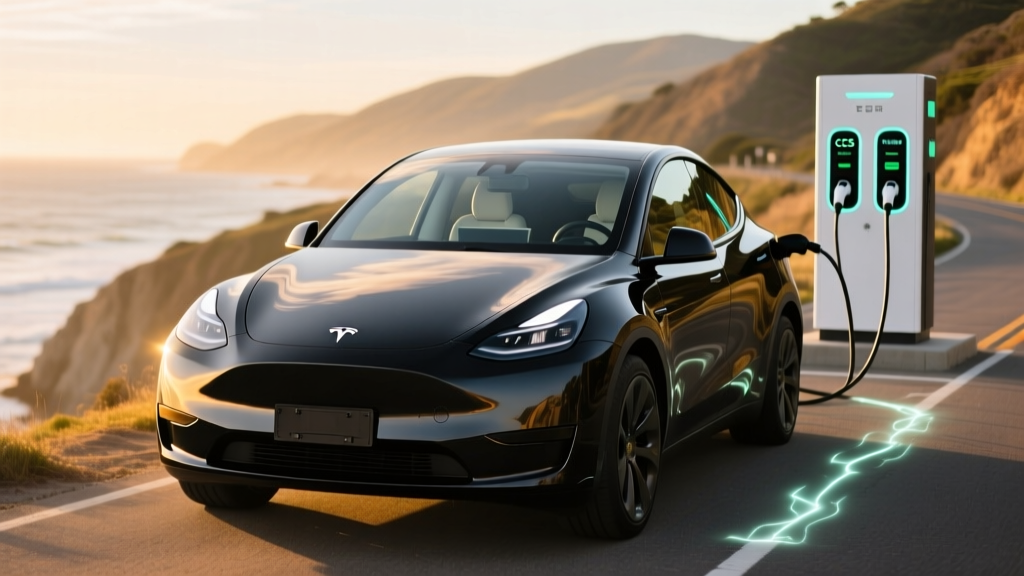
The 2024 Model Y uses a NACS (North American Charging Standard) connector natively, meaning direct access to Tesla's Supercharger network — over 6,000 V3 and V4 stalls across the US. At a V3 Supercharger, the Model Y peaks at 250 kW, but that peak is only sustained between roughly 10% and 30% state of charge (SoC). The charge curve tapers progressively: by 50% SoC, you're typically seeing 120–140 kW, and above 80%, it drops to under 50 kW to protect the NMC battery chemistry.
| Charging Level | Power (kW) | Speed (mi/hr added) | Notes |
|---|---|---|---|
| Level 1 (120V, 12A) | 1.4 kW | ~4–5 mi/hr | Emergency / overnight trickle only |
| Level 2 (240V, 48A) | 11.5 kW | ~44 mi/hr | Home Wall Connector; full overnight charge in ~7–8 hr |
| DC Fast (V3 Supercharger) | Peak 250 kW | ~1,000 mi/hr (peak) | 10–80% in ~27 min; tapers above 50% SoC |
| DC Fast (CCS adapter) | Up to 150–175 kW | Varies by station | Requires Tesla CCS adapter; works on EA, EVgo networks |
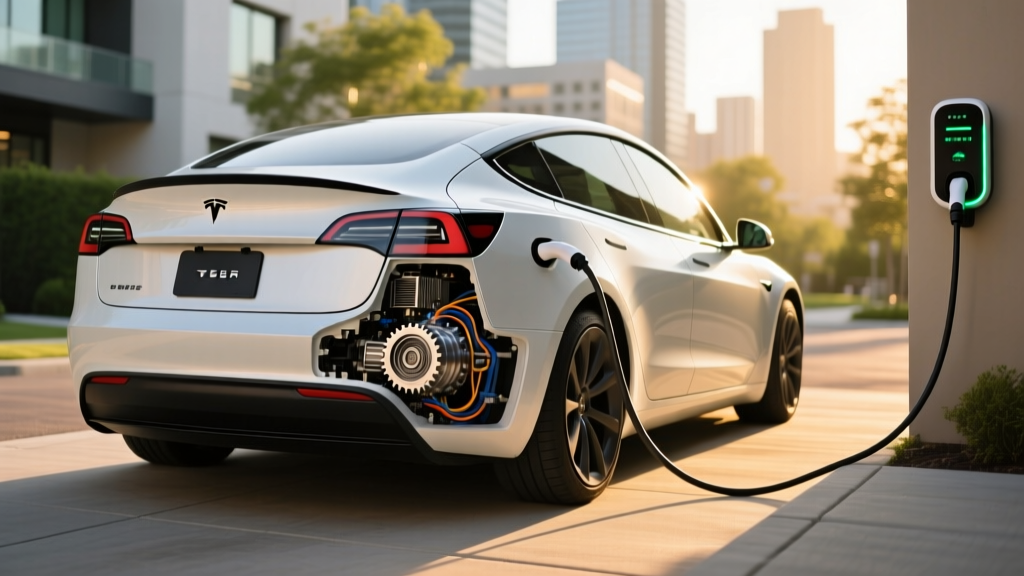
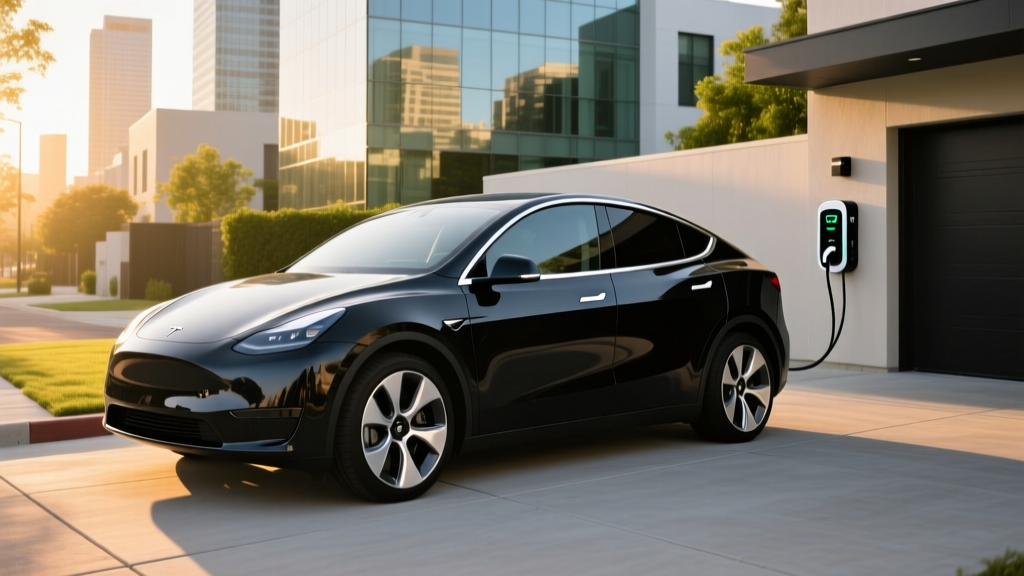
Home charging is where most Model Y owners refuel. The Tesla Wall Connector delivers up to 11.5 kW on a 60-amp circuit (48A continuous), adding roughly 44 miles of range per hour of charging. A full 10–100% session takes about 7–8 hours, which suits overnight charging perfectly. Installation costs typically range from $800 to $2,500 depending on panel proximity and whether a 200-amp service upgrade is needed — a licensed electrician should assess your panel before purchase.
For non-Tesla DC fast-charging networks like Electrify America or EVgo, Tesla sells a CCS adapter (~$175) that enables access at up to ~150–175 kW depending on the station. With the industry-wide adoption of NACS by Ford, GM, Rivian, and others, Tesla's connector has become the de facto North American standard, making the Model Y's native compatibility a long-term asset.
Performance: Quick Across the Board
Even the base Long Range RWD hits 60 mph in 6.5 seconds — brisk by any crossover standard. The Long Range AWD drops that to 4.8 seconds with its dual-motor setup producing 384 hp, while the Performance variant reaches 60 mph in 3.5 seconds with 456 hp. All trims use a single-speed reduction gear, so acceleration is linear and instant, with no shift lag.
The Performance trim includes track-oriented features: larger 21-inch Überturbine wheels, performance brakes, lowered sport suspension, and a Track Mode that adjusts torque distribution and regenerative braking aggressiveness. However, those 21-inch wheels reduce range to 285 miles and produce noticeably more road noise than the 19- or 20-inch options. For daily driving, the Long Range AWD on 19-inch Gemini wheels offers the best balance of performance, comfort, and range.
Regenerative braking on the 2024 Model Y is strong enough for one-pedal driving in most conditions. Tesla removed the user-adjustable regen setting in prior years, but the default level is well-calibrated — aggressive enough to slow the car to a stop in traffic, but not so abrupt that it unsettles passengers.
Interior, Cargo, and Technology
The 2024 Model Y cabin follows Tesla's minimalist philosophy: a single 15-inch touchscreen dominates the dash, controlling everything from climate to navigation to media. There's no instrument cluster — speed and range sit in the upper-left corner of the main display. The 2024 refresh brought updated acoustic glass, slightly softer-touch materials on the dash and door panels, and ambient lighting along the footwells, but the overall aesthetic remains stark compared to the Hyundai Ioniq 5's retro-modern interior or the Mercedes EQB's luxury trim.
Cargo volume is a Model Y strength. Behind the second row, you get 30.2 cubic feet of space — more than the Mach-E (29.7 cu ft) and significantly more than the Ioniq 5 (27.2 cu ft). Fold the rear seats and capacity expands to 72.1 cubic feet. The rear trunk includes a deep under-floor storage compartment, and the front trunk (frunk) adds 4.1 cubic feet for charging cables or a small bag.
Passenger space is adequate but not class-leading. Front legroom is 41.8 inches; rear legroom measures 37.3 inches. The panoramic glass roof creates an airy feel, but rear-seat passengers on taller sides may find the sloping roofline limits headroom compared to boxier competitors. Three adults across the rear bench is tight for long trips.
Driver assistance comes via Tesla Autopilot (standard), which provides adaptive cruise control and lane-centering on highways. Full Self-Driving (Supervised) is a $8,000 option or $99/month subscription that adds automated lane changes, traffic-light recognition, and city-street navigation. FSD (Supervised) remains a SAE Level 2 system — the driver must keep hands on the wheel and eyes on the road at all times. It is not autonomous driving. For hands-free Level 2+ experiences, GM's Super Cruise and Ford's BlueCruise on specific highway segments are competitive alternatives.
Pricing, Trims, and Federal Tax Credit Eligibility
| Trim | Base MSRP | Est. After §30D Credit* | Destination Fee |
|---|---|---|---|
| Long Range RWD | $44,990 | ~$37,490 | $1,390 (included in MSRP) |
| Long Range AWD | $47,990 | ~$40,490 | $1,390 (included in MSRP) |
| Performance AWD | $51,490 | ~$43,990 | $1,390 (included in MSRP) |
*Assumes full $7,500 federal tax credit under IRS §30D. Actual eligibility depends on buyer income, battery sourcing, and MSRP caps. Point-of-sale transfer available at participating dealers. Verify current rules at IRS.gov.
All three 2024 Model Y trims fall under the $80,000 MSRP cap for SUVs/crossovers under the §30D federal tax credit. However, eligibility is not automatic. Buyers must meet adjusted gross income limits ($150,000 single / $225,000 head of household / $300,000 joint) and the vehicle's battery must satisfy critical-mineral and battery-component sourcing requirements, which the IRS updates periodically. As of early 2024, the Model Y built at Giga Texas with certain battery configurations has qualified for the full $7,500, but Tesla's own website and the IRS qualified-vehicle list should be checked at time of purchase, as supply-chain changes can shift eligibility mid-year.
The point-of-sale transfer option allows buyers to apply the $7,500 credit directly at purchase rather than waiting to claim it on their tax return — effectively reducing the out-of-pocket cost immediately. This is a significant cash-flow advantage over the older system.
Warranty and Long-Term Ownership
Tesla provides a 4-year/50,000-mile basic vehicle warranty and an 8-year/120,000-mile battery and drive unit warranty for the Long Range trims (the Performance trim carries an 8-year/100,000-mile battery warranty). The battery warranty guarantees a minimum of 70% capacity retention over the coverage period. If degradation drops below that threshold, Tesla will repair or replace the battery pack.
Real-world data from Tesla's fleet and third-party tracking (including Recurrent Auto) suggests the Model Y's NMC battery typically retains 85–90% capacity after 100,000 miles under normal use. Best practices for longevity include keeping daily charge limits at 80–90% SoC, avoiding frequent 100% charges, and minimizing DC fast-charging when Level 2 is available. Tesla's battery preconditioning feature — activated automatically when navigating to a Supercharger — warms the pack to optimal temperature before charging, reducing stress on the cells.
Insurance costs for the Model Y tend to run 15–25% higher than comparable gas crossovers, driven by repair costs and Tesla's aluminum-intensive construction. Average annual premiums fall in the $1,800–$2,400 range depending on state, age, and driving record. Tesla Insurance is available in select states and can offer competitive rates based on real-time driving behavior via the vehicle's Safety Score.
Who the 2024 Model Y Suits Best
- You want direct access to the most reliable DC fast-charging network in North America (Supercharger).
- You prioritize efficiency and range per kWh over interior luxury.
- You value over-the-air software updates that add features post-purchase.
- You need 30+ cubic feet of cargo space with a frunk for a growing family.
- You want a more traditional cabin layout with physical buttons and a driver instrument cluster (see Hyundai Ioniq 5, Kia EV6).
- You prefer hands-free highway driving on mapped routes — GM Super Cruise and Ford BlueCruise offer this on limited segments.
- Rear-seat headroom for tall passengers is a priority — the sloping roofline limits space.
- You want a quieter, more plush ride — the Model Y transmits more road noise than luxury competitors at highway speed.
- Best-in-class Supercharger network access
- Top-tier efficiency (27 kWh/100 mi on RWD)
- Strong cargo capacity (30.2 cu ft rear, 72.1 cu ft folded)
- Over-the-air updates continuously improve the vehicle
- Competitive pricing after $7,500 federal credit
- Minimalist interior feels sparse at this price point
- Rear headroom limited by coupe-like roofline
- Road noise on 21-inch wheels is noticeable at highway speed
- FSD (Supervised) is expensive and still requires full driver attention
- Insurance premiums run higher than segment average
Frequently Asked Questions
What is the real-world range of the 2024 Tesla Model Y?
The EPA rates the Long Range RWD at 310 miles, but real-world highway driving at 70+ mph in moderate temperatures yields roughly 260–280 miles. In freezing weather with cabin heating, expect 220–250 miles. City driving with frequent regenerative braking comes closest to the EPA sticker.
How fast does the 2024 Model Y charge at home and on the road?
At home on a Level 2 Tesla Wall Connector (11.5 kW / 48A), the Model Y adds about 44 miles of range per hour, fully charging overnight in 7–8 hours. On a V3 Supercharger, it peaks at 250 kW and charges from 10–80% in approximately 27 minutes, though the rate tapers significantly above 50% SoC.
Does the 2024 Model Y qualify for the $7,500 federal EV tax credit?
All trims are under the $80,000 MSRP cap for SUVs, but buyer income limits ($150K single / $300K joint) and battery-sourcing requirements apply. The point-of-sale transfer option lets you apply the credit at purchase. Always verify current eligibility on IRS.gov and Tesla's website before ordering, as rules and sourcing can change.
Is the 2024 Model Y worth buying over the Ford Mach-E or Hyundai Ioniq 5?
The Model Y wins on Supercharger access, efficiency, and cargo space. The Mach-E offers a more conventional interior and competitive range, while the Ioniq 5 charges faster on 800V architecture (10–80% in ~18 min on a 350 kW charger) and has a more distinctive design. If Supercharger reliability is your top priority, the Model Y still holds the edge — though competitors are gaining NACS access through adapters and network expansion.
What battery chemistry does the 2024 Model Y use?
The US-market 2024 Model Y Long Range and Performance trims use NMC (nickel-manganese-cobalt) lithium-ion cells with approximately 75 kWh of usable capacity. NMC offers higher energy density than LFP (lithium iron phosphate), which is why it's used in the longer-range variants. Tesla recommends charging NMC batteries to 80–90% for daily use and reserving 100% charges for road trips to maximize longevity.
Can the 2024 Model Y tow?
Yes. When equipped with the optional tow hitch, the 2024 Model Y is rated to tow up to 3,500 pounds. Keep in mind that towing significantly reduces range — expect a 30–50% reduction depending on trailer weight, aerodynamics, and terrain.