The Tesla 2021 Model 3 occupies a unique spot in the used EV market today. Built during Tesla's transition from NMC to LFP battery chemistry in the Standard Range Plus trim, and featuring the refreshed "Highland-lite" interior updates that arrived mid-cycle, the 2021 model year represents a pivot point. For buyers shopping the secondary market in 2026, understanding exactly which battery, which range figure, and which charging profile you're getting is critical — because not all 2021 Model 3s are identical.
This review covers the 2021 Model 3 lineup as it stands from a 2026 ownership perspective: real-world range data, charging speeds, battery longevity expectations, and whether it still competes against newer rivals like the Hyundai Ioniq 6, BMW i4, and the refreshed 2024+ Model 3 Highland.
2021 Model 3 Trim Breakdown and Core Specs
The 2021 Model 3 was sold in three trims in the US market. Each carries different battery chemistry, range, and performance characteristics that directly affect daily ownership.
| Spec | Standard Range Plus | Long Range AWD | Performance |
|---|---|---|---|
| EPA Range | 263 mi | 353 mi | 315 mi |
| Battery (usable) | ~50 kWh (LFP) / ~50 kWh (NMC) | ~75 kWh (NMC) | ~75 kWh (NMC) |
| Drivetrain | RWD, single motor | AWD, dual motor | AWD, dual motor |
| Horsepower | 283 hp | 346 hp | 450 hp |
| 0-60 mph | 5.3 sec | 4.2 sec | 3.1 sec |
| MPGe (combined) | 142 MPGe | 134 MPGe | 125 MPGe |
| kWh/100 mi | 24 kWh | 25 kWh | 27 kWh |
| Original MSRP | $38,990 | $47,990 | $55,990 |
| Battery Warranty | 8 yr / 100,000 mi | 8 yr / 120,000 mi | 8 yr / 120,000 mi |
Source: EPA fueleconomy.gov
Real-World Range: What the EPA Sticker Doesn't Tell You
Standard Range Plus (LFP): EPA 263 mi — expect 210–230 mi on highway trips at 70+ mph; 170–200 mi in freezing temperatures with cabin heating.
Long Range AWD: EPA 353 mi — expect 280–310 mi highway; 230–270 mi in sub-freezing conditions.
Performance: EPA 315 mi — expect 250–280 mi highway; 210–240 mi in cold weather with aggressive driving.
The 2021 Model 3's EPA figures were generous for their time, but real-world consumption tells a more nuanced story. The Standard Range Plus with the LFP (lithium iron phosphate) battery, which Tesla began installing in US-market cars built at Giga Shanghai and later Fremont, actually holds up better in sustained high-SoC use because LFP chemistry tolerates regular 100% charging without accelerated degradation. That means you can use the full 263 EPA miles more often than you can with the NMC Long Range, where Tesla recommends daily charging to 80% — effectively giving you ~282 usable miles before you dip into the buffer.
In cold weather testing (20–35°F), the Model 3's heat pump — which became standard on the 2021 refresh — significantly reduces range loss compared to the resistive PTC heaters in 2018–2020 models. Expect roughly 20–25% range reduction in winter, versus 30–40% on pre-heat-pump Model 3s. This is one of the strongest arguments for choosing a 2021 over an earlier used Model 3.
Charging Speed: DC Fast Charge and Home Level 2
Charging speed is where the 2021 Model 3 shows its age relative to 2025–2026 competitors with 800V architectures, but it remains practical for most use cases.
| Charging Level | Max Power (kW) | Speed (mi/hr added) | Notes |
|---|---|---|---|
| Level 1 (120V household) | ~1.4 kW | ~4 mi/hr | Emergency/trickle only |
| Level 2 (240V / 48A Wall Connector) | 11.5 kW | ~44 mi/hr (SR+) / ~37 mi/hr (LR) | Full charge in 5–8 hours |
| DC Fast Charge (Supercharger V3) | 170 kW peak (SR+ LFP) / 250 kW peak (LR/Perf) | ~175 mi in 15 min (LR) | 10–80% in ~25 min (LR), ~30 min (SR+ LFP) |
The Standard Range Plus with the LFP battery has a notably different DC fast-charge curve than the Long Range. The LFP pack peaks around 170 kW and sustains a relatively flat curve, but its smaller total capacity means the 10–80% session takes roughly 30 minutes. The Long Range and Performance trims, with their larger NMC packs, can peak at 250 kW on a V3 Supercharger and typically complete 10–80% in about 25 minutes — though sustained rates above 60% SoC taper significantly, often dropping below 80 kW.
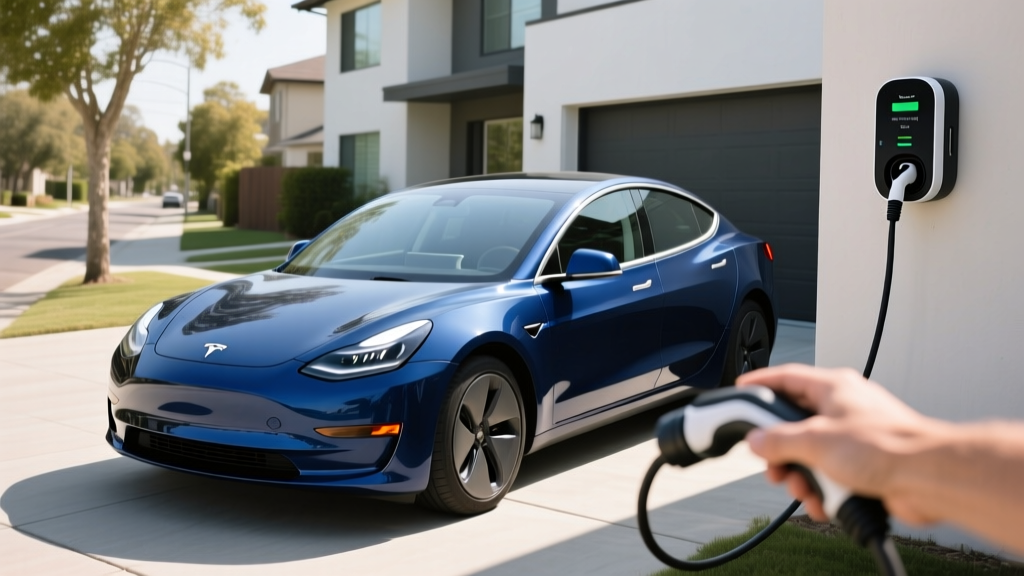
For home charging, the onboard charger is 11.5 kW (48 amps). With a Tesla Wall Connector or any J1772 adapter on a 60-amp circuit, you'll add roughly 44 miles of range per hour on the SR+ or 37 on the Long Range. A full overnight charge is easily achievable for all trims.
Preconditioning matters: If you navigate to a Supercharger using the car's built-in navigation, the battery will precondition automatically — warming to optimal temperature for faster charge acceptance. Without preconditioning (for instance, arriving at a third-party DC fast charger without navigation routing), cold-soaked batteries can see charge speeds cut in half for the first 5–10 minutes.
Battery Chemistry: LFP vs NMC in the 2021 Model 3
The 2021 model year is the first where US buyers might encounter either chemistry in the Standard Range Plus, depending on build date and origin. Here's what that means for ownership:
| Factor | LFP (Standard Range Plus) | NMC (SR+ early / Long Range / Performance) |
|---|---|---|
| Energy density | Lower — heavier pack for same kWh | Higher — more range per kg |
| Recommended daily charge | 100% (Tesla recommends weekly 100%) | 80% daily, 100% for trips only |
| Cycle life | ~3,000+ cycles to 80% SoH | ~1,000–1,500 cycles to 80% SoH |
| Cold-weather performance | Slightly worse range retention | Better low-temp discharge |
| State of Charge accuracy | Less accurate at mid-SoC; calibrate with full charges | More linear SoC estimation |
| Longevity outlook (2026) | Excellent — minimal degradation at 50k–80k miles | Good — expect 5–8% degradation at 50k–80k miles |
If you're buying a used 2021 Model 3 Standard Range Plus, confirming the battery chemistry is worth the effort. Check the vehicle's menu under Software > Additional Vehicle Information, or look at the charging screen — if the car recommends charging to 100% regularly, it's LFP. LFP packs from CATL in the 2021 SR+ have shown remarkably low degradation in fleet data, often retaining 95%+ State of Health at 60,000 miles.
Interior, Cargo, and Technology
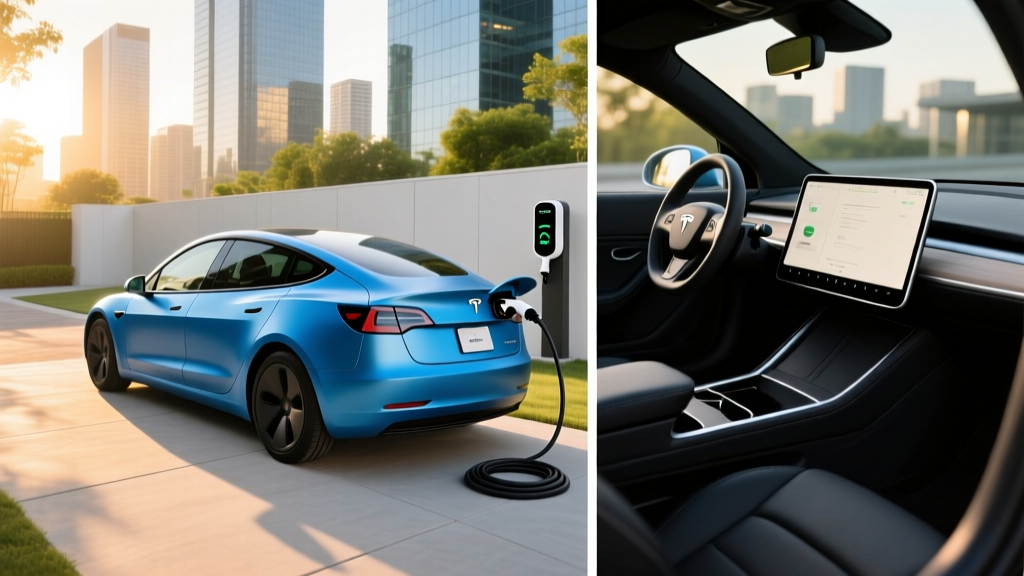
The 2021 Model 3 interior received meaningful updates over the 2018–2020 models: a center console redesign with sliding cupholder covers, matte black trim replacing piano black (a significant fingerprint improvement), a powered glovebox, and laminated front-row glass for improved cabin quietness. The heat pump was also introduced, replacing the older resistive heater.
Passenger and cargo dimensions:
- Front legroom: 42.7 inches
- Rear legroom: 35.2 inches
- Trunk: 15.0 cu ft (rear) + 3.1 cu ft (frunk) = 18.1 cu ft total
- Rear seats fold 60/40 for longer cargo
- Curb weight: 3,552–4,034 lbs depending on trim
The 15-inch center touchscreen handles all vehicle functions — there are no physical buttons for climate, mirrors, or glovebox access. This remains polarizing. The infotainment system in 2026 still receives over-the-air updates from Tesla, though 2021 Model 3s run on the older Intel Atom-based MCU (not the AMD Ryzen chip introduced in 2022), meaning the UI is slightly slower and lacks features like the updated navigation rendering and Steam gaming. It remains fully functional for media, navigation, and vehicle controls.
Driver assistance: Basic Autopilot (SAE Level 2) is standard, providing lane-centering and adaptive cruise control. Full Self-Driving (Supervised), also SAE Level 2 despite its name, was a $10,000 option in 2021 and is a transferable feature on used vehicles. FSD does not make the car self-driving — the driver must remain attentive and is legally responsible at all times. Only Level 4 services like Waymo operate without a human driver.
Pricing, Used Market Value, and Tax Credit Eligibility
As of early 2026, used 2021 Model 3 pricing varies significantly by trim, mileage, and condition:
| Trim | Typical Used Price (50k–70k mi) | Federal Used EV Credit (§25E) | Net Cost After Credit |
|---|---|---|---|
| Standard Range Plus (LFP) | $19,000–$23,000 | Up to $4,000 (30% of sale price, max $4,000) | $15,000–$19,000 |
| Long Range AWD | $23,000–$28,000 | Up to $4,000 | $19,000–$24,000 |
| Performance | $27,000–$32,000 | Up to $4,000 | $23,000–$28,000 |
Critical: The new-vehicle §30D credit no longer applies to 2021 Model 3 purchases. However, the §25E used clean vehicle credit may apply if you meet these requirements (per IRS §25E rules):
- Sale price must be $25,000 or less
- Buyer income caps: $75,000 single / $112,500 head of household / $150,000 joint filers (modified AGI)
- Vehicle must be purchased from a licensed dealer (private-party sales do not qualify)
- Vehicle must be at least 2 model years old (2021 qualifies in 2026)
- Credit equals 30% of the sale price, capped at $4,000
- Credit is non-refundable and can only be claimed once per vehicle (check the VIN history)
This means a $22,000 Long Range purchased from a dealer could yield a $4,000 credit (30% of $22,000 = $6,600, but capped at $4,000), bringing net cost to $18,000. Always confirm eligibility with a tax professional before relying on the credit.
Pros and Cons of the 2021 Model 3 in 2026
- LFP battery option offers exceptional longevity and 100% daily charging
- Heat pump standard — better cold-weather range than 2018–2020 models
- Access to Tesla Supercharger network (17,000+ stalls in North America)
- Lowest cost per mile of any used EV sedan in its class
- Over-the-air updates continue through 2026
- Strong safety ratings: NHTSA 5-star, IIHS Top Safety Pick+
- Older Intel Atom MCU feels sluggish vs. AMD Ryzen-equipped 2022+ models
- No CCS adapter included (Tesla NACS native, but third-party DC charging requires a $250 CCS adapter)
- Rear seat is tight for taller passengers (35.2" legroom)
- Panel gaps and paint quality remain inconsistent on 2021 Fremont builds
- No Apple CarPlay or Android Auto
- FSD transfer on used vehicles is not guaranteed — confirm before purchase
How the 2021 Model 3 Compares to Key Competitors
In the $18,000–$28,000 used EV sedan bracket, the 2021 Model 3 faces several credible alternatives:
- 2021 Polestar 2 Long Range: EPA 249 mi, CCS native, Google Automotive OS, similar pricing. Slower DC charging (~150 kW peak), less range, but better build quality and CarPlay support.
- 2022 Hyundai Ioniq 5 (early used): EPA 303 mi (LR RWD), 800V architecture with 10–80% in 18 minutes, more interior space. Newer examples start around $25,000.
- 2021 BMW i4 eDrive40: EPA 301 mi, premium interior, 200 kW DC charging. Used pricing typically $30,000+, a segment above.
The 2021 Model 3 wins on charging infrastructure access, energy efficiency (kWh/100mi), and total cost of ownership. It loses on interior build quality, third-party DC charging convenience, and rear-seat comfort. For a single driver or couple with home charging and regular access to Superchargers, it remains the most economical entry into a proven EV platform.
Who Should Buy the 2021 Model 3?
Choose the 2021 Model 3 Standard Range Plus (LFP) if: You commute under 60 miles daily, charge at home, want minimal battery degradation concerns, and prioritize lowest total cost of ownership.
Choose the 2021 Model 3 Long Range AWD if: You regularly drive 200+ miles between charges, need dual-motor traction in snow/rain, or take road trips where Supercharger access matters.
Look elsewhere if: You need spacious rear seating for adults, prefer CarPlay/Android Auto, rely on Electrify America or non-Tesla DC networks, or want the latest infotainment hardware.
Frequently Asked Questions
What is the real-world range of the 2021 Tesla Model 3?
Highway driving at 70–75 mph yields approximately 210–230 miles for the Standard Range Plus, 280–310 for the Long Range, and 250–280 for the Performance. In freezing weather with cabin heat, subtract 20–25% from those figures. The LFP-equipped SR+ allows regular 100% charging, meaning you access the full EPA range more often than NMC owners who charge to 80% daily.
How fast does the 2021 Model 3 charge at home and on DC fast chargers?
On a Level 2 home charger (240V, 48A), the Model 3 charges at up to 11.5 kW, adding 37–44 miles of range per hour and achieving a full charge in 5–8 hours. On a Tesla V3 Supercharger, the Long Range peaks at 250 kW and completes 10–80% in approximately 25 minutes. The SR+ LFP peaks at around 170 kW with a 10–80% time of roughly 30 minutes.
Does the 2021 Model 3 qualify for any federal tax credit in 2026?
The new-vehicle §30D credit no longer applies. However, the IRS §25E used EV credit offers up to $4,000 (30% of sale price) if the car is purchased from a dealer for $25,000 or less, the buyer meets income caps ($75K single / $150K joint), and the credit hasn't been previously claimed on that VIN. Consult a tax professional to confirm eligibility.
Is the 2021 Model 3 still worth buying versus newer EVs?
For budget-conscious buyers, yes — the 2021 Model 3 offers the lowest cost-per-mile of any used EV sedan, Supercharger access, continued OTA updates, and the heat pump that earlier models lack. Its main drawbacks are the older MCU processor, NACS-only charging (without an adapter), and tight rear seat. If those are acceptable trade-offs, it remains one of the strongest used EV values available.
How long will the 2021 Model 3 battery last?
Tesla warranties the battery for 8 years / 100,000 miles (SR+) or 8 years / 120,000 miles (LR/Performance) against degradation below 70% State of Health. LFP packs have demonstrated 95%+ SoH at 60,000 miles in fleet data, suggesting the SR+ LFP could realistically reach 200,000+ miles before approaching the warranty threshold. NMC packs typically show 5–8% degradation at 50,000–80,000 miles, still well within warranty coverage.