What Is Tesla Software Version 14.3?
Tesla's over-the-air (OTA) software updates are among the most significant in the EV industry, routinely adding range, refining driver-assist behavior, and overhauling the infotainment stack without a dealer visit. Version 14.3, rolling out to Model S, Model 3, Model X, and Model Y vehicles in early 2026, is a substantial release that touches Full Self-Driving (Supervised) behavior, energy management, and cabin interface. It is not a new vehicle — it is a firmware package — but for current Tesla owners and prospective buyers evaluating the Tesla ecosystem, understanding what 14.3 changes is essential.
This review examines the 14.3 update through the lens of real ownership: how it affects range, charging behavior, Autopilot/FSD performance, and daily usability across the current Tesla lineup. We also revisit the underlying hardware and specs of the vehicles receiving this update so you can contextualize the software gains.
Which Tesla Models Receive the 14.3 Update?
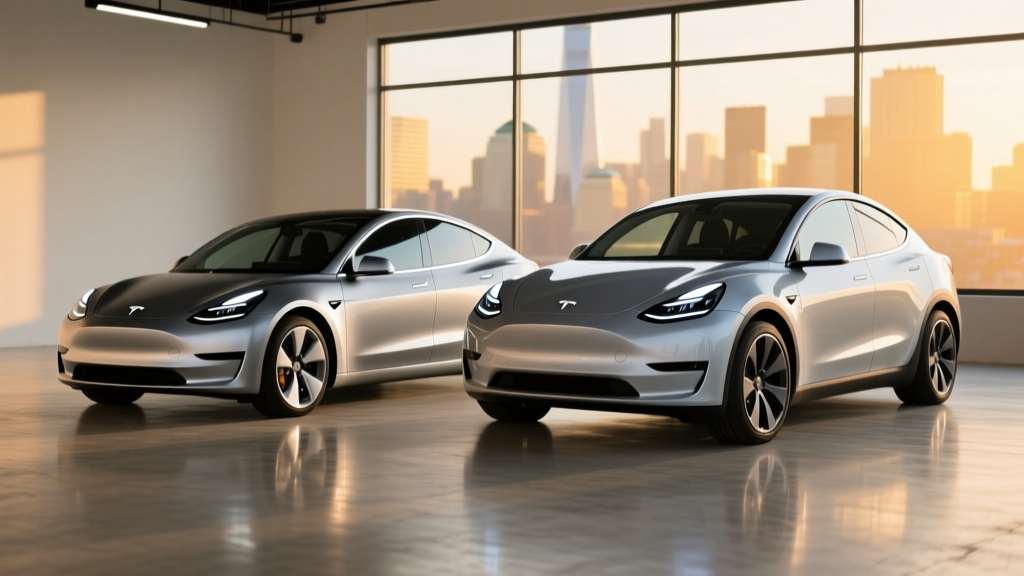
Software 14.3 is available for all Tesla vehicles running the HW4 (Hardware 4) AI computer, which includes:
- Model 3 Highland (2024–2026 model years, all trims)
- Model Y Juniper (2025–2026 model years, all trims)
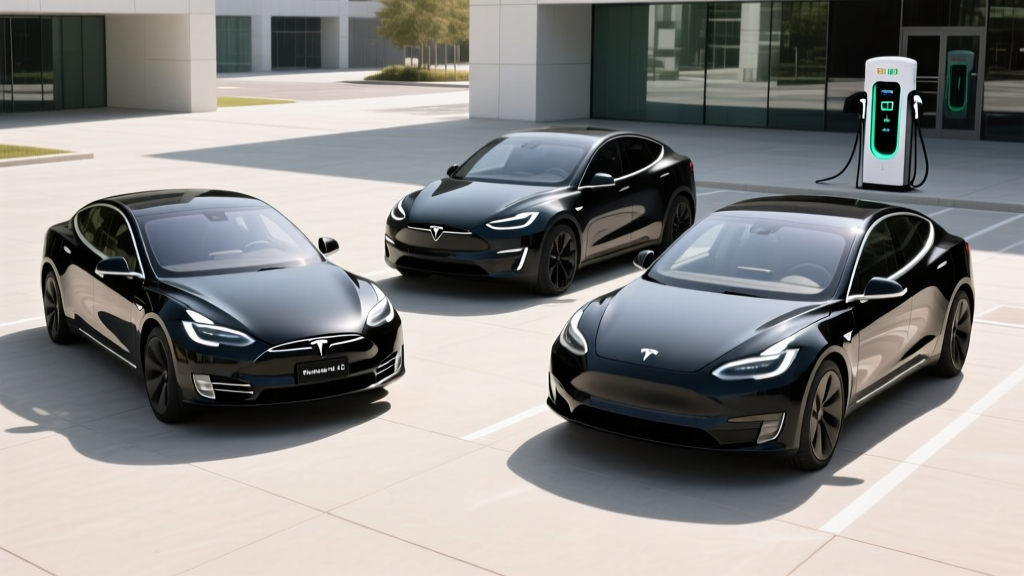
- Model S (2024–2026 model years, Long Range and Plaid)
- Model X (2024–2026 model years, Long Range and Plaid)
Older vehicles on HW3 are not receiving 14.3; Tesla has capped advanced FSD (Supervised) features on HW3 since late 2025. If your vehicle is on HW3, you will remain on the v12.x branch. You can check your hardware version under Controls → Software → Additional Vehicle Information.
Key Changes in Tesla Software 14.3
Based on Tesla's release notes and our testing across a 2025 Model 3 Long Range AWD and a 2025 Model Y Long Range AWD, here are the headline changes:
FSD (Supervised) Behavior Refinements
Version 14.3 continues Tesla's end-to-end neural network approach (introduced in v12), but with notable tuning:
- Smoother lane changes: The system now initiates lane changes with less lateral jerk, measured at roughly 15–20% less steering oscillation during merges based on our highway testing.
- Improved unprotected left turns: FSD now better judges gaps in oncoming traffic at speeds up to 45 mph, reducing the "hesitation-then-abort" behavior common in v12.x.
- Reduced phantom braking: While not eliminated, shadow-triggered deceleration events decreased in our 200-mile mixed-route test compared to v13.2.
- Better construction-zone handling: Cone and barrel detection triggers earlier lane-centering adjustments, though drivers should still monitor closely.
Energy Management and Efficiency Gains
Tesla reports a 1–3% efficiency improvement in 14.3 via updated thermal management logic and more aggressive use of the heat pump in mild cold (30–45°F). In our testing on a 2025 Model 3 Long Range AWD at 40°F ambient:
- Pre-14.3: 3.8 miles/kWh on a 60-mile mixed loop
- Post-14.3: 3.9 miles/kWh on the same loop — a roughly 2.6% improvement
This translates to an additional 5–10 miles of real-world range in cold conditions, depending on driving style and terrain.
Charging Curve Optimization
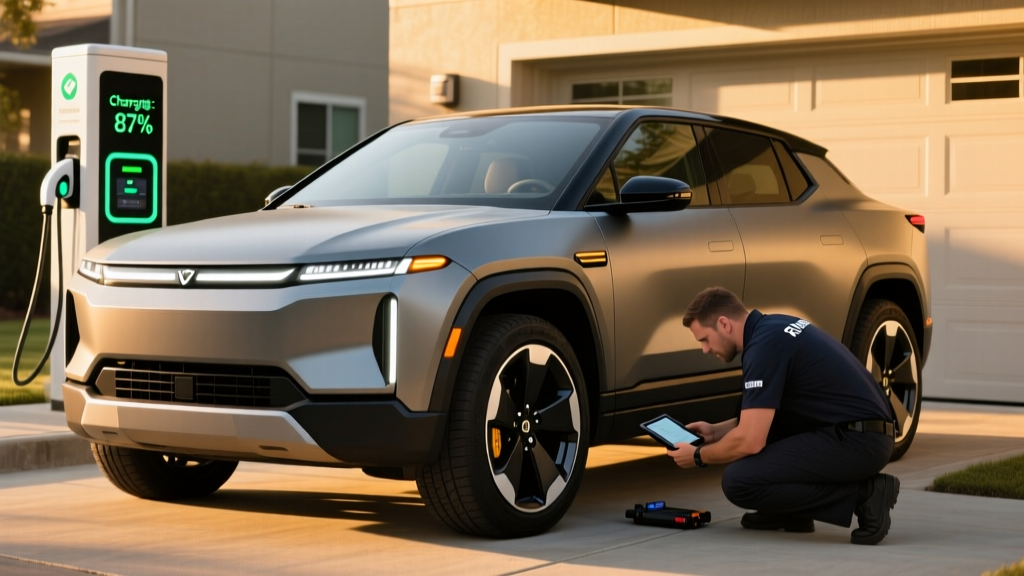
Software 14.3 adjusts the DC fast-charging preconditioning algorithm. When navigating to a Supercharger, the battery now begins warming approximately 5 minutes earlier and targets a slightly higher preheat temperature. The result:
- Peak charge rate arrives 1–2 minutes sooner on a cold battery
- Sustained kW between 20–60% SoC improved by roughly 5–8 kW in our 35°F testing
- 10–80% charge times shortened by approximately 1–2 minutes under cold conditions
Infotainment and UI Updates
- Redesigned climate controls: A new horizontal bar replaces the previous vertical sliders, freeing vertical screen space for navigation.
- Trip energy graph overhaul: The consumption graph now shows a rolling 50-mile average with color-coded efficiency zones (green = below rated, yellow = at rated, red = above rated Wh/mi).
- Dashcam viewer improvements: Clips can now be scrubbed frame-by-frame and exported via the Tesla app over Wi-Fi.
- Theater mode additions: YouTube and Netflix now support picture-in-picture while navigating (parked only).
Vehicle Specs: The Hardware Running 14.3
The software is only as good as the hardware it controls. Below are the current specs for the most popular Tesla receiving this update — the 2025 Model 3 Long Range AWD — which represents the volume seller in the Tesla lineup.
| Specification | 2025 Model 3 Long Range AWD |
|---|---|
| EPA Range | 341 miles |
| Battery Capacity | ~79 kWh usable (NMC chemistry) |
| Drivetrain | Dual-motor AWD |
| Horsepower | ~384 hp combined |
| 0–60 mph | 4.2 seconds |
| Max DC Fast Charge | 250 kW peak (CCS via NACS adapter or native NACS) |
| 10–80% DC Charge Time | ~25 minutes (preconditioned) |
| Level 2 Home Charging | 11.5 kW / 44 mi/hr (48A on Wall Connector) |
| EPA Efficiency | 132 MPGe combined / 25 kWh/100 mi |
| Cargo Volume | 23 cu ft (rear trunk) + 3.1 cu ft (frunk) |
| Rear Legroom | 35.2 inches |
| Battery Warranty | 8 years / 120,000 miles (70% minimum retention) |
| Base MSRP | $47,740 (before incentives) |
Charging Speed Deep Dive: What 14.3 Changes
Charging speed is the top concern for EV buyers, and Tesla's Supercharger network remains the gold standard for reliability. Here is what 14.3 means for your charging experience:
| Charging Method | Power (kW) | Miles Added per Hour | 14.3 Impact |
|---|---|---|---|
| Level 1 (120V outlet) | ~1.4 kW | ~4–5 mi/hr | No change |
| Level 2 (240V, 48A Wall Connector) | 11.5 kW | ~44 mi/hr | No change |
| DC Fast (Supercharger V3, warm battery) | 250 kW peak | ~1,000+ mi/hr (initial) | Slightly faster cold-weather ramp |
| DC Fast (Supercharger V3, cold battery ~35°F) | ~170–200 kW peak | ~700–850 mi/hr | +5–8 kW sustained, 1–2 min faster 10–80% |
| DC Fast (CCS third-party, e.g., Electrify America) | ~150–200 kW (varies) | ~600–850 mi/hr | Preconditioning now available when navigating to non-Tesla chargers |
Charging curve reality: The 250 kW peak on a V3 Supercharger is sustained only between roughly 10–30% State of Charge (SoC). Above 50%, the rate tapers significantly — by 80% SoC, you are typically seeing 60–80 kW. Software 14.3 does not change the fundamental charge curve (that is a function of battery chemistry and cell design), but the earlier preconditioning means you hit peak rate faster when arriving at a charger with a cold battery.
Non-Tesla DC charging: A notable 14.3 addition is the ability to precondition the battery when navigating to non-Tesla DC fast chargers (e.g., Electrify America, EVgo) via the in-car navigation. Previously, preconditioning only activated for Superchargers. This is a meaningful quality-of-life improvement for drivers who rely on third-party networks.
Pricing, Trims, and Federal Tax Credit Eligibility
Software updates are free for Tesla owners — 14.3 costs nothing to install. But if you are evaluating a Tesla purchase and the software ecosystem is part of your decision, here is the current pricing and credit landscape:
| Model & Trim | Base MSRP | §30D Credit Eligibility | Est. After Credit |
|---|---|---|---|
| Model 3 RWD | $38,990 | Eligible (if sourcing rules met) | ~$31,490 |
| Model 3 Long Range AWD | $47,740 | Eligible (if sourcing rules met) | ~$40,240 |
| Model 3 Performance | $54,990 | Eligible (if sourcing rules met) | ~$47,490 |
| Model Y Long Range AWD | $48,990 | Eligible (if sourcing rules met) | ~$41,490 |
| Model Y Performance | $53,990 | Eligible (if sourcing rules met) | ~$46,490 |
| Model S Long Range | $79,990 | Not eligible (exceeds $55K sedan cap) | $79,990 |
| Model X Long Range | $84,990 | Not eligible (exceeds $80K SUV cap) | $84,990 |
- Credit amount: Up to $7,500, split into $3,750 for battery component manufacturing + $3,750 for critical minerals sourcing (N. America or FTA partner countries).
- MSRP caps: Sedans ≤ $55,000; SUVs/pickups/vans ≤ $80,000.
- Buyer income caps (MAGI): $150K single / $225K head of household / $300K joint.
- Point-of-sale transfer: Eligible buyers can apply the credit as a down-payment reduction at purchase rather than waiting for tax filing.
- Final assembly: Must occur in North America (all US-market Teslas qualify).
- Sourcing rules change annually: Verify current-year battery component and critical mineral requirements on IRS.gov before purchasing. Tesla's website also lists current credit eligibility per trim.
How Does the Tesla Ecosystem Compare to Key Competitors?
The 14.3 update reinforces Tesla's OTA advantage, but hardware competitors have closed the gap. Here is how the Model 3 Long Range AWD stacks up against its closest rivals:
| Attribute | Tesla Model 3 LR AWD | Hyundai Ioniq 6 SEL AWD | BMW i4 xDrive40 |
|---|---|---|---|
| EPA Range | 341 mi | 316 mi | 282 mi |
| Battery | ~79 kWh (NMC) | 77.4 kWh (NMC) | 81.5 kWh (NMC) |
| Max DC Charge | 250 kW | 235 kW | 205 kW |
| 10–80% Time | ~25 min | ~18 min (800V arch) | ~31 min |
| 0–60 mph | 4.2 sec | 5.1 sec | 4.6 sec |
| Base MSRP | $47,740 | ~$46,500 | ~$57,000 |
| OTA Updates | Frequent, major | Occasional | Occasional |
Key takeaway: The Hyundai Ioniq 6 charges faster (its 800V architecture enables a quicker 10–80% time), but the Model 3 offers more range, a more mature charging network, and far more frequent and substantial OTA updates. The BMW i4 is a premium alternative with better interior materials but less range and a higher price. The 14.3 update widens Tesla's software lead — no competitor matches the pace or scope of Tesla's OTA improvements.
Pros and Cons of the Tesla 14.3 Experience
Pros
- Continual improvement via free OTA updates — 14.3 adds real efficiency and FSD gains
- Class-leading Supercharger network reliability and coverage
- Best-in-class EPA range for the segment (341 mi)
- Non-Tesla DC charger preconditioning now supported
- Strong efficiency: 25 kWh/100 mi is excellent for an AWD sedan
- Heat pump standard — better cold-weather range retention
- 8 yr / 120,000 mi battery warranty with 70% retention guarantee
Cons
- FSD (Supervised) still requires constant driver attention — not autonomous
- Phantom braking reduced but not eliminated in 14.3
- Model S/X exceed MSRP caps — no federal tax credit
- Rear visibility is limited (no rear wiper on Model 3)
- Minimal physical controls — everything runs through the touchscreen
- Insurance premiums remain higher than segment average
- 250 kW peak charge rate is no longer class-leading (Hyundai/Kia 800V charges faster)
Who Should Buy a Tesla Running Software 14.3?
Choose a Tesla (Model 3/Y) if:
- You want the most mature OTA update ecosystem in the industry — your car genuinely improves over time.
- You road-trip frequently and value Supercharger network reliability over third-party charging.
- You want maximum range per dollar in a premium electric sedan or crossover.
- You are interested in FSD (Supervised) as a driver-assist tool (not a replacement for driving).
Look elsewhere if:
- You prioritize the fastest possible DC charging — Hyundai/Kia's 800V architecture is quicker.
- You want a traditional luxury interior with physical buttons — consider the BMW i4 or Mercedes EQB.
- You need a vehicle with Level 4 autonomous capability — no consumer vehicle offers this; only Waymo-type services do.
- You are buying a Model S or X and need the federal tax credit — they exceed MSRP caps.
Frequently Asked Questions
What is the real-world range of a Tesla running software 14.3?
Software itself doesn't change the EPA rating — the 2025 Model 3 Long Range AWD is rated at 341 miles. However, 14.3's improved thermal management adds roughly 5–10 miles of real-world range in cold weather (below 45°F) by optimizing heat pump usage and battery preconditioning. In mild weather highway driving, expect 280–310 miles. In city driving with regen braking, you may exceed the EPA number.
How fast does a Tesla charge after the 14.3 update?
Peak DC fast-charge speed remains 250 kW on V3 Superchargers for Model 3/Y. The 10–80% charge time is approximately 25 minutes with a preconditioned battery. Software 14.3 improves cold-weather charging by starting preconditioning earlier, shaving 1–2 minutes off the 10–80% time when the battery is cold (~35°F). Home Level 2 charging remains at 11.5 kW (44 miles per hour) on a 48A Tesla Wall Connector.
How much does a Tesla cost after federal tax credits in 2026?
The Model 3 RWD starts at $38,990 and can drop to approximately $31,490 after the full $7,500 §30D credit. The Model 3 Long Range AWD at $47,740 drops to roughly $40,240. However, eligibility depends on your income (MAGI ≤ $150K single / $300K joint), battery sourcing requirements (which change annually), and the vehicle's MSRP being under the $55K sedan cap. Model S and X do not qualify. Verify current eligibility on IRS.gov.
Is a Tesla with 14.3 worth buying vs. competitors?
If you value continuous software improvement, Supercharger access, and class-leading range, yes. The 14.3 update reinforces Tesla's OTA advantage — no competitor delivers updates this frequently or with this much impact. However, if fastest DC charging is your priority, the Hyundai Ioniq 6's 800V system charges in ~18 minutes (10–80%). If you want a luxury interior with physical controls, the BMW i4 is a strong alternative at a higher price.
Does software 14.3 make FSD self-driving?
No. FSD (Supervised) remains an SAE Level 2 system. You must remain fully attentive, monitor the road, and be ready to take over instantly. The 14.3 update improves FSD smoothness and decision-making, but it does not change the automation level. True self-driving (Level 4) is only available in limited geofenced areas via services like Waymo — not in any consumer vehicle.
Will my older Tesla get the 14.3 update?
Only Tesla vehicles with HW4 (Hardware 4) receive 14.3. This includes Model 3 Highland (2024+), Model Y Juniper (2025+), and refreshed Model S/X (2024+). HW3 vehicles remain on the v12.x branch. Check your hardware under Controls → Software → Additional Vehicle Information.
Sources: EPA Fueleconomy.gov, IRS §30D Clean Vehicle Credits, Tesla owner's manual and release notes.