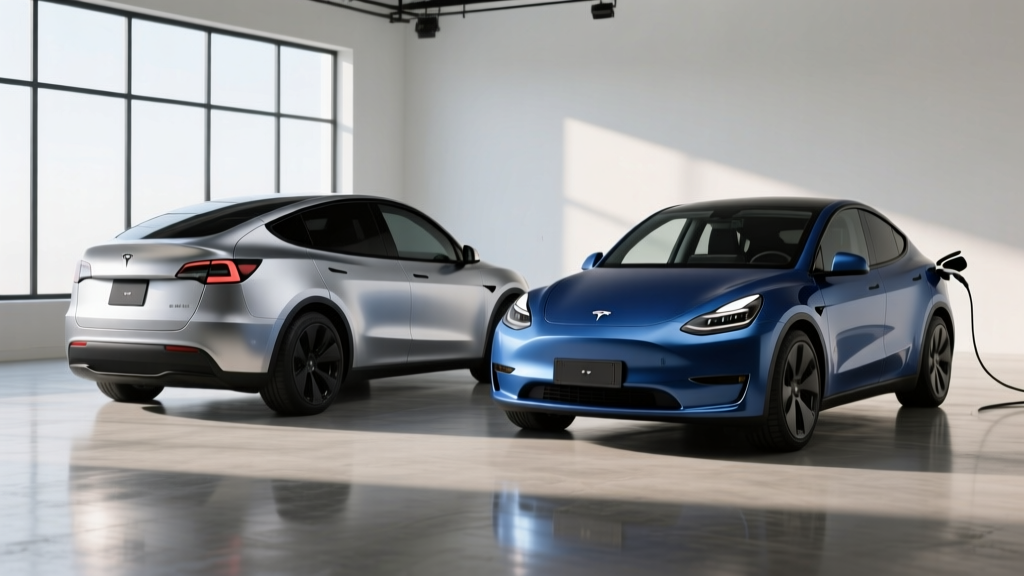
Tesla periodically rolls out promotional financing to move metal, and the Tesla 0% APR deal is one of the most searched offers in the EV space. But a zero-percent loan isn't free money in every scenario — it interacts with federal tax credits, trade-in values, and total cost of ownership in ways that can either save you thousands or quietly cost you versus a cash-back alternative. This review dissects the 2026 Model Y and Model 3 through the lens of that financing offer, pairing hard EPA data, charging curves, and real-world ownership math so you can decide if it's actually the cheapest way into a Tesla this year.
What the Tesla 0% APR Deal Actually Covers
Tesla's 0% APR promotions are typically offered through Tesla Finance for well-qualified buyers (usually 720+ FICO) on specific trims and loan terms — most commonly 36, 48, or 60 months. In 2026, the offer has appeared intermittently on Model Y Long Range AWD and Model 3 Long Range AWD inventory vehicles, often with a caveat: taking the 0% APR usually means forfeiting any concurrent cash incentive (such as a $1,000–$2,500 referral or inventory discount). That trade-off is the single most important math problem in this article.
Key structural points to know before signing:
- Loan term matters. A 60-month 0% loan on a $48,000 Model Y costs $800/month with zero interest. A 72-month loan at 5.99% APR (a common non-promotional Tesla rate) costs ~$793/month but adds ~$5,100 in interest over the life of the loan.
- Down payment changes the math. Tesla typically requires 10–20% down on promotional APR deals.
- The §30D tax credit is separate. The federal credit is claimed on your tax return (or transferred at point-of-sale as of 2024+ rules) and does not reduce the financed amount through Tesla Finance — it reduces your tax liability or acts as a down-payment offset at POS.
- Inventory vs. custom orders. 0% APR deals almost always apply to existing inventory, not custom builds, which limits color, wheel, and interior choices.
2026 Model Y Long Range AWD: The Numbers That Matter
| Spec | Value |
|---|---|
| EPA Range | 320 miles |
| Usable Battery | ~78 kWh (NMC chemistry) |
| Efficiency | 122 MPGe combined / 27 kWh/100mi |
| Peak DC Fast Charge | 250 kW (Supercharger V3/V4) |
| 10–80% DC Charge Time | ~27 minutes |
| Level 2 Home Charge Rate | 11.5 kW (~44 mi/hr) |
| 0–60 mph | 4.8 seconds |
| Horsepower | 384 hp (dual motor) |
| Drivetrain | AWD, dual motor |
| Cargo (rear seats up / folded) | 30.2 / 72.1 cu ft |
| Rear Legroom | 38.4 inches |
| Battery Warranty | 8 years / 120,000 miles (70% retention) |
| Base MSRP | $48,990 (before incentives) |
2026 Model 3 Long Range AWD: Leaner, Cheaper, Slightly More Range
| Spec | Value |
|---|---|
| EPA Range | 341 miles |
| Usable Battery | ~75 kWh (NMC chemistry) |
| Efficiency | 131 MPGe combined / 25 kWh/100mi |
| Peak DC Fast Charge | 250 kW |
| 10–80% DC Charge Time | ~25 minutes |
| Level 2 Home Charge Rate | 11.5 kW (~48 mi/hr) |
| 0–60 mph | 4.2 seconds |
| Horsepower | 346 hp (dual motor) |
| Drivetrain | AWD, dual motor |
| Cargo (trunk + frunk) | 22.9 cu ft total |
| Rear Legroom | 34.9 inches |
| Battery Warranty | 8 years / 120,000 miles (70% retention) |
| Base MSRP | $44,990 (before incentives) |
The Model 3's lower weight and more aerodynamic profile give it roughly 7% better efficiency than the Model Y, translating into a longer EPA range on a slightly smaller battery. Rear-seat space is the trade-off — families with rear-facing car seats will find the Model 3 tight, while the Model Y's taller roofline and hatch make it meaningfully more practical for kid-hauling.
Charging Reality: Supercharger Network vs. Public Alternatives
Tesla's Supercharger network remains the most reliable DC fast-charging ecosystem in North America, and the 250 kW peak rate on both the Model Y and Model 3 Long Range is genuinely competitive. However, peak is not sustained. The charge curve on Tesla's NMC packs typically holds above 200 kW from roughly 10% to 35% SoC, then tapers progressively — by 70% SoC you're usually seeing 80–110 kW, and above 85% the rate drops below 40 kW. This is why the 10–80% time is the honest metric, not peak kW.
| Level | Power | Miles Added per Hour | Typical Use Case |
|---|---|---|---|
| Level 1 (120V) | 1.4 kW | ~5 mi/hr | Emergency / overnight trickle |
| Level 2 (240V, 48A) | 11.5 kW | ~44 mi/hr | Home daily charging |
| DC Fast (Supercharger V3) | Up to 250 kW | Up to ~1,000 mi/hr (peak) | Road trips, 10–80% in ~27 min |
At home on a Wall Connector (up to 11.5 kW with a 60A circuit), most owners wake up to a full battery every morning. Installation typically runs $800–$2,200 depending on panel proximity and whether a 200A service upgrade is needed — factor that into first-year ownership cost. Source: Tesla Home Charging.
Federal Tax Credit Eligibility: The §30D Fine Print
As of the 2026 tax year, both the Model Y Long Range AWD and Model 3 Long Range AWD have periodically qualified for the IRS §30D Clean Vehicle Credit, but eligibility is not guaranteed and shifts based on battery-component and critical-mineral sourcing rules that Tesla and its suppliers update quarterly. Here is the checklist every buyer must verify before signing:
- MSRP cap: SUVs/trucks/vans (Model Y) must be ≤$80,000; sedans (Model 3) must be ≤$55,000. Both trims clear this easily.
- Buyer income cap: Modified AGI ≤$150,000 single / ≤$300,000 joint. Exceed this and you get $0 credit regardless of the car.
- Battery sourcing: A percentage of critical minerals and battery components must be sourced from the U.S. or FTA partners. Tesla's Fremont and Austin build vehicles have generally met the threshold, but specific battery batches may not — always confirm the VIN-specific eligibility on the IRS portal or with your Tesla advisor at delivery.
- Point-of-sale transfer: As of 2024, you can transfer the up-to-$7,500 credit to the dealer at purchase, reducing the drive-off price. This is the optimal path if you have tax liability to absorb it.
| Trim | Base MSRP | Max §30D Credit | Effective Price (if fully eligible) |
|---|---|---|---|
| Model Y LR AWD | $48,990 | $7,500 | $41,490 |
| Model 3 LR AWD | $44,990 | $7,500 | $37,490 |
Always confirm VIN-level eligibility at fueleconomy.gov before committing — the IRS portal, not Tesla's website, is the authoritative source.
Is the 0% APR Deal Actually the Best Way to Buy?
Here is the decision framework I use when advising readers:
- You qualify for the full $7,500 §30D credit (it's separate from financing).
- You plan to hold the car for the full loan term (no early payoff benefit from a low-rate loan).
- You have 10–20% down and a 720+ credit score.
- The alternative cash incentive being forfeited is smaller than the interest you'd pay on a standard-rate loan.
- The concurrent cash incentive is $2,500+ and you're financing for 36 months or less (the interest savings on a short loan are smaller than the cash).
- You have a credit union offering 4.5–5.5% APR — run both scenarios through a loan calculator before committing.
- You want to custom-order a configuration not in inventory.
On a $48,990 Model Y financed over 60 months at 0% APR with 10% down, your monthly payment is ~$735. At 6.49% APR (a typical 2026 non-promo rate), that same loan costs ~$813/month — a $78/month or $4,680-total difference. If Tesla is offering a $2,500 inventory discount instead of 0% APR, the 0% deal wins by ~$2,180 over 60 months. But if the cash incentive is $5,000 (which has appeared on slow-selling configurations), the cash discount wins. Always run the math on your specific term.
How It Stacks Up: Model Y vs. Key Rivals
| Attribute | Tesla Model Y LR AWD | Hyundai Ioniq 5 AWD | Ford Mach-E ER AWD |
|---|---|---|---|
| EPA Range | 320 mi | 290 mi | 305 mi |
| Peak DC Charge | 250 kW | 350 kW (800V) | 150 kW |
| 10–80% Time | ~27 min | ~18 min | ~45 min |
| 0–60 mph | 4.8 sec | 5.0 sec | 5.1 sec |
| Cargo (rear up) | 30.2 cu ft | 27.2 cu ft | 29.7 cu ft |
| Base MSRP | $48,990 | $49,850 | $48,995 |
| Charging Network | Supercharger (native) | NACS adapter / Ionna | NACS adapter / BlueOval |
The Ioniq 5's 800V architecture gives it a decisive charging-speed advantage — roughly 9 minutes faster from 10–80%. The Model Y counters with Supercharger network reliability, slightly more cargo space, and typically higher real-world efficiency. The Mach-E has softened in competitiveness on DC charge rate; it's a solid vehicle but trails on the road-trip charging metric that matters most for long-distance drivers.
Pros, Cons, and the Ownership Verdict
- Supercharger network remains the most reliable in North America
- Class-leading efficiency (27 kWh/100mi) reduces per-mile cost
- Over-the-air updates continue adding features post-purchase
- Hatchback cargo versatility with 72.1 cu ft max
- Strong resale value relative to most EVs
- No physical turn-signal stalks (steering-wheel buttons) — polarizing
- Ride quality on 20" wheels is firm over broken pavement
- Rear-seat comfort trails Ioniq 5 and Mach-E on long trips
- FSD (Supervised) is Level 2 — not autonomous; requires full attention
- Promotional financing often excludes custom orders
Who Should Buy This — and Who Shouldn't
Buy the Model Y LR AWD with 0% APR if: you're a two-adult-plus-kids household that needs hatchback cargo space, has home Level 2 charging, takes 2–4 road trips per year, and qualifies for the §30D credit. The combination of 320-mile EPA range, Supercharger access, and 0% financing on a sub-$50K SUV is genuinely difficult to beat on total cost of ownership over 5 years.
Buy the Model 3 LR AWD with 0% APR if: you're a commuter-dominant driver (80%+ solo or two-person), value the extra 21 miles of EPA range and slightly lower price, and don't need hatchback cargo. The Model 3's sedan trunk is its biggest practical limitation versus the Y.
Look elsewhere if: you regularly carry three adults in the rear seat (Ioniq 5 is more comfortable), you need 350 kW-class charging for frequent 500+ mile trips (Ioniq 5 or Ioniq 6), or you want a traditional instrument cluster and physical controls (BMW iX, Hyundai Ioniq 5).
Frequently Asked Questions
What is the real-world range of the 2026 Model Y Long Range?
EPA-rated at 320 miles. Expect 275–290 miles in warm-weather highway driving and 230–260 miles in sub-freezing winter conditions. Plan road-trip legs around 200–220 miles for a safe buffer.
How fast does the Model Y charge at home and on the road?
At home on a Level 2 Wall Connector (11.5 kW), it adds ~44 miles of range per hour — a full overnight charge from 20% to 100% takes roughly 8 hours. On a V3 Supercharger, 10–80% takes ~27 minutes, with peak rates of 250 kW tapering above 70% SoC.
How much does a Model Y cost after the federal tax credit?
Base MSRP is $48,990. If you qualify for the full $7,500 §30D credit (income, MSRP, and sourcing requirements met), the effective price drops to $41,490 before state incentives, destination fees, or options. Verify VIN-specific eligibility at fueleconomy.gov.
Does the Tesla Model Y qualify for the federal EV tax credit in 2026?
It has qualified in recent quarters, but eligibility depends on battery-component and critical-mineral sourcing that can change. Always check the IRS portal or fueleconomy.gov with the specific VIN before purchase. Buyer income must be ≤$150K single / ≤$300K joint.
Is the Tesla 0% APR deal better than a cash discount?
It depends on the loan term and the size of the concurrent cash incentive. On a 60-month loan, 0% APR typically saves $4,000–$5,000 in interest versus a 6.5% rate. If the forfeited cash incentive is under ~$3,000, the 0% deal usually wins. Always calculate both scenarios.
Is the Model Y worth it versus the Hyundai Ioniq 5?
For road-trip charging reliability and hatchback cargo, the Model Y wins. For raw DC charging speed (18-minute 10–80% vs. 27-minute) and rear-seat comfort, the Ioniq 5 wins. Both are strong — pick based on which trade-off matters more to your driving pattern.
Sources: fueleconomy.gov, IRS §30D Clean Vehicle Credit, Tesla Model Y specs, IIHS.