Every 2026 Tesla 0-60 Time, Ranked Fastest to Slowest
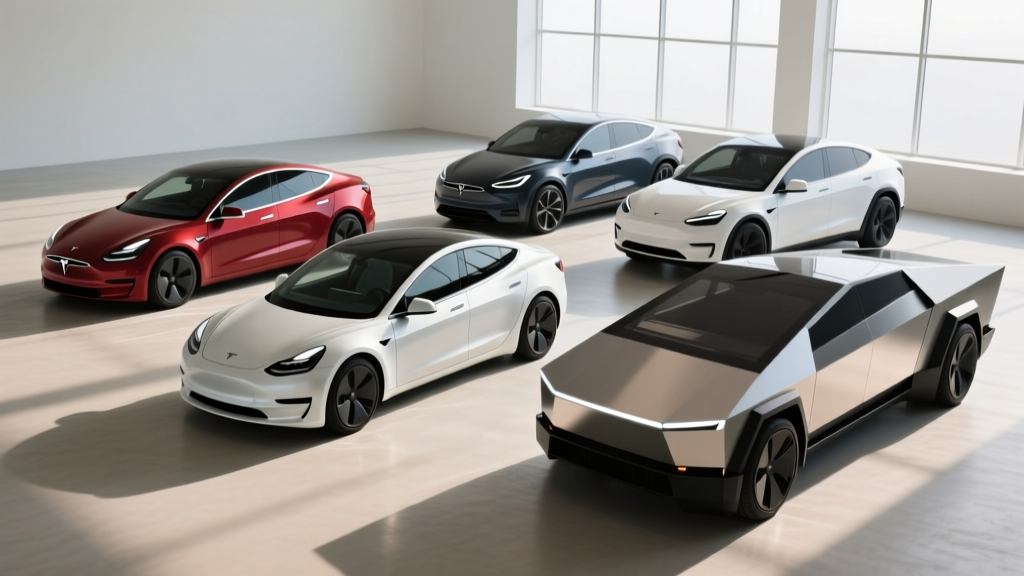
Tesla's performance claims have always been central to its brand identity. But when buyers search for 0 60 times Tesla models actually deliver, the numbers vary dramatically — from a physics-defying 1.99 seconds in the Model S Plaid to a more relaxed 6.5 seconds in the base Cybertruck. This guide consolidates every current-production Tesla's acceleration data alongside the specs that matter just as much: EPA range, charging speed, battery chemistry, pricing, and federal tax credit eligibility under current IRS §30D rules.
Whether you're cross-shopping a Model 3 Performance against a BMW i4 M50 or wondering if the Cybertruck AWD is quick enough for daily merging, the table below gives you the exact numbers — not marketing superlatives.
| Model / Trim | 0-60 mph | Top Speed | HP (est.) | Drivetrain |
|---|---|---|---|---|
| Model S Plaid | 1.99 sec | 200 mph | 1,020 | Tri-Motor AWD |
| Model S Long Range | 3.1 sec | 155 mph | 670 | Dual-Motor AWD |
| Model 3 Performance | 2.9 sec | 163 mph | 510 | Dual-Motor AWD |
| Model 3 Long Range AWD | 4.2 sec | 125 mph | 384 | Dual-Motor AWD |
| Model 3 RWD | 5.8 sec | 125 mph | 283 | Rear-Wheel Drive |
| Model X Plaid | 2.5 sec | 163 mph | 1,020 | Tri-Motor AWD |
| Model X Long Range | 3.8 sec | 155 mph | 670 | Dual-Motor AWD |
| Model Y Performance | 3.5 sec | 155 mph | 456 | Dual-Motor AWD |
| Model Y Long Range AWD | 4.8 sec | 125 mph | 384 | Dual-Motor AWD |
| Model Y Long Range RWD | 5.8 sec | 125 mph | 295 | Rear-Wheel Drive |
| Cybertruck Cyberbeast | 2.6 sec | 130 mph | 845 | Tri-Motor AWD |
| Cybertruck AWD | 3.9 sec | 112 mph | 600 | Dual-Motor AWD |
| Cybertruck RWD | 6.5 sec | 112 mph | 315 | Rear-Wheel Drive |
Source: Tesla.com official specifications and fueleconomy.gov. 0-60 times are manufacturer-claimed with rollout subtracted where applicable. Independent testing (Motor Trend, Car and Driver) typically records times 0.1–0.3 seconds slower on street tires.
Range, Battery Chemistry, and Real-World Efficiency
Acceleration is thrilling, but range and efficiency determine daily livability. Tesla currently uses two primary battery chemistries across its lineup: NMC (nickel manganese cobalt) in Long Range and Performance trims for maximum energy density, and LFP (lithium iron phosphate) in the Model 3 RWD for cost savings and cycle longevity. LFP batteries tolerate regular 100% charging without degradation concerns — a meaningful ownership advantage for commuters with home charging.
| Model / Trim | EPA Range | Battery (kWh usable) | Chemistry | MPGe (combined) | kWh/100mi |
|---|---|---|---|---|---|
| Model S Long Range | 402 mi | ~100 kWh | NMC | 120 MPGe | 28 |
| Model S Plaid | 359 mi | ~100 kWh | NMC | 116 MPGe | 29 |
| Model 3 RWD | 272 mi | ~57.5 kWh | LFP | 132 MPGe | 25 |
| Model 3 Long Range AWD | 341 mi | ~79 kWh | NMC | 134 MPGe | 25 |
| Model 3 Performance | 315 mi | ~79 kWh | NMC | 121 MPGe | 28 |
| Model X Long Range | 335 mi | ~100 kWh | NMC | 109 MPGe | 31 |
| Model X Plaid | 320 mi | ~100 kWh | NMC | 105 MPGe | 32 |
| Model Y Long Range AWD | 320 mi | ~79 kWh | NMC | 122 MPGe | 27 |
| Model Y Long Range RWD | 310 mi | ~75 kWh | NMC | 125 MPGe | 27 |
| Model Y Performance | 285 mi | ~79 kWh | NMC | 117 MPGe | 29 |
| Cybertruck AWD | 340 mi | ~123 kWh | NMC | 79 MPGe | 42 |
| Cybertruck Cyberbeast | 320 mi | ~123 kWh | NMC | 76 MPGe | 44 |
Charging Speed: DC Fast Charge and Home Level 2
A 2-second 0-60 time means nothing if you're stuck at a charger for an hour. Tesla's Supercharger network remains the gold standard for reliability, but peak kW numbers tell only part of the story. Charge curves taper significantly above 80% State of Charge (SoC), and cold batteries must be preconditioned — the car's navigation-based battery preconditioning typically activates when a Supercharger is set as your destination.
kW vs kWh refresher: kW (kilowatts) is the rate of energy transfer — like water pressure from a hose. kWh (kilowatt-hours) is the total energy stored — like the size of the bucket. A 250 kW charger fills a 79 kWh battery faster than a 150 kW charger, but only if the battery can accept that rate.
| Model / Trim | Max DC kW | 10–80% DC Time | Level 2 Rate (kW) | Level 2 Miles/Hr |
|---|---|---|---|---|
| Model S / X (all) | 250 kW | ~25–28 min | 11.5 kW | ~34 mi/hr |
| Model 3 RWD (LFP) | 170 kW | ~25 min | 11.5 kW | ~37 mi/hr |
| Model 3 LR / Perf | 250 kW | ~22–25 min | 11.5 kW | ~40 mi/hr |
| Model Y LR / Perf | 250 kW | ~24–27 min | 11.5 kW | ~36 mi/hr |
| Cybertruck (all) | 250 kW | ~30–35 min | 11.5 kW | ~25 mi/hr |
The Cybertruck's massive ~123 kWh battery means even at 250 kW, a full 10–80% session takes longer than a Model 3. For road-trippers, plan on 30-minute stops rather than 20. At home on a Level 2 wall connector, every Tesla adds roughly 25–40 miles of range per hour of charging — more than enough to replenish a day's commute overnight.
2026 Pricing and Federal Tax Credit Eligibility
Tesla's pricing has shifted multiple times over recent years. Below are base MSRPs as of early 2026. The federal EV tax credit under IRS §30D remains complex: eligibility depends on buyer income caps ($150K single / $300K joint modified AGI), vehicle MSRP caps ($55K for sedans, $80K for SUVs/trucks/vans), and stringent battery critical-mineral and component sourcing requirements that change annually.
- Buyer MAGI must not exceed: $150,000 (single), $225,000 (head of household), $300,000 (joint)
- Vehicle MSRP cap: $55,000 for sedans (Model 3); $80,000 for SUVs/trucks/vans (Model Y, Model X, Cybertruck)
- Battery must meet critical-mineral sourcing thresholds (increases yearly — check IRS.gov for current-year percentages)
- Battery component manufacturing/assembly must meet North American content thresholds
- Credit can be transferred to the dealer at point of sale as a purchase-price reduction
- Vehicles with disqualifying battery sourcing (certain foreign entity of concern materials) are excluded entirely
| Model / Trim | Base MSRP | MSRP Cap Category | §30D Credit Eligible? |
|---|---|---|---|
| Model 3 RWD | ~$38,990 | Sedan ($55K cap) | Varies by sourcing — check current IRS list |
| Model 3 Long Range AWD | ~$45,740 | Sedan ($55K cap) | Varies by sourcing |
| Model 3 Performance | ~$52,990 | Sedan ($55K cap) | Eligible if under $55K MSRP with options |
| Model Y Long Range AWD | ~$47,740 | SUV ($80K cap) | Historically eligible — verify current sourcing |
| Model Y Performance | ~$51,490 | SUV ($80K cap) | Historically eligible — verify current sourcing |
| Model S Long Range | ~$79,990 | Sedan ($55K cap) | Exceeds sedan MSRP cap — NOT eligible |
| Model S Plaid | ~$94,990 | Sedan ($55K cap) | Exceeds sedan MSRP cap — NOT eligible |
| Model X Long Range | ~$84,990 | SUV ($80K cap) | Exceeds SUV MSRP cap — NOT eligible |
| Model X Plaid | ~$99,990 | SUV ($80K cap) | Exceeds SUV MSRP cap — NOT eligible |
| Cybertruck AWD | ~$79,990 | Truck ($80K cap) | Under cap — sourcing-dependent |
| Cybertruck Cyberbeast | ~$99,990 | Truck ($80K cap) | Exceeds truck MSRP cap — NOT eligible |
Key takeaway: Only the Model 3 and Model Y trims that stay under their respective MSRP caps have any chance at the $7,500 credit — and even then, battery sourcing requirements may disqualify specific production batches. Model S, Model X, and Cybertruck Cyberbeast buyers should not expect federal credit eligibility.
Interior Space, Cargo, and Daily Practicality
Performance figures grab headlines, but cargo volume and passenger space determine whether a Tesla works for your actual life. Here's how the lineup stacks up for real-world utility:
- Model 3: 23 cu ft trunk + ~3 cu ft frunk. Rear legroom is 35.2 inches — adequate for adults on shorter trips, tight for tall passengers on long hauls. Best for: 1–2 person households, commuters.
- Model Y: 30 cu ft behind second row (76 cu ft folded) + ~4 cu ft frunk. Rear legroom 40.5 inches. The crossover form factor makes it the most practical Tesla for families with car seats and strollers.
- Model S: 28 cu ft rear cargo (hatchback) + ~5 cu ft frunk. Rear legroom 41.7 inches. The most spacious sedan option, with genuine cross-country comfort for four adults.
- Model X: Up to 91 cu ft cargo (5-seat config, rows folded) + ~7 cu ft frunk. Available in 5-, 6-, or 7-seat layouts. Falcon Wing doors aid car-seat loading in tight parking spots but add mechanical complexity.
- Cybertruck: 6.5-foot bed with powered tonneau (~67 cu ft), plus a large front trunk (~7 cu ft) and a "vault" behind the rear seats. Towing rated at 11,000 lbs (AWD/Cyberbeast). Best for: truck-duty buyers who also want EV performance.
Warranty, Tech, and Driver Assistance
Every 2026 Tesla includes the same baseline warranty structure:
- Vehicle limited warranty: 4 years / 50,000 miles
- Battery & drive unit: 8 years / 100,000 miles (Model 3 RWD) or 8 years / 120,000 miles (Long Range, Performance, Model S/X/Y). Tesla guarantees 70% minimum capacity retention during the warranty period.
That 70% retention threshold is important context: it means Tesla considers 30% degradation acceptable under warranty. Independent data from IIHS-referenced fleet studies and owner surveys suggest most NMC Tesla batteries lose 5–10% capacity in the first 50,000 miles before stabilizing, while LFP packs (Model 3 RWD) show even slower degradation curves with the added benefit of being safely chargeable to 100% daily.
Tech highlights across the lineup:
- 15.4-inch center touchscreen (17-inch in Model S/X) with integrated navigation, streaming, and gaming
- Tesla Vision-based Autopilot standard (adaptive cruise + lane centering) — this is SAE Level 2 driver assistance, meaning you must keep your hands on the wheel and eyes on the road at all times
- Full Self-Driving (Supervised) available as a $8,000 option or subscription — still Level 2 despite the name, and requires continuous driver supervision
- Over-the-air updates add features post-purchase
- Sentry Mode dashcam surveillance, Dog Mode climate control, and app-based remote preconditioning
Pros and Cons Across the Tesla Lineup
- Best-in-class Supercharger network with 50,000+ global stalls and NACS connector now adopted industry-wide
- Class-leading 0-60 times at nearly every price point (Model 3 Performance at 2.9s for ~$53K is extraordinary)
- Over-the-air updates continuously improve the vehicle post-purchase
- Low cost of ownership when home charging is available (~$0.04–0.08/mi vs $0.12–0.18/mi for gas)
- LFP option on Model 3 RWD offers exceptional battery longevity for daily commuters
- Strong resale value relative to most EV competitors
- No Apple CarPlay or Android Auto — Tesla's proprietary infotainment only
- Build quality inconsistency (panel gaps, paint defects) still reported more than legacy luxury brands
- FSD (Supervised) at $8,000 remains Level 2 — questionable value for most buyers
- Model S/X pricing exceeds federal tax credit MSRP caps entirely
- Cybertruck's angular design limits rear visibility and garage compatibility
- Service center wait times can stretch weeks in lower-density markets
Who Should Buy Which Tesla?
Choose Model 3 Long Range if: You take regular road trips, need AWD for snow-belt winters, and want the best efficiency-to-range ratio in the lineup.
Choose Model 3 Performance if: You want sports-car acceleration (2.9s 0-60) in a practical daily driver, and your budget stays near $53K to preserve potential tax credit eligibility.
Choose Model Y Long Range AWD if: You're a family of 3–5 needing crossover cargo space, car-seat-friendly rear doors, and strong range for weekend trips.
Choose Model S/X if: Budget is not a primary concern, you want premium luxury space, and you accept that the MSRP cap eliminates federal credit eligibility.
Choose Cybertruck if: You need genuine truck utility (11,000-lb towing, 6.5-ft bed) with EV performance and are willing to accept the polarizing design and higher energy consumption.
Frequently Asked Questions
What is the fastest Tesla 0-60 time in 2026?
The Model S Plaid holds the production record at 1.99 seconds (manufacturer claim, with 1-foot rollout subtracted). Independent testing by Motor Trend recorded 2.1 seconds. The Cybertruck Cyberbeast follows at 2.6 seconds, and the Model 3 Performance achieves 2.9 seconds at a fraction of the price.
Is the Tesla Model 3 Performance faster than a BMW M3?
In a straight line, yes. The Model 3 Performance hits 60 mph in 2.9 seconds versus the BMW M3 Competition's ~3.4 seconds. However, the M3 offers superior track handling, steering feedback, and braking endurance that Tesla hasn't matched. They serve different performance philosophies.
Does Tesla's 0-60 time change in cold weather?
Yes. Cold batteries deliver less peak power. In sub-30°F conditions without preconditioning, expect 0-60 times to increase by 10–20%. Tesla's battery preconditioning (activated when navigating to a Supercharger or via the app's "Climate" preconditioning) warms the pack and restores peak performance.
Which Tesla models qualify for the $7,500 federal tax credit in 2026?
Only Model 3 and Model Y trims priced under their MSRP caps ($55K sedan / $80K SUV) are potentially eligible. Even then, eligibility depends on battery critical-mineral sourcing and North American component content, which changes yearly. Model S, Model X, and Cybertruck Cyberbeast exceed MSRP caps and do not qualify. Always verify at fueleconomy.gov and consult a tax professional.
How long does a Tesla battery last before needing replacement?
Tesla's warranty guarantees 70% capacity retention for 8 years / 100,000–120,000 miles depending on trim. Real-world fleet data shows most packs retain 85–92% capacity at 100,000 miles. Full replacement costs range from $12,000–$20,000 depending on the model, but complete failures within warranty are uncommon. LFP batteries (Model 3 RWD) show particularly strong longevity.
Is Tesla's Supercharger network still an advantage in 2026?
Yes, but the gap is narrowing. With Ford, GM, Rivian, and others now using NACS connectors and accessing Superchargers, Tesla's exclusivity advantage has diminished. However, Superchargers still lead in uptime reliability, plug-and-charge simplicity, and route integration. Third-party networks (Electrify America, EVgo) have improved but still trail in consistency.
What's the real-world range of the Cybertruck on the highway?
The Cybertruck AWD is EPA-rated at 340 miles, but its brick-like aerodynamics and heavy weight (~6,600 lbs) cause significant highway range loss. Expect 250–280 miles at 70–75 mph in warm weather, and potentially under 220 miles in cold, windy conditions. Its 42 kWh/100mi efficiency is the worst in the Tesla lineup by a wide margin.