Quick Verdict: The Sensible Electric Crossover
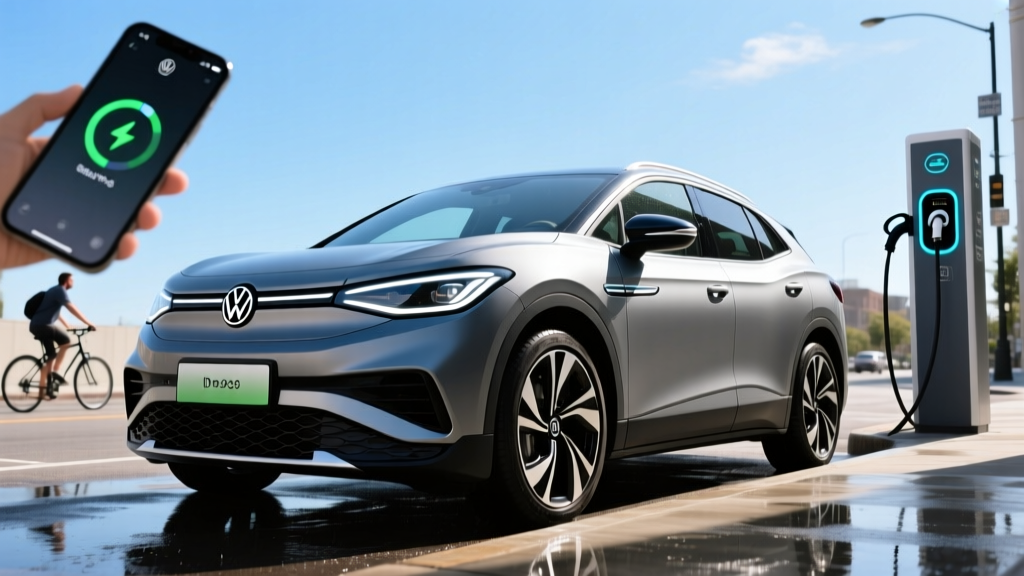
The 2023 Volkswagen ID.4 Pro S occupies a specific niche in the EV market: the no-drama electric family crossover. It doesn't chase headline-grabbing 0-60 times or 400-mile range claims. Instead, it delivers a comfortable ride, practical cargo space, and adequate DC fast-charging speeds at a price point that—when paired with the federal tax credit—undercuts rivals like the Tesla Model Y and Ford Mustang Mach-E.
The Pro S trim sits in the middle-upper tier of the ID.4 lineup, adding premium features like a panoramic glass roof, heated front seats, and a heated steering wheel over the base Pro. For 2023, Volkswagen also introduced the larger 82 kWh battery pack to rear-wheel-drive Pro and Pro S models (previously reserved for AWD variants), boosting EPA range to 275 miles. That's a meaningful upgrade over the earlier 62 kWh pack's 249-mile rating.
But adequate isn't always enough. The ID.4's infotainment system drew widespread criticism for sluggish response times and capacitive touch sliders that frustrate more than they simplify. And while 170 kW peak DC charging is respectable, it trails the Hyundai Ioniq 5's 800V architecture that can peak above 230 kW. Let's break down exactly what you get—and what you sacrifice.
Range, Battery, and Real-World Efficiency
Real-World Expectation: ~230–250 miles on highway-heavy trips at 70+ mph; ~190–215 miles in sub-30°F winter conditions. City and suburban driving with regen braking can approach or slightly exceed the EPA sticker.
The 2023 ID.4 Pro S RWD uses an 82 kWh gross / 77 kWh usable lithium-ion battery pack with NMC (nickel manganese cobalt) chemistry. Volkswagen doesn't publish the exact cell supplier for all markets, but the pack uses pouch cells in a skateboard-style platform shared across VW's MEB architecture.
The EPA rates the RWD Pro S at 104 MPGe combined (city 104 / highway 93), which translates to roughly 32 kWh per 100 miles. That's mid-pack for the compact electric SUV segment—the Model Y RWD achieves about 123 MPGe combined, while the Ioniq 5 RWD lands at 114 MPGe.
| Spec | Value |
|---|---|
| EPA Range (RWD) | 275 miles |
| Battery (Gross / Usable) | 82 kWh / 77 kWh |
| Chemistry | NMC (Nickel Manganese Cobalt) |
| Drivetrain | Rear-Wheel Drive (single motor) |
| Horsepower / Torque | 201 hp / 229 lb-ft |
| 0–60 mph | 7.7 seconds |
| EPA Efficiency | 104 MPGe combined (32 kWh/100mi) |
| Max DC Fast Charge | 170 kW |
| Level 2 Charge Rate | 11 kW (approx. 37 mi/hr) |
| Cargo (behind rear seats) | 30.3 cu ft |
| Cargo (seats folded) | 64.2 cu ft |
| Base MSRP (Pro S RWD) | $45,590 |
| Battery Warranty | 8 years / 100,000 miles |
The real-world range gap matters most on road trips. On a flat Interstate drive at 70 mph in moderate temperatures (60–75°F), expect to use about 34–36 kWh/100mi, yielding roughly 215–230 miles before you'd want to stop. In winter conditions, the ID.4's resistive cabin heater (it lacks a heat pump in the US-market 2023 Pro S) compounds range loss. Plan for 190–215 miles of usable range when temperatures drop below freezing.
For daily commuting under 60 miles round-trip with home charging, the 275-mile EPA figure is more than sufficient, and most owners will charge to 80% daily (about 220 miles) for battery longevity.
Charging Speed: Home and DC Fast Charging
The ID.4 Pro S supports a peak DC fast-charge rate of 170 kW on the RWD model (AWD variants peak at 135 kW). Volkswagen claims a 10–80% charge time of approximately 30 minutes under ideal conditions at a compatible 175+ kW station.
| Charging Level | Power / Rate | Time or Miles Added |
|---|---|---|
| Level 1 (120V household) | ~1.4 kW | ~4–5 miles per hour |
| Level 2 (240V home, 48A) | 11 kW | ~37 miles per hour; full charge ~7.5 hrs |
| DC Fast Charge (peak) | 170 kW | 10–80% in ~30 min; ~70% in ~22 min |
The charging curve tells the fuller story. The ID.4 ramps quickly to its 170 kW peak between roughly 10–30% state of charge, then progressively tapers. By 60% SoC, you're seeing approximately 100–120 kW, and above 80%, speeds drop sharply to protect the battery—often below 50 kW. This taper is why the 10–80% metric matters more than peak kW alone.
Compared to the Hyundai Ioniq 5's 800V system (10–80% in roughly 18 minutes at 230+ kW), the ID.4's 30-minute session is noticeably longer on road trips. It's not a dealbreaker, but if you regularly drive 300+ mile routes, the difference adds up to one extra stop or 12–15 extra minutes per charge.
At home, the 11 kW onboard charger is a strong point. With a 48-amp Level 2 wall connector on a 60-amp circuit, you'll add roughly 37 miles of range per hour—enough to fully replenish the 77 kWh usable pack in about 7.5 hours. This is faster than the base Nissan Leaf's 6.6 kW charger and on par with the Tesla Model Y's 11.5 kW capability. Most owners will wake up to a full battery every morning.
The ID.4 uses the CCS1 connector standard for DC fast charging and J1772 for Level 2 AC. VW also included three years of complimentary charging on the Electrify America network (with a kWh cap) for 2023 models, which partially offsets the EA network's variable reliability.
Performance and Driving Dynamics
The rear-wheel-drive Pro S sends 201 horsepower and 229 lb-ft of torque to the rear wheels via a single permanent-magnet synchronous motor. The 0–60 mph time of 7.7 seconds is perfectly adequate for merging and passing but won't win any stoplight drag races against the Model Y Long Range (4.8 seconds) or the Mach-E Premium RWD (6.1 seconds).
Where the ID.4 earns its keep is ride comfort. The suspension tuning leans decidedly soft—VW clearly prioritized compliance over sportiness. Potholes and expansion joints are absorbed with a muted thud that feels more premium than its price suggests. Steering is light and numb, which makes parking easy but highway driving less engaging.
Regenerative braking in the ID.4 is modest. The "B" mode on the shift selector increases regen but doesn't enable true one-pedal driving—the car won't come to a complete stop without touching the brake pedal. This is a deliberate VW choice, but it disappoints EV veterans accustomed to the strong regen of a Nissan Leaf or Tesla.
The available AWD Pro S (not the focus of this review) adds a front induction motor for a combined 295 hp and a 5.7-second 0–60, at the cost of about 15 miles of EPA range (260 miles for 2023 AWD Pro S).
Interior, Cargo, and Technology
The ID.4's cabin is spacious and airy, helped enormously by the Pro S's standard panoramic fixed glass roof. Rear legroom measures 37.6 inches—genuinely generous for the segment and more than the Model Y's ~36 inches. Front legroom is 41.1 inches. The seats are comfortable for long drives, though the synthetic leather (SofTex on some trims, leatherette on others) doesn't breathe as well as cloth in summer heat.
Cargo volume is 30.3 cubic feet behind the rear seats and 64.2 cubic feet with the 60/40 split folded. That's competitive with the RAV4 Hybrid and slightly less than the Model Y's 34.3 cu ft (behind second row). There's no front trunk (frunk) on RWD models—VW uses that space for HVAC components.
The infotainment system is the ID.4's most-criticized element. The 12-inch touchscreen (standard on Pro S) runs VW's ID. Software 3.x, which was plagued by lag and inconsistent touch response at launch. Over-the-air updates through 2024 and 2025 improved responsiveness, but the system still trails Tesla's and Hyundai's interfaces in fluidity. The capacitive touch sliders for volume and temperature—unlit and without haptic feedback—are a persistent annoyance, especially at night.
Wireless Apple CarPlay and Android Auto are standard, which many owners use as a workaround for the native interface. The Pro S also includes a 12-way power driver's seat, heated front seats, heated steering wheel, ambient interior lighting, and a power liftgate.
On the driver-assistance front, VW's IQ.DRIVE suite includes adaptive cruise control with stop-and-go, lane-centering assist, front emergency braking, blind-spot monitoring, and rear cross-traffic alert. This is a SAE Level 2 system, meaning the driver must remain fully engaged with hands on the wheel. It works competently on highways but doesn't match the smoothness of GM's Super Cruise or Tesla's Autopilot in stop-and-go traffic.
Pricing, Trims, and Federal Tax Credit
The 2023 ID.4 Pro S RWD carried a base MSRP of $45,590, including destination charge. Adding options like the Gradient Package (two-tone paint, 20-inch wheels, black roof) pushed as-tested prices to roughly $47,000–$48,000.
| Item | Amount |
|---|---|
| Base MSRP (Pro S RWD) | $45,590 |
| Gradient Package (optional) | +$1,500 |
| Typical As-Tested Price | ~$47,090 |
| Federal §30D Tax Credit (max) | Up to $7,500 |
| Effective Price After Max Credit | ~$39,590 |
For the 2023 model year, the ID.4 qualified for the full $7,500 federal EV tax credit under IRS §30D rules, provided the buyer met income caps (modified AGI ≤ $150,000 single / $300,000 joint) and the vehicle's MSRP stayed under the $80,000 SUV cap. The ID.4's battery sourcing and critical-minerals content met the phase-in requirements for 2023.
Starting January 1, 2024, the point-of-sale transfer option became available, allowing buyers to apply the credit as an immediate dealer discount rather than waiting for tax filing. For 2023 purchases, the credit was claimed on IRS Form 8936 with your annual tax return.
Important caveat: Tax credit eligibility depends on your specific tax situation, the vehicle's VIN-specific battery component sourcing, and annual rule changes. Consult a tax professional and verify current eligibility on the IRS Clean Vehicle Provisions page before purchasing.
Warranty and Long-Term Ownership
Volkswagen backs the ID.4's battery pack with an 8-year / 100,000-mile warranty, guaranteeing at least 70% capacity retention over that period. The limited vehicle warranty is 4 years / 50,000 miles, which is average for the segment. VW also includes 2 years of scheduled maintenance (cabin filter, brake fluid checks) and 3 years of roadside assistance.
NMC battery degradation data from early European ID.4 owners and MEB-platform vehicles shows approximately 5–8% capacity loss over the first 60,000 miles, which is within normal expectations. Long-term data beyond 100,000 miles is still accumulating as the platform launched in 2021 in the US.
Insurance costs for the ID.4 tend to run 10–20% higher than a comparably priced gas SUV, consistent with EV insurance premiums industry-wide. Get quotes before purchasing—insurers like Geico, Progressive, and EV-specific carriers vary significantly by zip code.
Pros, Cons, and Who Should Buy
Pros
- Comfortable, quiet ride quality that punches above its price class
- Generous rear legroom (37.6 in) and solid cargo space (30.3 cu ft)
- Strong 11 kW Level 2 home charging for fast overnight replenishment
- Federal $7,500 tax credit eligible (subject to income/sourcing rules)
- 3 years of complimentary Electrify America charging included
- 8-year/100,000-mile battery warranty with 70% retention guarantee
Cons
- Infotainment system remains sluggish despite OTA updates
- Capacitive touch sliders for climate/volume are frustrating to use
- DC fast charging (170 kW peak, ~30 min 10–80%) trails Hyundai/Kia 800V rivals
- No heat pump on US-market 2023 models — cold-weather range loss is significant
- Regen braking doesn't enable true one-pedal driving
- No front trunk (frunk) on RWD variants
Best for: Daily commuters and small families who prioritize ride comfort, interior space, and straightforward home charging over sporty performance or cutting-edge tech. If your typical drive is under 80 miles round-trip and you have Level 2 access at home, the ID.4 Pro S is a practical, comfortable EV that stays out of your way.
Look elsewhere if: You take frequent 300+ mile road trips (the Ioniq 5 or Model Y charge faster), you want the latest infotainment experience (Tesla or Rivian), or you live in a cold climate where the lack of a heat pump will cost you 30%+ of your range in winter.
Frequently Asked Questions
What is the real-world range of the 2023 ID.4 Pro S?
The EPA rates it at 275 miles, but expect roughly 230–250 miles on highway-heavy drives at 70+ mph in moderate weather, and as low as 190–215 miles in freezing temperatures. City driving with regenerative braking can approach or slightly exceed the EPA number.
How fast does the ID.4 Pro S charge at home and on the road?
At home on a 48-amp Level 2 charger (240V), it charges at 11 kW—adding about 37 miles of range per hour, or a full charge in roughly 7.5 hours. On DC fast chargers, it peaks at 170 kW and charges from 10–80% in approximately 30 minutes under ideal conditions.
Does the 2023 ID.4 qualify for the $7,500 federal tax credit?
Yes, the 2023 ID.4 qualified for up to $7,500 under IRS §30D, subject to buyer income limits ($150K single / $300K joint MAGI), MSRP caps ($80K for SUVs), and battery sourcing requirements. For 2023 purchases, the credit was claimed on your tax return. Always verify eligibility with a tax professional and the IRS Clean Vehicle page.
Is the ID.4 Pro S worth buying vs. the Tesla Model Y or Hyundai Ioniq 5?
It depends on priorities. The Model Y offers longer range (330 mi LR), faster charging, and a superior software experience but a firmer ride and panel-gap inconsistencies. The Ioniq 5 charges faster (18 min 10–80%) and has a more distinctive design but slightly less cargo room. The ID.4 Pro S wins on ride comfort, interior material quality at its price point, and value after the tax credit. Check fueleconomy.gov for side-by-side efficiency comparisons.
How reliable is the ID.4's battery long-term?
Early MEB-platform data shows 5–8% degradation over the first 60,000 miles, which is normal for NMC chemistry. VW's 8-year/100,000-mile warranty guarantees at least 70% capacity retention. Full long-term data (150,000+ miles) is still being collected as the platform is relatively new in the US market.
Does the ID.4 have a heat pump for winter efficiency?
The 2023 US-market ID.4 does not include a heat pump—it uses resistive electric heating for the cabin, which draws significantly more energy in cold weather. European ID.4 models received a heat pump option, but VW did not equip it for North America in 2023. This contributes to the notable winter range loss.