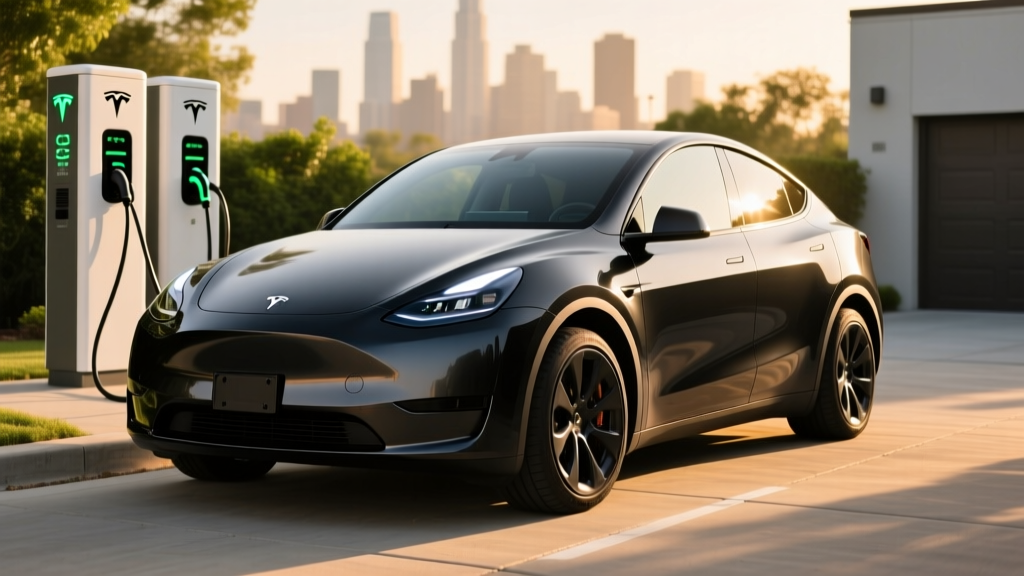
The Tesla Lineup at a Glance: Who Is Each Model Built For?
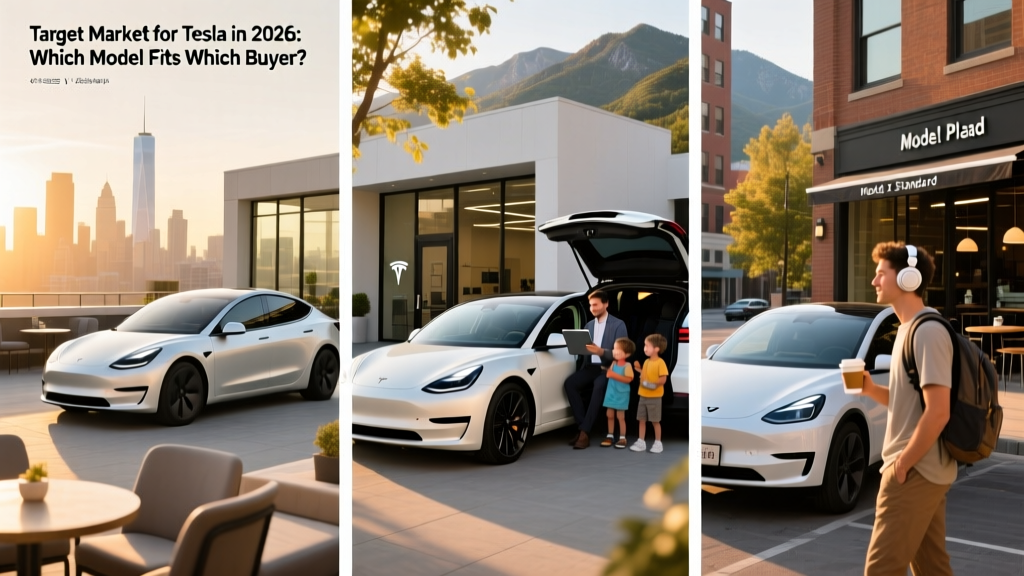
Tesla's 2026 lineup spans five distinct vehicles, each engineered for a specific slice of the EV-buying public. The target market for Tesla is no longer a single demographic of tech-forward early adopters — it now includes budget-conscious commuters, growing families, luxury sedan loyalists, and even light-duty truck buyers. Understanding which Tesla model maps to which buyer profile requires looking past marketing and into the hard numbers: EPA range, charging speed, battery chemistry, cargo space, and real ownership cost after federal incentives.
This guide dissects the 2026 Tesla portfolio model by model, pairing each vehicle's specifications with the buyer profile it serves best. All figures reflect current 2026 model-year data from fueleconomy.gov and Tesla's official specifications.
Quick-Spec Comparison: 2026 Tesla Lineup
| Spec | Model 3 LR AWD | Model Y LR AWD | Model S LR | Model X LR | Cybertruck AWD |
|---|---|---|---|---|---|
| EPA Range | 363 mi | 320 mi | 402 mi | 335 mi | 340 mi |
| Battery (usable kWh) | ~79 kWh (NMC) | ~78 kWh (NMC) | ~95 kWh (NMC) | ~95 kWh (NMC) | ~123 kWh (NMC) |
| Peak DC Charge | 250 kW | 250 kW | 250 kW | 250 kW | 350 kW |
| 10–80% DC Time | ~25 min | ~25 min | ~30 min | ~31 min | ~20 min |
| Level 2 Home Rate | 11.5 kW (~44 mi/hr) | 11.5 kW (~44 mi/hr) | 11.5 kW (~41 mi/hr) | 11.5 kW (~37 mi/hr) | 16.5 kW (~52 mi/hr) |
| 0–60 mph | 4.2 sec | 4.8 sec | 3.1 sec | 3.8 sec | 3.9 sec |
| Horsepower | 346 hp | 384 hp | 670 hp | 670 hp | 600 hp |
| Drivetrain | Dual-motor AWD | Dual-motor AWD | Dual-motor AWD | Dual-motor AWD | Tri-motor AWD |
| Cargo (cu ft) | 23 (trunk+frunk) | 76 (seats folded) | 28 (trunk+frunk) | 88 (seats folded) | ~68 (bed+frunk) |
| Efficiency | 132 MPGe / 25 kWh/100mi | 122 MPGe / 28 kWh/100mi | 124 MPGe / 27 kWh/100mi | 109 MPGe / 31 kWh/100mi | ~2.0 kWh/mi |
| Base MSRP | $47,740 | $48,240 | $79,990 | $84,990 | $79,990 |
| Federal §30D Credit | Up to $7,500 | Up to $7,500 | Not eligible (MSRP cap) | Not eligible (MSRP cap) | Up to $7,500 |
| Battery Warranty | 8 yr / 120,000 mi | 8 yr / 120,000 mi | 8 yr / 150,000 mi | 8 yr / 150,000 mi | 8 yr / 150,000 mi |
Model 3: The Commuter's Benchmark Sedan
The Model 3 Long Range AWD remains Tesla's most accessible all-around vehicle. At $47,740 before incentives, it targets urban and suburban professionals who want a premium compact sedan with minimal running costs. The 363-mile EPA range is among the best in its class, and the 250 kW peak DC charging rate means a 10–80% session takes roughly 25 minutes on a V3 or V4 Supercharger.
The Model 3's 79 kWh usable NMC (nickel-manganese-cobalt) battery delivers excellent energy density. Efficiency is rated at 132 MPGe combined (25 kWh per 100 miles), making it one of the most efficient EVs sold in the U.S. For buyers who prioritize low cost per mile and daily-driving practicality, the Model 3 is Tesla's strongest answer.
Who Should Buy the Model 3?
- Daily commuters covering 40–80 miles round-trip who want to charge overnight at home and rarely visit a DC fast charger
- Single professionals or couples without children who need sedan-class trunk space (23 cu ft including frunk)
- Buyers who want Tesla's Supercharger network access at the lowest entry price
- Tech-oriented drivers who value OTA updates and the 15.4-inch center touchscreen
Model Y: The Family Crossover Workhorse
The Model Y Long Range AWD is Tesla's volume leader for good reason. It occupies the compact crossover segment that dominates U.S. new-car sales, and its 76 cu ft of cargo space (rear seats folded) rivals midsize SUVs. At $48,240 base — just $500 more than the Model 3 — it delivers dramatically more utility.
The 320-mile EPA range is slightly lower than the Model 3 due to the Y's taller, heavier body, but still ample for most family road trips with one DC fast-charge stop. The dual-motor AWD powertrain produces 384 hp and a 4.8-second 0–60 time, quick enough for confident highway merging even when fully loaded with passengers and cargo.
Who Should Buy the Model Y?
- Families of 3–5 who need rear-seat legroom (41.6 inches) and easy car-seat installation
- Buyers transitioning from a gas SUV (RAV4, CR-V, Forester) who want comparable cargo space with lower per-mile fuel cost
- Light adventurers who haul bikes, kayaks, or camping gear using the available roof rack (165-lb dynamic capacity)
Model S and Model X: The Luxury Flagships
The Model S Long Range ($79,990) and Model X Long Range ($84,990) target a different buyer: luxury-sedan and luxury-SUV shoppers cross-shopping the Mercedes EQS, BMW i7, and Audi e-tron GT. The Model S delivers a staggering 402-mile EPA range — the highest of any current Tesla — and a 3.1-second 0–60 time from its 670-hp dual-motor powertrain. The Model X adds falcon-wing rear doors, up to 88 cu ft of cargo space, and optional six- or seven-seat configurations.
Both models use a ~95 kWh NMC battery and peak at 250 kW on DC fast charging, with 10–80% sessions taking approximately 30–31 minutes. The larger battery means more absolute energy to push through the same charge-rate ceiling, so charge sessions are modestly longer than the Model 3/Y despite identical peak kW.
Tax-Credit Reality for S and X
Neither the Model S nor Model X qualifies for the IRS §30D federal tax credit. The law caps eligible SUVs at an $80,000 MSRP and sedans at $55,000. The Model X's base price exceeds the SUV cap, and the Model S far exceeds the sedan cap. Buyers in this price bracket should factor in the full MSRP plus state-level incentives where available.
Who Should Buy the Model S or X?
- Executives and luxury buyers who want 400+ mile range without compromising on performance or materials
- Families wanting three-row seating (Model X) with electric powertrain and Supercharger access
- Buyers for whom the $7,500 federal credit is marginal relative to total vehicle spend
Cybertruck: The Electric Truck Disruptor
The Cybertruck AWD ($79,990) targets the full-size pickup market with a stainless-steel exoskeleton, 48-volt electrical architecture, and a tri-motor powertrain producing 600 hp. Its 340-mile EPA range (with the available range extender) and 350 kW peak DC charge rate — the fastest in Tesla's lineup — make it a credible work and adventure truck. A 10–80% charge takes approximately 20 minutes at a V4 Supercharger capable of delivering that rate.
The Cybertruck's ~123 kWh usable NMC battery is the largest Tesla has shipped, and its 16.5 kW Level 2 onboard charger is the fastest in the lineup — adding roughly 52 miles of range per hour of home charging versus 44 mi/hr for the Model 3/Y. This matters for truck owners who deplete the battery heavily during work or towing and need faster overnight replenishment.
Who Should Buy the Cybertruck?
- Truck buyers who tow boats, trailers, or equipment and want instant electric torque (zero turbo lag)
- Adventure-oriented owners who value the 6-foot bed, 11,000-lb towing capacity, and armor-grade body panels
- Early adopters willing to accept first-year build-quality variability and a polarizing design
Charging Deep Dive: Home and DC Fast Charging Across the Lineup
Charging speed is the single most common concern among EV buyers, and Tesla's Supercharger network remains a decisive advantage. But not all Teslas charge at the same rate. Here's how the 2026 lineup compares:
| Charging Level | Model 3 LR | Model Y LR | Model S LR | Model X LR | Cybertruck |
|---|---|---|---|---|---|
| Level 1 (120V, 1.4 kW) | ~5 mi/hr | ~5 mi/hr | ~4 mi/hr | ~4 mi/hr | ~3 mi/hr |
| Level 2 (240V, 11.5 kW) | ~44 mi/hr | ~44 mi/hr | ~41 mi/hr | ~37 mi/hr | ~52 mi/hr (16.5 kW) |
| DC Fast (peak kW) | 250 kW | 250 kW | 250 kW | 250 kW | 350 kW |
| 10–80% DC Time | ~25 min | ~25 min | ~30 min | ~31 min | ~20 min |
kW vs. kWh reminder: kW (kilowatts) measures charging power — how fast energy flows into the battery. kWh (kilowatt-hours) measures battery capacity — how much energy the battery stores. A 250 kW charger delivers energy faster than a 150 kW charger, but the total kWh stored determines your range.
Charge-curve reality: Tesla's published peak kW is not sustained across the entire session. Charging is fastest between 10–40% state of charge, then tapers progressively. Above 80%, the rate drops sharply to protect battery longevity — expect the 80–100% top-off to take nearly as long as the 10–80% session. For road trips, plan stops around 10–80% and skip the full charge unless you'll be parked overnight.
Home Charging Setup Cost
Installing a 240V Level 2 home charger (Tesla Wall Connector or equivalent) typically costs $500–$800 for the equipment plus $800–$2,500 for electrician labor, depending on panel proximity and whether a 200-amp panel upgrade is needed. Total: $1,300–$3,300 in most homes. A panel upgrade to 200A can push costs to $4,000–$5,500 in older homes with 100-amp service. Always consult a licensed electrician for a site-specific quote.
Federal Tax Credit Eligibility: What Actually Qualifies?
The IRS §30D Clean Vehicle Credit offers up to $7,500 for eligible new EVs, but qualification depends on several interacting rules that change periodically. Here's the 2026 framework:
- MSRP Cap: Sedans/wagons ≤ $55,000; SUVs/pickups/vans ≤ $80,000
- Buyer Income Cap (MAGI): $150,000 single / $225,000 head of household / $300,000 joint
- Battery Sourcing: Critical minerals and battery components must meet escalating domestic-content thresholds (increases annually through 2029)
- Assembly: Final assembly must occur in North America
- Point-of-Sale Transfer: Eligible buyers can transfer the credit to the dealer for an upfront price reduction at purchase
- Filing Requirement: You must have sufficient federal tax liability to claim the credit (it is non-refundable unless transferred at POS)
Always verify current eligibility on the IRS website and consult a tax professional. Battery-sourcing rules tighten annually and can disqualify a previously eligible model mid-year.
| Model | Base MSRP | MSRP Cap Met? | Est. Price After $7,500 Credit | Notes |
|---|---|---|---|---|
| Model 3 LR AWD | $47,740 | Yes (sedan ≤ $55K) | ~$40,240 | Most trims qualify; verify sourcing |
| Model Y LR AWD | $48,240 | Yes (SUV ≤ $80K) | ~$40,740 | All current trims under cap |
| Model S LR | $79,990 | No (sedan cap $55K) | $79,990 (full price) | Ineligible regardless of income |
| Model X LR | $84,990 | No (SUV cap $80K) | $84,990 (full price) | Ineligible regardless of income |
| Cybertruck AWD | $79,990 | Yes (pickup ≤ $80K) | ~$72,490 | Base trim qualifies; higher trims may exceed cap |
Driver-Assist Technology: Autopilot and FSD (Supervised)
Tesla's Autopilot and Full Self-Driving (Supervised) are SAE Level 2 driver-assistance systems. They provide steering, acceleration, and braking support but require the driver to remain fully engaged, hands on or near the wheel, and eyes on the road at all times. These systems do NOT make the vehicle self-driving. Only SAE Level 4 services (e.g., Waymo robotaxis in designated zones) operate without a human driver.
Every 2026 Tesla ships with basic Autopilot (traffic-aware cruise control and lane centering). FSD (Supervised) is a $8,000 add-on or $99/month subscription that adds automatic lane changes, traffic-light recognition, and city-street navigation. Real-world performance has improved significantly, but drivers must remain vigilant — NHTSA continues to investigate incidents involving Level 2 systems across all brands.
Pros and Cons Across the Tesla Lineup
Pros
- Access to the Tesla Supercharger network — the most reliable and extensive DC fast-charging network in North America
- Class-leading range across multiple segments (363–402 mi EPA)
- Over-the-air software updates that add features post-purchase
- Strong resale value relative to most EV competitors
- Industry-best efficiency (kWh per mile) reducing electricity cost
- Robust mobile app with remote climate, charging, and location control
Cons
- Model S and X are ineligible for the $7,500 federal tax credit due to MSRP caps
- Minimalist interior lacks physical controls — HVAC, mirrors, and glovebox are screen-operated
- No Apple CarPlay or Android Auto — Tesla's proprietary infotainment only
- Service center wait times can be long in high-density Tesla markets
- Insurance premiums run 15–30% higher than comparable gas vehicles in many states
- Panel gaps and build-quality inconsistency remain reported issues, especially on early-production vehicles
Decision Framework: Which Tesla Matches Your Needs?
Choose the Model Y if: You have children, haul gear regularly, or are replacing a compact SUV. The $500 premium over the Model 3 buys dramatically more interior volume. Effective price after credit: ~$40,740.
Choose the Model S if: You want 400+ mile range with luxury performance and don't need the federal credit. Cross-shop against the Mercedes EQS and BMW i7.
Choose the Model X if: You need three-row seating in an electric SUV and value the falcon-wing doors for tight parking. Budget $85K+ and accept no federal credit.
Choose the Cybertruck if: You need a pickup bed, tow regularly, and want the fastest DC charging in Tesla's lineup. Verify that the base trim stays under the $80K MSRP cap for credit eligibility.
Frequently Asked Questions
What is the real-world range of Tesla vehicles?
Real-world range typically falls 10–20% below EPA estimates during sustained highway driving at 70–75 mph, and 15–25% below in sub-freezing temperatures. The Model 3 LR delivers roughly 310–330 highway miles; the Model Y LR about 275–295; the Model S approximately 350–370. Always plan road trips around 80% of the EPA figure to maintain a safety buffer.
How fast does a Tesla charge at home and on the road?
On a home Level 2 charger (240V, 48A), the Model 3 and Y add roughly 44 miles of range per hour — enough to fully replenish overnight. The Cybertruck charges faster at home (52 mi/hr) thanks to its 16.5 kW onboard charger. On DC fast chargers, expect 10–80% in 20–31 minutes depending on the model, assuming battery preconditioning is active.
How much does a Tesla cost after tax credits?
The Model 3 LR AWD drops from $47,740 to approximately $40,240 after the $7,500 §30D credit (if you meet income and sourcing requirements). The Model Y LR AWD falls to ~$40,740. The Model S, Model X, and higher-trim Cybertrucks do not qualify due to MSRP cap exceedances.
Is Tesla worth buying vs. competitors like Hyundai, Ford, and BMW?
Tesla's advantages are Supercharger network access, efficiency, and OTA updates. Competitors like the Hyundai Ioniq 5 and Ford Mustang Mach-E now match or exceed Tesla in interior quality and offer CCS/NACS charging access to growing third-party networks. BMW's i4 and iX rival the Model 3 and S in luxury refinement. Test-drive at least two competitors before committing — the Tesla ecosystem is compelling but not the only strong option in 2026.
Does Tesla qualify for the federal EV tax credit?
Yes — the Model 3, Model Y, and base-trim Cybertruck qualify for up to $7,500 under IRS §30D, provided the buyer meets income caps ($150K single / $300K joint) and the vehicle's battery sourcing meets current-year domestic-content thresholds. The Model S and Model X do not qualify due to MSRP caps. Verify current eligibility at irs.gov before purchasing.
What is Tesla's battery warranty?
Tesla covers the battery and drive unit for 8 years or 120,000 miles (whichever comes first) on the Model 3 and Y, and 8 years or 150,000 miles on the Model S, X, and Cybertruck. The warranty guarantees a minimum 70% battery capacity retention during the coverage period. Out-of-pocket battery replacement costs range from approximately $12,000 to $20,000+ depending on the model, though most Tesla batteries show less than 10% degradation at 100,000 miles based on fleet data.