The Quick Answer: Suzuki EV Cars and the US Market
Bottom line: As of early 2026, Suzuki does not sell any electric vehicle in the United States. The brand exited the US auto market in 2012 and has not returned. Globally, Suzuki launched the e Vitara — its first mass-production battery-electric vehicle — in India and Europe starting in 2025, with a 49 kWh LFP battery, up to ~250 miles of WLTP range, and pricing equivalent to roughly $25,000–$35,000 depending on market. If Suzuki re-enters the US, the e Vitara would likely be the first model offered, but no timeline has been announced.
If you're searching for a Suzuki EV car in the US, you're likely either recalling the brand from its earlier American presence (the Swift, SX4, Grand Vitara) or you've seen international headlines about the e Vitara and want to know if it's buyable stateside. This guide gives you the exact specs on Suzuki's global EV platform, explains what it would cost if it arrived here, compares it against the subcompact EVs you can actually buy in America right now, and provides a practical decision framework for buyers waiting on Suzuki or considering alternatives.
Suzuki e Vitara: The Brand's First Global EV
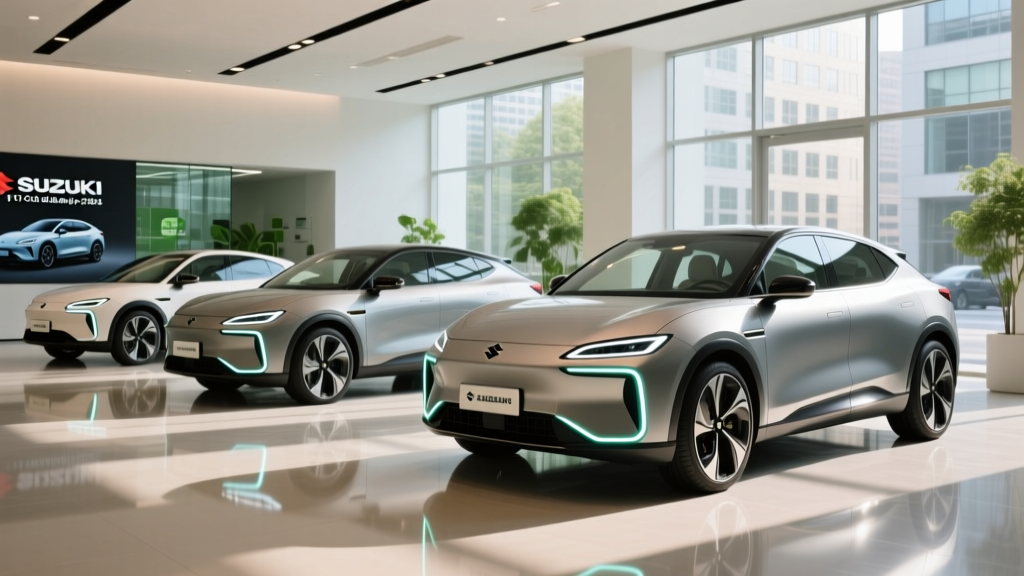
The Suzuki e Vitara (badged as the Toyota Urban SUV in some markets under the two companies' partnership) is Suzuki's ground-up electric subcompact crossover. Built on a new HEARTECT-e platform co-developed with Toyota, it represents the company's first serious EV entry after years of relying on mild-hybrid and strong-hybrid powertrains.
| Specification | e Vitara (Standard) | e Vitara (Long Range / AWD) |
|---|---|---|
| Battery Capacity | 49 kWh (LFP) | 61 kWh (LFP) |
| WLTP Range | ~250 mi (400 km) | ~310 mi (500 km) |
| Estimated EPA Range | ~200–215 mi | ~250–265 mi |
| Motor Output | 142 hp / 189 Nm (FWD) | 182 hp (AWD dual motor) |
| 0–100 km/h (est.) | ~8.5 sec | ~7.5 sec |
| DC Fast Charge Peak | ~100 kW | ~115 kW |
| 10–80% DC Charge | ~30 min (est.) | ~32 min (est.) |
| Level 2 AC Charge | 11 kW | 11 kW |
| Length / Wheelbase | 4,265 mm / 2,700 mm | |
| Platform | HEARTECT-e (Suzuki-Toyota joint) | |
Range reality check: The WLTP cycle used in Europe and India typically yields 10–15% higher range figures than the US EPA cycle. The 49 kWh e Vitara rated at ~250 mi WLTP should expect roughly 200–215 miles EPA if certified for the US. On sustained highway driving at 70+ mph, plan for 170–190 usable miles. In cold weather (below 30°F), LFP batteries lose 15–25% of range, bringing real-world winter range closer to 150–165 miles.
LFP Battery Choice: What It Means for Buyers
Suzuki's decision to use lithium iron phosphate (LFP) cells — likely sourced from BYD — aligns with the cost-conscious positioning of the e Vitara. LFP chemistry trades energy density for longevity and safety:
| Factor | LFP (e Vitara) | NMC (typical rival) |
|---|---|---|
| Energy Density | Lower (~160 Wh/kg cell) | Higher (~250 Wh/kg cell) |
| Cycle Life | 3,000+ cycles | 1,500–2,000 cycles |
| Cold-Weather Performance | Weaker — more range loss below freezing | Better low-temp retention |
| Thermal Runaway Risk | Very low | Moderate |
| Recommended Charge Habit | Can charge to 100% daily | 80% daily, 100% for trips |
| Cost per kWh | ~$80–$100 | ~$120–$140 |
The practical takeaway: an LFP e Vitara can be charged to 100% every night without the degradation concerns that NMC owners manage. Over a 10-year ownership period, the LFP pack should retain 85–90% of original capacity under normal use. However, if you live in a region with harsh winters — Minnesota, Maine, Montana — the cold-weather range penalty is real and worth factoring into your daily mileage math.
Cost Breakdown: What a Suzuki EV Would Cost in the US
Since the e Vitara isn't sold in the US yet, we'll model the economics based on its global pricing translated to American market conditions, then compare against the closest available alternatives.
| Cost Factor | Suzuki e Vitara (projected US) | Hyundai Kona Electric (2026) | Chevrolet Equinox EV (2026) |
|---|---|---|---|
| Base MSRP (est.) | $27,000–$30,000 | $33,000 | $33,000 |
| Federal Tax Credit (§30D) | Uncertain — battery sourcing TBD | Up to $7,500 (sourcing-dependent) | Up to $7,500 |
| Est. After Credit | $27,000–$30,000 | $25,500–$33,000 | $25,500–$33,000 |
| EPA Range (est.) | ~210 mi | 261 mi | 319 mi |
| Cost per Mile of Range | ~$129–$143 | ~$126 | ~$103 |
| Annual Electricity (15k mi) | ~$540 | ~$560 | ~$570 |
| Annual Maintenance | ~$300 | ~$300 | ~$300 |
| Insurance (avg annual) | ~$1,600 (est.) | ~$1,700 | ~$1,750 |
Federal Tax Credit Complications
The IRS §30D credit has strict requirements that would directly affect a potential Suzuki e Vitara US launch:
- MSRP cap: SUVs must be under $80,000 — the e Vitara clears this easily.
- Buyer income cap: AGI under $150,000 (single) or $300,000 (joint).
- Battery sourcing: A percentage of critical minerals must be sourced from the US or FTA partners, increasing annually. Suzuki's likely BYD battery supply chain (China) would face the foreign entity of concern (FEOC) exclusion — meaning the e Vitara could be ineligible for the full $7,500, or possibly any credit, depending on 2026 sourcing thresholds.
- Final assembly: Must occur in North America. Suzuki has no US manufacturing footprint currently.
This is a significant barrier. Even if Suzuki brought the e Vitara to the US, buyers might not qualify for any federal credit, putting it at a disadvantage against the Equinox EV and Kona Electric, which have established (or are establishing) North American supply chains.
Suzuki EV vs Gas and Hybrid: What the Numbers Show
For buyers in markets where Suzuki operates, the e Vitara competes against both the brand's own mild-hybrid Vitara and rival EVs. Here's how the math stacks up, projected into US fuel and electricity costs:
| Metric | e Vitara (EV, projected) | Vitara Mild-Hybrid (gas) | Toyota Corolla Cross Hybrid |
|---|---|---|---|
| Powertrain | BEV, 49 kWh LFP | 1.4L turbo + 48V mild hybrid | 2.0L HEV |
| Efficiency | ~3.2 kWh/mi (~105 MPGe) | ~30 MPG combined | 42 MPG combined |
| Fuel/Energy Cost (15k mi/yr) | ~$540/yr | ~$1,750/yr | ~$1,250/yr |
| 5-Year Fuel/Energy Total | ~$2,700 | ~$8,750 | ~$6,250 |
| 5-Year Maintenance (est.) | ~$1,500 | ~$3,000 | ~$2,800 |
| 5-Year Total Running Cost | ~$4,200 | ~$11,750 | ~$9,050 |
The EV advantage in running costs is substantial — roughly $7,500 saved over five years versus the mild-hybrid gas Vitara. However, this savings only materializes if you can charge at home at residential electricity rates (~$0.13–$0.17/kWh national average). If you're reliant on public DC fast charging at $0.35–$0.50/kWh, the annual "fuel" cost jumps to $1,575–$2,400, narrowing the gap with a Corolla Cross Hybrid significantly.
Real-World Ownership: What First-Time EV Buyers Need to Know
If Suzuki does bring an EV to the US, or if you're cross-shopping the available subcompact EVs today, these ownership realities matter more than spec sheets:
Home Charging Access Is the Make-or-Break Factor
With a 49 kWh battery and 11 kW Level 2 onboard charger, the e Vitara would charge from 10–100% in roughly 5 hours on a Level 2 home charger. That's overnight-ready for most drivers. But the prerequisite is having a Level 2 (240V) charger installed, which costs:
| Item | Typical Cost Range |
|---|---|
| Level 2 Charger (hardware) | $300–$700 |
| Electrician labor (standard install) | $500–$1,500 |
| Electrical panel upgrade (if needed) | $1,500–$3,500 |
| Permit and inspection | $100–$400 |
| Total (no panel upgrade) | $900–$2,600 |
| Total (with panel upgrade) | $2,400–$6,100 |
Apartment dwellers and street-parkers without home charging access face a harder equation. Public charging adds time (30-minute DC sessions vs 10-second gas fill-ups) and cost. If you can't charge at home or at work, a hybrid like the Corolla Cross Hybrid may be the more practical electrified choice.
Climate and Driving Pattern Considerations
The e Vitara's LFP battery and ~210-mile projected EPA range make it best suited for:
- Urban/suburban commutes under 60 miles round-trip — easily covered with range to spare
- Mild to moderate climates — Southern and coastal states where winter range loss is minimal
- Households with a second vehicle for longer road trips, since 210 miles of range means DC stops every ~170 highway miles
It is less suited for:
- Cold-climate single-car households — winter range of ~155 miles is tight for daily errands plus detours
- Frequent long-distance drivers — the ~100 kW peak DC charge rate and 30-minute 10–80% time lag behind rivals like the Ioniq 5 (240 kW, ~18 min)
- Rural areas with sparse charging infrastructure — range becomes a genuine constraint
Common Misconceptions About Suzuki and EVs
| Myth | Fact |
|---|---|
| "Suzuki already sells EVs in the US" | Suzuki has not sold any vehicle — gas or electric — in the US since 2012. The e Vitara is available in India, Japan, and Europe only. |
| "LFP batteries don't last as long" | LFP cells typically endure 3,000+ full cycles vs 1,500–2,000 for NMC. At 210 miles per cycle, that's 630,000+ theoretical miles before significant degradation. |
| "A cheaper EV always saves money" | A lower-MSRP EV without federal tax credit eligibility can cost more net than a pricier EV that qualifies for the full $7,500. The credit-adjusted price is the number that matters. |
| "You can charge any EV at a Tesla Supercharger" | Only NACS-equipped vehicles can use Superchargers natively. The e Vitara, sold in CCS-dominant markets, would likely launch with CCS1 in the US — requiring an adapter (if approved) for Tesla network access. |
| "Small batteries mean the car won't last" | A 49 kWh battery with LFP chemistry is sized for cost and daily driving. Battery longevity is measured in cycles, not capacity — and smaller LFP packs can outlast larger NMC packs in cycle count. |
Decision Framework: Should You Wait for Suzuki or Buy Now?
Wait for a Suzuki EV if:
- You're outside the US (India, Europe, Japan) where the e Vitara is already available or launching soon
- You want a subcompact crossover under $30,000 and don't need more than 210 miles of range
- You're not in a rush — Suzuki's US return has no confirmed timeline
- You prefer LFP battery chemistry for its longevity and 100% daily charging tolerance
Buy an available EV or hybrid now if:
- You're a US buyer — Suzuki's return is speculative and likely years away, if it happens at all
- You need federal tax credit eligibility — established models like the Equinox EV and Kona Electric have clearer §30D qualification paths
- Your daily driving exceeds 80 miles round-trip — you'll want 260+ miles of EPA range (Kona Electric: 261 mi; Equinox EV: 319 mi)
- You live in a cold climate — NMC-equipped rivals with heat pumps perform better in sub-freezing temperatures
- You can't charge at home — a hybrid (Corolla Cross Hybrid at 42 MPG) removes the charging-infrastructure dependency entirely
US Alternatives: What You Can Buy Today
Since the Suzuki e Vitara isn't an option for American buyers, here are the closest available vehicles in the subcompact EV crossover segment, with key data from fueleconomy.gov:
| Spec | 2026 Hyundai Kona Electric | 2026 Chevrolet Equinox EV | 2026 Nissan LEAF |
|---|---|---|---|
| Base MSRP | $33,000 | $33,000 | $28,140 |
| EPA Range | 261 mi | 319 mi | 212 mi (S Plus) |
| Battery | 64.8 kWh (NMC) | 85 kWh (NMC) | 60 kWh (NMC) |
| Peak DC Charge | ~100 kW | ~150 kW | ~100 kW |
| 10–80% DC Time | ~43 min | ~34 min | ~40 min |
| Connector | NACS (2026) | NACS (2026) | CCS1 |
| §30D Credit Eligibility | Partial — verify sourcing | Up to $7,500 | Phase-out (Nissan) |
| Warranty (battery) | 10 yr / 100,000 mi | 8 yr / 100,000 mi | 8 yr / 100,000 mi |
The Equinox EV stands out for buyers who want maximum range at a mainstream price point. The Kona Electric, now equipped with the NACS connector for 2026, gains access to Tesla's Supercharger network — a significant charging-infrastructure advantage. The LEAF remains the cheapest entry point but is aging, uses the CHAdeMO/CCS connector (not NACS), and Nissan has lost §30D eligibility due to the credit phase-out rules.
Frequently Asked Questions
Will Suzuki ever return to the US market with EVs?
Suzuki's partnership with Toyota is deepening globally, and Toyota has US manufacturing infrastructure. A joint product — potentially a rebadged e Vitara or a Toyota-platform SUV sold under both brands — is plausible. However, as of early 2026, Suzuki has made no official announcement about re-entering the US market. Any return would require establishing a dealer network, service infrastructure, and North American assembly to qualify for federal EV incentives.
Is the Suzuki e Vitara the same as the Toyota Urban SUV?
They share the HEARTECT-e platform and battery options but have distinct exterior styling, interior layouts, and tuning. In markets where both are sold, they're positioned as separate products. If either comes to the US, it's more likely to arrive as a Toyota-badged product through Toyota's existing dealer network.
What's the best small EV I can buy in the US right now?
For range and value, the Chevrolet Equinox EV (319 mi, ~$33,000) leads the subcompact/midsize crossover segment. For charging convenience, the Hyundai Kona Electric with its 2026 NACS connector opens up the Supercharger network. Budget buyers should consider the used EV market, where the §25E credit offers up to $4,000 on qualifying pre-owned electric vehicles under $25,000 (per IRS §25E rules).
How does LFP battery degradation compare to NMC over 10 years?
LFP packs typically retain 85–92% capacity after 10 years of daily charging to 100%, thanks to their 3,000+ cycle life. NMC packs charged to 80% daily retain roughly 80–88% over the same period. The LFP advantage is real but not dramatic — both chemistries should outlast the vehicle's useful life for most owners. The bigger practical difference is that LFP owners don't need to manage charge limits, simplifying daily routine.
Can I import a Suzuki e Vitara to the US myself?
Importing a non-US-spec vehicle is possible under NHTSA's 25-year rule (for vehicles not originally certified to US standards), but the e Vitara is far too new to qualify. Importing a current-model-year vehicle requires it to meet all FMVSS safety standards and EPA emissions certification — a process that is cost-prohibitive for an individual and effectively impossible without manufacturer cooperation. Grey-market import is not a realistic path for the e Vitara.