The Short Answer
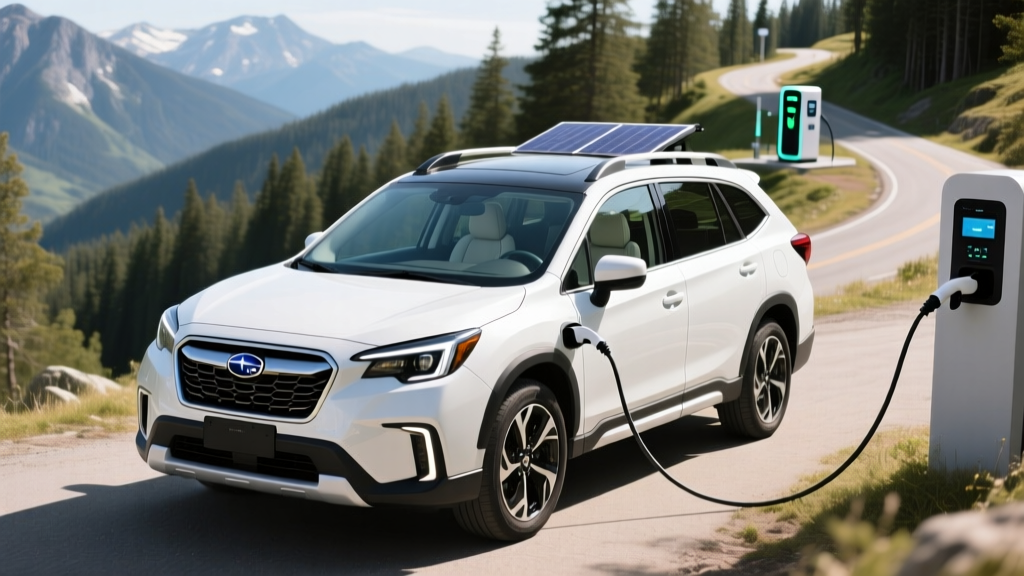
The 2026 Subaru Trailblazer is Subaru's first dedicated three-row electric SUV, built on the co-developed Subaru-Toyota e-TNGA platform (shared architecture with the Toyota bZ5x). It targets families who need seven seats, standard all-wheel drive, and genuine off-road capability in a battery-electric package. The Trailblazer is expected to start around $46,000 with an EPA-estimated range near 270 miles, a 100 kWh (usable) NMC battery, and peak DC fast-charging at approximately 150 kW. It qualifies as a serious family hauler for buyers with home charging access, though its charging speed trails segment leaders like the Hyundai Ioniq 9 and Kia EV9. Production begins late 2025 for the 2026 model year.
What the Subaru Three-Row Electric SUV Actually Is
Subaru confirmed the Trailblazer as a production three-row BEV during its 2024 technology roadmap update, with the vehicle arriving in U.S. dealerships for the 2026 model year. Unlike the Solterra — a compact two-row EV co-developed with Toyota — the Trailblazer is a larger, family-oriented vehicle built on an extended version of the e-TNGA platform. It seats seven across three rows and retains Subaru's brand-defining symmetrical all-wheel drive, now implemented via dual electric motors.
The positioning is deliberate: Subaru's buyer demographic skews toward outdoor-active families in regions with real winters — exactly the people who need three rows, AWD, and ground clearance, but who may be hesitant about range loss in cold weather. The Trailblazer aims to address those concerns with a large battery, heat-pump HVAC, and X-MODE traction software adapted for electric torque delivery.
| Specification | Value |
|---|---|
| EPA Range (est.) | ~270 miles (AWD) |
| Battery Capacity (usable) | ~100 kWh, NMC chemistry |
| Drivetrain | Dual-motor AWD |
| Horsepower | ~338 hp combined |
| 0–60 mph | ~6.0 seconds (est.) |
| Peak DC Fast Charge | ~150 kW |
| 10–80% DC Charge Time | ~35 minutes (est.) |
| Level 2 Charge Rate | ~11 kW (onboard charger) |
| Seating | 7-passenger, 3 rows |
| Ground Clearance | ~8.3 inches (est.) |
| Towing Capacity | ~3,500 lbs (est.) |
| Starting MSRP (est.) | ~$46,000 |
| Battery Warranty | 8 years / 100,000 miles |
Note: As of early 2026, final EPA certification figures have not been published. Specs above reflect manufacturer-announced targets and platform-shared data. Verify at fueleconomy.gov before purchasing.
Range, Efficiency, and Real-World Expectations
Range Reality Check
EPA estimate: ~270 miles
Real-world highway (70 mph, moderate climate): ~235–250 miles
Cold-weather (below 30°F, highway): ~190–215 miles
Why the drop? Aerodynamic drag at highway speeds reduces efficiency by 15–20% versus city driving. Cold temperatures increase battery internal resistance and demand cabin heating energy, compounding losses to 25–30% without preconditioning.
The Trailblazer's ~100 kWh usable battery is competitive for the three-row EV segment. For context, the Kia EV9 offers a 99.8 kWh pack with up to 304 miles EPA (in the lighter, more aerodynamic RWD Light Long Range trim). Subaru's AWD-only approach and boxier, more rugged styling will cost it some efficiency — expect combined consumption around 34–37 kWh/100 miles, translating to roughly 90–98 MPGe.
Subaru has confirmed a heat-pump HVAC system for the U.S. market, which is critical for cold-climate buyers. Heat pumps consume roughly 30–50% less energy than resistive heaters in temperatures between 20°F and 45°F, meaning your winter range penalty will be less severe than in EVs without one. Still, if you live in Minnesota or Maine and regularly drive 200+ miles in January, plan your charging stops accordingly.
Battery chemistry is expected to be NMC (nickel manganese cobalt), which offers higher energy density than LFP (lithium iron phosphate) — important for fitting enough capacity into a vehicle this size while keeping weight manageable. The trade-off: NMC batteries generally prefer not to sit at 100% state of charge for extended periods, and they degrade slightly faster than LFP over thousands of cycles. Subaru's 8-year/100,000-mile battery warranty (with a capacity retention threshold typically set at 70%) aligns with the industry standard.
Charging Speed and Infrastructure
This is where the Trailblazer faces its toughest scrutiny. A peak DC fast-charge rate of ~150 kW is adequate but not class-leading. The Hyundai Ioniq 9 and Kia EV9 can peak above 200 kW on 800-volt architecture, achieving 10–80% charges in roughly 20–24 minutes. The Trailblazer's estimated 35-minute 10–80% session is more in line with the Toyota bZ4X's charging profile — understandable given the shared platform, but a tangible gap on road trips.
| Charging Level | Power | Miles Added per Hour | Use Case |
|---|---|---|---|
| Level 1 (120V household) | ~1.4 kW | ~3–4 miles | Emergency top-up only |
| Level 2 (240V, 48A home charger) | ~11 kW | ~30–33 miles | Daily overnight charging |
| DC Fast Charge (peak) | ~150 kW | ~180+ miles in 20 min | Road-trip stops |
For home charging, the 11 kW onboard charger means a full 10–100% charge takes approximately 9.5–10 hours on a properly installed Level 2 station. This is fine for overnight replenishment — most daily driving uses 30–60 miles, easily replaced in 2–3 hours of Level 2 charging.
The Trailblazer will use the NACS (Tesla North American Charging Standard) connector, aligning with Subaru's commitment to the NACS transition. This grants access to Tesla's Supercharger network (over 20,000 U.S. stalls) via native plug — a major practical advantage over CCS-equipped competitors that still require adapters. For public charging outside the Tesla network, Electrify America and EVgo are also deploying NACS cables at new stations.
Charging curve reality: Peak 150 kW is sustained only between roughly 10–40% state of charge. Expect the rate to taper to ~100 kW by 60% SoC and ~50 kW above 80%. This is normal lithium-ion behavior, but it means charging from 80–100% at a DC station is painfully slow — plan to leave at 80% on road trips.
Cost Breakdown: Purchase, Charging, and Ownership
Let's run the numbers against the vehicle most Subaru three-row buyers are currently cross-shopping: the Subaru Ascent (gas-powered, 3-row, AWD, ~$38,000–$52,000 MSRP).
| Category | Trailblazer EV (est.) | Ascent (gas, est.) |
|---|---|---|
| Purchase Price (base) | $46,000 | $40,000 |
| Federal Tax Credit (§30D) | Up to $7,500* | $0 |
| Effective Purchase | ~$38,500 | $40,000 |
| Fuel/Energy (5 yrs, 75,000 mi) | $3,750–$5,250 | $8,500–$10,500 |
| Maintenance (5 yrs) | $800–$1,200 | $3,000–$4,000 |
| Insurance (5 yrs, avg.) | $9,500–$12,000 | $7,500–$9,500 |
| Estimated Depreciation | $18,000–$22,000 | $16,000–$20,000 |
| Approx. 5-Year Total Cost | $70,550–$78,950 | $75,000–$84,000 |
*§30D Federal Tax Credit caveat: Eligibility for the full $7,500 credit depends on multiple factors per current IRS rules: buyer income caps ($150,000 single / $300,000 joint), vehicle MSRP caps ($80,000 for SUVs), battery critical-mineral and component sourcing requirements, and point-of-sale transfer availability. The Trailblazer's battery sourcing will determine whether it qualifies for the full $7,500, a partial $3,750, or no credit at all. Check fueleconomy.gov for the latest eligibility status at time of purchase.
Energy cost detail: At a national average residential electricity rate of ~$0.16/kWh and estimated consumption of 35 kWh/100 miles, home charging costs roughly $0.056/mile — or about $4,200 over 75,000 miles. Public DC fast charging at $0.35–$0.50/kWh raises that to $0.12–$0.18/mile. If you charge 80% at home and 20% on DC fast chargers, your blended cost lands around $0.07/mile ($5,250 over 5 years).
The Ascent's 24 mpg combined (EPA) at $3.50/gallon works out to $0.146/mile — nearly double the Trailblazer's blended energy cost. Over 75,000 miles, that's a fuel savings of $3,250–$6,750 in the EV's favor.
How the Trailblazer Compares to Gas and Hybrid Alternatives
| Metric | Subaru Trailblazer EV | Subaru Ascent (gas) | Toyota Grand Highlander Hybrid |
|---|---|---|---|
| Powertrain | Dual-motor AWD BEV | 2.4L turbo AWD | 2.5L hybrid AWD |
| EPA Range / MPG | ~270 mi / ~95 MPGe | 24 mpg combined | 34 mpg combined |
| Refuel/Recharge Time | ~10 hrs (L2) / ~35 min (DC) | ~5 min | ~5 min |
| Energy Cost per Mile | $0.05–$0.12 | $0.15 | $0.10 |
| Seating | 7 | 7–8 | 7–8 |
| AWD | Standard | Standard | Available |
| Towing | ~3,500 lbs | 5,000 lbs | 5,000 lbs |
| Starting MSRP | ~$46,000 | ~$40,000 | ~$47,000 |
The Trailblazer wins on per-mile energy cost and eliminates oil changes, transmission fluid, and exhaust-system maintenance. But the Ascent and Grand Highlander Hybrid retain advantages in towing capacity (5,000 lbs vs. the Trailblazer's estimated 3,500 lbs), refueling speed, and — critically — proven long-distance range without route planning. If you regularly tow a boat or camper more than 150 miles, the gas or hybrid options remain more practical today.
The hybrid middle ground is worth serious consideration. The Grand Highlander Hybrid delivers 34 mpg combined (a 40% improvement over the Ascent) with zero range anxiety and no charging infrastructure dependency. Its per-mile fuel cost (~$0.10) is higher than the Trailblazer's home-charging cost but lower than DC fast-charging. For buyers without reliable home charging access, a PHEV or HEV may be the more rational choice in 2026.
Myths and Misconceptions — Addressed with Data
| Myth | Fact |
|---|---|
| "The battery will need expensive replacement in a few years." | Modern NMC packs are warrantied for 8 years/100,000 miles at ≥70% capacity. Real-world data from similar platforms shows ~10–15% degradation over 100,000 miles. Full replacement (if ever needed) runs $12,000–$18,000, but most packs outlast the vehicle. |
| "270 miles of range isn't enough for a family road trip." | Average U.S. daily driving is ~37 miles (FHWA data). 270 miles covers 95%+ of daily needs without charging. For road trips, a 35-minute DC fast-charge stop every 200–230 miles aligns with normal rest/bathroom breaks. |
| "EVs are worse in winter and snow." | The Trailblazer's dual-motor AWD delivers instant torque to all four wheels with no mechanical lag. X-MODE traction software manages regenerative braking to prevent wheel slip. Range drops 20–30% in deep cold, but capability in snow is excellent — often better than gas AWD. |
| "I can't charge at home, so an EV won't work." | This is a legitimate constraint, not a myth. Without home or workplace Level 2 charging, EV ownership becomes significantly less convenient and more expensive (relying on DC fast charging at $0.35–$0.50/kWh). Assess your charging access honestly before buying. |
| "EVs cost more to insure." | Generally true: EV insurance premiums run 10–25% higher than equivalent gas vehicles due to higher repair costs and parts pricing. Budget an extra $300–$600/year. Shop quotes from multiple carriers — EV-specific insurers like Tesla Insurance and Lemonade sometimes offer better rates. |
First-Time EV Buyer Checklist
If the Trailblazer would be your first EV, work through these practical items before signing:
- Home charging assessment: Do you have a garage or driveway where a Level 2 charger (240V, 48A circuit) can be installed? Expect $500–$2,500 for the charger unit and $800–$3,000 for electrician installation (more if your panel needs a 200A upgrade, which can add $2,000–$4,000). Consult a licensed electrician for a site-specific quote.
- Electrical panel capacity: Older homes with 100A service may not support a 48A EV charger alongside existing loads. A panel upgrade to 200A is common and adds cost but future-proofs your home.
- Daily driving audit: Track your actual weekly mileage for two weeks. If 90% of your driving is under 50 miles/day, the Trailblazer's range covers your needs with margin. If you regularly exceed 200 miles in a single day, plan your DC fast-charging route.
- Climate planning: In regions with sustained sub-freezing winters, budget 25–30% range loss. Use preconditioning (available via the Subaru app) to warm the battery while plugged in — this preserves range and enables faster DC charging.
- Tax credit verification: Confirm your AGI falls within §30D limits, and check fueleconomy.gov for the Trailblazer's current credit eligibility. The point-of-sale transfer option lets you apply the credit as a down-payment reduction at the dealer rather than waiting for a tax refund.
- Insurance quotes: Get quotes before purchasing. EV premiums vary wildly by carrier, zip code, and driving record.
Decision Framework: Is the Trailblazer the Right Three-Row for You?
Choose the Subaru Trailblazer EV If:
- You have reliable home or workplace Level 2 charging
- Your daily driving is under 150 miles and you take road trips 2–4 times per year (not weekly)
- You value AWD capability in snow and light off-road conditions
- You want to eliminate gas-station visits and reduce per-mile energy costs by 50%+
- You prefer Subaru's brand values (safety reputation, outdoor lifestyle, dealer network in rural/mountain states)
- You don't need to tow more than 3,500 lbs regularly
Choose a Gas or Hybrid Three-Row Instead If:
- You lack home or workplace charging access and can't install it
- You tow a trailer, boat, or camper over 150+ miles regularly
- You frequently drive 300+ miles in a single day in areas with sparse DC fast-charging infrastructure
- You live in an extreme cold climate (regularly below 0°F) and can't accept 30%+ range reduction
- You need the absolute lowest upfront cost and plan to keep the vehicle under 4 years
Choose a Competitor EV (Kia EV9 / Hyundai Ioniq 9) If:
- Faster DC charging (200+ kW, 10–80% in ~20 min) is a priority for frequent road trips
- You want a third row that comfortably fits adults, not just children
- V2L (vehicle-to-load) capability for camping or backup power is important to you
Frequently Asked Questions
When will the Subaru Trailblazer be available to buy?
Subaru has targeted late 2025 production start with vehicles arriving at U.S. dealerships in early-to-mid 2026 as a 2026 model-year vehicle. Exact timing varies by market and trim. Check with your local Subaru dealer for reservation availability.
Will the Trailblazer qualify for the $7,500 federal EV tax credit?
Potentially, but it depends on battery sourcing compliance with IRS §30D requirements. The credit has two components: $3,750 for critical-mineral sourcing and $3,750 for battery-component manufacturing. Subaru's battery supply chain will determine eligibility. Buyer income caps ($300,000 joint / $150,000 single) and the $80,000 SUV MSRP cap also apply. Verify on fueleconomy.gov at time of purchase — rules and sourcing compliance change.
Can the Trailblazer use Tesla Superchargers?
Yes. Subaru has adopted the NACS connector for its upcoming EVs, meaning the Trailblazer will plug directly into Tesla Supercharger stalls without an adapter. Subaru owners will access the Supercharger network through the Subaru app or Tesla's app for non-Tesla vehicles.
How long will a full home charge take?
On a Level 2 home charger at 11 kW, a full 0–100% charge takes approximately 9.5–10 hours. In practice, most owners charge from 20–80% overnight, which takes about 5.5 hours and replenishes roughly 160 miles of range — more than enough for daily driving.
Is the Trailblarger bigger than the Solterra?
Significantly so. The Solterra is a compact two-row SUV (~184 inches long) comparable to a Subaru Crosstrek in size. The Trailblazer is expected to measure around 198–202 inches in length, placing it between the Ascent and a full-size SUV. Third-row space and cargo volume will be substantially greater.
What about Subaru's EyeSight safety system?
The Trailblazer will feature an updated version of EyeSight, Subaru's driver-assistance suite (SAE Level 2 — the driver must remain engaged at all times). Expect adaptive cruise control, lane-centering, automatic emergency braking, and blind-spot monitoring. This is a driver-assist system, not autonomous driving.
How does cold weather affect the Trailblazer's range?
Expect 20–30% range reduction in sustained below-freezing temperatures, bringing the ~270-mile EPA estimate down to roughly 190–215 real-world miles. The included heat pump mitigates some loss versus resistive heating. Preconditioning the battery while plugged in (via the Subaru app) recovers charging speed and preserves range — use this feature every winter morning.