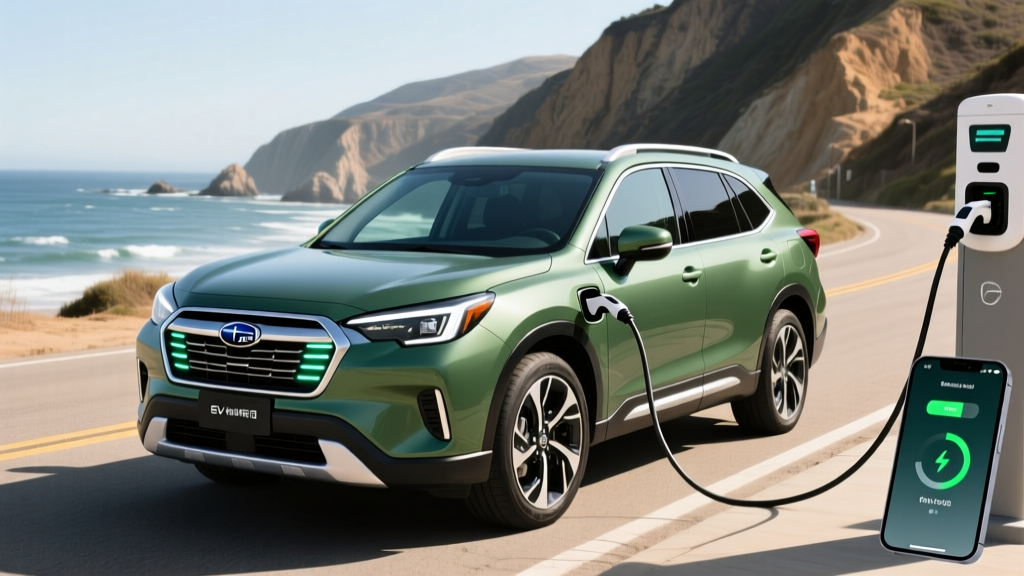
The Subaru Solterra has always been the EV for buyers who want Subaru's legendary all-wheel-drive confidence but are ready to ditch the gas pump. For 2026, Subaru and Toyota (its co-development partner on the e-TNGA platform) have addressed the two loudest criticisms of earlier models: mediocre DC fast-charging speeds and tepid highway range. The result is a more capable, more practical electric SUV — though not without trade-offs that buyers need to understand before signing a purchase agreement.
Below, we break down the 2026 Subaru Solterra SUV with the exact numbers that matter: EPA range, real-world efficiency, charging curves, battery chemistry, tax-credit eligibility, and how it stacks up against the Hyundai Ioniq 5, Ford Mustang Mach-E, and Toyota bZ4X.
Quick Verdict: Who the 2026 Solterra Is For
The 2026 Solterra is best suited for outdoor-oriented buyers and cold-climate drivers who prioritize standard all-wheel drive, solid ground clearance (8.3 inches), and Subaru's safety-first brand identity over maximum range or the fastest charging in the segment. If your typical week involves commuting through snow, hauling gear to a trailhead, and charging at home overnight, the Solterra delivers. If you regularly road-trip 400+ miles through the Southwest and need the quickest DC fast-charge times available, competitors like the Ioniq 5 or Tesla Model Y do it faster.
Range & Efficiency: EPA Numbers vs. Real-World Reality
Real-World Expectation: Expect 190–210 miles in mixed highway driving at 70+ mph. In cold weather (below 30°F), plan for 160–185 miles depending on cabin heating demand and terrain. City/regenerative driving can approach or slightly exceed the EPA sticker.
The 2026 Solterra benefits from a revised battery management system and slightly improved aerodynamic tuning that nudges range upward from prior model years. Subaru equips the Solterra with a 72.8 kWh usable lithium-ion battery (gross capacity approximately 74.4 kWh) using NMC (nickel manganese cobalt) cell chemistry supplied by Panasonic/CATL depending on production batch. NMC offers higher energy density than LFP, which helps in a platform where packaging space is constrained by the dual-motor AWD hardware.
Efficiency lands at 104 MPGe combined (city 111 / highway 97) per EPA data on fueleconomy.gov, translating to roughly 32 kWh per 100 miles. That's average for the dual-motor electric SUV segment — the Ioniq 5 AWD achieves 110 MPGe combined, while the heavier Ford Mustang Mach-E AWD sits at 101 MPGe.
For context on the real-world range gap: EV batteries lose roughly 15–25% of their effective range in sustained highway driving due to aerodynamic drag (which scales with the square of speed), and another 15–30% in sub-freezing temperatures because the battery must divert energy to thermal management and the cabin heater draws significant power. Subaru includes a standard heat pump for 2026, which helps reduce cold-weather losses compared to resistive heating, but physics is physics — plan conservatively in winter.
Charging Speeds: DC Fast Charge, Level 2, and Level 1
Charging is where the 2026 Solterra makes its biggest improvement over the 2023–2024 models, which topped out at a sluggish 100 kW. The updated model now supports a peak DC fast-charge rate of 150 kW on CCS1-equipped vehicles. Subaru has also adopted the NACS (Tesla Supercharger) connector as standard on 2026 models, with access to the Tesla Supercharger network via built-in adapter or native port depending on trim.
| Charging Level | Power / Rate | Speed | Notes |
|---|---|---|---|
| Level 1 (120V household) | 1.4 kW | ~4 miles per hour | Emergency/trickle only; ~60 hrs for full charge |
| Level 2 (240V home/public) | 7.2 kW (onboard charger) | ~22 miles per hour | Full charge in ~10.5 hours; ideal for overnight |
| DC Fast Charge (CCS1/NACS) | Peak 150 kW | 10–80% in ~30 minutes | Tapers significantly above 80%; curve peaks ~150 kW through ~55% SoC then drops to ~80 kW |
Charging curve reality check: The "150 kW peak" figure applies only in ideal conditions — battery preconditioned to optimal temperature (roughly 77–95°F at the cell level), state of charge below 30%, and a charger capable of delivering sustained power. In practice, the Solterra holds close to peak rate through about 50–55% SoC, then tapers to roughly 80 kW through 80%, and drops further above 80%. A 10–80% session takes approximately 30 minutes at a 150+ kW station. This is improved from earlier years but still trails the Hyundai Ioniq 5 (peak 240 kW, 10–80% in ~18 minutes) and Tesla Model Y (peak 250 kW, 10–80% in ~15 minutes).
For home Level 2 charging, the 7.2 kW onboard charger means you'll need a 32-amp or 40-amp dedicated circuit to get the full rate. A typical overnight session (10 hours) adds roughly 220 miles of range — enough to refill the battery from near-empty. Installation costs for a home Level 2 setup typically run $500–$2,000 depending on panel capacity and run length from your electrical panel to the garage or driveway. Always consult a licensed electrician for final specifications.
Performance: Dual-Motor AWD Standard Across All Trims
Subaru doesn't offer a single-motor, range-maximizing variant. Every 2026 Solterra comes with dual electric motors and standard symmetrical all-wheel drive, which is core to the brand's identity.
| Spec | Value |
|---|---|
| Powertrain | Dual-motor AWD (e-TNGA platform) |
| Total Horsepower | 215 hp (combined) |
| Total Torque | 248 lb-ft |
| 0–60 mph | 6.5 seconds |
| Top Speed | 110 mph (electronically limited) |
| Ground Clearance | 8.3 inches |
| Towing Capacity | 2,000 lbs (braked) |
| Battery Usable Capacity | 72.8 kWh (NMC chemistry) |
| Curb Weight | ~4,365 lbs |
The 6.5-second 0–60 time is adequate for merging and passing but won't thrill anyone coming from a Tesla Model Y Long Range (4.8 seconds) or an Ioniq 5 AWD (5.1 seconds). Where the Solterra earns its keep is low-traction confidence: Subaru's X-MODE system with Hill Descent Control and the dual-motor torque vectoring provide genuinely capable snow, mud, and light off-road performance. The 8.3 inches of ground clearance exceeds most crossover competitors and matches some dedicated SUVs.
Regenerative braking is adjustable via steering-wheel paddles across multiple levels, though Subaru stops short of true one-pedal driving (the vehicle does not come to a complete stop and hold without brake application). This is a common complaint among EV enthusiasts accustomed to stronger regen systems.
Interior, Cargo, and Technology
The Solterra's cabin is functional rather than flashy. Material quality is solid on upper trims (Limited, Touring) with SofTex-trimmed seats and soft-touch surfaces, while the base Premium trim uses more hard plastics. The 2026 model year carries over the 12.3-inch touchscreen infotainment system (on Limited and Touring; 8-inch on Premium) with wireless Apple CarPlay and Android Auto, integrated navigation, and cloud-connected services.
Cargo and passenger dimensions:
- Cargo volume behind rear seats: 23.8 cu ft
- Cargo volume with rear seats folded: 63.5 cu ft
- Front legroom: 42.1 inches
- Rear legroom: 35.7 inches
- Front headroom: 39.8 inches
- Rear headroom: 38.4 inches
Rear legroom is the Solterra's weak point compared to competitors. The Hyundai Ioniq 5 offers 39.4 inches of rear legroom, and the Tesla Model Y provides 40.5 inches. Taller passengers will find the Solterra's back seat snug on long trips. The cargo area, however, is competitive, and Subaru includes a small under-floor storage compartment (no true front trunk/frunk — the space is occupied by HVAC and power electronics).
Driver assistance: Subaru's EyeSight suite is standard and includes adaptive cruise control with lane centering, pre-collision braking, lane departure warning, and blind-spot detection. This is an SAE Level 2 driver-assist system — the driver must remain fully engaged with hands on the wheel and eyes on the road at all times. It is not autonomous or "self-driving." The system is competent for highway cruising but does not offer hands-free capability like GM's Super Cruise or Ford's BlueCruise.
Pricing, Trims, and Federal Tax Credit Eligibility
The 2026 Subaru Solterra is offered in three trims. Pricing reflects base MSRP before destination charges ($1,395) and before any incentives:
| Trim | Base MSRP | Est. Federal Credit (§30D) | Effective Price* |
|---|---|---|---|
| Premium | $39,995 | Up to $7,500 | ~$32,495 |
| Limited | $43,495 | Up to $7,500 | ~$35,995 |
| Touring | $47,495 | Up to $7,500 | ~$39,995 |
*Effective price assumes full §30D credit eligibility. Actual credit depends on buyer income, battery sourcing, and MSRP caps. See details below.
- MSRP Cap: SUVs/vans/pickups must have MSRP ≤ $80,000 (all Solterra trims qualify)
- Buyer Income Cap: Modified AGI ≤ $150,000 (single) / $225,000 (head of household) / $300,000 (married filing jointly)
- Battery Sourcing: Critical minerals and battery components must meet phased-in percentage thresholds from US or FTA-partner countries — verify current-year compliance on the IRS eligible vehicle list
- Point-of-Sale Transfer: Eligible buyers can transfer the credit to the dealer at purchase, reducing the purchase price directly rather than waiting for a tax refund
- Assembly: Vehicle must undergo final assembly in North America (the Solterra is assembled in Japan — this may disqualify it from §30D; check current IRS guidance)
Critical caveat: The Subaru Solterra is manufactured at Toyota's Motomachi plant in Japan. Under current §30D rules, vehicles must undergo final assembly in North America to qualify for the federal purchase credit. This has historically disqualified the Solterra from the §30D new-vehicle credit. However, buyers should check two potential workarounds: (1) the commercial vehicle credit (§45W), which some dealers have structured through lease arrangements, and (2) any updates to sourcing or assembly rules. Always verify eligibility on irs.gov and consult a tax professional before relying on credit availability.
Warranty Coverage
Subaru backs the 2026 Solterra with competitive warranty terms:
- Basic Vehicle Warranty: 3 years / 36,000 miles
- Powertrain Warranty: 5 years / 60,000 miles
- EV Battery Warranty: 8 years / 100,000 miles (capacity retention guaranteed above 70% of original capacity)
- Corrosion Perforation: 5 years / unlimited miles
- Roadside Assistance: 3 years / 36,000 miles
The 70% battery capacity retention threshold over 8 years/100,000 miles is industry-standard and matches most competitors. Real-world degradation data for the e-TNGA platform is still limited given the Solterra's 2023 launch, but the Toyota bZ4X (mechanical twin) has shown approximately 5–8% degradation over the first 50,000 miles in owner-reported data, which projects well within warranty limits.
How the Solterra Compares to Key Competitors
| Spec | Subaru Solterra | Hyundai Ioniq 5 AWD | Ford Mach-E AWD | Toyota bZ4X AWD |
|---|---|---|---|---|
| EPA Range | 227–242 mi | 260 mi | 250–290 mi | 222–236 mi |
| Battery (usable) | 72.8 kWh NMC | 74.0 kWh NMC | 75.7 kWh NMC | 72.8 kWh NMC |
| Peak DC Charge | 150 kW | 240 kW | 150 kW | 150 kW |
| 10–80% Time | ~30 min | ~18 min | ~35 min | ~30 min |
| AWD HP | 215 hp | 320 hp | 266–480 hp | 214 hp |
| 0–60 mph | 6.5 sec | 5.1 sec | 5.1–6.1 sec | 6.5 sec |
| Ground Clearance | 8.3 in | 6.1 in | 5.7 in | 8.1 in |
| Rear Legroom | 35.7 in | 39.4 in | 38.1 in | 35.7 in |
| Base MSRP (AWD) | $39,995 | $47,400 | $42,995 | $39,595 |
- You need genuine ground clearance and AWD for snow, gravel, or light trails
- You value Subaru's safety reputation and EyeSight standard equipment
- You charge primarily at home and rarely need ultra-fast DC charging
- You prefer a traditional SUV driving position over a crossover-car feel
- Maximum range is your top priority → Hyundai Ioniq 5, Tesla Model Y
- You road-trip frequently and need the fastest DC charging → Ioniq 5 (240 kW)
- Rear-seat space for adults matters → Ioniq 5, Model Y
- You want hands-free highway driving → Ford Mach-E with BlueCruise
Pros and Cons
Pros
- Standard dual-motor AWD on every trim — no FWD penalty trim
- Class-leading 8.3 inches of ground clearance for snow and trails
- Competitive base pricing at $39,995
- Subaru's EyeSight safety suite standard across all trims
- Improved DC fast-charge rate (150 kW vs. prior 100 kW)
- Heat pump standard for better cold-weather efficiency
- 2,000-lb towing capacity adequate for small trailers and bikes
Cons
- EPA range of 227–242 miles trails most competitors
- Rear legroom (35.7 in) is tight for taller passengers
- 150 kW DC charging is slower than Ioniq 5 (240 kW) and Model Y (250 kW)
- Japan-assembled — likely ineligible for §30D federal purchase credit
- No one-pedal driving mode; regen is modest
- No front trunk (frunk) — space used by electronics
- Infotainment system can be sluggish compared to Tesla/Hyundai
Frequently Asked Questions
What is the real-world range of the 2026 Subaru Solterra?
The EPA rates the Solterra at 227 miles (20" wheels) or 242 miles (18" wheels). In real-world mixed highway driving at 70+ mph, expect 190–210 miles. In cold weather below 30°F, plan for 160–185 miles. City driving with regenerative braking can approach or slightly exceed the EPA number.
How fast does the Solterra charge at home and on the road?
At home on a Level 2 (240V) charger, the Solterra charges at 7.2 kW, adding about 22 miles of range per hour — a full charge takes roughly 10.5 hours. On DC fast chargers, it peaks at 150 kW and charges from 10–80% in approximately 30 minutes under ideal conditions.
Does the 2026 Subaru Solterra qualify for the federal EV tax credit?
Likely not under the standard §30D purchase credit, because the Solterra is assembled in Japan, and §30D requires North American final assembly. However, some lease arrangements may qualify under the commercial vehicle credit (§45W). Always check the current IRS eligible vehicle list and consult a tax professional.
Is the Subaru Solterra worth buying over the Toyota bZ4X?
They share the same e-TNGA platform, battery, and powertrain, so range and performance are nearly identical. The Solterra edges ahead with slightly more ground clearance (8.3 vs. 8.1 inches), Subaru's X-MODE off-road tuning, and Subaru's brand cachet for outdoor buyers. The bZ4X may be priced slightly lower. Test-drive both and compare dealer incentives.
Can the Solterra tow?
Yes. The 2026 Solterra has a maximum towing capacity of 2,000 pounds when properly equipped with the available tow hitch. This is sufficient for small utility trailers, bike racks, or a light popup camper, but not for larger boat or travel trailers.
Does the Solterra have one-pedal driving?
No. While regenerative braking is adjustable via paddle shifters, the Solterra will not come to a complete stop and hold position without brake pedal input. This differs from competitors like the Nissan Ariya, Ford Mach-E, and most Tesla models that offer full one-pedal driving.
What is the battery warranty on the Solterra?
Subaru covers the EV battery for 8 years or 100,000 miles, guaranteeing that capacity will remain above 70% of original. This matches the industry standard set by most automakers and complies with CARB-emissions-state requirements.
The 2026 Subaru Solterra SUV occupies a clear niche: it's the electric SUV for drivers who live where the pavement ends or the snow begins. It won't win range or charging-speed contests, but it delivers where Subaru buyers have always demanded — all-weather confidence, practical utility, and a safety-first philosophy. If that's your priority list, and you can charge at home, the Solterra earns a serious look.