Quick Verdict: A Capable AWD EV With Subaru DNA, But Range Lags Rivals
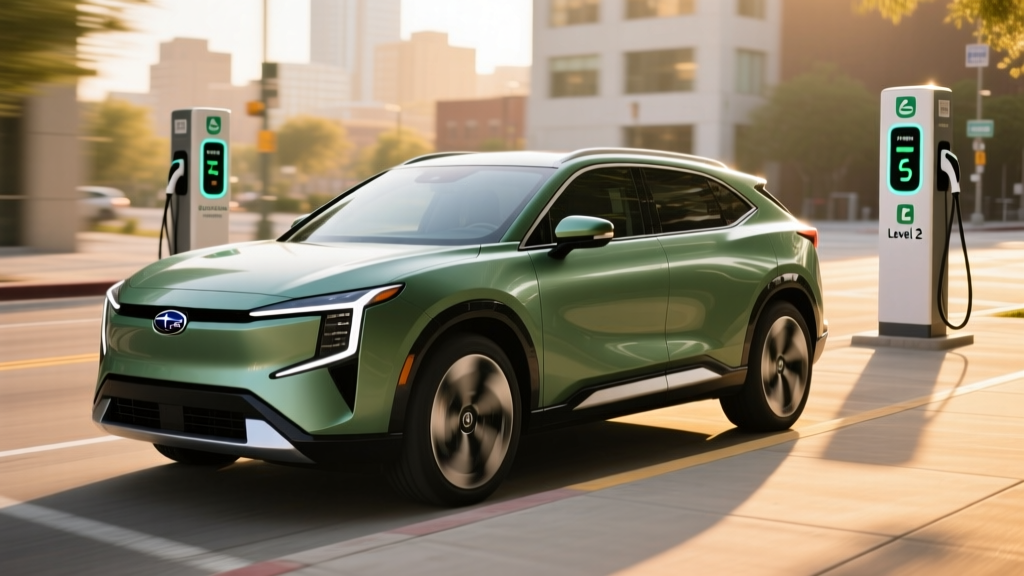
The 2026 Subaru Solterra occupies a specific niche in the EV market: it's the electric SUV for buyers who prioritize standard all-wheel drive, rugged styling, and Subaru's safety reputation over maximum range. Built on the shared e-TNGA platform with the Toyota bZ4X, the Solterra delivers competent daily-driving efficiency and improved DC fast-charging speeds for the 2026 model year. However, with an EPA-estimated range that tops out around 227 miles and a usable battery of approximately 64 kWh, it trails key competitors like the Hyundai Ioniq 5 and Tesla Model Y by a significant margin on long road trips. If your driving consists mainly of commutes under 40 miles round-trip with occasional weekend excursions—and you value ground clearance and standard AWD—the Solterra remains a compelling, if imperfect, electric option.
| Specification | Value |
|---|---|
| EPA Estimated Range | 222–227 mi (trim-dependent) |
| Battery Capacity (Usable) | ~64 kWh (72.8 kWh gross) |
| Battery Chemistry | NMC (Nickel Manganese Cobalt) |
| Max DC Fast Charge Rate | 150 kW peak |
| 10–80% DC Fast Charge Time | ~35 minutes |
| Level 2 Home Charge Rate | ~6.6 kW (approx. 21 mi/hr) |
| Drivetrain | Dual-motor AWD (standard all trims) |
| Horsepower | 214 hp |
| Torque | 248 lb-ft |
| 0–60 mph | ~6.5 seconds |
| EPA Efficiency | 104 MPGe combined / 32 kWh/100 mi |
| Cargo Volume (behind rear seats) | 23.8 cu ft |
| Cargo Volume (rear seats folded) | 56.9 cu ft |
| Ground Clearance | 8.3 inches |
| Battery Warranty | 8 years / 100,000 miles |
| Base MSRP (Premium trim) | ~$44,995 |
Range and Efficiency: EPA Sticker vs. Real-World Reality
EPA Estimated Range: 222 miles (Limited/Touring) to 227 miles (Premium with 18-inch wheels).
Real-World Expectation: Expect 190–210 miles in mixed highway driving at 70 mph, and 160–180 miles in freezing temperatures (below 32°F) with cabin heat active. City driving with regenerative braking can push closer to the EPA sticker, around 215–225 miles.
The Solterra's range story requires honest context. The EPA numbers cited above apply to the 2026 model year with incremental efficiency tweaks, but the fundamental limitation is the ~64 kWh usable battery capacity paired with a relatively heavy dual-motor AWD platform weighing over 4,300 pounds. According to fueleconomy.gov, the Solterra's combined efficiency of roughly 104 MPGe (or 32 kWh per 100 miles) is middling among compact electric SUVs.
In real-world testing, highway range suffers noticeably. At sustained 70–75 mph speeds, expect to use approximately 36–38 kWh per 100 miles, which brings practical range down to about 190 miles before you'd want to find a charger. Cold weather compounds this: below-freezing temperatures can reduce range by 20–30% due to battery heating demands and cabin climate load. The Solterra does include a battery preconditioning feature for DC fast charging, but it lacks a dedicated heat pump on some trims, which hurts cold-weather efficiency compared to rivals like the Ioniq 5.
For daily commuting under 50 miles round-trip, this range is perfectly adequate—you'll charge at home every two to three days and rarely think about it. But for road trips exceeding 200 miles one-way, you'll need to plan at least one charging stop, and the 35-minute 10–80% charge time means that stop takes noticeably longer than in a Hyundai or Kia on the same platform-adjacent chargers.
Charging Speed: DC Fast Charging and Home Level 2 Setup
Subaru upgraded the Solterra's DC fast-charging capability for the 2026 model year, moving from the previous generation's widely criticized 100 kW peak to a more competitive 150 kW peak rate. Here's how that translates to real charging scenarios:
| Charging Level | Power (kW) | Time / Rate | Notes |
|---|---|---|---|
| Level 1 (120V household) | ~1.4 kW | ~3–4 mi/hr | Emergency/trickle only; full charge in ~45+ hours |
| Level 2 (240V home) | ~6.6 kW | ~21 mi/hr (~10 hrs 0–100%) | Standard overnight charging; requires 30A circuit |
| DC Fast Charge (public) | 150 kW peak | 10–80% in ~35 min | Peak rate not sustained; tapers significantly above 80% |
A few critical nuances for prospective owners:
- Charge curve taper: The 150 kW peak is only achieved between roughly 10–40% state of charge. Above 60%, the rate drops progressively, and above 80%, it slows to roughly 30–40 kW to protect battery health. This is why manufacturers quote 10–80% times rather than 0–100%.
- CCS vs. NACS: The 2026 Solterra ships with a CCS1 charge port. Subaru has announced a transition to NACS (Tesla's connector) for future model years, but 2026 models will require a CCS-to-NACS adapter to access Tesla Supercharger stalls. Subaru has indicated adapters will be available through dealerships.
- Home charging reality: At 6.6 kW Level 2, a full overnight charge (10 hours on a dedicated 240V/30A circuit) replenishes the battery from near-empty to full. Most owners who plug in nightly will rarely need more than 3–4 hours of Level 2 charging to top off daily driving.
- Installation cost: Budget $800–$2,500 for professional Level 2 home charger installation, depending on whether your electrical panel needs an upgrade. A licensed electrician should assess your panel capacity before purchase.
Performance, Drivetrain, and the AWD Advantage
Every 2026 Solterra comes with standard dual-motor all-wheel drive—no single-motor RWD option exists, which is a deliberate Subaru decision aligned with the brand's AWD heritage. The system produces 214 horsepower and 248 lb-ft of torque, delivering a 0–60 mph time of approximately 6.5 seconds. That's adequate for highway merging and confident passing, though it trails sportier competitors like the Ford Mustang Mach-E (which hits 60 in under 5 seconds in extended-range AWD form).
Where the Solterra's powertrain shines is low-traction scenarios. Subaru's X-MODE system, carried over from its ICE lineup, manages torque distribution between the front and rear motors for improved grip on snow, mud, and gravel. The 8.3 inches of ground clearance exceeds most electric crossovers, making the Solterra genuinely capable on unplowed roads and light off-road trails. If you live in a region with harsh winters and value traction confidence, this is a tangible advantage over lower-clearance EVs.
Ride quality is compliant and tuned for comfort rather than sportiness. Body roll is present in corners given the ride height and weight, but the low center of gravity from the floor-mounted battery keeps it composed. Regenerative braking offers adjustable levels via steering-wheel paddles, though the Solterra does not offer true one-pedal driving (the regen doesn't bring the vehicle to a complete stop without brake application).
Interior, Cargo, and Technology
The Solterra's cabin prioritizes function over flash. Materials are durable hard plastics on lower surfaces with soft-touch materials on the dashboard and armrests—appropriate for the price point but noticeably less premium than a Tesla Model Y or Ioniq 5 interior. The 12.3-inch touchscreen infotainment system (standard on Limited and Touring trims; an 8-inch screen on Premium) supports wireless Apple CarPlay and Android Auto, and the interface is responsive, if not class-leading in design.
Cargo and passenger dimensions:
- Cargo behind rear seats: 23.8 cu ft (adequate for groceries, two large suitcases, or a stroller)
- Cargo with rear seats folded: 56.9 cu ft (competitive for the segment but trails the Model Y's ~76 cu ft)
- Rear legroom: 35.7 inches (comfortable for adults on longer trips)
- Front headroom: 40.7 inches (generous, even with the panoramic roof on Touring trim)
- No front trunk (frunk) — the space is occupied by HVAC and power electronics
Subaru's EyeSight driver-assistance suite comes standard and includes adaptive cruise control, lane-centering assist, pre-collision braking, and lane-departure warning. This is an SAE Level 2 driver-assistance system—meaning you must keep your hands on the wheel and eyes on the road at all times. It is not autonomous driving. The system performs reliably on marked highways but can be conservative in lane-centering compared to Ford's BlueCruise or GM's Super Cruise.
Pricing, Trims, and Federal Tax Credit Eligibility
The 2026 Subaru Solterra is offered in three trims. Pricing below includes destination charge:
| Trim | MSRP (approx.) | Key Features | §30D Credit Eligibility |
|---|---|---|---|
| Premium | $44,995 | 18" wheels, 8" display, heated seats, X-MODE, EyeSight | Eligible up to $7,500 (see caveats below) |
| Limited | $48,495 | 12.3" display, power liftgate, 20" wheels, SofTex seats | Eligible up to $7,500 |
| Touring | $51,995 | Panoramic roof, ventilated seats, premium audio, 20" dark wheels | Eligible up to $7,500 |
Federal Tax Credit (IRS §30D) — Critical Eligibility Rules
The Solterra is assembled in Japan (at Toyota's Motomachi plant), which creates a significant tax-credit complication under current IRS rules. Here is what you must know before assuming you'll receive $7,500:
- MSRP cap: The Solterra is classified as an SUV, so the MSRP cap is $80,000. All trims fall well under this limit. ✓
- Buyer income cap: Adjusted gross income must not exceed $150,000 (single), $225,000 (head of household), or $300,000 (married filing jointly). ✓ Check your AGI.
- Battery component sourcing: Under current IRS §30D rules, a percentage of battery components must be manufactured or assembled in North America, and critical minerals must be sourced from the U.S. or free-trade-agreement partners. The Solterra's Toyota-sourced battery may only partially meet these thresholds, potentially reducing the credit to $3,750 or disqualifying it entirely depending on the model year's sourcing certification.
- Point-of-sale transfer: If eligible, you can transfer the credit to the dealer at purchase for an immediate price reduction rather than waiting to claim it on your tax return.
Bottom line: Verify current eligibility on the IRS Clean Vehicle credit page and confirm with your dealer before signing. Do not assume the full $7,500 applies. A qualified tax professional can advise on your specific situation.
If the Solterra qualifies for the full $7,500 credit, the Premium trim effectively drops to approximately $37,495—making it far more competitive against the Ioniq 5 SE Standard Range (which starts around $42,000 and qualifies for the credit). If only $3,750 applies, the effective price rises to ~$41,245, which narrows the value proposition considerably.
How It Compares: Solterra vs. Key Competitors
| Spec | Subaru Solterra | Hyundai Ioniq 5 (AWD) | Tesla Model Y (LR AWD) | Ford Mach-E (AWD) |
|---|---|---|---|---|
| EPA Range | 222–227 mi | 290 mi | 311 mi | 290–320 mi |
| Battery (usable) | ~64 kWh | 77.4 kWh | ~75 kWh | 75.7 kWh |
| DC Fast Charge Peak | 150 kW | 240 kW | 250 kW | 150 kW |
| 10–80% Time | ~35 min | ~18 min | ~22 min | ~36 min |
| 0–60 mph | 6.5 sec | 5.0 sec | 4.8 sec | 5.1 sec |
| Standard AWD | Yes (all trims) | No (optional) | Yes (LR AWD) | No (optional) |
| Ground Clearance | 8.3 in | 6.1 in | 6.6 in | 5.7 in |
| Base MSRP | ~$44,995 | ~$47,000 | ~$48,000 | ~$43,000 |
The data tells a clear story: the Solterra sacrifices range and charging speed for standard AWD, superior ground clearance, and Subaru brand loyalty. If range and fast-charging speed are your top priorities, the Ioniq 5 and Model Y are objectively better choices. If you need an EV that handles snowy mountain roads and unplowed driveways with confidence, the Solterra's 8.3 inches of ground clearance and X-MODE system give it a practical edge no competitor matches.
Ownership Costs, Warranty, and Long-Term Battery Outlook
Subaru provides the following warranty coverage for the 2026 Solterra:
- Basic vehicle warranty: 3 years / 36,000 miles
- Powertrain warranty: 5 years / 60,000 miles
- Battery warranty: 8 years / 100,000 miles (covers capacity loss below 70% of original capacity)
The 70% capacity-retention threshold is industry-standard, matching most competitors. Based on data from the Solterra's platform sibling (the Toyota bZ4X) and broader NMC battery degradation studies, owners can expect approximately 10–15% capacity loss over 100,000 miles under normal use patterns. Avoiding repeated DC fast-charging to 100% and minimizing prolonged storage at extreme states of charge (below 10% or above 90%) will help preserve long-term battery health.
Insurance costs for the Solterra tend to run 10–20% higher than equivalent gasoline Subaru models (Outback, Forester) due to higher repair costs for EV-specific components. Get a quote before purchasing to budget accurately.
According to IIHS testing, the Solterra has performed well in crashworthiness evaluations, earning strong scores in moderate overlap front and side impact tests. Verify the latest model-year ratings directly with IIHS before purchase.
Pros, Cons, and Who Should Buy the Solterra
Pros
- Standard dual-motor AWD on every trim — no extra-cost package required
- 8.3 inches of ground clearance — best-in-class for electric crossovers
- X-MODE traction management for snow, mud, and gravel
- Subaru EyeSight safety suite standard across all trims
- Comfortable ride quality with compliant suspension tuning
- Competitive pricing if the full $7,500 tax credit applies
Cons
- EPA range of 222–227 miles trails most rivals by 60–90 miles
- 35-minute 10–80% DC fast charge is slower than Ioniq 5, Model Y, and EV6
- No front trunk (frunk) for additional cargo storage
- Interior materials feel budget-conscious for the price point
- CCS port requires an adapter for Tesla Supercharger access
- Federal tax credit eligibility uncertain due to Japan assembly and battery sourcing
- No one-pedal driving mode (regen doesn't bring vehicle to full stop)
Who Should Buy the Solterra?
Choose the Solterra if: You live in a snowy or rural area where AWD and ground clearance are non-negotiable, your daily commute is under 50 miles round-trip, you're a loyal Subaru owner who trusts the brand's reliability, and you can verify tax-credit eligibility before purchase.
Look elsewhere if: You regularly drive 200+ miles one-way and need fast charging, you want maximum range per dollar, you prioritize premium interior materials, or you need access to the Tesla Supercharger network without an adapter.
Frequently Asked Questions
What is the real-world range of the 2026 Subaru Solterra?
In mixed driving conditions, expect 190–210 miles at highway speeds (70 mph). In cold weather below freezing, range drops to approximately 160–180 miles. City driving with frequent regenerative braking can approach the EPA estimate of 222–227 miles. Plan road trips with a buffer—don't rely on the EPA sticker for long-distance planning.
How fast does the Solterra charge at home and on the road?
On a Level 2 home charger (240V, 6.6 kW), expect about 21 miles of range added per hour, or a full charge in roughly 10 hours. On a DC fast charger, the Solterra peaks at 150 kW and charges from 10–80% in approximately 35 minutes. This is slower than the Hyundai Ioniq 5 (~18 minutes) and Tesla Model Y (~22 minutes) on comparable chargers.
Does the 2026 Solterra qualify for the $7,500 federal EV tax credit?
It depends. The Solterra is assembled in Japan, and its battery sourcing must meet IRS §30D critical-mineral and component-manufacturing thresholds. Depending on the model year's certification, it may qualify for the full $7,500, a partial $3,750, or no credit at all. Buyer income caps ($150K single / $300K joint) and the $80K SUV MSRP cap also apply. Always verify current eligibility on IRS.gov and with your dealer before committing.
Is the Solterra worth buying over the Hyundai Ioniq 5 or Tesla Model Y?
It depends on your priorities. If standard AWD, high ground clearance, and Subaru's safety and reliability reputation matter most—and your daily driving stays under 200 miles—the Solterra is a solid choice, especially if the tax credit applies. If range, charging speed, interior refinement, or cargo space are your top concerns, the Ioniq 5 and Model Y are objectively stronger EVs. Test-drive all three before deciding.
Does the Solterra have a frunk (front trunk)?
No. The space under the front hood houses power electronics and HVAC components. All cargo must go in the rear cargo area (23.8 cu ft behind rear seats, 56.9 cu ft with seats folded).
Can I use Tesla Superchargers with the Solterra?
The 2026 Solterra uses a CCS1 charge port. To access Tesla Superchargers (which use the NACS connector), you'll need a CCS-to-NACS adapter. Subaru has indicated adapters will be available through dealerships, but confirm availability and compatibility before relying on the Supercharger network for travel.
How long will the Solterra's battery last?
Subaru warranties the battery for 8 years or 100,000 miles against capacity loss below 70%. Based on NMC battery degradation data and the Toyota bZ4X platform track record, expect 10–15% capacity loss over 100,000 miles with normal charging habits. Many EV batteries retain 80–85% capacity at 150,000 miles. Avoid habitual DC fast-charging to 100% and prolonged storage at very low or very high states of charge to maximize longevity.