The Case for Leasing the 2026 Subaru Solterra
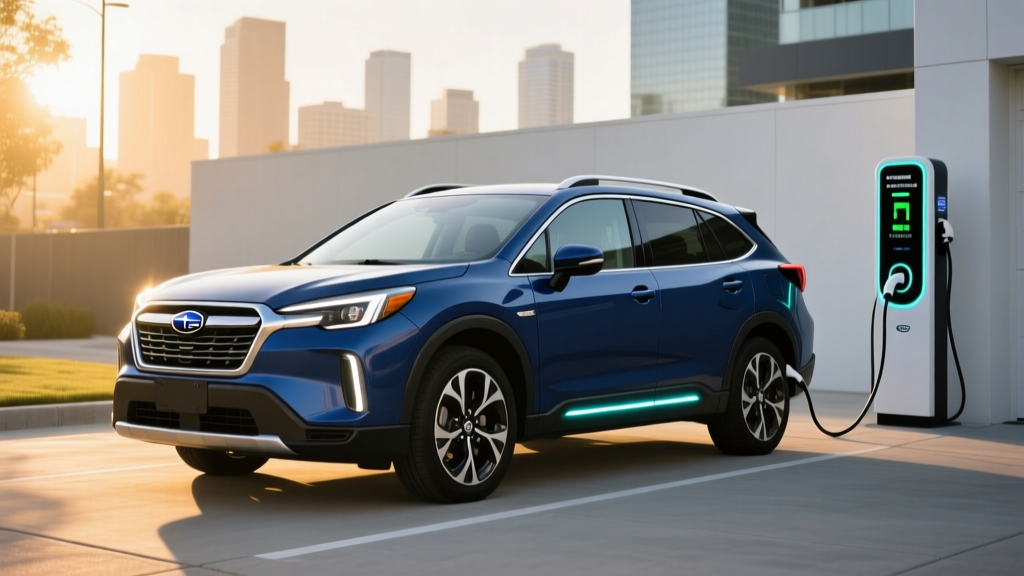
Subaru's second-generation Solterra enters the 2026 model year with a meaningful mid-cycle refresh: a more efficient drivetrain, faster DC charging, and revised pricing that makes it one of the most accessible dual-motor AWD electric SUVs on the market. But for many buyers, the real question isn't whether the Solterra is a capable EV — it's whether the Subaru Solterra lease deals available right now represent smarter money than buying outright, especially given rapid EV depreciation and evolving tax-credit rules.
This review covers everything you need to evaluate both the vehicle and the lease math: real-world range, charging performance, federal incentive eligibility, and how the Solterra stacks up against the Hyundai Ioniq 5, Toyota bZ4X, and Ford Mustang Mach-E.
Spec Sheet at a Glance
| Specification | 2026 Subaru Solterra |
|---|---|
| EPA Range | 227 miles (Premium trim); 222 miles (Limited/Touring) |
| Battery Capacity | 72.8 kWh usable (Lithium-ion, NMC chemistry) |
| Drivetrain | Dual-motor AWD (standard on all trims) |
| Horsepower | 215 hp combined |
| 0–60 mph | 6.5 seconds |
| Max DC Fast Charge | 150 kW peak |
| 10–80% DC Charge Time | ~35 minutes |
| Level 2 Charge Rate | 11.5 kW (~37 miles per hour) |
| EPA Efficiency | 111 MPGe combined (30 kWh/100 mi) |
| Cargo Volume | 27.7 cu ft (rear seats up); 56.9 cu ft (folded) |
| Base MSRP (Premium) | $44,995 (before incentives) |
| Battery Warranty | 8 years / 100,000 miles |
Real-World Range: What the EPA Sticker Doesn't Tell You
Real-World Expectation: 190–210 miles highway; 160–185 miles in sub-35°F cold weather
The Solterra's 72.8 kWh NMC (nickel manganese cobalt) battery is shared with its platform twin, the Toyota bZ4X. The 2026 refresh brought a revised thermal management system and improved regenerative braking calibration, bumping range modestly from the prior year's 222-mile figure on the base trim.
In mixed suburban-and-highway driving at moderate temperatures (55–75°F), expect to see between 200 and 215 miles before needing a charge. Push sustained highway speeds above 70 mph, and efficiency drops to roughly 33–35 kWh/100 mi, cutting range to approximately 190 miles. Cold weather remains the Solterra's biggest range liability: without a standard heat pump (available as part of the All-Weather package on Limited and Touring), sub-freezing temperatures can reduce usable range by 20–30%, landing you in the 160–185 mile window.
For context, the EPA's fueleconomy.gov listing confirms the 111 MPGe combined figure. That trails the Hyundai Ioniq 5 (114 MPGe combined on the Long Range AWD) but matches expectations for a boxy, AWD-focused crossover optimized for traction over efficiency.
Charging Speed: Home and DC Fast Charging
| Charging Level | Power / Rate | Time / Speed |
|---|---|---|
| Level 1 (120V outlet) | ~1.4 kW | ~4 miles per hour of charging |
| Level 2 (240V home charger) | 11.5 kW | ~37 miles per hour; full charge in ~7 hours |
| DC Fast Charge (CCS/NACS) | 150 kW peak | 10–80% in ~35 minutes |
The 2026 Solterra's 150 kW peak DC fast-charge rate is a step forward from the original model's 100 kW cap, but it still trails competitors like the Ioniq 5 (which peaks at 240 kW on its 800V architecture and hits 10–80% in roughly 18 minutes). In practice, the Solterra's charge curve tapers noticeably above 60% State of Charge (SoC). You'll see the full 150 kW only between roughly 10–40% SoC, after which the rate steps down to around 80–100 kW through 60%, and further to 40–50 kW approaching 80%.
On a road trip, plan for 35-minute stops from 10–80%. If you only need a quick top-up from 20–50%, you can add roughly 100 miles in about 15 minutes — enough to keep moving on most highway corridors.
For home charging, the 11.5 kW onboard charger is competitive. A full overnight charge from near-empty takes about 7 hours on a 48-amp Level 2 circuit (hardwired, 60-amp breaker). Subaru includes a dual-voltage Level 1/Level 2 portable cord with the vehicle that can deliver up to 9.6 kW on a 240V NEMA 14-50 outlet — a genuine cost-saver if your electrical panel supports it without a dedicated wall-unit installation.
Connector note: the 2026 Solterra ships with a NACS (Tesla-style) charge port in the U.S. market, giving direct access to Tesla Supercharger stalls. A CCS adapter is included for Electrify America and other legacy CCS networks.
Performance, Ride, and Capability
Subaru's brand identity is all-weather capability, and the Solterra delivers. The dual-motor AWD system provides 215 hp and a 6.5-second 0–60 mph time — adequate for merging and passing, if not thrilling. The X-MODE system, carried over from Subaru's gas lineup, includes Snow/Dirt and Deep Snow/Mud settings, plus a new EV-specific traction algorithm that modulates torque to individual wheels faster than the mechanical systems in Subaru's ICE crossovers.
Ground clearance stands at 8.3 inches — best in its EV class and meaningfully higher than the Ioniq 5 (6.2 in) or Mach-E (5.7 in). Towing capacity is rated at 2,000 pounds, sufficient for a small utility trailer or a pair of dirt bikes but not a camper.
The ride quality is firm but composed, with well-damped body control that outperforms the bZ4X's softer, floatier tuning. Road noise is noticeable at highway speeds — a consequence of the all-terrain tire options and boxy aero profile — but acceptable for the segment.
Pricing, Lease Deals, and Tax Credit Math
The 2026 Solterra is offered in three trims:
| Trim | MSRP | Est. Monthly Lease (36 mo) | §30D Credit Eligibility |
|---|---|---|---|
| Premium | $44,995 | $299–$379/mo | Yes (if buyer qualifies) |
| Limited | $48,995 | $369–$449/mo | Yes (if buyer qualifies) |
| Touring | $52,995 | $429–$519/mo | Yes (if buyer qualifies) |
Federal Tax Credit Eligibility (§30D)
The Solterra qualifies for up to $7,500 in federal EV tax credits under IRS §30D rules, provided the buyer meets all current requirements:
- MSRP cap: Vehicle MSRP must not exceed $80,000 for SUVs — the Solterra clears this easily at all trims.
- Buyer income cap: Modified adjusted gross income must not exceed $150,000 (single), $225,000 (head of household), or $300,000 (joint filing).
- Battery sourcing: The Solterra's battery cells are manufactured in Japan (Panasonic), and critical-mineral sourcing requirements must be met for the full $7,500. The 2026 model year meets current critical-mineral thresholds for the full credit. Verify at the time of purchase, as sourcing rules tighten annually.
- Point-of-sale transfer: Buyers can transfer the credit to the dealer at purchase, reducing the drive-off price by $7,500 immediately — a significant advantage over waiting for a tax refund.
Why Lease Deals Matter for the Solterra
EV lease deals often include manufacturer-subsidized money factors (the lease equivalent of an interest rate) and residual values that protect you from depreciation risk. The Solterra, like most non-Tesla EVs, has experienced steeper depreciation than gas vehicles — a 2024 Solterra with 20,000 miles may trade at 45–55% of its original MSRP in the used market. Leasing transfers that depreciation risk to Subaru Motors of America.
Additionally, under the commercial clean vehicle credit (§45W), leasing companies can claim a $7,500 credit on leased EVs without the buyer meeting income or battery-sourcing requirements. Many Subaru dealers pass this savings through as a "lease cash" incentive, effectively reducing the capitalized cost by $7,500 regardless of your personal tax situation. Confirm with your dealer whether the lease cash is being applied to your specific deal.
Current competitive lease offers for the Premium trim hover around $299–$379/month for 36 months with $2,500–$3,999 due at signing, depending on region and dealer. Compare this to a purchase: at $44,995 minus a $7,500 credit, you'd finance roughly $37,495, yielding approximately $620–$680/month over 60 months at current rates — nearly double the lease payment, though you'd own the vehicle at term end.
Interior, Tech, and Daily Livability
The 2026 Solterra's cabin is functional and durable rather than luxurious. A 12.3-inch touchscreen dominates the center stack, running Subaru's latest Starlink infotainment with wireless Apple CarPlay and Android Auto. The digital gauge cluster is a 7-inch display mounted high on the dash — a configuration borrowed from Toyota that some drivers find intuitive and others find oddly distant.
Passenger space is generous: 42.1 inches of front legroom and 35.6 inches in the rear, competitive with the Ioniq 5 and slightly ahead of the Mach-E's rear seat. The flat floor (a benefit of the dedicated EV platform) makes the rear middle seat usable for adults on shorter trips.
Cargo volume is 27.7 cubic feet behind the rear seats — enough for a week's groceries or two carry-on suitcases plus a stroller. Fold the 60/40 rear bench and you get 56.9 cubic feet, sufficient for camping gear or a Costco run. There is no front trunk (frunk); the space under the hood houses the power electronics and the onboard charger.
Standard driver-assist tech includes Subaru's EyeSight suite: adaptive cruise control, lane-centering assist, automatic emergency braking, and blind-spot monitoring. This is SAE Level 2 driver assistance — it requires continuous driver attention and hands-on-wheel supervision. It is not autonomous driving.
Warranty and Ownership Costs
Subaru backs the Solterra with:
- Battery: 8 years / 100,000 miles (capacity retention warranty — covers defects and excessive degradation, typically defined as loss beyond 30% of original capacity)
- Powertrain: 5 years / 60,000 miles
- Bumper-to-bumper: 3 years / 36,000 miles
- Roadside assistance: 3 years / 36,000 miles, including out-of-charge towing
Maintenance costs are minimal — no oil changes, no transmission fluid, and brake pad life is extended significantly by regenerative braking. Expect to spend roughly $0.04–$0.06 per mile on electricity for home charging (varies by local utility rates), compared to $0.12–$0.16 per mile for a comparable gas-powered Subaru Outback at current fuel prices.
Insurance premiums for the Solterra average 10–15% higher than a similarly priced gas SUV, per industry data — a common pattern for EVs due to higher repair costs and battery replacement expenses. Get quotes before signing.
Who Should Lease the Solterra (And Who Shouldn't)
Choose the Solterra if: You need standard AWD and high ground clearance for snow, dirt roads, or light off-pavement use; you want a proven brand with a strong dealer network; your daily commute is under 80 miles round-trip; you value a high driving position and outward visibility; you want to avoid EV depreciation risk through leasing.
Look elsewhere if: You regularly drive more than 200 miles between charges; you need fast DC charging for road-trip-heavy lifestyles (the Ioniq 5's 18-minute 10–80% is substantially faster); you want maximum cargo space (the Mach-E offers 29.7 cu ft behind the rear seats); you prioritize one-pedal driving (the Solterra's regen is mild even in its strongest setting).
Pros and Cons
Pros
- Standard dual-motor AWD on every trim — no FWD base model
- Best-in-class 8.3 inches of ground clearance
- Competitive lease pricing with available $7,500 lease cash
- NACS charge port with Supercharger access standard
- Strong Subaru dealer and service network
- X-MODE traction system adapted effectively for EV torque
Cons
- 227-mile range trails Ioniq 5 (303 mi) and Mach-E Extended Range (312 mi)
- 35-minute 10–80% DC charge is slow vs. 800V competitors
- No front trunk (frunk) for additional storage
- Heat pump is optional, not standard — cold-weather range suffers without it
- Road noise is pronounced at highway speeds
- Mild regenerative braking limits one-pedal driving capability
Frequently Asked Questions
What is the real-world range of the 2026 Subaru Solterra?
The EPA rates the Solterra Premium at 227 miles. In real-world mixed driving at moderate temperatures, expect 200–215 miles. Sustained highway driving above 70 mph drops that to roughly 190 miles, and cold weather (below 35°F) can cut range to 160–185 miles, especially without the optional heat pump.
How fast does the Solterra charge at home and on DC fast chargers?
On a Level 2 home charger (240V, 48A), the Solterra charges at 11.5 kW, adding roughly 37 miles of range per hour — a full charge in about 7 hours. On DC fast chargers, it peaks at 150 kW and reaches 10–80% in approximately 35 minutes. That's competitive but not class-leading; the Hyundai Ioniq 5 reaches 10–80% in about 18 minutes on its 800V architecture.
How much does the Solterra cost after federal tax credits?
The base Premium trim starts at $44,995. If you qualify for the full $7,500 federal §30D credit (meeting income caps and battery-sourcing requirements), the effective purchase price drops to $37,495. Through a lease, the commercial clean vehicle credit (§45W) may reduce your cost by $7,500 regardless of personal income — confirm with your dealer that "lease cash" is being applied to your deal.
Does the Subaru Solterra qualify for the federal EV tax credit?
Yes, the 2026 Solterra qualifies for up to $7,500 under IRS §30D, subject to buyer income caps ($150K single / $300K joint), the $80K MSRP cap (which the Solterra clears), and current battery critical-mineral sourcing requirements. The credit can be transferred to the dealer at point of sale, reducing your drive-off cost immediately. Always verify current eligibility on irs.gov before purchase, as sourcing rules tighten annually.
Is the Solterra worth leasing versus buying or choosing a competitor?
Leasing the Solterra makes strong financial sense if you want AWD capability without long-term depreciation risk. The available lease cash incentives and subsidized money factors can bring monthly payments below $350 on the Premium trim. However, if road-trip range and fast charging are priorities, the Hyundai Ioniq 5 (303 miles EPA, 18-minute DC charging) is a more capable all-around EV, and the Ford Mustang Mach-E Extended Range offers 312 miles of EPA range. The Solterra's niche is the all-weather, all-surface buyer who values ground clearance and traction over maximum range.
What are the biggest drawbacks of the Solterra?
The primary limitations are range (227 miles EPA, trailing most competitors), relatively slow DC charging (35 minutes 10–80%), the absence of a frunk, and the optional-only heat pump that leaves cold-weather range vulnerable. If your daily driving stays under 100 miles and you charge at home nightly, these drawbacks are manageable. For road-trip-heavy owners, they're more consequential.