Quick Verdict: An EV That Actually Earns the Subaru Badge
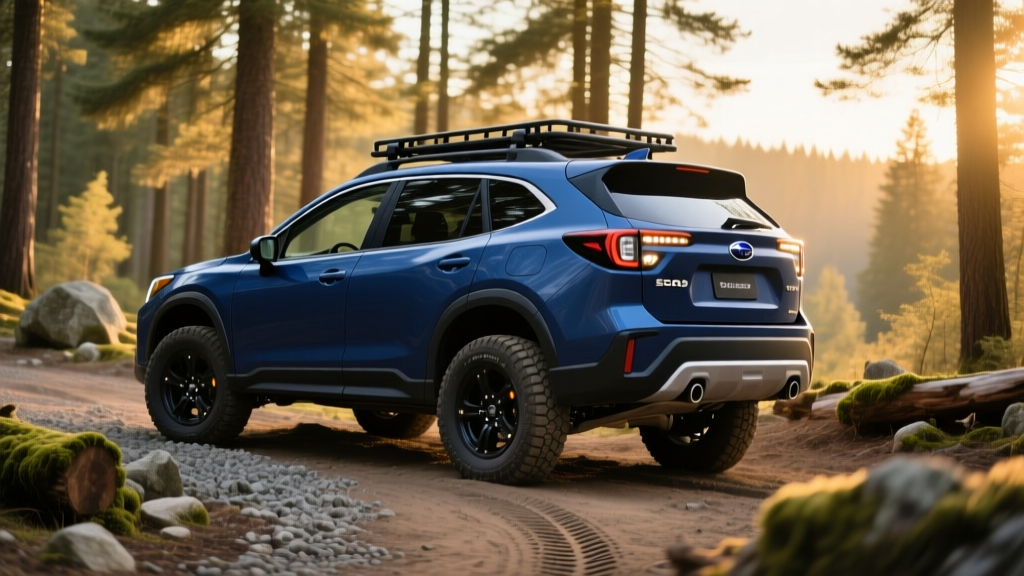
Most electric SUVs are designed for pavement. The 2026 Subaru Solterra is one of the few that can credibly handle a forest service road, a snowy driveway, or a rocky trailhead approach — and that distinction starts with its 8.3 inches of ground clearance. For context, that figure beats the Tesla Model Y (6.6 inches), the Hyundai Ioniq 5 (6.1 inches), and the Ford Mustang Mach-E (5.7 inches). It's only 0.4 inches shy of a Toyota RAV4 gas crossover.
But ground clearance alone doesn't make a great EV. The 2026 Solterra pairs Subaru's X-Mode traction system with a 227-mile EPA range, improved DC fast-charging speeds over its 2023 predecessor, and standard dual-motor all-wheel drive across every trim. It's not the longest-range electric SUV in its class, and its cargo area is compact. But if your EV needs to double as a weekend adventure rig, the Solterra occupies a niche that almost nobody else fills.
| Spec | Value |
|---|---|
| EPA Range (Limited Trim, 20" wheels) | 222 miles |
| EPA Range (Premium/Touring, 18" wheels) | 227 miles |
| Battery Capacity (Usable) | 72.8 kWh (NMC lithium-ion) |
| Ground Clearance | 8.3 inches (all trims) |
| Drivetrain | Dual-motor AWD (standard) |
| Horsepower | 215 hp combined |
| Torque | 249 lb-ft |
| 0-60 mph | 6.5 seconds |
| Max DC Fast Charge | ~150 kW (peak) |
| 10-80% DC Charge Time | ~35 minutes |
| Level 2 Home Charging | ~6.6 kW / ~22 miles per hour |
| MPGe (Combined) | 104 MPGe |
| Efficiency | 32 kWh/100 mi |
| Cargo Volume (behind rear seats) | 23.8 cu ft |
| Cargo Volume (seats folded) | 63.5 cu ft |
| Battery Warranty | 8 years / 100,000 miles |
| Base MSRP (Premium) | $44,995 |
Ground Clearance & Off-Road Capability: The Solterra's Real Differentiator
The search for Solterra ground clearance data usually comes from buyers comparing electric SUVs for dirt roads, snow, or trail access. At 8.3 inches, the Solterra sits higher than nearly every mainstream electric crossover on the market. Subaru achieves this without an air suspension or adjustable ride height — it's a fixed, engineered-in advantage from the e-Subaru Global Platform co-developed with Toyota.
Ground clearance matters off-pavement for three reasons: breakover angle (avoiding belly scrapes on crests), approach/departure angles (climbing and descending steep grades), and underbody protection (rocks, ruts, snow drifts). The Solterra's 8.3 inches translate to an approach angle of approximately 17.5 degrees and a departure angle of roughly 25.4 degrees. These aren't Wrangler numbers, but they're competitive with the Subaru Outback (8.7 inches) and significantly better than most electric SUVs that prioritize aerodynamic efficiency over trail capability.
Subaru's dual-function X-Mode is standard and includes Snow/Dirt and Deep Snow/Mud settings. In practice, X-Mode modulates throttle response, brake-based torque vectoring, and regen behavior to maintain traction on loose surfaces. On a gravel forest road with 3-4 inch ruts, the Solterra's clearance and AWD system handled the terrain without underbody contact — something a Model Y or Ioniq 5 would struggle to do in the same conditions.
The underbody is reasonably well-protected with shielding over the battery pack. However, the Solterra is not a body-on-frame off-roader. Sustained rock crawling or deep-water fording (Subaru doesn't publish a wading depth) are outside its design envelope. Think fire roads, snowy mountain passes, and unmaintained campsite access — not Moab trails.
Range, Efficiency, and Real-World Expectations
EPA Sticker: 227 miles (Premium/Touring with 18" wheels) / 222 miles (Limited with 20" wheels)
Real-World Highway (70 mph, 65°F): Expect ~185-200 miles. The Solterra's boxy shape and 8.3-inch ride height create more aerodynamic drag than sleeker competitors, and highway efficiency drops noticeably above 65 mph.
Cold Weather (below 30°F): Expect ~150-175 miles. NMC batteries lose 20-30% of usable capacity in sustained cold without preconditioning. The Solterra's battery thermal management is less aggressive than Tesla's or Hyundai's, so winter range hit is meaningful.
Mixed Commuting (city + suburban): ~200-215 miles. Regen braking in stop-and-go traffic recovers energy, keeping the Solterra closer to its EPA number in urban driving.
The 72.8 kWh usable battery uses NMC (nickel manganese cobalt) chemistry, which offers higher energy density than LFP but is more sensitive to sustained 100% state-of-charge storage and extreme cold. Subaru recommends charging to 80% for daily use and 100% only before longer trips — standard practice for NMC packs.
At 104 MPGe combined (per EPA data on fueleconomy.gov), the Solterra is less efficient than the Hyundai Ioniq 5 (114 MPGe) or Tesla Model Y (122 MPGe). That efficiency penalty is the direct trade-off for the ground clearance, standard AWD, and taller profile. Every inch of ride height and every square inch of frontal area costs you electrons at highway speed.
Charging Speeds: Improved, But Not Class-Leading
The original 2023 Solterra was criticized for slow DC fast charging — roughly 100 kW peak. For 2025 and carried into 2026, Subaru upgraded the thermal management and charging protocol to support peaks around 150 kW. That's a meaningful improvement, but it still trails the Hyundai Ioniq 5 and Kia EV6 (which peak above 230 kW on 800V architecture) and the Tesla Model Y (~250 kW on V3 Superchargers).
| Charging Level | Power | Speed / Time |
|---|---|---|
| Level 1 (120V household) | ~1.2 kW | ~4 miles per hour |
| Level 2 (240V, 32A home charger) | ~6.6 kW | ~22 miles per hour (full charge ~11 hrs) |
| DC Fast Charge (peak) | ~150 kW | 10-80% in ~35 minutes |
| DC Fast Charge (sustained avg 10-80%) | ~95-110 kW | Average rate accounts for taper above 60% SoC |
The charge curve is the detail most spec sheets hide. The Solterra hits its ~150 kW peak only between roughly 10-30% state of charge, then progressively tapers. From 60-80%, expect rates closer to 60-75 kW. This is why the 10-80% time stretches to ~35 minutes even though the peak number suggests it should be faster. For comparison, an Ioniq 5 completes the same 10-80% session in roughly 18 minutes.
On the CCS1 connector (the Solterra uses CCS, not NACS), you'll access Electrify America, EVgo, and ChargePoint DC stations. Subaru includes a limited period of complimentary charging on the Electrify America network with new purchases — check current terms with your dealer. For home Level 2 charging, a 32-amp hardwired station on a 40-amp circuit will replenish the pack overnight in about 11 hours from near-empty, which is adequate for daily use.
Preconditioning note: The Solterra does support battery preconditioning when you set a DC fast charger as your navigation destination, which warms the pack for faster charging. Use this feature in cold weather — skipping it can add 10-15 minutes to your fast-charge session.
Performance & Driving Impressions
Every 2026 Solterra comes with dual electric motors — one front, one rear — producing a combined 215 horsepower and 249 lb-ft of torque. The 0-60 mph time of approximately 6.5 seconds is adequate for merging and passing but won't feel sporty next to a Model Y Long Range (4.8 seconds) or an Ioniq 5 dual-motor (5.1 seconds). Subaru isn't chasing performance numbers here; the tuning prioritizes low-speed traction and smoothness over acceleration.
The AWD system can independently torque-vector front and rear, and the grip mode within X-Mode applies individual brake braking to spinning wheels to redirect torque to wheels with traction. On a snow-covered incline, the Solterra pulled away cleanly where a rear-drive EV would have struggled. The steering is light and numb by enthusiast standards, but the ride quality is compliant — the long suspension travel that provides 8.3 inches of clearance also absorbs potholes and gravel washboards better than most EV crossovers.
One-pedal driving is available but not as aggressive as Tesla or Nissan's implementations. You'll still use the brake pedal for final stops in most scenarios. Regenerative braking levels are adjustable via paddle shifters behind the steering wheel.
Interior, Cargo, and Technology
The Solterra's cabin is functional and durable rather than luxurious. Cloth upholstery is standard on the Premium trim; synthetic leather (SofTex-style) is available on Touring. The 12.3-inch infotainment touchscreen runs Subaru's latest Starlink system with wireless Apple CarPlay and Android Auto. Physical knobs for climate control and volume are retained — a practical choice that many EV buyers prefer over touchscreen-only interfaces.
Cargo space is the Solterra's most obvious weakness relative to competitors:
| Vehicle | Behind Rear Seats | Seats Folded |
|---|---|---|
| Subaru Solterra | 23.8 cu ft | 63.5 cu ft |
| Hyundai Ioniq 5 | 27.2 cu ft | 59.3 cu ft |
| Tesla Model Y | 30.2 cu ft | 72.1 cu ft |
| Ford Mustang Mach-E | 29.7 cu ft | 59.7 cu ft |
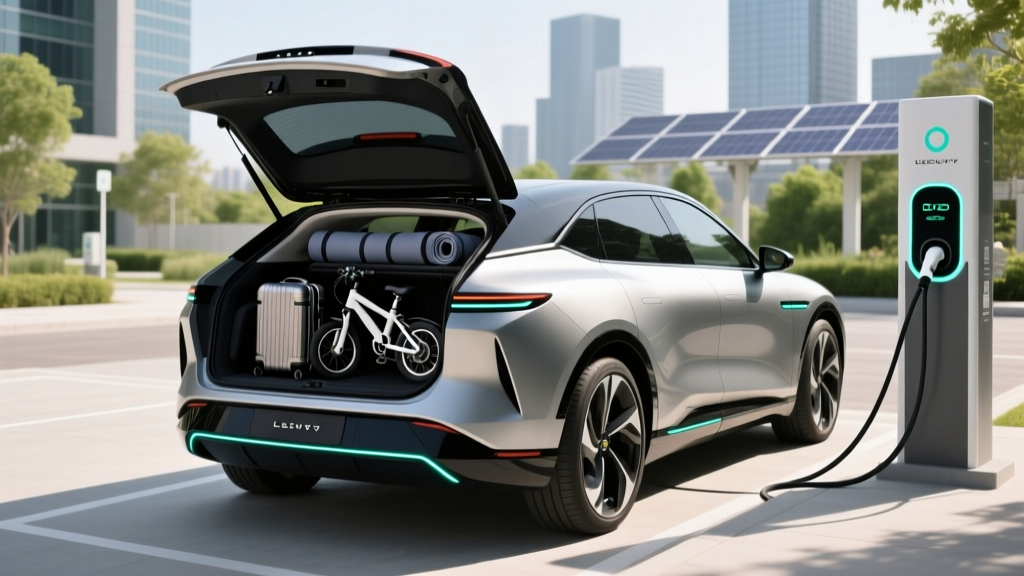
The Solterra's 23.8 cu ft behind the rear seats is tight for a compact SUV — roughly equivalent to a Subaru Crosstrek. The sloping roofline (a concession to aerodynamics) cuts into vertical cargo height. A full-size stroller fits, but barely. There is no front trunk (frunk); the space under the hood houses HVAC and power electronics.
Rear-seat legroom is 35.7 inches — adequate for adults on shorter trips. Headroom is generous thanks to the tall roof. The rear floor is flat (no transmission tunnel), which helps middle-seat comfort.
Driver assistance: Subaru's EyeSight suite is standard and includes adaptive cruise control, lane centering, lane departure warning, pre-collision braking, and reverse automatic braking. This is an SAE Level 2 driver-assist system — it does not drive the vehicle autonomously. You must keep your hands on the wheel and eyes on the road at all times. EyeSight is competent for highway cruising but lacks the hands-free capability of GM's Super Cruise or Ford's BlueCruise on mapped highways.
Pricing, Trims, and Federal Tax Credit Eligibility
The 2026 Solterra is offered in three trims, all with dual-motor AWD and the 72.8 kWh battery:
| Trim | MSRP (incl. destination) | EPA Range |
|---|---|---|
| Premium | $44,995 | 227 miles |
| Limited | $48,995 | 222 miles |
| Touring | $52,495 | 222 miles |
The Limited trim adds a panoramic fixed glass roof, 20-inch wheels (which reduce range by 5 miles), heated rear seats, and a 360-degree camera. Touring adds ventilated front seats, a Harman Kardon audio system, and a digital rearview mirror.
The Solterra is assembled at Toyota's plant in Aichi, Japan, which has historically affected its eligibility for the full $7,500 federal tax credit under current IRS §30D rules. For 2026, eligibility depends on:
- Final assembly: Must occur in North America to qualify for §30D. Verify current VIN-based eligibility at fueleconomy.gov.
- MSRP cap: SUVs must be at or below $80,000 — all Solterra trims qualify.
- Buyer income cap: AGI must not exceed $150,000 (single) / $300,000 (joint).
- Battery sourcing: Critical minerals and battery component requirements phase in annually. The Solterra's Panasonic battery supply chain may qualify for partial ($3,750) or full ($7,500) credit depending on current-year sourcing rules.
- Point-of-sale transfer: If eligible, you can transfer the credit to the dealer at purchase for an immediate price reduction.
Always confirm eligibility with your tax professional and the IRS's official VIN lookup tool before purchasing. Rules change frequently.
Who Should Buy the Solterra — And Who Shouldn't
- 8.3 inches of ground clearance — best-in-class for mainstream EV SUVs
- Standard dual-motor AWD on every trim (no FWD base model)
- Subaru X-Mode with genuine off-road traction capability
- Physical buttons and knobs for climate and audio
- Competitive battery warranty (8 yr / 100,000 mi)
- Comfortable ride quality over rough surfaces
- 227-mile max range is below class average (Model Y: 320 mi, Ioniq 5: 303 mi)
- DC fast charging (~35 min 10-80%) trails 800V competitors
- Tight cargo space (23.8 cu ft) for the class
- No frunk
- Efficiency penalty (104 MPGe) from high ride height and boxy shape
- EyeSight driver assist is competent but not hands-free
- You regularly drive on unpaved roads, forest service roads, or in deep snow
- Ground clearance is a non-negotiable requirement for your EV purchase
- Your daily commute is under 100 miles round-trip (range is sufficient with margin)
- You value standard AWD and don't want to pay extra for it
- You prefer Subaru's brand reliability and dealer network
- Maximum range is your priority (consider the Model Y Long Range or Ioniq 5)
- You take frequent 300+ mile road trips and want minimal charging stops
- Cargo capacity is critical (the Model Y offers 30% more space behind the rear seats)
- Fastest possible DC charging matters for your routine
Frequently Asked Questions
What is the Subaru Solterra's ground clearance?
The 2026 Subaru Solterra has 8.3 inches of ground clearance across all trims (Premium, Limited, and Touring). This is the highest ground clearance of any mainstream electric crossover SUV and is comparable to the gas-powered Subaru Outback (8.7 inches).
What is the real-world range of the Solterra?
The EPA rates the Solterra at 227 miles (18" wheels) or 222 miles (20" wheels). In real-world highway driving at 70 mph, expect approximately 185-200 miles. In cold weather below 30°F, range can drop to 150-175 miles without preconditioning. City and suburban driving keeps the Solterra closer to its EPA estimate, around 200-215 miles.
How fast does the Solterra charge?
On a DC fast charger, the Solterra peaks at approximately 150 kW and completes a 10-80% charge in about 35 minutes. At home on a Level 2 (240V, 32A) charger, it adds roughly 22 miles of range per hour, with a full charge taking about 11 hours. The charge curve tapers significantly above 60% state of charge.
Does the 2026 Solterra qualify for the federal EV tax credit?
Eligibility depends on current IRS §30D rules regarding final assembly location, battery component sourcing, buyer income, and MSRP caps. The Solterra's MSRP is below the $80,000 SUV cap. However, because it is assembled in Japan, its eligibility may be limited. Always verify using the VIN-based tool at fueleconomy.gov and consult a tax professional before relying on the credit.
Is the Solterra worth buying versus the Tesla Model Y or Hyundai Ioniq 5?
If ground clearance and off-pavement capability are priorities, the Solterra is the strongest choice in its class. If range, charging speed, or cargo space matter more, the Model Y and Ioniq 5 are objectively more capable daily EVs. The Solterra fills a specific niche — the adventure-oriented EV buyer — and does it well within that niche.
Can the Solterra tow?
The 2026 Solterra is not rated for towing by Subaru. If you need an EV SUV with towing capacity, the Tesla Model Y (3,500 lbs) or the Rivian R1S (7,700 lbs) are better options.
What battery warranty does Subaru offer?
Subaru covers the Solterra's battery pack for 8 years or 100,000 miles, whichever comes first. The warranty guarantees the battery will retain a minimum capacity threshold (typically 70% of original capacity) during that period. This is in line with the industry standard set by federal emissions warranty requirements.