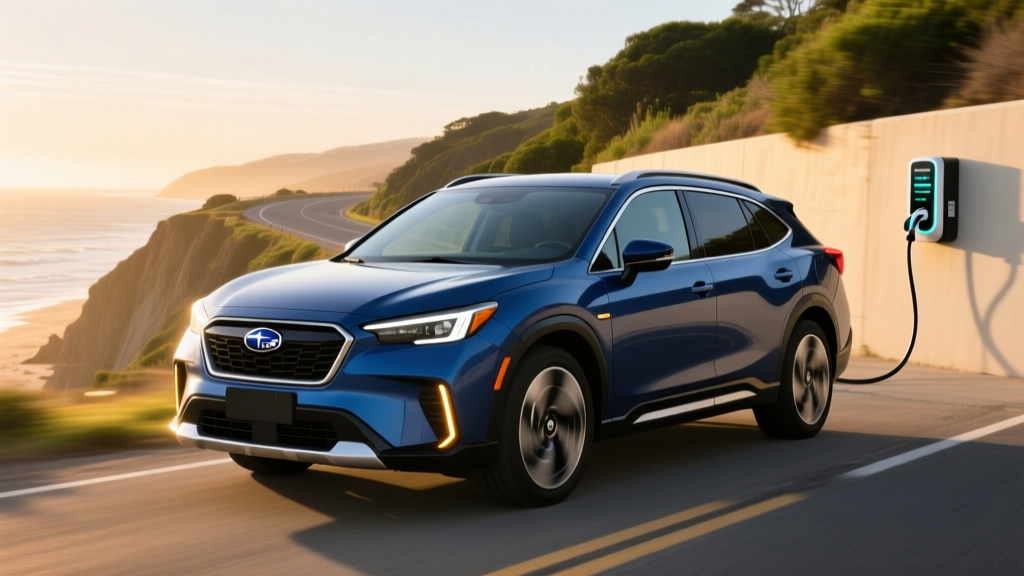
Is a Subaru electric car worth it in 2026? The Subaru Solterra is the brand's only all-electric vehicle, delivering 222–227 miles of EPA range, standard symmetrical AWD, and 8.3 inches of ground clearance — the most off-road-capable EV in its price class. Base pricing starts around $39,995. It excels for outdoorsy buyers who need all-weather traction and trail access, but its DC fast-charging speed (peaking around 135 kW) and highway efficiency lag behind rivals like the Hyundai Ioniq 5 and Tesla Model Y. If you can charge at home and your daily commute stays under 150 miles round-trip, the Solterra is a compelling, practical EV. If you road-trip frequently or rely solely on public fast charging, consider its limitations carefully.
Solterra Specs at a Glance: Range, Battery, and Performance
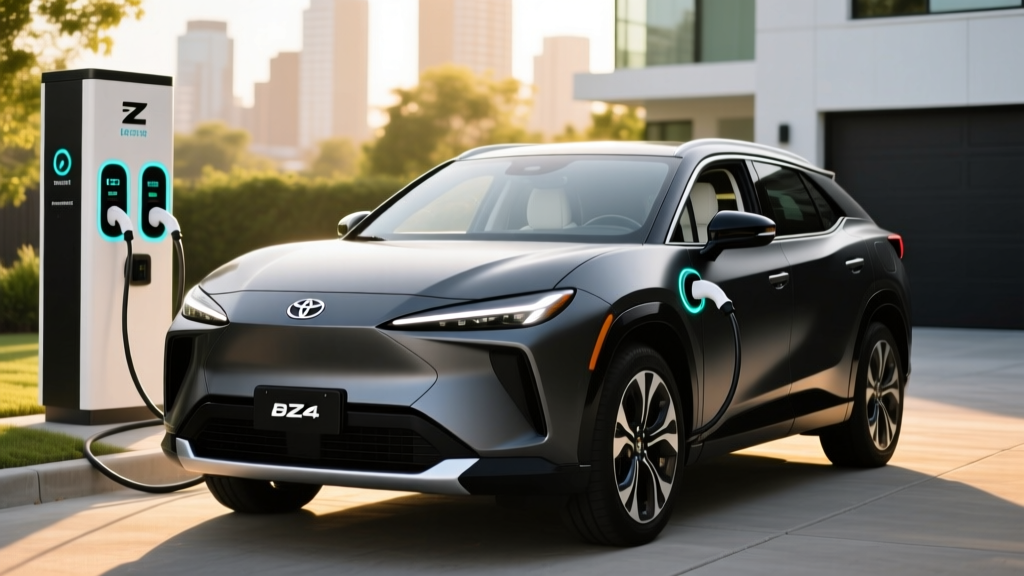
The 2026 Subaru Solterra is built on the e-Subaru Global Platform, co-developed with Toyota (which sells the mechanically similar bZ4X). It uses a 72.8 kWh lithium-ion battery pack (NMC chemistry) and comes exclusively with dual-motor all-wheel drive producing 215 horsepower and 249 lb-ft of torque.
| Spec | 2026 Subaru Solterra |
|---|---|
| EPA Range | 222 mi (Touring) / 227 mi (Premium, Limited) |
| Real-World Highway Range | ~180–200 mi (70+ mph, mild weather) |
| Cold-Weather Range (20°F) | ~155–175 mi (estimated 25–30% loss) |
| Battery Capacity | 72.8 kWh (usable), NMC chemistry |
| Drivetrain | Dual-motor AWD, 215 hp / 249 lb-ft |
| 0–60 mph | ~6.5 seconds |
| Peak DC Fast Charge | ~135 kW |
| 10–80% DC Charge Time | ~35 minutes |
| Level 2 Charge Rate | ~7.2 kW (onboard charger) |
| Ground Clearance | 8.3 inches |
| MPGe (Combined) | 102–104 MPGe |
| EPA Efficiency | ~31–32 kWh/100 mi |
| Base MSRP | $39,995 (Premium) – $46,995 (Touring) |
| Battery Warranty | 8 years / 100,000 miles |
Real-World Range Reality: The EPA sticker says 222–227 miles, but expect roughly 180–200 miles on the highway at sustained speeds above 70 mph. In freezing temperatures, plan for 155–175 miles. The Solterra's boxy shape and AWD drivetrain consume more energy at speed than sleeker rivals — its ~31 kWh/100 mi efficiency is noticeably thirstier than the Ioniq 5's ~27 kWh/100 mi. For daily commuting under 80 miles round-trip with home charging, this is a non-issue. For road trips, it means more frequent stops.
Solterra vs Gas Subaru: Outback and Crosstrek Cost Comparison
Most Subaru buyers cross-shop the Solterra against the Outback or Crosstrek. Here's how the numbers stack up over five years and 75,000 miles, assuming $0.14/kWh for home charging, $3.40/gallon gas, and 12,000 miles/year.
| Cost Factor | 2026 Solterra (Premium) | 2026 Outback (Base, AWD) | 2026 Crosstrek (Base, AWD) |
|---|---|---|---|
| MSRP (before incentives) | $39,995 | $32,695 | $27,195 |
| Federal Tax Credit (§30D) | Up to $7,500* | $0 | $0 |
| Effective Purchase Price | ~$32,495 | $32,695 | $27,195 |
| Fuel/Energy (5 yr / 75k mi) | ~$3,280 (home charging) | ~$8,500 (26 MPG combined) | ~$7,560 (29 MPG combined) |
| Maintenance (5 yr) | ~$1,200 | ~$3,500 | ~$3,200 |
| 5-Year Total (purchase + fuel + maint.) | ~$36,975 | ~$44,695 | ~$37,955 |
*The §30D federal EV tax credit is subject to buyer income caps ($150k single / $300k joint), MSRP caps ($55k for SUVs), and battery critical-mineral sourcing requirements. The Solterra's eligibility may vary by model year and production batch. Verify current eligibility at IRS.gov or via the IRS Energy Credits Online tool. Point-of-sale transfer is available at participating dealers.
The Solterra's total cost of ownership is competitive with the Outback over five years when you factor in the tax credit and dramatically lower fuel and maintenance costs. Against the Crosstrek, the gap narrows — the Crosstrek's lower MSRP keeps it close, though the Solterra still edges ahead on a pure cost-per-mile basis if you qualify for the full credit.
Charging the Solterra: Home, Public, and the Curve Reality
Charging speed is where the Solterra draws the most criticism — and where prospective buyers need clear expectations.
| Charging Level | Power | Miles Added Per Hour | Typical Use Case |
|---|---|---|---|
| Level 1 (120V household) | ~1.4 kW | ~3–4 mi/hr | Overnight top-up, low-mileage drivers |
| Level 2 (240V home charger) | ~7.2 kW | ~20–23 mi/hr | Daily primary charging (full charge in ~10 hrs) |
| DC Fast Charging | Peak ~135 kW | ~150+ mi in 20 min | Road trips, public stations |
The charge curve matters. The Solterra peaks at roughly 135 kW only between approximately 10–40% state of charge. Above 60%, the rate tapers significantly — often dropping below 50 kW past 80%. A 10–80% session takes about 35 minutes at a capable 150+ kW station. That's 15–20 minutes slower than an Ioniq 5 or EV6 on the same charger. If you road-trip often, those extra minutes per stop add up.
Home charging is essential. With a Level 2 home charger (a $500–$700 unit plus $800–$2,000 for electrician installation, depending on panel capacity and run length), you'll wake up to a full battery every morning. The Solterra's 72.8 kWh battery charges from empty to full in roughly 10 hours at 7.2 kW. If your home has a 200-amp electrical panel with spare capacity, installation is straightforward. Older homes with 100-amp panels may need a $2,000–$4,000 panel upgrade.
For apartment dwellers or those without garage access, the Solterra's moderate DC charging speed and ~220-mile range make public-charging-only ownership challenging — especially in winter or for drivers exceeding 40 miles daily.
Solterra vs Rivals: Where It Wins and Where It Doesn't
| Attribute | Subaru Solterra | Hyundai Ioniq 5 (AWD) | Tesla Model Y (LR AWD) | Ford Mustang Mach-E (AWD) |
|---|---|---|---|---|
| EPA Range | 222–227 mi | 290 mi | 320 mi | 290–312 mi |
| Peak DC Charge | ~135 kW | ~240 kW | ~250 kW | ~150 kW |
| 10–80% DC Time | ~35 min | ~18 min | ~20 min | ~32 min |
| Ground Clearance | 8.3 in | 6.1 in | 6.6 in | 5.7 in |
| Standard AWD | Yes (all trims) | No (optional) | No (LR AWD optional) | No (optional) |
| Starting MSRP | $39,995 | $46,000 | $44,990 | $42,995 |
| Off-Road Capability | X-MODE, 8.3" GC | Limited | Limited | Limited |
The Solterra's advantages are specific and tangible: standard AWD across all trims, best-in-class ground clearance, Subaru's X-MODE traction system for snow and dirt, and a lower entry price. Its disadvantages are equally clear: shorter range, slower DC charging, and lower highway efficiency than the Ioniq 5 or Model Y.
If range and road-trip charging speed are your top priorities, the Ioniq 5 or Model Y are objectively better electric vehicles. If you need a capable AWD crossover that handles mountain passes, ski resorts, and forest roads — and you mostly drive within 150 miles of home — the Solterra fills a niche no rival matches.
Common Subaru EV Misconceptions, Corrected
| Myth | Fact |
|---|---|
| "Subaru doesn't make an electric car." | The Solterra has been in production since 2023 and is sold nationwide at Subaru dealerships. |
| "The battery won't last." | Subaru warranties the battery for 8 years / 100,000 miles against degradation below 70% capacity. NMC batteries in thermally managed packs (like the Solterra's) typically retain 85–90% capacity after 100,000 miles based on industry data. |
| "EVs cost more to insure." | Sometimes true. The Solterra's insurance averages 10–20% higher than an equivalent Outback due to repair costs for battery and sensor-equipped body panels. Get quotes before buying. |
| "You can't take a Subaru EV off-road." | The Solterra has 8.3 inches of ground clearance, X-MODE with Grip Control, and dual-motor torque vectoring. It handles moderate trails, snow, and forest roads well — though it's not a Wrangler. |
| "The $7,500 tax credit applies to everyone." | Eligibility depends on buyer income (≤$150k single / $300k joint AGI), vehicle MSRP (≤$55k for SUVs), and battery mineral sourcing. Check the IRS qualified vehicles list before purchasing. |
Who Should Buy the Solterra — And Who Shouldn't
Buy the Subaru Solterra if:
- You live in a snowy or mountainous region and need reliable AWD with high ground clearance.
- Your daily driving is under 150 miles round-trip and you can install a Level 2 home charger.
- You're a current Subaru owner who values the brand's safety reputation (the Solterra earns top IIHS marks) and wants to go electric without switching ecosystems.
- You want an EV that can handle light off-road use — ski resort access, dirt roads to trailheads, forest service roads.
- Your budget is $35,000–$47,000 after incentives.
Skip the Solterra and consider rivals if:
- You regularly drive 200+ miles one-way and need maximum range and fast DC charging (look at the Ioniq 5, Model Y, or EV6).
- You cannot charge at home and would rely entirely on public DC fast charging — the Solterra's ~35-minute 10–80% time and ~220-mile range make this frustrating.
- You want the longest possible range per dollar — the Model Y Long Range delivers 320 miles EPA for a similar price.
- You prioritize efficiency and low kWh/100mi consumption — the Solterra's ~31 kWh/100 mi is among the highest in its class.
First-Time EV Buyer Checklist: What to Know Before You Sign
If the Solterra is your first electric vehicle, here's what you need to confirm before purchasing:
- Home charging feasibility: Can you install a 240V Level 2 charger in your garage or driveway? Get a quote from a licensed electrician before committing. Budget $1,500–$3,000 for equipment and installation (more if a panel upgrade is needed).
- Tax credit eligibility: Use the IRS Energy Credits Online tool to confirm the specific VIN you're buying qualifies for §30D. Income, MSRP, and battery sourcing all factor in. The point-of-sale transfer option lets you apply the credit as a down payment at the dealer.
- Insurance quotes: Call your insurer with the Solterra's VIN before signing. EV insurance can be 10–20% higher than gas equivalents.
- Winter range planning: If you live where temperatures regularly drop below 30°F, plan for 25–30% range reduction. A 227-mile Solterra becomes a ~165-mile vehicle in deep cold.
- Road-trip charging apps: Download PlugShare, ChargePoint, and EVgo before delivery. Map your most common 200+ mile routes and confirm DC charger availability along the way.
- Maintenance savings: EVs eliminate oil changes, spark plugs, transmission fluid, and exhaust system repairs. The Solterra still needs tire rotations, cabin air filters, brake fluid checks, and wiper fluid — but annual maintenance drops to roughly $200–$300 vs. $600–$800 for a gas Subaru.
Frequently Asked Questions
Does Subaru make a fully electric car?
Yes. The Subaru Solterra is a fully electric compact SUV with dual-motor AWD, 222–227 miles of EPA range, and a starting MSRP of $39,995. It's Subaru's only EV as of the 2026 model year.
How long does it take to charge a Subaru Solterra at home?
On a Level 2 (240V) home charger at 7.2 kW, a full charge from empty takes approximately 10 hours. Most owners plug in overnight and wake up to a full battery. On a standard 120V outlet (Level 1), a full charge takes roughly 50+ hours — suitable only for topping up, not daily use if you drive more than 20 miles per day.
Is the Subaru Solterra eligible for the $7,500 federal tax credit?
Potentially. The Solterra's MSRP falls under the $55,000 SUV cap. However, §30D eligibility also depends on your adjusted gross income (≤$150,000 single / $300,000 joint) and the battery's critical-mineral and component sourcing, which can vary by production batch. Always verify the specific VIN on the IRS qualified vehicles list before purchasing.
How does the Solterra handle in snow and winter conditions?
Very well. Standard dual-motor AWD, 8.3 inches of ground clearance, and Subaru's X-MODE traction management make it one of the most capable EVs in winter conditions. The main winter consideration is range: expect 25–30% range loss in sustained sub-freezing temperatures, bringing real-world winter range to approximately 155–175 miles.
What's the real cost per mile to drive the Solterra vs a gas Outback?
At $0.14/kWh (national average for home charging), the Solterra costs roughly $0.044 per mile in energy. The Outback at 26 MPG combined and $3.40/gallon costs about $0.131 per mile. That's a savings of approximately $0.087 per mile — or about $650 per year at 12,000 miles driven. Over five years, fuel savings alone total roughly $3,250, not counting reduced maintenance.
Will Subaru release other electric vehicles?
Subaru has announced plans for additional EVs, including a larger three-row electric SUV expected later in the decade. As of 2026, the Solterra remains the only Subaru EV available for purchase. Any future models should be considered announced/preliminary until official specs and pricing are released.