Quick Verdict: A Budget Commuter EV With Caveats
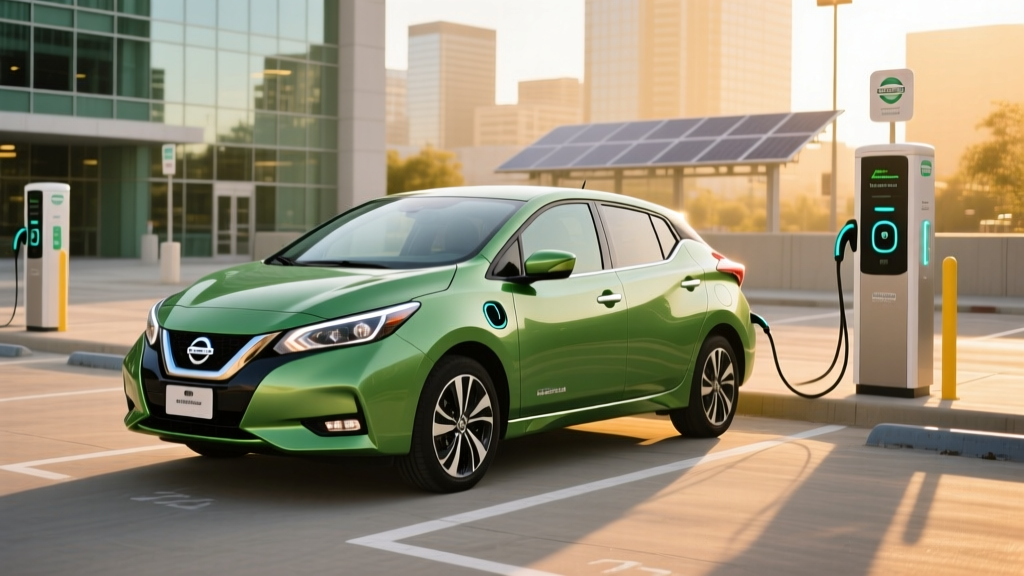
The 2019 Nissan Leaf S occupies a specific niche in the used EV market: an affordable, practical, zero-emission commuter car for drivers who can charge at home and don't need highway fast-charging speed. With an EPA-estimated 150 miles of range from its 40 kWh lithium-ion battery, the base Leaf S undercuts nearly every competitor on price — especially when the up-to-$4,000 used EV tax credit applies. But its CHAdeMO connector, passive battery thermal management, and modest DC fast-charge rate mean road-trip practicality is limited. If your daily drive is under 60 miles round-trip and you have Level 2 access at home, the 2019 Leaf S remains one of the cheapest ways to get into a modern electric vehicle in 2026.
| Spec | Value |
|---|---|
| EPA Range | 150 miles |
| Battery (usable) | 40 kWh (NMC lithium-ion) |
| Motor Output | 110 kW / 147 hp, 236 lb-ft torque |
| 0–60 mph | ~7.9 seconds |
| Drivetrain | FWD (single motor) |
| MPGe (combined) | 112 MPGe (city 118 / hwy 104) |
| Efficiency | 30 kWh / 100 mi |
| Max DC Fast Charge | 50 kW (CHAdeMO) |
| Level 2 Charge Rate | 6.6 kW (240V) |
| Cargo Volume | 23.6 cu ft (rear seats up) / 30.0 cu ft (folded) |
| Original MSRP | $30,885 (before incentives) |
| Battery Warranty | 8 years / 100,000 miles |
Range and Efficiency: What 150 EPA Miles Really Means
Real-World Expectation: 115–135 miles highway; 140–155 miles city. In cold weather (below 32°F), expect a 20–35% reduction — potentially as low as 95–110 miles on a full charge.
The 2019 Leaf S uses the standard 40 kWh battery pack (Nissan's second-generation Leaf platform introduced for the 2018 model year). According to fueleconomy.gov, the EPA rates it at 150 miles combined, with 112 MPGe overall. That efficiency figure — 30 kWh per 100 miles — is competitive with other compact EVs of this era, though newer models like the Chevrolet Bolt EV and Hyundai Kona Electric achieved more range from similarly sized packs through better aerodynamics and thermal management.
The critical real-world factor with the Leaf is its passive air-cooled battery. Unlike the liquid-cooled packs in the Bolt, Model 3, or Kona Electric, the Leaf relies on ambient airflow to manage battery temperature. This has two consequences:
- Summer highway driving: Sustained high-speed travel in hot climates can cause the battery to heat up, triggering "Rapidgate" — Nissan's thermal protection that throttles DC fast-charging speeds to prevent overheating. On a hot day after highway driving, your 50 kW charge session may drop to 20–30 kW.
- Winter range loss: Without a heat pump (the Leaf uses resistive cabin heating), cold-weather range drops are steeper than in EVs equipped with heat-pump HVAC systems. Plan for 95–110 usable miles in freezing conditions.
For a commuter who drives 30–50 miles round-trip and charges nightly at home, the 150-mile envelope provides a comfortable buffer. But if your commute includes 70+ mph highway segments or you live in the upper Midwest, treat the usable range as closer to 110–125 miles in mixed conditions.
Charging: CHAdeMO, 50 kW Peak, and the Rapidgate Reality
| Charging Level | Power / Voltage | Speed | Notes |
|---|---|---|---|
| Level 1 (120V) | ~1.4 kW | ~4–5 miles/hour | Emergency/top-up only; 30+ hours for full charge |
| Level 2 (240V) | 6.6 kW (J1772) | ~22 miles/hour | Full charge in ~7 hours; ideal for overnight home use |
| DC Fast (CHAdeMO) | Up to 50 kW | 10–80% in ~40–60 min | Speed throttles when battery is warm (Rapidgate) |
The Leaf S comes standard with a CHAdeMO DC fast-charging port. This was the dominant non-Tesla standard when the 2019 Leaf was designed, but as of 2026, the North American Charging Standard (NACS) has largely overtaken CHAdeMO in new infrastructure buildout. Electrify America stations still carry CHAdeMO connectors at many locations, but newer networks increasingly prioritize NACS and CCS1. If you rely on public DC fast charging, check your local stations for CHAdeMO availability before buying.
The 50 kW peak charge rate is the Leaf's most significant limitation for road-trip use. At 50 kW sustained, a 10–80% session would take roughly 40 minutes — adding about 100 miles of range. In practice, the passive thermal system means you'll rarely sustain that rate. After highway driving or in warm weather, expect the charge curve to taper early, stretching 10–80% to 50–60+ minutes. This is not a vehicle for frequent long-distance travel.
At home on a Level 2 (240V, 32-amp) charger, the Leaf's 6.6 kW onboard charger replenishes the 40 kWh pack in approximately 7 hours — perfectly suited for overnight charging. A quality Level 2 home station costs $400–$700 for the unit, plus $500–$1,500 for electrician installation depending on your panel and run length.
Performance and Driving Dynamics
The 2019 Leaf S is powered by a single front-mounted AC synchronous motor producing 110 kW (147 horsepower) and 236 lb-ft of torque. The instant torque delivery gives it a responsive feel around town — the 0–60 mph time of approximately 7.9 seconds is adequate for merging and passing, though it won't thrill anyone coming from a Tesla Model 3 or even a Chevrolet Bolt (which hits 60 in about 6.5 seconds).
Ride quality is comfortable and compliant, with a soft suspension tune that absorbs urban road imperfections well. The low center of gravity (battery pack mounted under the floor) contributes to stable handling, though the eco-oriented low-rolling-resistance tires limit grip. Steering is light and numb — this is a transportation appliance, not a sports sedan.
Nissan's e-Pedal mode enables one-pedal driving by maximizing regenerative braking when you lift off the accelerator. It's well-calibrated and can bring the car to a complete stop without touching the brake pedal in most city driving scenarios. The Leaf also includes a conventional B (brake) mode on the shifter for increased regen without full one-pedal behavior.
Interior, Tech, and Driver Assistance
The 2019 Leaf S is the base trim, and it shows in the technology department — though it covers the essentials:
- Infotainment: 5.0-inch color display with NissanConnect, Bluetooth, USB port, and a 4-speaker audio system. No Apple CarPlay or Android Auto on the S trim (those arrive on the SV and SL).
- Instrument cluster: 7-inch digital display alongside analog speedometer — shows range, energy flow, and charge status.
- ProPILOT Assist: Not standard on the S trim. This SAE Level 2 driver-assistance system (adaptive cruise + lane centering) is available on SV/SL trims or as a package. The S does include standard Nissan Safety Shield features: automatic emergency braking, forward collision warning, lane departure warning, and blind-spot monitoring.
- Keyless entry and push-button start are standard.
Cabin materials are hard plastics throughout — expected at this price point, but noticeably cheaper than the Bolt or Kona Electric interiors. Seats are cloth and manually adjusted. Rear legroom is adequate at 33.5 inches, though the floor-mounted battery creates a slightly elevated floor that compromises under-thigh support for taller rear passengers.
Pros
- Low used-market pricing ($10,000–$15,000 typical in 2026)
- Comfortable ride and quiet cabin for city commuting
- 23.6 cu ft cargo space is practical for a hatchback
- Proven, simple powertrain with wide dealer service network
- Eligible for up to $4,000 used EV tax credit (income/price dependent)
- e-Pedal one-pedal driving is intuitive
Cons
- CHAdeMO connector is a declining standard in North America
- 50 kW max DC charge rate is slow by 2026 standards
- Passive battery cooling causes Rapidgate throttling in heat
- No Apple CarPlay/Android Auto on base S trim
- 150-mile range limits road-trip utility
- No heat pump — significant winter range loss
- 5-inch infotainment screen feels dated
Pricing and Federal Tax Credit Eligibility
The 2019 Nissan Leaf S originally carried an MSRP of $30,885 (including destination). In the 2026 used market, expect to pay between $10,000 and $15,000 depending on mileage, condition, and battery state of health (SoH). Higher-mileage examples with degraded batteries can dip below $10,000.
Federal Used EV Tax Credit (§25E): The 2019 Leaf S may qualify for a federal used clean vehicle credit of up to $4,000 — calculated as 30% of the sale price, capped at $4,000. To qualify under current IRS rules, the following must apply:
- The sale price must be $25,000 or less (virtually all used Leaf S examples qualify).
- Buyer modified adjusted gross income must not exceed $75,000 (single), $112,500 (head of household), or $150,000 (joint).
- The vehicle must be at least two model years old (2019 qualifies).
- You must purchase from a licensed dealer (private-party sales do not qualify).
- The credit is non-refundable — you must have tax liability to claim it, though point-of-sale transfer to the dealer is available as of 2024.
- This is a lifetime-per-vehicle credit — if a previous owner already claimed it, the car is ineligible.
At a $12,000 purchase price, the 30% calculation yields $3,600 — bringing the effective cost to $8,400 after the credit. That makes the 2019 Leaf S one of the least expensive paths to EV ownership available.
Battery Health, Warranty, and Longevity
The 2019 Leaf's 40 kWh battery pack uses NMC (nickel-manganese-cobalt) chemistry. Nissan provides an 8-year/100,000-mile battery capacity warranty, guaranteeing that the pack will retain at least 9 bars out of 12 on the battery capacity gauge (roughly 66–70% of original capacity) during the warranty period.
For a 2019 model in 2026, the factory battery warranty is nearing expiration (7 years old). This is a critical consideration:
- Expected degradation: Data from Leaf owners and fleet studies suggest 40 kWh packs typically lose 10–18% capacity over 5–7 years, depending on climate and charging habits. Hot-climate vehicles that were frequently DC fast-charged tend toward the higher end of that range.
- State of Health (SoH) check: Before purchasing, use the Leaf Spy app with an OBD-II dongle to read the actual battery SoH percentage and capacity bar count. A healthy 2019 Leaf should show 85–92% SoH at this age.
- Replacement cost: If the battery fails outside warranty, Nissan dealer replacement runs approximately $8,000–$10,000 for a refurbished 40 kWh pack. Third-party options exist but vary in availability.
The passive cooling system accelerates degradation in hot climates (Arizona, Texas, Florida) compared to liquid-cooled competitors. If you live in a hot region, prioritize finding a Leaf that was garaged and primarily Level 2 charged.
Who Should Buy the 2019 Nissan Leaf S?
Buy the 2019 Leaf S if:
- Your daily commute is under 60 miles round-trip
- You can install a Level 2 charger at home
- You want the cheapest possible entry into EV ownership
- You live in a moderate climate (not extreme heat or cold)
- You rarely take road trips over 120 miles one-way
- Your household income qualifies for the used EV credit
Look elsewhere if:
- You need 200+ miles of range for regular longer drives
- You rely on public DC fast charging (CHAdeMO availability is shrinking)
- You live in a hot climate and plan to DC fast-charge frequently
- You want modern infotainment with smartphone integration
- You need a vehicle for frequent highway road trips
Compared to its primary used-market competitors — the 2019 Chevrolet Bolt EV (238 miles EPA, CCS, liquid-cooled, ~$13,000–$17,000 used) and the 2019 Hyundai Kona Electric (258 miles EPA, CCS, liquid-cooled, ~$14,000–$18,000 used) — the Leaf S wins purely on price. But the Bolt and Kona offer meaningfully more range, faster charging, better thermal management, and the more future-proof CCS connector. If your budget can stretch $3,000–$5,000 higher, the Bolt EV is the stronger used EV value for most buyers.
Frequently Asked Questions
What is the real-world range of the 2019 Nissan Leaf S?
The EPA rates it at 150 miles combined. In real-world mixed driving, expect 125–140 miles in moderate weather. Highway driving at 70+ mph reduces that to roughly 115–130 miles. In freezing temperatures, plan for as little as 95–110 miles due to the lack of a heat pump and resistive cabin heating drawing from the traction battery.
How fast does the 2019 Leaf S charge?
On a Level 2 (240V) home charger at 6.6 kW, a full charge takes about 7 hours, adding roughly 22 miles of range per hour. On a CHAdeMO DC fast charger, the peak rate is 50 kW, but thermal throttling (Rapidgate) often reduces sustained speed — expect 10–80% in 40–60 minutes depending on battery temperature. A full DC fast charge from near-empty to 80% adds roughly 100 miles.
Does the 2019 Nissan Leaf S qualify for the federal EV tax credit?
It is not eligible for the new-vehicle §30D credit (which expired for the Leaf years ago). However, it may qualify for the §25E used clean vehicle credit of up to $4,000 (30% of sale price, capped at $4,000), subject to buyer income limits, a $25,000 max sale price, dealer purchase requirement, and the condition that no previous owner has already claimed the credit on this specific VIN.
Is the 2019 Leaf S worth buying vs. the Chevrolet Bolt EV?
If price is the sole criterion, the Leaf S is typically $2,000–$5,000 cheaper on the used market. But the Bolt EV offers 238 miles of EPA range (vs. 150), a CCS connector (more widely supported than CHAdeMO), liquid-cooled battery (no Rapidgate), and Apple CarPlay/Android Auto. For most buyers, the Bolt is the better long-term used EV — the Leaf S makes sense only if budget is extremely tight and your commute is short.
What should I check before buying a used 2019 Leaf?
Prioritize a battery State of Health (SoH) reading using the Leaf Spy app and an OBD-II adapter. Look for 85%+ SoH. Check the battery capacity bars on the dashboard display (12 bars is new; 9+ is acceptable). Verify whether the car was primarily garage-kept (critical in hot climates). Confirm the CHAdeMO DC fast-charging port functions. And check whether the §25E used EV credit has already been claimed on that VIN by a previous owner.
Can I use Tesla Superchargers with the 2019 Leaf?
No. The Leaf uses a CHAdeMO connector, and Tesla Supercharger stations use NACS (or CCS with Tesla's Magic Dock adapter at select locations). There is no widely available, reliable CHAdeMO-to-NACS adapter. You'll rely on Electrify America, EVgo, and independent CHAdeMO stations for public DC fast charging — a network that is not expanding and in some areas is contracting.