The Quick Answer on Subaru EVs in 2026
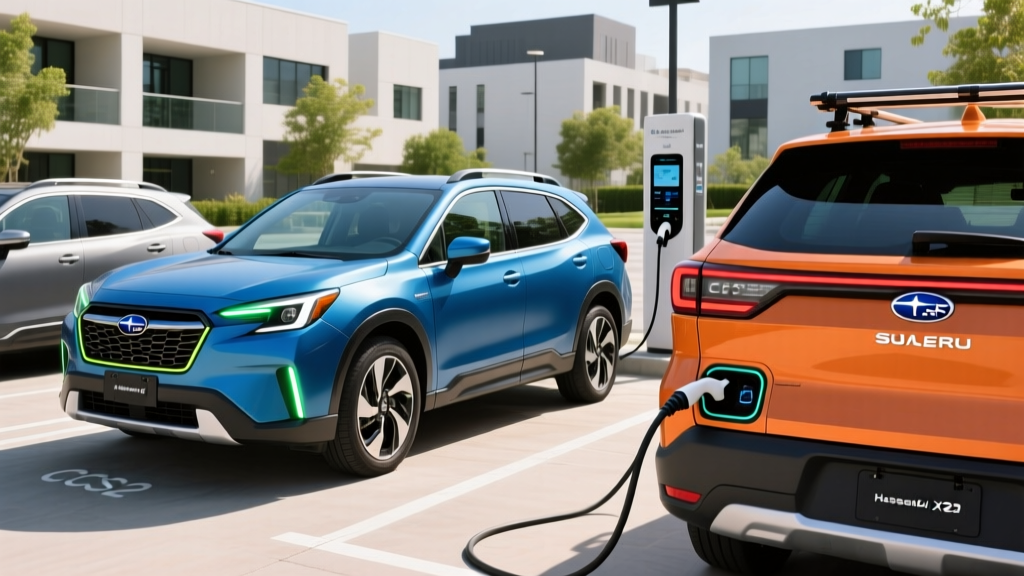
Subaru's only all-electric vehicle is the Solterra, a compact SUV developed jointly with Toyota (which sells the nearly identical bZ4X). For 2026, the Solterra delivers up to 285 miles of EPA-estimated range on the Extended Range trim with a 72.8 kWh (usable) NMC lithium-ion battery, standard all-wheel drive, and a peak DC fast-charge rate of 150 kW. Pricing starts around $38,495 before destination and incentives. The Solterra qualifies for a partial or full federal tax credit under IRS §30D rules, but eligibility depends on your income, the vehicle's MSRP, and battery-mineral sourcing — always verify current-year rules at irs.gov. If you need three rows, 350+ miles of range, or a truck bed, Subaru does not yet offer an EV that fits. Subaru has announced a larger three-row EV (the Uncharted concept) expected later in the decade, but it is not yet on sale.
2026 Subaru Solterra: Specs at a Glance
Below is the core data for the 2026 Solterra across its trims. All trims come standard with Subaru's Symmetrical All-Wheel Drive — there is no front-wheel-drive option, which is unusual in this segment and matters for buyers in snow-belt states.
| Spec | Solterra Premium | Solterra Limited | Solterra Touring (Extended Range) |
|---|---|---|---|
| EPA Range | 227 miles | 250 miles | 285 miles |
| Battery (usable) | 65.6 kWh NMC | 72.8 kWh NMC | 72.8 kWh NMC |
| MPGe (combined) | 111 MPGe | 107 MPGe | 104 MPGe |
| Peak DC Fast Charge | 150 kW | 150 kW | 150 kW |
| 10–80% DC Charge | ~32 min | ~35 min | ~35 min |
| Level 2 (240V) Rate | 7.6 kW | 7.6 kW | 7.6 kW |
| Level 2 Full Charge | ~8.5 hours | ~9.5 hours | ~9.5 hours |
| Horsepower | 215 hp | 215 hp | 215 hp |
| 0–60 mph | ~6.5 sec | ~6.5 sec | ~6.5 sec |
| Cargo Volume | 23.8 cu ft / 63.5 cu ft (rear seats folded) | 23.8 / 63.5 cu ft | 23.8 / 63.5 cu ft |
| Base MSRP | $38,495 | $41,995 | $46,995 |
| Battery/Powertrain Warranty | 8 years / 100,000 miles (capacity retention threshold: 70%) | ||
Sources: EPA fueleconomy.gov, Subaru of America press specifications.
Real-World Range: What the EPA Sticker Doesn't Tell You
EPA Sticker: Up to 285 miles (Touring Extended Range)
Real-World Expectation: ~230–255 miles in mixed driving; ~200–220 miles sustained highway at 70+ mph; ~170–195 miles in sub-freezing winter conditions.
The Solterra's EPA numbers are respectable for a compact AWD SUV, but real-world range depends heavily on three factors that Subaru buyers specifically care about:
1. Highway driving. The Solterra's boxy, wagon-like profile creates more aerodynamic drag than sleeker competitors like the Hyundai Ioniq 5 or Tesla Model Y. At 75 mph on the interstate, expect to use roughly 30–34 kWh/100 miles, which cuts effective range to around 210–230 miles on the Extended Range battery. For context, the Ioniq 5 AWD uses closer to 28–30 kWh/100 mi at highway speed.
2. Cold weather. The Solterra uses a resistive PTC heater rather than a heat pump on most trims (heat pump availability varies by model year and trim — check the window sticker). In temperatures below 32°F, expect 20–30% range loss compared to the EPA figure. That 285-mile Touring trim becomes roughly 200–225 miles on a cold January commute in Minnesota or upstate New York. Preconditioning the battery while plugged in at home mitigates some of this loss.
3. Mountain and off-road driving. Subaru buyers often head into terrain. Climbing passes at elevation consumes significantly more energy, though regenerative braking on descents recovers some of it. If your typical weekend involves 5,000+ feet of elevation gain, budget for 180–200 miles of effective range between charges.
Charging the Solterra: Home, Public, and Road Trips
The Solterra uses the CCS1 connector for DC fast charging and the J1772 connector for Level 1 and Level 2 AC charging. Subaru has not adopted the Tesla NACS port for the Solterra as of the 2026 model year, though adapters are available for Supercharger access on some networks.
| Charging Level | Power | Miles Added per Hour | Best For |
|---|---|---|---|
| Level 1 (120V household) | ~1.4 kW | ~4–5 miles/hr | Overnight top-up, low-mileage drivers |
| Level 2 (240V home/public) | 7.6 kW | ~25–28 miles/hr | Daily home charging, full overnight refill |
| DC Fast Charge (public) | Up to 150 kW peak | ~150+ miles in 15 min (to ~60% SoC) | Road trips, highway corridors |
Charging curve reality: The Solterra's 150 kW peak rate is only sustained up to roughly 30–40% State of Charge. After that, the rate tapers progressively — dropping to ~100 kW around 50% SoC, ~60 kW at 70%, and below 30 kW above 85%. This means a 10–80% charge takes roughly 32–35 minutes at a 150+ kW station, but a 10–95% charge can stretch past 55 minutes. Plan road-trip stops around the 10–80% window for efficiency.
Home charging cost: A Level 2 home charger installation (240V, 40-amp circuit) typically costs $800–$2,000 total, including the charger unit ($400–$700), electrician labor ($400–$1,000), and permits ($50–$200). If your electrical panel needs a 200-amp upgrade, add $1,500–$3,000. Charging at home at the national average electricity rate of ~$0.17/kWh costs roughly $12.30 for a full 72.8 kWh charge — about $0.04–$0.05 per mile driven.
Solterra vs. Gas Subaru: The Cost Comparison
The natural cross-shop for most Subaru EV buyers is the gas-powered Outback or Forester. Here's how the numbers stack up over 5 years and 60,000 miles of ownership.
| Cost Factor | 2026 Solterra Touring (EV) | 2026 Outback Limited (Gas AWD) |
|---|---|---|
| MSRP (approx.) | $46,995 | $39,995 |
| Federal Tax Credit (§30D) | Up to $7,500 (income/MSRP/sourcing rules apply) | $0 |
| Effective Purchase Price | ~$39,495 (if full credit) | $39,995 |
| Fuel/Energy Cost (60k mi) | ~$2,900 (home charging at $0.17/kWh) | ~$7,200 (gas at $3.40/gal, 28 MPG combined) |
| Maintenance (60k mi) | ~$600 (tire rotations, cabin filter, fluid top-offs) | ~$2,400 (oil changes, brake pads, filters) |
| Insurance (est. annual avg.) | ~$1,800–$2,200/yr | ~$1,400–$1,700/yr |
| 5-Year Fuel + Maintenance Total | ~$3,500 | ~$9,600 |
Assumptions: 12,000 miles/year, home charging predominant, gas price $3.40/gal national average. Actual costs vary by state, driving pattern, and electricity rate. Verify tax credit eligibility at irs.gov.
The Solterra's higher sticker price is largely offset by the federal credit (if you qualify) and dramatically lower energy and maintenance costs. Over 5 years, you save roughly $6,100 in fuel and maintenance alone. However, insurance premiums on EVs tend to run 15–25% higher than equivalent gas models, and EV depreciation remains less predictable. Factor those into your total cost of ownership.
Solterra vs. Rival Compact EVs
The Solterra does not exist in a vacuum. Here's how it compares to the most common cross-shops in the compact electric SUV segment.
| Attribute | Subaru Solterra Touring | Hyundai Ioniq 5 AWD | Tesla Model Y LR AWD | Ford Mustang Mach-E AWD |
|---|---|---|---|---|
| EPA Range | 285 mi | 290 mi | 320 mi | 300 mi (Ext. Range) |
| Battery (usable) | 72.8 kWh NMC | 77.4 kWh NMC | ~78 kWh NMC | 91 kWh NMC (Ext.) |
| Peak DC Charge | 150 kW | 240 kW | 250 kW | 150 kW |
| 10–80% DC Time | ~35 min | ~18 min | ~20 min | ~35 min |
| 0–60 mph | ~6.5 sec | ~5.0 sec | ~4.8 sec | ~5.1 sec |
| AWD Standard? | Yes | Optional | Yes (LR AWD) | Optional |
| Starting MSRP | $46,995 | $49,850 | $47,990 | $44,995 |
| NACS (Tesla) Port? | No (CCS1) | No (CCS1, adapter avail.) | Yes (native) | No (CCS1, adapter avail.) |
Where the Solterra wins: Standard AWD across all trims (competitors charge extra or require higher trims), competitive cargo space, Subaru's EyeSight safety suite, and strong brand loyalty among outdoor-oriented buyers who value ground clearance (8.3 inches) and X-MODE off-road traction settings.
Where the Solterra falls short: DC charging speed is the biggest gap. At 150 kW peak and ~35 minutes for 10–80%, it lags behind the Ioniq 5's 800V architecture (~18 minutes) and the Model Y (~20 minutes). On road trips with multiple DC fast-charge stops, this adds up. The Solterra also lacks a front trunk (frunk), and its infotainment system, while improved for 2026, trails Tesla's and Hyundai's in responsiveness and over-the-air update capability.
Common Subaru EV Misconceptions — Fact vs. Fiction
| Myth | Fact |
|---|---|
| "The Solterra is just a rebadged Toyota bZ4X with no differences." | While they share the e-TNGA platform and battery, Subaru tunes the suspension, steering, and X-MODE traction system differently. The Solterra also has slightly more ground clearance (8.3 in vs. 8.1 in) and distinct exterior/interior styling. |
| "EVs don't work in cold weather." | EVs work in cold weather — range is reduced 20–30% in sub-freezing temps, but the Solterra's AWD and heated seats/steering wheel (which use far less energy than cabin air heating) make it a capable winter vehicle. Preconditioning while plugged in preserves range. |
| "I'll need to replace the battery in 5 years for $20,000." | Modern NMC batteries are designed for 1,000–1,500+ full charge cycles. Subaru warranties the battery for 8 years/100,000 miles with a 70% capacity retention threshold. Industry data from Recurrent Auto shows most EV batteries retain 85–90%+ capacity at 100,000 miles. Full replacement is rare and typically covered under warranty if degradation is abnormal. |
| "I can't take a Subaru EV off-road or in snow." | The Solterra's X-MODE and 8.3 inches of ground clearance handle light off-road trails, forest service roads, and snowy conditions competently. It won't replace a Wrangler on technical rock crawls, but for Subaru's typical buyer — ski trips, dirt roads, snowy commutes — it's well-suited. |
| "The $7,500 tax credit applies to every Solterra." | Federal §30D credit eligibility depends on your taxable income (caps apply: $150K single / $300K joint), the vehicle's MSRP (must be under $80,000 for SUVs — Solterra qualifies), and battery critical-mineral and component sourcing requirements that change annually. Always confirm at irs.gov before purchasing. |
Decision Framework: Is the Subaru Solterra the Right EV for You?
Choose the Solterra if:
- You want standard AWD and live in a snow-belt or mountain state.
- Your daily commute is under 60 miles round-trip and you can charge at home overnight.
- You value Subaru's safety reputation (EyeSight, standard AWD) and plan light off-road or dirt-road use.
- You qualify for the federal §30D tax credit, bringing the effective price close to a gas Outback.
- You primarily drive in-town and on two-lane highways rather than long interstate road trips.
Look at competitors if:
- Road-trip charging speed is a priority — the Ioniq 5 or Model Y charge nearly twice as fast.
- You need 320+ miles of EPA range for frequent 300-mile drives without stopping.
- You want access to the Tesla Supercharger network natively (Model Y) or a frunk for gear storage.
- You need three rows of seating — Subaru has no three-row EV yet.
- You don't have access to home or workplace charging and rely entirely on public infrastructure in an area with limited DC fast chargers.
First-Time EV Buyer Checklist for the Solterra
- Confirm home charging access. Can you install a 240V Level 2 charger in your garage or driveway? If you live in an apartment or condo without charging, public-only charging adds time and cost.
- Check your electrical panel. A 40-amp EV circuit requires capacity on your panel. If you have a 100-amp panel already near capacity, budget $1,500–$3,000 for a 200-amp upgrade. Get a quote from a licensed electrician before purchasing.
- Verify federal and state incentives. Use the IRS §30D eligibility tool and check your state's EV rebate programs (amounts and availability vary by jurisdiction).
- Test-drive in conditions you'll actually drive. Take the Solterra on your commute, a highway stretch, and — if possible — in cold weather. Pay attention to regenerative braking feel (adjustable in settings) and one-pedal driving capability.
- Download the Subaru app and check charger networks. Confirm that Electrify America, EVgo, or ChargePoint stations are available on your regular routes. Subaru's app integrates with multiple networks for route planning and payment.
- Get an insurance quote before buying. EV insurance can run 15–25% higher than a comparable gas car. Get a real quote from your insurer, not an estimate.
Frequently Asked Questions
Does Subaru make any other electric vehicles besides the Solterra?
No. As of the 2026 model year, the Solterra is Subaru's only all-electric vehicle. Subaru has announced future EV plans including a larger three-row SUV (previewed by the Uncharted concept) and additional models through the late 2020s, but none are currently on sale or available to order. Subaru also sells the Crosstrek Hybrid (a plug-in hybrid), but it has been discontinued for recent model years in many markets — check your local dealer for current PHEV availability.
How long does the Solterra battery last?
Subaru warranties the high-voltage battery for 8 years or 100,000 miles, whichever comes first, with a capacity retention threshold of 70%. Industry data from battery analytics firm Recurrent Auto shows that most modern NMC batteries retain 85–90%+ of original capacity at 100,000 miles under normal use. To maximize longevity, avoid routinely charging to 100% or letting the battery sit at 0% for extended periods. Daily charging to 80–90% is ideal for NMC chemistry.
Can I charge the Solterra at a Tesla Supercharger?
Not natively — the Solterra uses a CCS1 port, while Tesla Superchargers use the NACS connector. However, Tesla has opened select Supercharger locations to non-Tesla EVs via the Magic Dock adapter (built into some stations), and third-party CCS-to-NACS adapters exist. Availability varies by location. For reliable public fast charging, plan around Electrify America, EVgo, and ChargePoint networks, which all support CCS1 natively.
Is the Solterra good for towing?
The 2026 Solterra has a maximum towing capacity of 2,200 pounds when properly equipped. That's sufficient for a small utility trailer, a pair of dirt bikes, or a light pop-up camper, but it falls well short of gas-powered Outback (2,700 lb) or Ascent (5,000 lb) ratings. Towing also significantly reduces EV range — expect a 30–40% range reduction when towing near the maximum capacity.
How does the Solterra compare to the Toyota bZ4X?
The Solterra and bZ4X share the same e-TNGA platform, battery options, and powertrain hardware. The differences are in tuning: Subaru adds X-MODE off-road traction settings, slightly more ground clearance, unique suspension tuning for a firmer ride, and distinct interior/exterior styling. Pricing is similar, though trim structures differ. If you prioritize off-road capability and Subaru's brand ecosystem, choose the Solterra. If you find a better deal or prefer Toyota's infotainment layout, the bZ4X is mechanically comparable.
What happens if I can't charge at home?
Owning a Solterra without home charging is possible but less convenient and more expensive. Public DC fast charging typically costs $0.30–$0.48/kWh (versus ~$0.17/kWh at home), raising your per-mile energy cost from ~$0.05 to ~$0.10–$0.14. You'll also spend 30–45 minutes per charging session 1–2 times per week. If you have reliable workplace Level 2 charging, that largely solves the problem. Without home or work charging, a plug-in hybrid or conventional hybrid may be a better fit for your lifestyle.