The Short Answer on Mazda's 2026 EV Lineup
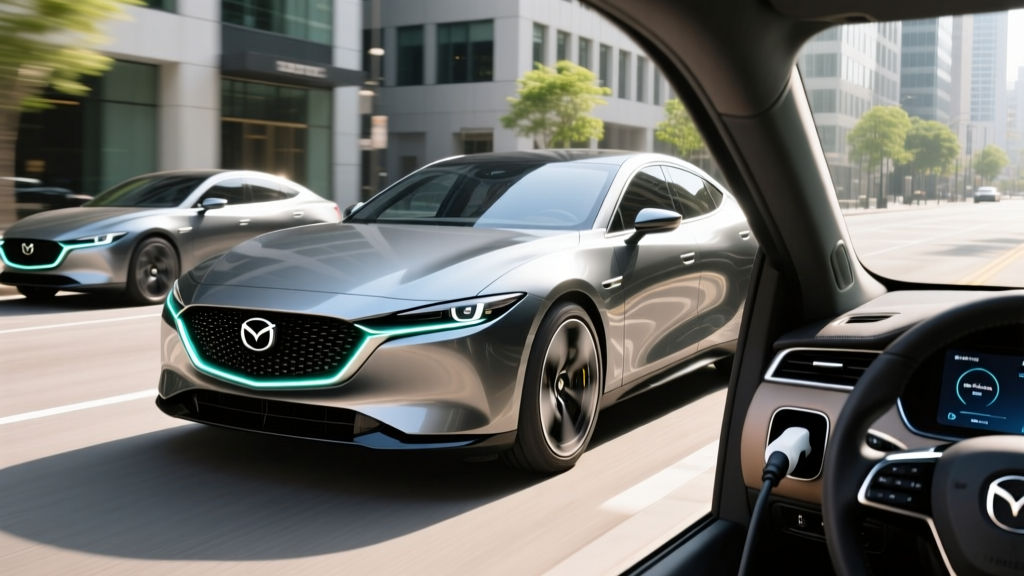
For 2026, Mazda sells one fully electric vehicle in the U.S.: the Mazda CX-60e (a compact electric SUV with an EPA-estimated 270 miles of range and a ~$42,500 starting MSRP). The Mazda CX-70e, a midsize two-row electric SUV, joins the lineup mid-year with an estimated 285 miles of range and a starting price near $48,000. Mazda's broader electrification strategy leans heavily on plug-in hybrids (the CX-60 PHEV and CX-90 PHEV), which bridge the gap for buyers without reliable home charging. If you need a Mazda EV today, the CX-60e is your option; if you can wait, the CX-70e offers more space and range. Neither model currently qualifies for the full $7,500 federal §30D tax credit due to battery-sourcing requirements, though point-of-sale lease credits may apply.
Mazda's 2026 Electric Lineup at a Glance
Mazda has been cautious in its EV rollout compared to Hyundai, Tesla, or Ford. The brand's "Multi-Solution" strategy spreads its bets across mild hybrids, plug-in hybrids, and battery-electric vehicles. For 2026, the fully electric options remain limited but purposeful — both models target the premium compact-to-midsize SUV segment where Mazda traditionally competes.
| Specification | 2026 Mazda CX-60e | 2026 Mazda CX-70e (Announced) |
|---|---|---|
| Body Style | Compact SUV (2-row) | Midsize SUV (2-row) |
| EPA Range | 270 miles | ~285 miles (estimated) |
| Battery Capacity | 72 kWh usable (NMC) | ~80 kWh usable (NMC, est.) |
| Drivetrain | AWD (dual motor) | AWD (dual motor) |
| Horsepower | 308 hp | ~340 hp (est.) |
| 0-60 mph | 5.8 seconds | ~5.4 seconds (est.) |
| Peak DC Fast Charge | 150 kW | ~150 kW (est.) |
| 10-80% DC Charge Time | ~28 minutes | ~30 minutes (est.) |
| Level 2 (240V) Rate | 11 kW | 11 kW (est.) |
| Efficiency (MPGe) | 105 MPGe combined | ~100 MPGe (est.) |
| Cargo Volume | 28.7 cu ft (rear seats up) | ~34 cu ft (est.) |
| Base MSRP | $42,500 | ~$48,000 (est.) |
| Battery Warranty | 8 years / 100,000 miles | 8 years / 100,000 miles |
Sources: fueleconomy.gov (EPA estimates), Mazda USA press specifications. CX-70e figures are preliminary estimates for an announced model; final specs may differ.
Real-World Range: What the EPA Sticker Doesn't Tell You
CX-60e Range Reality Check
EPA Estimate: 270 miles
Real-World Highway (70-75 mph): Expect 225-245 miles
Cold Weather (below 32°F): Expect 190-220 miles
Mixed Commute (city + suburban): 255-270 miles (regen-friendly driving recovers energy)
The CX-60e's 72 kWh NMC battery and dual-motor AWD layout mean real-world efficiency depends heavily on your driving mix. Highway driving at sustained speeds consumes more energy because EVs lack a multi-gear transmission to optimize efficiency at high velocity. Cold weather compounds this — battery heating and cabin climate draw can reduce range by 20-30% in northern climates. If your daily commute is under 60 miles round-trip, the CX-60e handles it easily even in winter. For road trips exceeding 200 miles one-way, plan a DC fast-charging stop.
The CX-60e's 150 kW peak charge rate is moderate by 2026 standards — Hyundai's Ioniq 5 peaks at 240 kW, and Tesla's Model Y at 250 kW. Mazda's charge curve holds near peak until roughly 55% state of charge (SoC), then tapers progressively. A 10-80% session takes approximately 28 minutes at a functioning 150+ kW charger. This is adequate but not class-leading; if you road-trip frequently, factor in slightly longer stops than you'd take in a Hyundai or Kia EV.
Cost Breakdown: EV vs. Gas vs. Mazda's Own PHEV
Mazda's own lineup gives buyers a natural comparison: the CX-60e (full EV), the CX-60 PHEV (26 miles electric-only, then hybrid), and the CX-5 (gas-only, carried over from prior years). Here's how five-year ownership stacks up for a driver covering 12,000 miles annually:
| Cost Category | CX-60e (EV) | CX-60 PHEV | CX-5 Turbo (Gas) |
|---|---|---|---|
| Base MSRP | $42,500 | $47,550 | $38,550 |
| Federal Tax Credit (§30D) | $0-$3,750* | $0-$3,750* | $0 |
| Est. Effective Purchase Price | ~$40,000 | ~$45,000 | $38,550 |
| Fuel/Energy (5 yrs, 60k mi) | $3,900** | $5,800 | $9,000 |
| Maintenance (5 yrs) | $1,800 | $3,200 | $4,100 |
| Insurance (5 yrs, avg) | $9,500 | $9,200 | $8,400 |
| Estimated Depreciation (5 yrs) | $18,000 | $19,500 | $16,500 |
| 5-Year Total Cost | ~$55,200 | ~$62,700 | ~$60,550 |
*Tax credit eligibility depends on battery critical-mineral and component sourcing, buyer AGI, and MSRP caps per IRS §30D rules. Mazda's battery supply chain may limit credit to $3,750 or $0 for some buyers — verify with a tax professional before purchasing.
**EV energy cost assumes $0.14/kWh national average, 80% home charging, 20% public DC charging at $0.40/kWh. Gas cost assumes $3.40/gallon, 25 MPG combined.
The EV wins on fuel and maintenance savings — no oil changes, fewer brake replacements (regen braking reduces pad wear), and cheaper per-mile energy. However, higher insurance premiums and steeper initial depreciation partially offset those gains. Over five years, the CX-60e saves roughly $5,000-$7,000 compared to the gas CX-5, but the gap narrows if you can't access the full tax credit.
Charging at Home and on the Road
The CX-60e uses a NACS (Tesla-style) charge port for 2026, reflecting Mazda's adoption of the North American Charging Standard. This gives direct access to Tesla Superchargers via native compatibility — no adapter needed — which significantly improves road-trip charging reliability compared to CCS-only vehicles.
| Charging Level | Power | Miles Added Per Hour | Typical Use Case |
|---|---|---|---|
| Level 1 (120V household) | ~1.4 kW | ~4-5 mi/hr | Overnight top-up, emergencies |
| Level 2 (240V home, 48A) | 11 kW | ~33-36 mi/hr | Daily home charging (full charge in ~7 hrs) |
| DC Fast Charge | Up to 150 kW | ~180 mi in 30 min (peak) | Road trips, rapid top-ups |
Home charging setup cost: Expect $800-$2,000 for a quality Level 2 wall connector (ChargePoint Home Flex, Emporia V2, or Tesla Wall Connector) plus $500-$2,500 for electrician installation, depending on whether your panel needs a 240V circuit run. Total: $1,300-$4,500 in most cases. If your home has a 200-amp panel with spare capacity, installation stays on the lower end. Older homes with 100-amp service may need a panel upgrade ($2,000-$4,000 additional).
Without home charging, EV ownership becomes significantly less convenient. Public DC fast-charging costs $0.30-$0.55/kWh in most markets, raising your per-mile cost close to what a hybrid would spend on gasoline. If you live in an apartment without charging access, Mazda's PHEV models (CX-60 PHEV, CX-90 PHEV) are a more practical choice — you can charge when available and burn gas when not.
Mazda EV vs. the Competition
The CX-60e competes in a crowded compact electric SUV segment. Here's how it measures up against key rivals:
| Attribute | Mazda CX-60e | Tesla Model Y LR | Hyundai Ioniq 5 | Ford Mustang Mach-E |
|---|---|---|---|---|
| EPA Range | 270 mi | 330 mi | 303 mi | 312 mi |
| Battery (usable kWh) | 72 kWh | 75 kWh | 77.4 kWh | 75.7 kWh |
| Peak DC Charge | 150 kW | 250 kW | 240 kW | 150 kW |
| 10-80% Time | ~28 min | ~20 min | ~18 min | ~33 min |
| 0-60 mph | 5.8 sec | 4.8 sec | 5.1 sec (AWD) | 5.0 sec |
| Starting MSRP | $42,500 | $44,990 | $42,600 | $42,995 |
| Connector | NACS | NACS | NACS (2026) | NACS (2026) |
Mazda's trade-off is clear: the CX-60e sacrifices 30-60 miles of range and slower DC charging speed compared to Tesla and Hyundai, but offers Mazda's characteristically premium interior materials, tuning-focused driving dynamics, and a more traditional SUV design language. If you value driving feel and cabin quality over maximum range and charge speed, the CX-60e holds its own. If range and road-trip charging speed are your top priorities, the Model Y or Ioniq 5 are stronger picks.
Common Misconceptions About Mazda EVs
| Myth | Fact |
|---|---|
| "Mazda doesn't make a real electric car." | The 2026 CX-60e is a full-production BEV with 270 miles of EPA range, not a compliance car. The CX-70e joins mid-year. |
| "EV batteries need replacing every few years." | Mazda warranties its EV batteries for 8 years/100,000 miles against degradation below 70% capacity. Industry data from Recurrent shows modern NMC batteries averaging 90%+ capacity retention at 100,000 miles. |
| "The Mazda CX-60e qualifies for the full $7,500 tax credit." | Credit eligibility depends on battery sourcing and critical-mineral requirements that change annually. As of 2026, Mazda's supply chain may qualify for $3,750 (critical minerals only) or $0 — always verify via the IRS clean vehicle credit lookup before purchasing. |
| "I can't take a Mazda EV on a road trip." | With NACS compatibility and Supercharger network access, the CX-60e can road-trip anywhere. You'll stop for 25-30 minutes every 200-220 miles — longer than a Tesla, but workable with planning. |
| "Mazda is behind because they only have one EV." | Mazda's multi-solution approach includes two PHEVs (CX-60, CX-90) and expanding BEVs. For buyers who need EVs now, options are limited. For buyers who want a bridge, Mazda's PHEVs are among the best in the segment. |
Decision Framework: Is a 2026 Mazda EV Right for You?
Choose the Mazda CX-60e if:
- You have Level 2 home charging access (or can install it)
- Your daily driving is under 100 miles round-trip
- You prioritize interior quality and driving dynamics over maximum range
- You want NACS/Supercharger compatibility without an adapter
- You prefer a Mazda dealer experience and service network
Choose the Mazda CX-60 PHEV instead if:
- You lack reliable home or workplace charging
- You regularly drive more than 300 miles between stops
- You live in a region with extreme cold and limited charging infrastructure
- You want Mazda's design and driving feel without range compromise
Choose a competitor (Model Y, Ioniq 5) if:
- Maximum range (300+ miles) is your top priority
- You want the fastest possible DC charging (sub-20 min, 10-80%)
- You need third-row seating (Model Y offers an optional third row)
- Federal tax credit eligibility is a make-or-break factor in your budget
Wait for the CX-70e if:
- You need more cargo space (~34 cu ft vs. 28.7)
- You want an estimated 285+ miles of range in a midsize package
- Your purchase timeline extends to late 2026
What First-Time Mazda EV Buyers Should Know
1. Preconditioning matters. The CX-60e can precondition its battery when you set a departure time or navigate to a DC fast charger. This warms the battery to optimal temperature, enabling faster charging. Skip preconditioning in cold weather, and your 150 kW peak might drop to 80-100 kW for the first several minutes of a charge session.
2. Regenerative braking settings change your experience. Mazda offers multiple regen levels. The strongest setting enables near one-pedal driving in city traffic, recovering energy that would otherwise be lost to friction brakes. On the highway, a lighter regen setting lets the car coast more naturally.
3. Insurance will cost more. EV insurance premiums run 10-20% higher than equivalent gas vehicles due to higher repair costs and battery replacement expense. Get a quote before purchasing — the premium difference may be $100-$200/year.
4. The 80% charging rule applies. For daily use, charge to 80% state of charge rather than 100%. This reduces stress on the NMC battery chemistry and extends long-term capacity retention. Reserve 100% charges for road-trip departure days. (LFP batteries tolerate 100% daily charges better, but the CX-60e uses NMC.)
5. Check your electrical panel before committing. A Level 2 charger requires a dedicated 240V circuit (typically 50-amp breaker, 48-amp continuous draw). If your panel is near capacity, an electrician may recommend a load-management device or panel upgrade before installation. Get a quote early — it can take weeks to schedule in some markets.
Frequently Asked Questions
Does Mazda have a fully electric car for 2026?
Yes. The 2026 Mazda CX-60e is a compact electric SUV with 270 miles of EPA-estimated range, AWD, and a $42,500 starting MSRP. The midsize CX-70e is announced for mid-2026 with an estimated 285 miles of range.
What is the real-world range of the Mazda CX-60e?
Expect 225-245 miles on highway road trips at 70-75 mph, and 190-220 miles in freezing weather. City and suburban driving with regenerative braking gets closest to the 270-mile EPA estimate.
Does the 2026 Mazda CX-60e qualify for the $7,500 federal tax credit?
Full credit eligibility is uncertain. Under current IRS §30D rules, the credit depends on battery critical-mineral sourcing and component manufacturing requirements, buyer income caps, and the vehicle's MSRP falling under the $80,000 SUV cap. Mazda's supply chain may qualify for a partial credit ($3,750) or none. Leasing may unlock a $7,500 commercial credit passed through as a lease discount — ask your dealer.
How long does it take to charge the CX-60e at home?
On a Level 2 (240V, 11 kW) home charger, a full 0-100% charge takes approximately 7 hours. Most owners plug in overnight and wake to a full battery. On a standard 120V outlet (Level 1), expect roughly 4-5 miles of range per hour — adequate only for very low daily mileage or emergency top-ups.
Should I buy the Mazda CX-60e or the CX-60 PHEV?
Choose the CX-60e if you have home charging, drive under 100 miles daily, and want the lowest operating costs. Choose the CX-60 PHEV (26 miles electric-only, then 25 MPG combined as a hybrid) if you lack reliable charging, take frequent long trips, or live in an area with sparse public charging infrastructure.
Is the Mazda CX-60e good for road trips?
It's adequate. With NACS compatibility, you can use Tesla Superchargers natively. Plan to stop every 200-220 miles for 25-30 minutes (10-80% charge). That's longer than a Tesla Model Y (~20 min) but comparable to many rivals. Route planning via the car's navigation or apps like A Better Routeplanner makes it manageable.
What is the battery warranty on the 2026 CX-60e?
Mazda covers the high-voltage battery for 8 years or 100,000 miles against defects and degradation below 70% of original capacity. This is consistent with the industry standard and federal requirement for emissions-related components.