The Short Answer on Electric Subaru
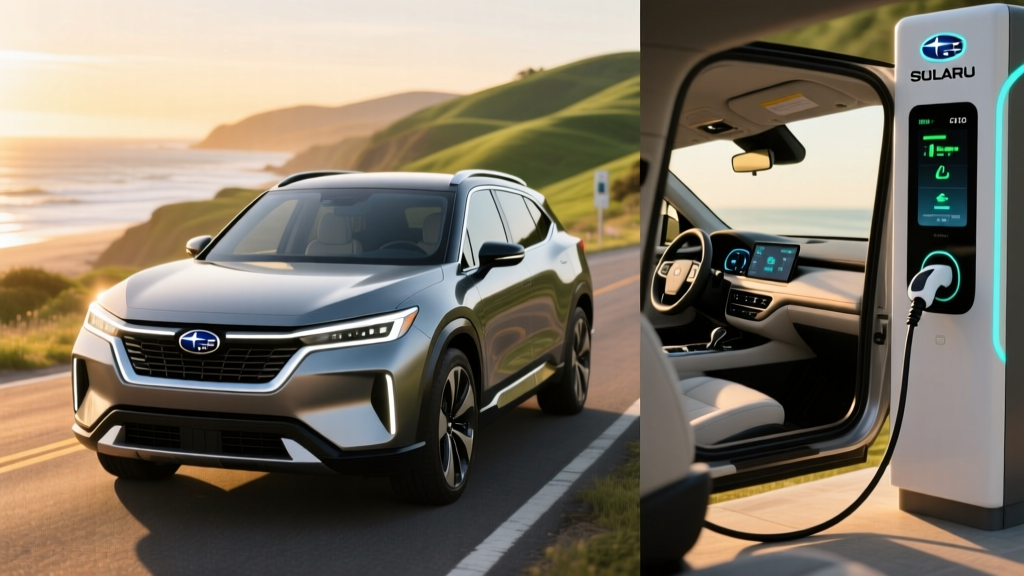
The 2026 Subaru Solterra is the brand's only fully electric vehicle, offering 228 miles of EPA-estimated range, standard all-wheel drive, and competitive off-road capability. Starting around $44,995 before incentives, it costs more than a gas Outback upfront but saves $1,200–$1,800 annually in fuel and maintenance for home-charging owners. It's best suited for drivers with Level 2 home charging who want Subaru's AWD reputation in an EV package, but its 150 kW peak DC charging and cold-weather range loss mean road-trippers should plan carefully.
2026 Subaru Solterra: The Current Electric Lineup
As of 2026, Subaru offers one battery-electric vehicle: the Solterra, developed jointly with Toyota (which sells the mechanically similar bZ4X). Subaru has not announced additional EV models for the U.S. market, though the company has signaled future electrified products. If you're searching for an electric Subaru, the Solterra is your only option — and understanding its real-world capabilities versus its spec sheet is essential before purchase.
| Specification | 2026 Subaru Solterra |
|---|---|
| EPA Range | 228 miles (Limited/Touring trims with 20" wheels) |
| Battery Capacity | 71.4 kWh usable (NMC lithium-ion) |
| Drivetrain | Dual-motor AWD, 215 hp, 249 lb-ft torque |
| 0–60 mph | ~6.5 seconds |
| Peak DC Fast Charge | 150 kW (10–80% in ~35 minutes) |
| Level 2 Charge Rate | 6.6 kW onboard charger |
| EPA Efficiency | 104 MPGe combined (32 kWh/100 mi) |
| Base MSRP | $44,995 (Premium trim) |
| Battery/Powertrain Warranty | 8 years / 100,000 miles |
Real-World Range Reality
The 228-mile EPA figure assumes mixed driving at moderate temperatures. Expect approximately 190–210 miles on a highway road trip at 70 mph, and as low as 160–180 miles in sub-freezing winter conditions. Subaru's battery thermal management system helps, but like all NMC chemistries, cold weather reduces available capacity and slows charging speeds. Preconditioning the battery while plugged in before fast charging recovers some of this loss.
Solterra vs Gas Subaru: Outback Comparison
The natural cross-shop for most Subaru buyers is the gas-powered Outback. Here's how the numbers stack up when you look past the sticker price.
| Factor | 2026 Solterra (EV) | 2026 Outback AWD (Gas) |
|---|---|---|
| Starting MSRP | $44,995 | $32,995 |
| Federal Tax Credit (§30D) | Up to $7,500 (eligibility varies) | $0 |
| Effective Price After Credit | ~$37,495 | $32,995 |
| Energy Cost per Mile | ~$0.04–$0.06 (home charging) | ~$0.14–$0.17 (gas at $3.50/gal) |
| Annual Fuel/Energy (15k mi) | $600–$900 | $2,100–$2,550 |
| Annual Maintenance | ~$200–$400 | ~$600–$900 |
| 5-Year Energy + Maintenance | $4,000–$6,500 | $13,500–$17,250 |
| Cargo Volume | 23.8 cu ft (rear seats up) | 32.5 cu ft (rear seats up) |
| Towing Capacity | Not rated for towing | 2,700 lbs |
The Solterra's effective price after the federal tax credit narrows the gap significantly, and five-year operating savings of $7,000–$12,000 can make the EV cheaper to own over time. But the Outback wins on cargo space, towing, and upfront affordability — and you never have to think about charging infrastructure.
Real Costs of Solterra Ownership
Purchase price is only the beginning. Here's a five-year total cost breakdown for a typical driver covering 15,000 miles annually.
| Cost Category | Solterra (5 Years) | Outback (5 Years) |
|---|---|---|
| Purchase (after credit) | $37,495 | $32,995 |
| Home Charger Install (Level 2) | $800–$2,000 | $0 |
| Energy/Fuel | $3,000–$4,500 | $10,500–$12,750 |
| Maintenance | $1,000–$2,000 | $3,000–$4,500 |
| Insurance (avg) | $7,500–$9,000 | $6,000–$7,500 |
| Estimated Depreciation | $14,000–$17,000 | $10,000–$13,000 |
| Total 5-Year Cost | $63,795–$71,995 | $62,495–$70,745 |
Key takeaways:
- Energy savings are real — $7,000–$9,000 less spent on fuel over five years with home charging at national average electricity rates (~$0.16/kWh).
- Insurance runs 15–25% higher on the Solterra, reflecting EV repair costs and higher vehicle value. Get quotes before purchase.
- Depreciation is steeper for the Solterra. EV resale values have softened since 2023, and early adopters absorbed significant losses. Buying used or holding the car 8+ years mitigates this.
- Home charging installation is a one-time cost that pays back within 2–3 years through fuel savings. If you can't install a Level 2 charger, public DC fast charging at $0.30–$0.48/kWh erases much of the EV cost advantage.
Charging the Solterra: What You Need to Know
The Solterra uses the CCS1 connector (not NACS/Tesla). Here's what charging looks like in practice:
| Level | Power | Speed | Use Case |
|---|---|---|---|
| Level 1 (120V) | 1.4 kW | ~4 miles/hour | Emergency/overnight trickle |
| Level 2 (240V) | 6.6 kW | ~22 miles/hour (full charge ~11 hrs) | Home daily charging |
| DC Fast Charge | 150 kW peak | 10–80% in ~35 min | Road trips |
The 150 kW peak charge rate is modest by 2026 standards — competitors like the Hyundai Ioniq 5 and Kia EV6 peak at 240–350 kW and hit 10–80% in 18 minutes. The Solterra's charge curve also tapers significantly above 80%, meaning that last 20% can take as long as the first 80%. Plan road-trip stops around 10–80% charges and move on rather than waiting for a full battery.
Subaru includes a complimentary trial of DC fast charging at Electrify America stations (typically 1 year or a set kWh allotment). After that, expect to pay $0.35–$0.48/kWh on public networks — roughly $25–$35 for a 10–80% session.
Federal Tax Credit: Does the Solterra Qualify?
The 2026 Solterra's eligibility for the §30D federal tax credit depends on several factors that change periodically:
- MSRP Cap: SUVs must be under $80,000 — the Solterra qualifies at all trim levels.
- Buyer Income Cap: AGI must not exceed $150,000 (single), $225,000 (head of household), or $300,000 (joint).
- Battery Sourcing: Critical minerals and battery component requirements phase in annually. As of 2026, strict sourcing rules may reduce the credit from $7,500 to $3,750 or disqualify some vehicles entirely. Check fueleconomy.gov for the current Solterra credit status.
- Point-of-Sale Transfer: Eligible buyers can transfer the credit to the dealer at purchase, reducing the out-of-pocket price immediately rather than waiting for a tax refund.
Never assume the full $7,500. Battery sourcing rules have disqualified several EVs from the full credit in 2025–2026. Confirm current eligibility on the IRS website or through your dealer before signing.
Common EV Misconceptions — Solterra Edition
| Myth | Fact |
|---|---|
| "228 miles of range isn't enough." | The average American drives 37 miles/day (FHWA data). 228 miles covers 95%+ of daily needs with home charging. Road trips require planning but are manageable with DC fast charging. |
| "The battery will need expensive replacement." | NMC batteries typically retain 85–90% capacity after 100,000 miles. Subaru's 8-year/100,000-mile warranty covers capacity below 70%. Full replacements (rare) cost $8,000–$14,000 but are seldom needed within a vehicle's normal lifespan. |
| "EVs don't work in cold weather." | Range drops 20–30% in freezing temps, but the Solterra's standard heat pump and battery preconditioning mitigate this. Owners in cold climates simply charge more frequently in winter — they don't get stranded. |
| "I can just use public chargers, no home install needed." | You can, but public DC charging costs 3–5x more than home Level 2 charging, erasing most fuel savings. It's also slower and less convenient. Home charging access is the single biggest factor in EV satisfaction. |
| "AWD EVs are as capable as Subaru's gas AWD off-road." | The Solterra has 8.3 inches of ground clearance and X-MODE, but it's not rated for towing and its approach/departure angles trail the Outback. It handles snow and dirt roads well but isn't a hardcore off-roader. |
Decision Framework: Is the Electric Subaru Right for You?
Choose the Solterra if:
- You have (or can install) Level 2 home charging — a 240V outlet or hardwired charger in your garage or driveway.
- Your daily commute is under 80 miles round-trip, leaving plenty of range buffer.
- You value standard AWD, Subaru's safety reputation (EyeSight driver assist), and the brand's resale loyalty.
- You qualify for some or all of the §30D tax credit, narrowing the price gap with gas alternatives.
- You take road trips 2–4 times a year and can tolerate 35-minute charging stops along routes with DC fast chargers.
Choose the Gas Outback (or wait) if:
- You can't install home charging and rely on apartment/street parking — public charging costs and inconvenience will frustrate you.
- You tow a trailer, boat, or camper — the Solterra is not rated for towing.
- You regularly drive 300+ miles between stops in areas with sparse charging infrastructure (rural West, parts of the Midwest).
- Cargo space is a priority — the Outback's 32.5 cu ft (75.7 cu ft max) significantly exceeds the Solterra's 23.8 cu ft.
- You want to spend $12,000 less upfront and don't mind higher fuel/maintenance costs over time.
Frequently Asked Questions
Is Subaru making more electric vehicles beyond the Solterra?
Subaru has announced plans for additional EVs globally but has not confirmed specific models or timelines for the U.S. market as of 2026. The Solterra remains the only electric Subaru you can buy today. If you're waiting for an electric Forester or Outback, no timeline has been published.
How does the Solterra compare to the Toyota bZ4X?
They share the same platform, battery, and powertrain, but the Solterra comes standard with dual-motor AWD (the bZ4X offers a FWD base model), more off-road-oriented X-MODE software, and Subaru's EyeSight safety suite. Pricing is similar, though trim-level equipment differs. Range and charging specs are nearly identical.
Can I charge the Solterra at Tesla Superchargers?
Not natively. The Solterra uses a CCS1 connector, while Tesla Superchargers use NACS. As of 2026, Subaru has not announced a NACS adapter program for the Solterra (unlike Ford, GM, and Rivian). You'll rely on Electrify America, EVgo, ChargePoint, and other CCS-compatible networks. Some third-party CCS-to-NACS adapters exist, but Subaru has not officially endorsed any.
What happens if the battery degrades?
Subaru's battery warranty guarantees at least 70% capacity retention for 8 years or 100,000 miles. Real-world data from similar NMC packs shows typical degradation of 10–15% over 100,000 miles. If your 228-mile range drops to ~195 miles after several years, that's normal — not a warranty claim. Only capacity loss beyond 30% triggers warranty replacement.
Is the Solterra good in snow?
Yes. Standard AWD with 8.3 inches of ground clearance, X-MODE traction management, and winter tire compatibility make it competent in snow. The battery's low center of gravity aids stability. Just account for 20–30% range loss in sustained freezing temperatures and plan charging accordingly.
What does home charger installation cost?
A Level 2 (240V) home charger installation typically runs $800–$2,000 for a standard setup (charger unit + electrician labor + permit). If your electrical panel needs an upgrade from 100A to 200A service, add $1,500–$3,000. Get a quote from a licensed electrician before committing to the vehicle.