Quick Verdict: The Solterra Premium in 2026
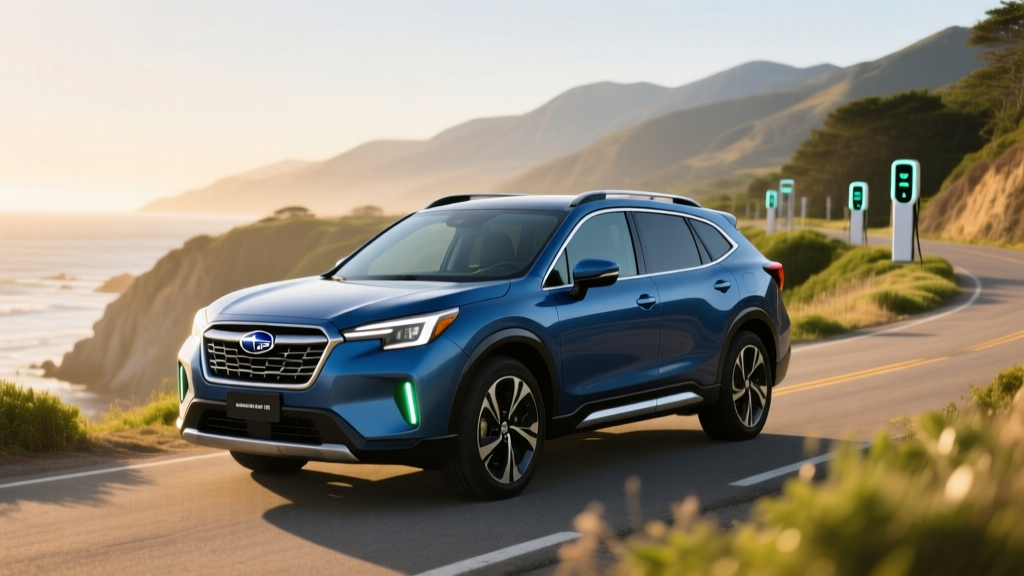
The 2026 Subaru Solterra Premium occupies a specific niche: it's the EV for buyers who want Subaru's trademark all-wheel-drive confidence and rugged design language, now with meaningfully improved range and charging over the original 2023 launch model. Built on the shared Toyota-Subaru e-TNGA platform (the same architecture underpinning the bZ4X), the Solterra differentiates itself with standard dual-motor AWD across every trim, X-MODE off-road software, and a more outdoorsy cabin treatment. For 2026, Subaru has updated the battery pack and thermal management system, yielding a higher EPA range estimate and faster DC charging than previous model years.
But the Solterra Premium isn't the longest-range EV in its price class, nor the fastest-charging. Buyers who prioritize maximum highway range or cutting-edge infotainment may find stronger alternatives. This review breaks down every number that matters — from real-world range to the tax-credit math — so you can decide if the Solterra Premium fits your driveway.
Range, Efficiency, and Real-World Expectations
| Metric | Value |
|---|---|
| EPA Estimated Range | 285 miles |
| Usable Battery Capacity | 74.7 kWh (NMC lithium-ion) |
| EPA MPGe (Combined) | 107 MPGe |
| EPA Efficiency | 31 kWh / 100 mi |
| Drivetrain | Dual-motor AWD (standard) |
The EPA rates the 2026 Solterra Premium at 285 miles. In mixed suburban and city driving at moderate temperatures, expect to achieve roughly 260–280 miles before needing a charge. On sustained highway runs at 70–75 mph, range drops to approximately 230–250 miles due to aerodynamic drag and the energy cost of dual-motor AWD. In cold weather (below 32°F / 0°C), plan for a 15–25% reduction, yielding roughly 210–240 miles depending on cabin heat usage. The Solterra's standard heat pump helps mitigate winter losses compared to EVs without one, but the boxy crossover shape and all-season tires still penalize efficiency relative to sleeker competitors.
The 74.7 kWh usable battery uses NMC (nickel manganese cobalt) chemistry, which offers higher energy density than LFP cells but requires more careful state-of-charge management for long-term longevity. Subaru recommends daily charging to 80–90% and reserving 100% charges for road trips. The battery management system includes a buffer above and below the usable window to protect against deep discharge and overcharge degradation.
Charging Speed: DC Fast, Level 2, and Level 1
Charging capability is where the 2026 Solterra shows meaningful improvement over the 2023–2024 models, which were criticized for sluggish DC charging. Subaru upgraded the thermal preconditioning system and battery cooling loop, enabling higher sustained charge rates.
| Charging Level | Power / Rate | Speed |
|---|---|---|
| DC Fast Charge (Peak) | 150 kW max | 10–80% in ~28 minutes |
| DC Fast Charge (Sustained Avg) | ~110 kW (10–80% avg) | Charge curve tapers above 70% SoC |
| Level 2 (240V, Home/Public) | 11.5 kW onboard charger | ~37 miles of range per hour |
| Level 1 (120V Household) | ~1.4 kW | ~4–5 miles of range per hour |
Understanding kW vs. kWh: kW (kilowatts) measures charging power — how fast energy flows into the battery. kWh (kilowatt-hours) measures battery capacity — how much total energy the battery stores. Think of kW as the width of the hose and kWh as the size of the tank.
The charging curve matters. While the Solterra Premium peaks at 150 kW, that rate is only sustained in a narrow SoC window (roughly 15–45%). Above 70%, the rate tapers significantly to protect the NMC cells, dropping below 50 kW as you approach 80%. This is standard behavior for lithium-ion batteries, but it means the 10–80% time of ~28 minutes is the realistic benchmark, not the peak rate. On a road trip, plan stops around the 20–25 minute mark to stay in the fastest-charging window.
Preconditioning tip: Use the Solterra's navigation system to route to a DC fast charger. This triggers battery preconditioning — warming the pack to optimal temperature before you arrive. In cold weather, preconditioning can shave 5–10 minutes off your charge time. Without it, a cold battery may accept only 50–70 kW initially.
For home charging, the 11.5 kW onboard charger is competitive. A full charge from 10% to 100% on a Level 2 home station takes roughly 7–8 hours, easily covering overnight replenishment. Subaru includes a dual-voltage portable charging cable (120V/240V) with the vehicle, though most buyers will want a dedicated Level 2 wallbox for daily use.
Performance and Driving Dynamics
| Metric | Value |
|---|---|
| Powertrain | Dual-motor AWD (one motor per axle) |
| Total System Horsepower | 215 hp |
| Total System Torque | 248 lb-ft |
| 0–60 mph | 6.5 seconds |
| Top Speed | 110 mph (electronically limited) |
| Towing Capacity | 3,500 lbs (with factory tow package) |
| Ground Clearance | 8.3 inches |
The Solterra Premium isn't a performance EV — it won't pin you to your seat like a Tesla Model Y Performance or a Hyundai Ioniq 5 with the dual-motor option. The 6.5-second 0–60 mph time is adequate for highway merging and passing, and the instant torque delivery makes it feel quicker around town than the number suggests. Where the Solterra earns its keep is off-pavement and in adverse conditions.
Subaru's X-MODE with Grip Control is standard, offering selectable terrain programs (Snow/Dirt, Deep Snow/Mud) that modulate torque distribution and regenerative braking for low-traction surfaces. The 8.3 inches of ground clearance exceeds most crossover EVs, giving it genuine capability on forest service roads, snow-covered driveways, and mild trail use. The 3,500-lb towing capacity (with the optional tow package) is practical for small boat trailers, bike racks, or light campers — a meaningful advantage for outdoors-oriented buyers.
Ride quality is composed and slightly firm, with well-damped body control over rough pavement. The steering is light and numb by enthusiast standards, but that's typical for the class. Cabin noise isolation is good at highway speeds, with minimal wind noise from the roof rails and modest tire roar from the all-season rubber.
Interior, Cargo, and Technology
| Metric | Value |
|---|---|
| Seating Capacity | 5 passengers |
| Front Legroom | 42.1 inches |
| Rear Legroom | 35.6 inches |
| Cargo Volume (Behind Rear Seats) | 27.4 cu ft |
| Cargo Volume (Rear Seats Folded) | 56.9 cu ft |
| Front Trunk (Frunk) | Not available |
| Infotainment Display | 12.3-inch touchscreen |
| Wireless Apple CarPlay / Android Auto | Standard |
| Wireless Phone Charging | Standard (Premium trim) |
| Driver Display | 7-inch digital instrument cluster |
The Solterra Premium's cabin is practical and durable rather than luxurious. Subaru uses water-resistant seatback pockets and easy-clean cargo-area materials that align with its outdoorsy positioning. The 12.3-inch touchscreen runs Subaru's latest Starlink infotainment software, which is responsive and logically organized. Wireless Apple CarPlay and Android Auto are standard, as is wireless phone charging on the Premium trim.
Passenger space is competitive for the compact EV crossover segment. Front-seat occupants enjoy generous headroom and legroom, while the rear seat accommodates adults comfortably on shorter trips. The 35.6 inches of rear legroom is slightly tighter than a Hyundai Ioniq 5 (39.4 in) but comparable to a Toyota bZ4X. The absence of a frunk is a missed opportunity — competitors like the Ford Mustang Mach-E and Ioniq 5 offer front-trunk storage for charging cables or groceries.
Cargo volume at 27.4 cu ft behind the rear seats is adequate for a week's groceries or two large suitcases, and the 56.9 cu ft maximum with seats folded handles larger hauls. The load floor is relatively high due to the battery pack underneath, which can make loading heavy items a bit of a lift.
Driver Assistance (SAE Level 2): The Solterra Premium comes equipped with Subaru EyeSight 4.0, which includes adaptive cruise control with lane centering, lane-keeping assist, automatic emergency braking with pedestrian and cyclist detection, and blind-spot monitoring. This is an SAE Level 2 driver-assistance system — meaning the driver must remain fully attentive with hands on the wheel and eyes on the road at all times. It is not autonomous or self-driving. EyeSight 4.0 is well-regarded for smooth, non-intrusive interventions and strong performance in rain and low-light conditions.
Pricing, Trims, and Federal Tax Credit
| Trim | Base MSRP | Est. After §30D Credit* |
|---|---|---|
| Premium | $39,995 | ~$32,495 |
| Limited | $43,995 | ~$35,495 |
| Touring | $47,495 | ~$39,995 |
*Federal tax credit estimate assumes full $7,500 eligibility. Actual credit depends on buyer income, battery sourcing, and MSRP caps. See eligibility checklist below.
The 2026 Subaru Solterra Premium starts at an MSRP of $39,995 (including destination). Key standard equipment includes dual-motor AWD, the 12.3-inch infotainment system, heated front seats, heated steering wheel, EyeSight 4.0 driver assist, X-MODE, and 18-inch alloy wheels. Adding the optional panoramic glass roof, JBL premium audio, or the tow package pushes the as-tested price toward $43,000–$44,000.
- Vehicle MSRP cap: SUVs/crossovers must be ≤ $80,000 MSRP — the Solterra qualifies.
- Buyer income cap: Modified AGI must not exceed $150,000 (single), $225,000 (head of household), or $300,000 (joint filers).
- Battery sourcing: Critical minerals and battery components must meet phased-in domestic-sourcing thresholds per IRS rules. Subaru sources battery cells from Panasonic/Toyota's supply chain — verify current-year compliance on the IRS qualified vehicles list.
- Point-of-sale transfer: The $7,500 credit can be transferred to the dealer at purchase, reducing your out-of-pocket cost immediately (effective since Jan 2024). You must file IRS Form 8936 with your tax return to reconcile.
- Consult a tax professional to confirm your personal eligibility. Rules change and individual circumstances vary.
For buyers who qualify, the Solterra Premium effectively costs around $32,495 after the point-of-sale credit transfer — a compelling entry point for a dual-motor AWD electric crossover. State and local incentives (such as California's CVRP, Colorado's state credit, or utility rebates) may reduce the cost further. Check IRS.gov for the latest §30D rules and the qualified vehicles list.
Warranty and Long-Term Ownership
| Coverage | Term |
|---|---|
| Basic (Bumper-to-Bumper) | 3 years / 36,000 miles |
| Powertrain | 5 years / 60,000 miles |
| EV Battery | 8 years / 100,000 miles (≥70% capacity retention) |
| Corrosion Perforation | 5 years / unlimited miles |
| Roadside Assistance | 3 years / 36,000 miles |
The 8-year / 100,000-mile battery warranty is standard for the industry and guarantees at least 70% state-of-health (capacity retention) over the coverage period. Based on data from similar NMC packs in the Toyota bZ4X and other e-TNGA vehicles, owners can expect roughly 8–12% degradation over 100,000 miles under normal use — meaning the battery should still hold approximately 88–92% of its original capacity at that point. Subaru's thermal management system (active liquid cooling) helps mitigate degradation by keeping cells within an optimal temperature window during charging and driving.
Long-term maintenance costs for the Solterra are lower than a comparable gas-powered Subaru Forester or Outback — no oil changes, no spark plugs, no transmission fluid. Brake wear is also reduced thanks to regenerative braking, which handles most deceleration. Expect to replace cabin air filters, wiper blades, brake fluid (every 2–3 years), and tires on a normal schedule. Insurance costs tend to run 10–20% higher than equivalent gas crossovers due to repair costs and EV parts pricing.
Competitive Comparison: Solterra Premium vs. Key Rivals
| Spec | Subaru Solterra Premium | Hyundai Ioniq 5 SEL AWD | Ford Mustang Mach-E Select AWD | Toyota bZ4X XLE AWD |
|---|---|---|---|---|
| EPA Range | 285 mi | 290 mi | 270 mi | 252 mi |
| Battery (usable kWh) | 74.7 kWh | 77.4 kWh | 75.7 kWh | 71.4 kWh |
| DC Fast Charge (Peak kW) | 150 kW | 240 kW | 150 kW | 150 kW |
| 10–80% Time | ~28 min | ~18 min | ~29 min | ~30 min |
| Horsepower | 215 hp | 320 hp | 266 hp | 201 hp |
| 0–60 mph | 6.5 sec | 5.0 sec | 5.5 sec | 7.1 sec |
| Base MSRP (AWD) | $39,995 | $46,500 | $42,995 | $38,450 |
| Ground Clearance | 8.3 in | 6.1 in | 5.7 in | 8.1 in |
The Solterra Premium's closest rival is the Toyota bZ4X, which shares the same platform. The Solterra edges ahead on range (285 vs. 252 mi), ground clearance (8.3 vs. 8.1 in), and power (215 vs. 201 hp), while the bZ4X undercuts on price by ~$1,500. The Hyundai Ioniq 5 AWD is the segment benchmark for charging speed (240 kW peak, 10–80% in ~18 minutes) and performance (320 hp, 5.0-second 0–60), but it costs significantly more and offers less ground clearance for off-pavement use. The Ford Mustang Mach-E AWD splits the difference on performance but trails on range and has a lower ride height.
Choose the Subaru Solterra Premium if: You need genuine AWD capability for snow, dirt roads, or light trail use; you value 8.3 inches of ground clearance and 3,500-lb towing; you want a durable, outdoors-oriented cabin; you prioritize Subaru's safety reputation and EyeSight driver assist.
Look elsewhere if: You want the fastest DC charging for road trips (Ioniq 5 wins); you need maximum rear-seat legroom (Ioniq 5 or Model Y); you want a frunk for cargo; you prioritize sporty acceleration and handling (Ioniq 5, Mach-E, or Model Y).
Pros and Cons
- Standard dual-motor AWD on every trim
- Class-leading 8.3 inches of ground clearance
- X-MODE off-road capability is genuinely useful
- 3,500-lb towing capacity with tow package
- Strong EyeSight 4.0 driver-assist suite
- Heat pump standard (better cold-weather range retention)
- Competitive pricing after $7,500 federal tax credit
- 8-year / 100,000-mile battery warranty
- 150 kW peak DC charging trails the Ioniq 5's 240 kW
- No front trunk (frunk) for cable or cargo storage
- Rear legroom (35.6 in) is tighter than key rivals
- 215 hp feels modest for a dual-motor EV
- Infotainment is functional but not class-leading
- Real-world highway range drops to ~230–250 mi
- Cargo floor is high due to battery pack placement
Frequently Asked Questions
What is the real-world range of the 2026 Subaru Solterra Premium?
The EPA estimates 285 miles. In real-world mixed driving, expect 260–280 miles. Highway driving at 75 mph reduces this to roughly 230–250 miles, and cold weather (below freezing) can drop range to 210–240 miles. The standard heat pump helps, but the boxy shape and AWD drivetrain work against efficiency.
How fast does the Solterra Premium charge?
On DC fast charging, it peaks at 150 kW and charges from 10–80% in approximately 28 minutes. The sustained average rate is around 110 kW due to charge-curve tapering above 70% SoC. At home on a Level 2 (240V) charger, the 11.5 kW onboard charger adds about 37 miles of range per hour, fully recharging overnight in 7–8 hours.
How much does the Solterra Premium cost after tax credits?
The base MSRP is $39,995. If you qualify for the full $7,500 federal tax credit under IRS §30D (income, MSRP, and battery-sourcing requirements apply), the effective price drops to approximately $32,495 via the point-of-sale transfer option. State and utility incentives may reduce this further.
Does the 2026 Solterra qualify for the $7,500 federal EV tax credit?
The Solterra's MSRP is well under the $80,000 SUV cap. Eligibility depends on your modified adjusted gross income (≤$150K single / ≤$300K joint), and on whether the battery meets current-year critical-mineral and component sourcing thresholds. Check the IRS qualified clean vehicles list and consult a tax professional before purchase.
Is the Solterra Premium worth buying vs. the Hyundai Ioniq 5 or Tesla Model Y?
It depends on your priorities. If you need off-pavement capability, high ground clearance, and towing, the Solterra has no direct equal in the EV crossover segment. If you prioritize fast DC charging for road trips, maximum interior space, or sporty performance, the Ioniq 5 or Model Y are stronger choices. The Solterra trades some efficiency and tech for genuine ruggedness.
What are the biggest drawbacks of the Solterra Premium?
The main compromises are its 150 kW peak charging speed (slower than the Ioniq 5's 240 kW), the absence of a frunk, modest 215 hp output, and rear legroom that trails class leaders. It's a capable and practical EV, but not a segment leader in any single performance metric.
Does the Solterra have a frunk (front trunk)?
No. The 2026 Solterra does not offer a front trunk. The space under the hood houses power electronics and the HVAC system. Charging cables and accessories must be stored in the rear cargo area.
Can I tow with the Solterra Premium?
Yes. With the optional factory tow package, the Solterra is rated for 3,500 lbs — sufficient for small utility trailers, bike racks, pop-up campers, and lightweight boat trailers. Towing will significantly reduce range (expect 30–50% loss depending on trailer weight and aerodynamics).
Sources: EPA Fuel Economy (fueleconomy.gov), IRS Clean Vehicle Credits, Subaru of America official specifications. Specifications reflect 2026 model year data available at time of publication. Confirm all pricing, incentives, and eligibility with your dealer and tax advisor.