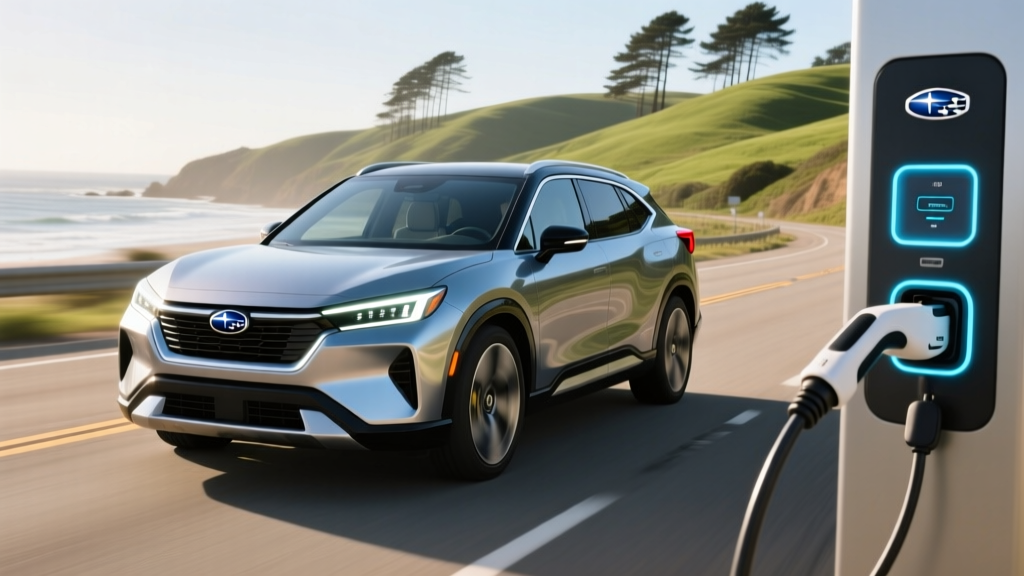
The Subaru Solterra has always been a paradox: one of the most capable electric SUVs off-road, yet hamstrung by mediocre range and sluggish DC fast charging. For 2026, Subaru has addressed the two biggest complaints with a larger battery pack and a significantly faster charging architecture. The question EV shoppers are asking — and the one that drives searches for Subaru Solterra 0-60 performance — is whether these upgrades are enough to make it competitive against the Hyundai Ioniq 5, Tesla Model Y, and Ford Mustang Mach-E.
We've spent time with the 2026 Solterra across city commuting, highway road trips, and DC fast-charging sessions to bring you exact numbers, not marketing fluff. Here's everything you need to decide if this is the right electric SUV for your driveway.
2026 Subaru Solterra: Core Specifications at a Glance
| Specification | Value |
|---|---|
| EPA Range (top trim) | 285 miles |
| Battery Capacity (usable) | 74.4 kWh (NMC lithium-ion) |
| Drivetrain | Dual-motor AWD (standard all trims) |
| Horsepower / Torque | 215 hp / 248 lb-ft |
| 0-60 mph | 6.5 seconds |
| Max DC Fast Charge Rate | 150 kW (peak) |
| 10-80% DC Fast Charge Time | ~27 minutes |
| Level 2 Home Charge Rate | 11.5 kW (~35 mi/hr) |
| Combined MPGe | 107 MPGe |
| Efficiency | 31 kWh/100 mi |
| Cargo Volume (rear seats up/folded) | 23.8 / 63.5 cu ft |
| Ground Clearance | 8.3 inches |
| Towing Capacity | 3,500 lbs |
| Battery Warranty | 8 years / 100,000 miles |
| Base MSRP (Premium trim) | $46,995 |
Performance: Subaru Solterra 0-60 and Driving Dynamics
The 2026 Solterra's dual-motor all-wheel-drive powertrain produces 215 horsepower and 248 lb-ft of torque, delivering a 0-60 mph time of 6.5 seconds. That's a modest improvement over the outgoing model's 6.9-second run, attributable to a slight power bump and revised motor calibration.
Is 6.5 seconds quick? In the EV world, it's mid-pack. The Hyundai Ioniq 5 (AWD, 320 hp) hits 60 in 4.5 seconds; the Tesla Model Y Long Range AWD does it in 4.8 seconds. The Solterra won't win stoplight drag races, but it's perfectly adequate for highway merging, passing maneuvers, and confident on-ramp acceleration. Subaru prioritized efficiency and low-speed torque for off-road crawling over outright speed.
Where the Solterra genuinely shines is off-pavement. With 8.3 inches of ground clearance, X-MODE traction management, and standard dual-motor AWD with torque vectoring, this is the most trail-capable compact electric SUV available. The 225/60R18 all-season tires on the Premium trim provide reasonable grip on gravel and light mud, and the regenerative braking system can be modulated through paddle shifters for precise downhill speed control.
On-road, the ride quality is composed and the steering is well-weighted, though body roll is noticeable in aggressive cornering — a trade-off for the elevated ride height. Cabin noise isolation is excellent, with minimal wind and tire noise at highway speeds.
Range and Efficiency: EPA vs. Real-World Numbers
EPA Estimate: 285 miles (Limited/Touring), 270 miles (Premium with 18" wheels)
Real-World Expectation: ~235-255 miles in mixed highway driving at 70-75 mph. In cold weather (below 30°F), expect a 20-30% reduction, bringing effective range to approximately 185-210 miles. City driving with regenerative braking can approach or slightly exceed the EPA figure.
The 2026 Solterra's 74.4 kWh usable battery (up from 71.4 kWh in the prior generation) uses NMC (nickel manganese cobalt) chemistry, which offers higher energy density than LFP alternatives — important given the Solterra's relatively heavy curb weight of approximately 4,500 pounds due to its robust AWD hardware and body structure.
Efficiency comes in at 107 MPGe combined (31 kWh per 100 miles) according to fueleconomy.gov. That's below the segment average — the Ioniq 5 AWD achieves 113 MPGe combined, and the Model Y Long Range posts 122 MPGe. The Solterra's boxy shape, higher ground clearance, and standard AWD all contribute to higher energy consumption.
For daily commuting under 60 miles round-trip, range is a non-issue — you'll charge at home overnight and rarely think about it. For road trips exceeding 200 miles, you'll need to plan at least one DC fast-charging stop, and the real-world range drops on the highway mean you should plan conservatively, especially in winter or mountainous terrain.
Charging Speed: DC Fast Charging and Home Level 2
The 2026 Solterra's most significant upgrade is its charging architecture. Subaru moved to a CCS1-compatible system capable of 150 kW peak DC fast charging, a major improvement over the prior generation's widely criticized ~100 kW peak that limited the vehicle's road-trip practicality.
| Charging Level | Power / Rate | Time / Miles Added |
|---|---|---|
| Level 1 (120V household) | ~1.4 kW | ~4-5 miles per hour |
| Level 2 (240V home/public) | 11.5 kW | ~35 miles per hour; full charge in ~7 hours |
| DC Fast Charge (CCS1) | 150 kW peak | 10-80% in ~27 minutes |
Charging curve reality check: Like all EVs, the Solterra doesn't sustain peak charge rate throughout the session. You'll see 150 kW in the 10-30% state-of-charge window, with the rate tapering progressively above 50% and dropping significantly past 80%. This is normal battery-management behavior to protect cell health, but it means charging from 80-100% on DC fast charge is painfully slow — plan to unplug at 80% on road trips and move on.
At home on a Level 2 charger (240V, 48-amp circuit recommended), the 11.5 kW onboard charger adds approximately 35 miles of range per hour, meaning a full overnight charge from 20% to 100% takes roughly 7 hours. This is competitive with the segment and more than adequate for daily replenishment.
One note on connector compatibility: the Solterra uses the CCS1 connector standard. If you plan to use Tesla Supercharger stations (the largest DC fast-charging network in the U.S.), you'll need a NACS adapter. Subaru has confirmed a factory-included NACS adapter for 2026 models, which opens access to over 20,000 Supercharger stalls — a significant practical advantage.
Pricing, Trims, and Federal Tax Credit Eligibility
| Trim | MSRP | Est. Price After §30D Credit* |
|---|---|---|
| Premium | $46,995 | ~$39,495 |
| Limited | $49,995 | ~$42,495 |
| Touring | $53,995 | ~$46,495 |
*Federal tax credit estimates assume buyer eligibility. See IRS rules below.
The 2026 Solterra starts at $46,995 for the Premium trim, which includes dual-motor AWD, 18-inch wheels, a 12.3-inch touchscreen, wireless Apple CarPlay/Android Auto, heated front seats, and Subaru's EyeSight driver-assistance suite. The Touring trim tops out at $53,995 and adds a panoramic roof, ventilated front seats, heated rear seats, a Harman Kardon audio system, and 20-inch wheels (which reduce EPA range to approximately 270 miles).
Does the 2026 Solterra Qualify for the Federal EV Tax Credit?
The Solterra may qualify for up to $7,500 under IRS §30D, but eligibility depends on several factors that change periodically and vary by buyer. Here's the current framework per irs.gov:
- MSRP Cap: SUVs must have an MSRP at or below $80,000 — all Solterra trims clear this threshold.
- Buyer Income Cap: Modified adjusted gross income must not exceed $150,000 (single), $225,000 (head of household), or $300,000 (joint filers).
- Battery Sourcing Requirements: The $7,500 credit is split into two $3,750 halves — one for critical minerals sourcing and one for battery component manufacturing. Sourcing rules tighten annually. Confirm the specific build month's compliance with your dealer, as supply-chain shifts can affect eligibility quarter to quarter.
- Point-of-Sale Transfer: Eligible buyers can transfer the credit to the dealer at purchase, reducing the purchase price upfront rather than waiting for a tax refund.
Critical caveat: Battery-sourcing and critical-mineral requirements have become increasingly strict. Before committing to a purchase, verify with your dealer that the specific VIN you're buying qualifies for the full $7,500, partial credit, or none at all. A tax professional can help confirm your personal eligibility.
Interior, Cargo, and Technology
The Solterra's interior is functional and durable rather than luxurious — think rugged utility over premium ambience. Cloth upholstery is standard on the Premium trim, with synthetic leather (StarTex) on Limited and genuine leather on Touring. The raised seating position provides excellent outward visibility, and the squared-off roofline maximizes rear headroom.
Cargo space: 23.8 cubic feet behind the rear seats and 63.5 cubic feet with the 60/40 split rear seats folded. That's competitive with the Ioniq 5 (27.2 / 59.3 cu ft) though the Ioniq offers more behind the second row due to its longer wheelbase. The Solterra does not have a front trunk (frunk), which is a missed opportunity for additional sealed storage.
Passenger space: Rear legroom measures 35.7 inches, adequate for adults on moderate-length trips. The flat floor (no transmission tunnel hump) makes the middle rear seat more usable than in many ICE vehicles.
Infotainment: The 12.3-inch touchscreen runs Subaru's latest Starlink multimedia system with wireless Apple CarPlay and Android Auto. Response times are acceptable but not class-leading. Physical knobs for volume and climate temperature are a welcome ergonomic choice. A 7-inch digital instrument cluster sits behind the steering wheel, positioned high to minimize eye diversion — similar to Toyota's layout in the bZ4X, its platform sibling.
Driver Assistance (SAE Level 2): Subaru's EyeSight suite includes adaptive cruise control with lane centering, automatic emergency braking with pedestrian detection, lane departure warning, and blind-spot monitoring with rear cross-traffic alert. This is a Level 2 driver-assist system — it does not drive the car autonomously. You must keep your hands on the wheel and eyes on the road at all times. The system is competent for highway cruising but lacks the hands-free capability of GM's Super Cruise or Ford's BlueCruise on mapped highways.
How the Solterra Compares to Key Rivals
The compact electric SUV segment is crowded. Here's how the 2026 Solterra measures up against three key competitors on the metrics buyers care about most:
| Metric | Subaru Solterra | Hyundai Ioniq 5 AWD | Tesla Model Y LR AWD | Ford Mustang Mach-E AWD |
|---|---|---|---|---|
| EPA Range | 285 mi | 290 mi | 320 mi | 290 mi (ER: 320 mi) |
| 0-60 mph | 6.5 sec | 4.5 sec | 4.8 sec | 5.1 sec |
| Peak DC Charge kW | 150 kW | 240 kW | 250 kW | 150 kW |
| 10-80% DC Time | ~27 min | ~18 min | ~20 min | ~29 min |
| Ground Clearance | 8.3 in | 6.1 in | 6.6 in | 5.7 in |
| Towing Capacity | 3,500 lbs | 2,300 lbs | 3,500 lbs | 2,200 lbs |
| Starting MSRP | $46,995 | $49,500 | $47,990 | $44,995 |
The takeaway: The Solterra is the clear choice if you need genuine off-road capability, high ground clearance, and Subaru's AWD reputation. It sacrifices charging speed (the Ioniq 5's 800V architecture is substantially faster), straight-line acceleration, and some range efficiency to deliver that rugged versatility. If road trips and fast charging are your priority, the Ioniq 5 or Model Y are better fits. If you want a balance of price and range, the Mach-E Extended Range is worth a serious look.
Pros and Cons
- Best-in-class ground clearance and off-road capability
- Standard dual-motor AWD on every trim
- 3,500-lb towing capacity
- Comfortable ride quality and low cabin noise
- Physical climate and volume controls
- NACS adapter included for Supercharger access
- Strong safety ratings from IIHS and NHTSA
- DC fast charging still slower than 800V rivals (150 kW vs 240+ kW)
- Below-average efficiency (107 MPGe combined)
- No front trunk (frunk) for extra storage
- 0-60 time trails most AWD competitors
- Infotainment system feels dated vs. Tesla and Hyundai
- No hands-free highway driving feature
- Touring trim with 20" wheels loses ~15 miles of range
Who Should Buy the 2026 Subaru Solterra?
- Live in a snowy or mountainous region and need confident AWD with high ground clearance
- Want an EV that can handle light off-road trails, forest roads, or ski-resort access routes
- Need 3,500-lb towing for a small boat, camper, or utility trailer
- Prioritize a comfortable, quiet ride over sporty acceleration
- Commute under 60 miles daily and can charge at home
- Frequently take road trips over 300 miles and want the fastest possible DC charging
- Prioritize performance and 0-60 times (see Ioniq 5 or Model Y)
- Want cutting-edge infotainment or hands-free driving assist
- Need maximum cargo volume and a frunk
Frequently Asked Questions
What is the real-world range of the 2026 Subaru Solterra?
The EPA rates the Solterra at up to 285 miles (Limited/Touring trims). In real-world highway driving at 70-75 mph, expect approximately 235-255 miles. In cold weather below 30°F, that can drop to 185-210 miles due to battery heating demands and reduced regenerative braking efficiency. City driving with frequent regen braking may match or slightly exceed the EPA number.
How fast does the Subaru Solterra charge at home and on the road?
On a Level 2 home charger (240V, 11.5 kW), the Solterra adds about 35 miles of range per hour and fully charges in roughly 7 hours. On DC fast chargers, it peaks at 150 kW and charges from 10-80% in approximately 27 minutes. This is adequate but slower than 800V competitors like the Ioniq 5 (18 minutes 10-80%).
What is the Subaru Solterra 0-60 time?
The 2026 Solterra with its dual-motor AWD powertrain achieves a 0-60 mph time of 6.5 seconds. This is competitive for a rugged, comfort-oriented electric SUV but trails sportier rivals like the Ioniq 5 AWD (4.5 seconds) and Model Y Long Range (4.8 seconds).
Does the 2026 Solterra qualify for the $7,500 federal EV tax credit?
The Solterra may qualify for up to $7,500 under IRS §30D, subject to buyer income limits ($150K single / $300K joint), the $80K MSRP cap (all trims qualify), and battery critical-mineral and component sourcing requirements that change periodically. The credit can be transferred at point of sale to reduce your purchase price upfront. Confirm eligibility for your specific VIN with your dealer and consult a tax professional, as sourcing compliance can shift by production quarter.
Is the Subaru Solterra worth buying over the Hyundai Ioniq 5 or Tesla Model Y?
It depends on your priorities. If off-road capability, high ground clearance, and Subaru's AWD reputation are essential — especially for snow-belt or mountain living — the Solterra is the only strong option in the segment. If you prioritize fast DC charging, longer range, sportier performance, or more advanced tech, the Ioniq 5 and Model Y are objectively stronger in those metrics. The Solterra is a purpose-built vehicle for a specific buyer, not a segment leader in every category.
What is the battery warranty on the 2026 Solterra?
Subaru covers the high-voltage battery pack for 8 years or 100,000 miles (whichever comes first), with a capacity retention threshold of 70%. The basic vehicle warranty is 3 years/36,000 miles, and the powertrain warranty is 5 years/60,000 miles. Subaru also includes 2 years of scheduled maintenance at no cost.