The 2011 Ford F-150 remains one of the most common light-duty trucks on American roads, and its 6-lug wheel architecture is a frequent reference point for owners replacing wheels, upgrading brakes, or exploring electric powertrain conversions. Whether you are swapping to a set of winter wheels, fitting aftermarket rims, or researching whether a modern EV hub motor can mate to this platform, understanding the exact bolt pattern, center bore, and thread specifications is essential before spending money on hardware.
This guide covers the precise 2011 F-150 bolt pattern and wheel fitment data, then pivots to the question we hear increasingly from the EV-curious truck community: what would it take to convert a 2011 F-150 to electric power, and how do the wheel and suspension specs factor into that project?
2011 F-150 Bolt Pattern: Exact Specifications
The 2011 Ford F-150 uses a 6x135mm bolt pattern (also written as 6x5.31 inches). This means six lug nuts arranged on a circle with a diameter of 135 millimeters. This pattern was introduced with the 2004 F-150 redesign and carried through the 2014 model year, making it one of the longest-running Ford truck bolt patterns in modern history.
| Specification | Value |
|---|---|
| Bolt Pattern | 6x135mm (6x5.31") |
| Lug Nut Thread Size | M14 x 2.0 |
| Lug Nut Torque Spec | 150 lb-ft (203 Nm) |
| Center Bore | 87.1mm |
| Stock Wheel Sizes | 17", 18", 20" (trim-dependent) |
| Stock Tire Sizes | 245/70R17, 265/60R18, 275/55R20 |
| Offset Range (OEM) | +44mm to +55mm |
The 87.1mm center bore is critical: any aftermarket wheel must match this bore diameter or use hub-centric rings to avoid vibration. The M14 x 2.0 thread pitch is specific — using M14 x 1.5 lug nuts (common on many imports and some newer Fords) will cross-thread and damage the studs.
Wheel Compatibility: What Fits and What Does Not
Because the 6x135mm pattern was shared across the 2004-2014 F-150 generation, wheels from any of those model years are directly interchangeable, provided the offset and center bore match. The Ford Expedition (2007-2017) and Lincoln Navigator (2007-2017) share the same 6x135mm pattern and 87.1mm bore, making their OEM wheels viable donors.
Wheels from the 2015+ F-150 also use 6x135mm, but Ford changed the center bore to 87.1mm on most trims while introducing aluminum-intensive bodies. The key difference is that 2015+ wheels may have different offsets optimized for the lighter chassis, so always verify offset before mounting newer wheels on a 2011 chassis.
Wheels from GM 6-lug trucks (6x139.7mm / 6x5.5") will not fit without adapters, and using adapters on a truck-rated vehicle introduces safety and liability concerns we do not recommend for daily-driven or towing applications.
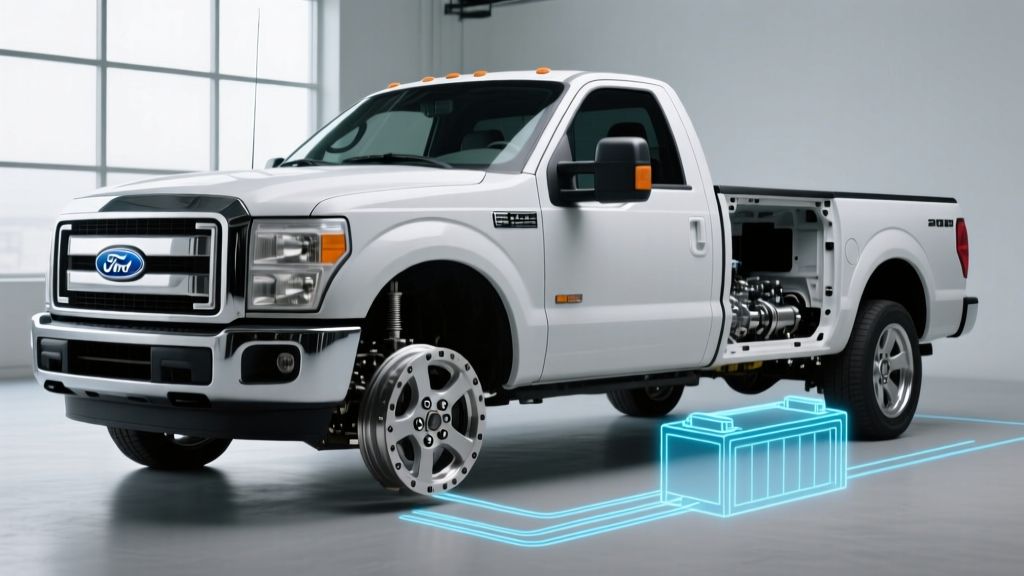
Real-World Context: The 2011 F-150 as an EV Conversion Candidate
The 2011 F-150's body-on-frame construction, generous engine bay, and robust rear axle make it an appealing candidate for electric vehicle conversions — a growing niche in the EV aftermarket. Companies like Ford's own Lightning program demonstrated that the F-150 platform handles electric powertrains well, and the used-truck market offers project vehicles at a fraction of the cost of a new Lightning.
For context, the 2026 Ford F-150 Lightning with the Extended Range battery delivers an EPA-estimated 320 miles from a 131 kWh usable pack. A conversion truck carrying a smaller battery and lacking the Lightning's integrated thermal management will fall well short of that figure, but the project cost can still undercut a new Lightning's MSRP.
Electric Conversion Powertrain: What the Specs Look Like
A typical 2011 F-150 EV conversion uses a salvaged or crate motor from a production EV — common choices include Tesla large drive units (LDU), Cascadia Motion iDM-140 modules, or NetGain Hyper 9 systems for lighter-duty builds. Battery packs are assembled from salvaged Tesla, Chevy Bolt, or Nissan Leaf modules, or sourced new from suppliers like LG Energy Solution or CATL in LFP (lithium iron phosphate) chemistry for longevity.
| Specification | Estimated Value |
|---|---|
| Battery Capacity | 80-120 kWh (NMC or LFP) |
| Motor Output | 250-450 HP (single or dual motor) |
| 0-60 mph | 5.5-8.0 seconds (weight-dependent) |
| EPA-Equivalent Range | 140-180 miles (real-world) |
| Efficiency | 55-70 MPGe (2.0-2.5 kWh/mile) |
| DC Fast Charging | 50-100 kW peak (CCS or CHAdeMO) |
| 10-80% DC Charge Time | 35-60 minutes |
| Level 2 Home Charging | 7.2-11.5 kW (25-40 miles/hr) |
| Cargo Bed Retained | Yes (battery under floor or bed-mounted) |
LFP chemistry is increasingly popular for conversions because it tolerates 100% state-of-charge storage better than NMC and offers a longer cycle life (3,000+ cycles vs. 1,000-1,500 for NMC). The trade-off is lower energy density — an LFP pack of equivalent capacity weighs 20-30% more, which matters in a truck already carrying a heavy frame.
Charging a Converted F-150: Home and DC Fast Charging
Most conversion shops install a CCS1 or CHAdeMO charge port, with CCS1 being the more future-proof choice given the industry's shift toward the NACS (Tesla) standard. For DC fast charging, a 50 kW peak rate is common on budget builds using a single CCS module; higher-end builds with 100 kW capability require more sophisticated battery management systems (BMS) and contactor arrays.
| Charging Level | Power (kW) | Miles Added Per Hour |
|---|---|---|
| Level 1 (120V household) | 1.4 kW | ~4-5 miles |
| Level 2 (240V, 32A) | 7.2 kW | ~25 miles |
| Level 2 (240V, 48A) | 11.5 kW | ~40 miles |
| DC Fast (50 kW peak) | 50 kW | ~150 miles/hr (to 80%) |
| DC Fast (100 kW peak) | 100 kW | ~300 miles/hr (to 80%) |
At home, a Level 2 charger on a 240V/48A circuit (requiring a 60A breaker) will replenish a 100 kWh pack overnight in roughly 9-10 hours. This is the practical daily-charging solution for converted trucks used as commuters or worksite vehicles.
Conversion Cost vs. Buying a Production EV Truck
A professional 2011 F-150 EV conversion typically costs between $35,000 and $65,000 on top of the donor vehicle price (roughly $5,000-$10,000 for a clean-title 2011 F-150 in 2026). That puts total project cost in the $40,000-$75,000 range. For comparison, a 2026 Ford F-150 Lightning Pro starts at approximately $54,995 MSRP before any incentives.
- Retain a paid-off, familiar truck body
- Custom battery placement and capacity
- No dealer dependency for service
- Unique vehicle with conversation value
- LFP battery option for maximum longevity
- No federal §30D tax credit (applies only to new OEM EVs)
- Limited or no warranty on conversion components
- Insurance complications — specialty carriers required
- Resale market is extremely narrow
- Range and charging speed lag production EVs
- DIY builds carry high-voltage safety risk
The IRS §30D federal tax credit applies exclusively to new, OEM-produced electric vehicles meeting MSRP caps ($80,000 for trucks), buyer income limits ($300,000 joint / $150,000 single), and battery critical-mineral sourcing requirements. A converted 2011 F-150 does not qualify for this credit, which can reduce the effective price of a new Lightning by up to $7,500.
Who Should Consider an EV Conversion vs. a Production EV Truck?
An EV conversion of a 2011 F-150 makes the most sense for a specific buyer profile: someone with a clean, well-maintained donor truck who values the project experience, wants a custom-spec electric truck, and does not need the range or charging speed of a factory Lightning or Rivian R1T. Fleet operators, daily commuters covering more than 150 miles, and buyers who need reliable warranty coverage should look at production EV trucks instead.
For the commuter with home charging and a sub-80-mile round trip, the conversion works well as a low-operating-cost daily driver. For towing or heavy payload use, the added weight of a battery pack (typically 800-1,500 lbs) reduces payload capacity and stresses the stock suspension — upgraded springs and shocks are strongly recommended.
Frequently Asked Questions
What is the exact bolt pattern on a 2011 Ford F-150?
The 2011 F-150 uses a 6x135mm (6x5.31 inch) bolt pattern with six lug nuts, an 87.1mm center bore, and M14 x 2.0 lug nut threads torqued to 150 lb-ft.
Will 2015+ F-150 wheels fit a 2011 F-150?
Yes, the 2015-2026 F-150 retains the same 6x135mm bolt pattern and 87.1mm center bore. However, verify offset values, as newer wheels may have different offsets optimized for the aluminum-body chassis.
Can I convert my 2011 F-150 to electric power?
Yes, professional conversion shops and DIY kits exist. Expect to invest $35,000-$65,000 in parts and labor for a build with 140-180 miles of range, DC fast charging, and Level 2 home charging capability.
Does an EV-converted 2011 F-150 qualify for the federal tax credit?
No. The IRS §30D clean vehicle credit applies only to new OEM electric vehicles meeting specific MSRP, income, and battery-sourcing requirements. Conversions and used-vehicle electrification projects do not qualify.
What battery chemistry is best for an F-150 EV conversion?
LFP (lithium iron phosphate) is preferred for longevity and safety — it tolerates full-charge storage and offers 3,000+ cycles. NMC offers higher energy density (more range per pound) but degrades faster if held at 100% state of charge regularly.
How fast can a converted 2011 F-150 charge at home?
With a Level 2 (240V) charger at 11.5 kW, expect roughly 40 miles of range added per hour, or a full overnight charge for a 100 kWh pack. Level 1 (120V) adds only about 4-5 miles per hour and is not practical as a primary charging method.