The Short Answer on the Subaru Outback EV
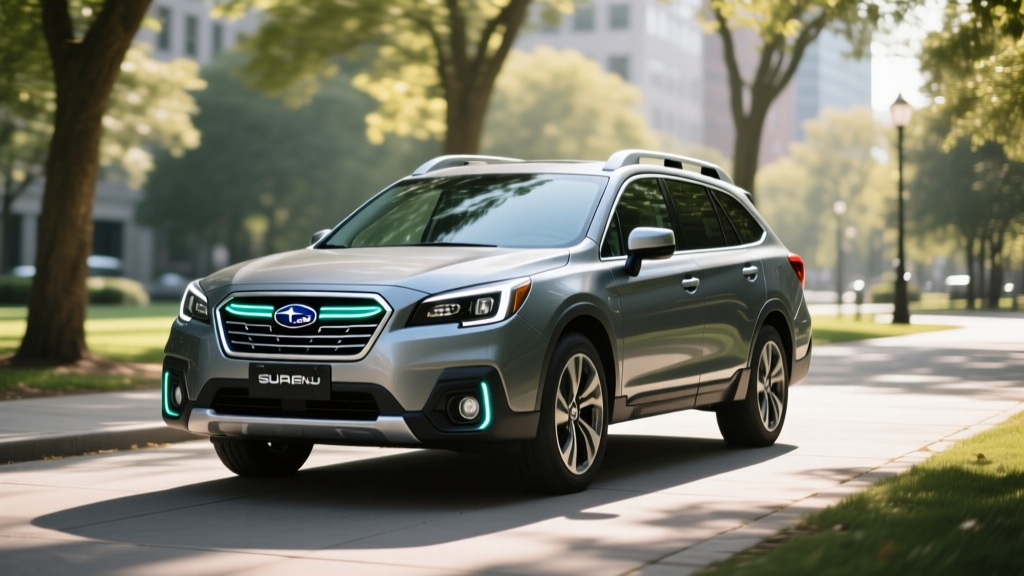
As of early 2026, Subaru has not released a dedicated electric Outback. The current Outback lineup remains gas-powered and hybrid (the 2026 Outback Hybrid pairs a 2.5L boxer with an electric motor for roughly 35 MPG combined). However, Subaru has confirmed a next-generation midsize electric SUV for the US market — built on an evolved version of the e-Subaru Global Platform co-developed with Toyota — expected to arrive for the 2027 model year. If you need an electric wagon or rugged EV today, alternatives like the Tesla Model Y, Ford Mustang Mach-E, or the Subaru Solterra (a compact EV crossover) are available now. Below, we break down what an eventual Outback EV needs to deliver, what it will likely cost, and how to decide whether to wait or buy now.
Where Subaru's Electric Lineup Stands in 2026
Subaru entered the EV market with the Solterra, a compact electric crossover built on the e-Subaru Global Platform. The 2026 Solterra offers an EPA-estimated 227 miles of range (on the Limited and Touring trims with the larger battery) and DC fast charging at up to 150 kW, achieving a 10–80% charge in roughly 35 minutes. Its 72.8 kWh usable battery (Lithium-ion, NMC chemistry) powers standard Symmetrical All-Wheel Drive with dual motors producing a combined 215 horsepower.
While the Solterra is a credible compact EV, it does not fill the Outback's role. Outback buyers expect:
- Class-leading cargo volume (the gas Outback delivers 32.5 cu ft behind the rear seats, 75.7 cu ft folded)
- 8.7 inches of ground clearance for rough roads and light trails
- Up to 3,500 lbs of towing capacity (with the 2.4L turbo)
- Long-distance highway comfort and real-world range above 300 miles
A future Outback EV — or an electric midsize wagon/SUV wearing a new nameplate — must hit those benchmarks to satisfy the loyal Subaru wagon buyer.
Expected Specs: What an Outback EV Needs to Deliver
Based on Subaru's platform roadmap, industry reporting, and the competitive landscape in 2026, here is what a realistic Outback-class electric vehicle from Subaru should target. All figures below are projected, not confirmed.
| Specification | Projected Target | Competitive Benchmark (2026) |
|---|---|---|
| EPA Range | 300–330 miles | Tesla Model Y LR: 320 mi |
| Battery Capacity | ~90–100 kWh usable (NMC) | Hyundai Ioniq 5: 84 kWh |
| DC Fast Charge (Peak) | 200–250 kW | Rivian R1S Dual: 200 kW |
| 10–80% DC Charge Time | ~20–25 minutes | Model Y: ~25 min at 250 kW |
| Level 2 Charging (Home) | 11.5 kW (~46 mi/hr) | Industry standard for midsize EVs |
| Horsepower (Dual Motor AWD) | 350–400 hp | Ford Mach-E GT: 480 hp |
| 0–60 mph | ~5.0–5.5 seconds | Outback 2.4T (gas): 6.1 sec |
| Ground Clearance | 8.5+ inches | Solterra: 8.3 in |
| Towing Capacity | 3,500–4,000 lbs | Model Y: 3,500 lbs |
| Cargo Volume (rear seats up) | 35+ cu ft | Model Y: 30.2 cu ft (rear) |
| Starting MSRP (Projected) | $48,000–$55,000 | Outback Wilderness (gas): $40,855 |
The critical number is range. Subaru's Solterra fell short at 227 miles EPA — a figure that drew criticism in a segment where 300+ miles is now the buyer expectation. An Outback EV must clear 300 miles EPA to be competitive, and real-world highway driving at 75 mph will likely reduce that to 250–280 miles depending on temperature and terrain. In sub-freezing conditions, expect a further 15–25% reduction, bringing effective winter highway range to roughly 200–230 miles.
Cost Comparison: Electric Outback-Class EV vs. Gas Outback
The Outback has long been a value proposition: spacious, capable, and priced in the mid-$30,000s. An electric successor will carry a significant price premium — but operating costs tell a different story over five years of ownership.
| Cost Factor | 2026 Outback 2.5i Premium (Gas) | Projected Outback EV (Base) |
|---|---|---|
| MSRP | $34,995 | ~$48,000–$52,000 |
| Federal Tax Credit (§30D) | $0 | Up to $7,500 (if eligible)* |
| Effective Purchase Price | $34,995 | ~$40,500–$44,500 |
| Annual Fuel/Energy (15,000 mi/yr) | ~$1,950 (26 MPG, $3.38/gal) | ~$620 (3.0 mi/kWh, $0.13/kWh avg) |
| 5-Year Fuel/Energy Cost | ~$9,750 | ~$3,100 |
| 5-Year Maintenance | ~$3,200 | ~$1,400 (no oil, fewer fluids) |
| Estimated 5-Year Insurance | ~$7,800 | ~$9,200 (EV premium ~15–18%) |
| 5-Year Total Operating Cost | ~$20,750 | ~$13,700 |
*Federal §30D tax credit eligibility for 2026 depends on MSRP caps ($80,000 for SUVs/wagons), buyer income limits ($150K single / $300K joint), and battery critical-mineral and component sourcing requirements. Credits may be transferred to the dealer at point of sale. Always verify current rules at IRS.gov and consult a tax professional.
The math is clear: an Outback EV would cost roughly $8,000–$12,000 more upfront after the tax credit but could save $5,000–$7,000 in operating costs over five years. The break-even point arrives around year 4–6 depending on local electricity rates, annual mileage, and whether the buyer qualifies for the full credit. For buyers who drive 20,000+ miles annually or live in states with high gas prices (California, Washington, New York), the EV's economics improve substantially.
Real-World Ownership: What First-Time EV Buyers Must Consider
Specs and cost tables only tell part of the story. Here is what actually matters when you live with an EV daily.
Home Charging Is Non-Negotiable for Most Buyers
Over 80% of EV charging happens at home. If you have a garage or dedicated parking spot with access to a 240V circuit, a Level 2 home charger (7.7–11.5 kW) adds 30–46 miles of range per hour — enough to fully replenish overnight. Installation costs range from $500–$2,000 if your electrical panel has capacity, or $2,000–$4,500+ if you need a panel upgrade (common in older homes with 100-amp service).
If you live in an apartment, rely on street parking, or lack charging access at home or work, an EV becomes significantly less convenient. Public DC fast charging works but costs $0.35–$0.55/kWh on networks like Electrify America and EVgo — erasing much of the fuel-cost advantage and adding time to your routine.
Climate and Terrain Matter
Subaru buyers disproportionately live in cold-climate and mountain states — exactly where EV range suffers most. Lithium-ion batteries lose 15–30% of usable range in temperatures below 20°F, primarily due to cabin heating demands and reduced battery efficiency. A heat pump (standard on many 2026 EVs, including updated Solterra models) mitigates this by 5–10 percentage points but does not eliminate the loss.
For a buyer in Vermont, Colorado, or Montana who regularly drives 200+ miles in January, an EV with 300 miles of EPA range will realistically deliver 210–250 miles in winter highway conditions. Plan charging stops accordingly.
Charging on Road Trips
Subaru has committed to adopting the North American Charging Standard (NACS) connector for future EVs, granting access to Tesla's Supercharger network — the most reliable and widespread DC fast-charging network in the US. This is a major advantage for an Outback EV aimed at road-trip-oriented buyers. Current Solterra models use CCS1, with adapters available.
| Common Misconception | The Reality |
|---|---|
| "EVs can't handle cold weather." | EVs lose 15–30% range in deep cold but start reliably, heat instantly, and AWD traction is excellent. Preconditioning while plugged in preserves range. |
| "The battery will need expensive replacement." | Modern NMC and LFP batteries are warrantied for 8 years/100,000 miles with a minimum 70% capacity retention threshold. Data from fueleconomy.gov and long-term fleet studies show most batteries retain 85–90% capacity at 100K miles. |
| "I'll save money immediately." | Higher purchase price, insurance premiums, and home charger installation mean break-even typically takes 4–6 years. The savings are real but not instant. |
| "AWD EVs are as capable off-road as a Subaru." | Dual-motor EV AWD provides excellent traction on snow and gravel but lacks the low-range gearing and suspension articulation of dedicated off-roaders. Ground clearance and approach/departure angles are what matter on trails. |
| "Public charging is everywhere now." | Charging infrastructure is strong along major interstates and in metro areas but remains sparse in rural corridors — exactly where many Outback owners drive. Always plan routes with PlugShare or your EV's built-in navigation. |
Should You Wait for the Outback EV or Buy Now?
This is the decision every current Outback shopper faces. Here is a practical framework based on your situation.
Buy a Gas or Hybrid Outback Now If:
- You lack reliable home charging access (apartment, street parking, no 240V circuit)
- Your budget tops out around $35,000–$40,000
- You regularly tow more than 2,500 lbs or drive 300+ mile routes in rural areas with limited charging
- You need a vehicle within the next 3–6 months
- You drive fewer than 10,000 miles per year (the fuel savings won't offset the EV premium in a reasonable timeframe)
Wait for the Outback EV (or Buy a Competing EV Now) If:
- You have home Level 2 charging or can install it
- Your daily commute is under 80 miles and you take road trips 3–5 times per year
- You qualify for the full §30D federal tax credit (check income and sourcing requirements at IRS.gov)
- You're spending $1,800+ annually on gas and want to cut that to $600 or less
- You can wait until late 2026 or 2027 for a potential Subaru electric wagon/SUV reveal
Consider a Competing EV Today If:
- Tesla Model Y Long Range — 320 mi EPA, $46,630, Supercharger access, but lower ground clearance (6.6 in) and no roof rails standard
- Ford Mustang Mach-E Extended Range AWD — 290 mi EPA, ~$48,995, comfortable ride, BlueCruise available
- Hyundai Ioniq 5 AWD — 290 mi EPA, ~$52,600, 800V architecture with 10–80% in ~18 min at 250 kW
- Subaru Solterra — 227 mi EPA, ~$39,995, genuine Subaru AWD and 8.3 in clearance, but range is the limiting factor for road trips
The Bottom Line on the Outback EV
Subaru's loyal buyer base — outdoor-oriented, cold-climate, practical — is one of the most demanding segments for an EV to satisfy. An electric Outback must deliver 300+ miles of range, genuine AWD capability, competitive cargo space, and a price that doesn't alienate buyers accustomed to the $35,000 Outback value proposition. Based on platform timelines and competitive pressure, a credible Subaru electric midsize SUV is likely for the 2027 model year with pricing in the $48,000–$55,000 range before incentives.
Until then, the current gas and hybrid Outback remain excellent vehicles, and the compact Solterra serves buyers who need Subaru's AWD DNA in an electric package — if 227 miles of range fits their driving patterns. For everyone else, the EV market already offers capable alternatives that approximate the Outback formula. The question is whether you can wait for Subaru's answer, or whether a Model Y, Mach-E, or Ioniq 5 gets you where you need to go today.
Frequently Asked Questions
Does Subaru currently make an electric Outback?
No. As of 2026, the Subaru Outback is available only as a gas-powered vehicle and a hybrid. Subaru's only all-electric model sold in the US is the Solterra, a compact crossover.
When will the Subaru Outback EV be available?
Subaru has announced plans for a next-generation midsize electric SUV for the US market, expected around the 2027 model year. Exact timing, pricing, and specifications have not been confirmed. Treat all projected specs as preliminary.
Will the Outback EV qualify for the $7,500 federal tax credit?
It depends. Under current IRS §30D rules, eligibility requires the vehicle MSRP to be under $80,000 (for SUVs/wagons), the buyer's AGI to be under $150K (single) or $300K (joint), and the battery to meet critical-mineral and component-sourcing thresholds that tighten annually. Subaru's battery supply chain will determine eligibility at launch. Always verify at IRS.gov.
How does the Solterra compare to what an Outback EV would offer?
The Solterra is a compact crossover with 227 miles of range, 72.8 kWh of battery, and 215 hp. An Outback-class EV would need significantly more range (~300+ mi), a larger battery (~90–100 kWh), more power (~350+ hp), and substantially more cargo volume to match the Outback's practicality.
Is the Subaru Outback Hybrid a good alternative to an EV?
The 2026 Outback Hybrid delivers approximately 35 MPG combined with a mild hybrid system — a meaningful improvement over the standard 2.5i's 28 MPG combined per fueleconomy.gov. It requires no charging infrastructure, has no range anxiety, and costs significantly less upfront. For buyers who can't charge at home or who drive long rural routes, the hybrid is an excellent bridge option.
What is the real-world range loss for EVs in cold weather?
Expect 15–30% range reduction in sustained sub-freezing temperatures, primarily from cabin heating and reduced battery efficiency. Preconditioning the battery while plugged in and using a heat pump can reduce the penalty. A 300-mile EPA EV will realistically deliver 210–250 miles on a winter highway drive.