Can You Actually Drive a Golf Cart on Public Roads?
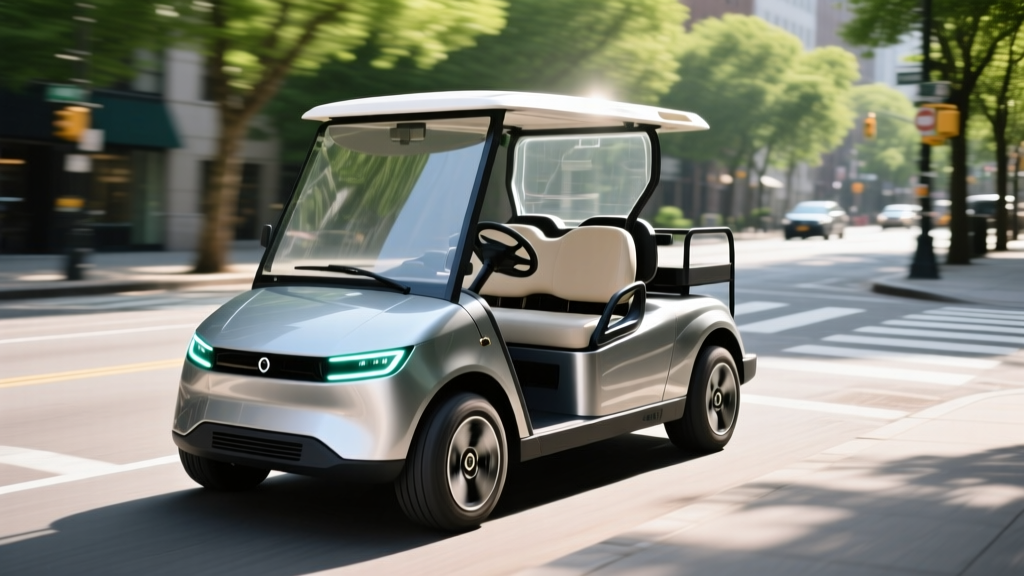
Short answer: Standard golf carts are not street legal on most public roads. However, a modified category called Low-Speed Vehicles (LSVs) — often built on golf-cart-style platforms — are federally street legal on roads with speed limits up to 35 mph (some states allow up to 45 mph). To qualify as an LSV under Federal Motor Vehicle Safety Standard 500 (FMVSS 500), the vehicle must have a VIN, seat belts, headlamps, turn signals, mirrors, a windshield, and a top speed between 20–25 mph. Most states require registration, insurance, and a valid driver's license to operate one on public roads.
If you've seen small, electric, golf-cart-like vehicles cruising through retirement communities, beach towns, or college campuses and wondered whether you could legally drive one on your local streets — the answer depends on the vehicle's classification and your state's laws. This guide breaks down exactly what makes an electric golf car street legal, what it costs to buy and own one, and whether an LSV or a neighborhood electric vehicle (NEV) makes sense for your driving needs in 2026.
LSV vs. Golf Cart vs. NEV: Understanding the Classifications
These terms get used interchangeably in casual conversation, but they have distinct legal meanings that determine where you can and cannot drive.
| Category | Top Speed | Federal Standard | VIN Required | Street Legal? | Typical Use |
|---|---|---|---|---|---|
| Standard Golf Cart | ≤15 mph | None (off-road vehicle) | No | No (private property only) | Golf courses, private communities |
| Low-Speed Vehicle (LSV) | 20–25 mph | FMVSS 500 | Yes | Yes (roads ≤35 mph, some states ≤45 mph) | Neighborhood commuting, errands |
| Neighborhood Electric Vehicle (NEV) | 20–25 mph | FMVSS 500 (same as LSV) | Yes | Yes (same as LSV) | Same as LSV — NEV is a marketing term |
| Medium-Speed Vehicle | 25–35 mph | Varies by state | Yes | Some states only | Limited road use, campus/fleet |
Key takeaway: When someone asks about "street-legal electric golf cars," they're almost always talking about LSVs. Manufacturers like Club Car, GEM (Global Electric Motorcars), Bintelli, and Tomberlin build LSV-class vehicles that look like golf carts but meet federal safety requirements for road use.
2026 Street-Legal Electric LSV Models: Specs, Range, and Pricing
Here's a data-driven look at the most popular street-legal electric golf-style vehicles available in 2026. Note that unlike full-size EVs, these vehicles use lead-acid or lithium iron phosphate (LiFePO₄/LFP) batteries, and their range is measured at low speeds — real-world range drops significantly at higher speeds or on inclines.
| Model | Battery | Est. Range | Top Speed | Charge Time (120V) | Seats | Base MSRP (2026) |
|---|---|---|---|---|---|---|
| GEM e2 | 72V LFP (~7.5 kWh usable) | 30–50 mi | 25 mph | 8–10 hrs | 2 | ~$13,000 |
| GEM e4 | 72V LFP (~7.5 kWh usable) | 25–40 mi | 25 mph | 8–10 hrs | 4 | ~$15,500 |
| Club Car Onward LSV (4-pass) | Li-Ion (~5.5 kWh) | 25–35 mi | 25 mph | 6–8 hrs | 4 | ~$14,500 |
| Bintelli Beyond 4PR LSV | 72V LFP (~10 kWh) | 35–50 mi | 25 mph | 6–8 hrs | 4 | ~$12,800 |
| Tomberlin E-Merge E2 | 72V LFP (~8 kWh) | 30–45 mi | 25 mph | 8–10 hrs | 2 | ~$14,000 |
Real-world range note: The ranges above assume flat terrain at 15–20 mph with moderate payload. If you're regularly climbing hills, carrying four passengers, or driving at the 25 mph top speed, expect range to drop 20–35%. In cold weather (below 40°F), LFP batteries lose roughly 10–15% of usable capacity — less severe than the 25–40% losses seen in full-size EVs with NMC packs, but still meaningful when your total range is only 30 miles.
What It Actually Costs to Own a Street-Legal Electric LSV
LSVs are dramatically cheaper to operate than gas cars, but the upfront economics are different from what full-size EV buyers encounter. Here's a realistic cost breakdown.
Purchase and Registration
- Vehicle cost: $12,000–$16,000 for most 2026 LSV models (new). Used LSVs can be found for $6,000–$10,000.
- Registration and title: $50–$200/year depending on state. LSVs are titled and registered like any other motor vehicle.
- Insurance: $300–$800/year for liability coverage. Some insurers (Progressive, GEICO) offer LSV-specific policies; others require a specialty provider. Full coverage with comprehensive/collision adds $200–$500/year.
- Federal tax credit: LSVs do not qualify for the IRS §30D clean vehicle credit. That credit applies to vehicles with a gross vehicle weight rating (GVWR) under 14,000 lbs that meet specific battery sourcing and MSRP caps — and critically, most LSVs fall outside the eligible vehicle categories. Do not count on a $7,500 credit when budgeting.
Charging vs. Fueling: The Math
| Cost Factor | Electric LSV (72V, ~8 kWh usable) | Gas Golf Cart (12 HP) | Gas Compact Car (e.g., Honda Fit baseline) |
|---|---|---|---|
| Energy cost per full "tank" | $0.96–$1.28 (at $0.12–$0.16/kWh) | $8–$12 (2–3 gal at $4/gal) | $40–$48 (10–12 gal at $4/gal) |
| Cost per mile | $0.02–$0.04 | $0.12–$0.18 | $0.14–$0.18 |
| Annual cost (3,000 mi/yr) | $60–$120 | $360–$540 | $420–$540 |
| Maintenance/year | $50–$150 (tire rotation, brake check) | $300–$600 (oil, filters, belts) | $500–$1,000 |
At 3,000 miles per year — a reasonable estimate for neighborhood driving — an electric LSV saves $400–$700 annually in fuel and maintenance compared to a gas golf cart, and $600–$1,000 versus a gas compact car used for the same short trips.
Battery Replacement: The Big-Ticket Item
Most LSVs use LFP battery packs rated for 2,000–3,000 full charge cycles before dropping to 80% state of health (SoH). At one full cycle per day, that's roughly 5–8 years of daily use. Replacement packs cost $2,500–$4,500 installed depending on the model and capacity. Lead-acid packs are cheaper to replace ($1,200–$2,000) but last only 3–5 years and are significantly heavier, reducing range.
State-by-State Street Legality: Where Can You Actually Drive?
Federal FMVSS 500 sets the baseline, but states have wide latitude in how they regulate LSVs on public roads. Here's what varies:
- Speed limit of roads: Most states allow LSVs on roads posted at 35 mph or below. Florida, Texas, Arizona, and South Carolina allow some LSV use on roads up to 45 mph with local approval.
- Crossing higher-speed roads: Most states allow LSVs to cross roads with speed limits above 35 mph at controlled intersections, but not to travel along them.
- Driver's license: Required in all 50 states. A standard Class C license suffices — no special endorsement needed.
- Insurance: Mandatory in nearly all states, just like a car. Minimum liability coverage applies.
- Restricted communities: Many planned communities (The Villages, FL; Sun City, AZ; Kiawah Island, SC) have local ordinances that are more permissive, allowing golf carts on designated paths and lower-speed roads even without full LSV certification. Check your HOA or municipal code.
For state-specific regulations, the National Conference of State Legislatures (NCSL) maintains a current summary of LSV laws by state.
Common Misconceptions About Street-Legal Electric Golf Cars
| Myth | Fact |
|---|---|
| "Any golf cart can be made street legal with a few mods." | Converting a standard golf cart to LSV spec requires adding a VIN, DOT-compliant windshield, seat belts, headlamps, turn signals, exterior mirrors, and a parking brake. Many golf cart frames were never engineered for FMVSS 500 compliance, and DIY conversions may not pass state inspection. |
| "LSVs qualify for the $7,500 federal EV tax credit." | The IRS §30D credit applies to new clean vehicles meeting battery sourcing, MSRP, and buyer income requirements. Most LSVs are not classified as eligible vehicles under the statute. Always verify with a tax professional before assuming credit eligibility. |
| "Electric golf carts have the same range as gas ones." | Gas golf carts typically achieve 80–120 miles per tank. Electric LSVs deliver 25–50 miles per charge. For most neighborhood use, 30 miles is sufficient — but if you plan longer routes, range is a real constraint. |
| "I don't need insurance for an LSV." | If it's street legal, it requires insurance in nearly every state. Driving an uninsured LSV on a public road carries the same penalties as driving an uninsured car. |
| "LSVs are safe in traffic." | LSVs are not crash-tested to the same standards as full-size vehicles. They lack airbags, crumple zones, and side-impact protection. They are appropriate for low-speed roads only — never mix with highway-speed traffic. |
Who Should Buy a Street-Legal Electric LSV — and Who Shouldn't
Buy an electric LSV if:
- You live in a planned community, beach town, or retirement area with low-speed roads and short trip distances (under 15 miles round trip).
- You want a second vehicle for errands, school drop-offs, or neighborhood commuting and want near-zero fuel costs.
- You have access to a standard 120V outlet for overnight charging (LSVs charge slowly but don't need a 240V Level 2 station).
- Your state and local roads allow LSVs on the routes you'd actually use.
- You're comfortable with a 25 mph top speed and understand the safety limitations.
Do NOT buy an electric LSV if:
- Your daily commute involves roads with speed limits above 35 mph.
- You need to carry more than 4 passengers or significant cargo regularly.
- You live in an area with harsh winters — LSVs have minimal weather protection and cold reduces range further.
- You expect crash safety comparable to a full-size vehicle.
- You need 100+ miles of range without mid-day charging.
LSV vs. Full-Size EV: A Quick Comparison
If your budget allows $25,000+, a used or new full-size EV like the Chevrolet Bolt EV (EPA range 259 mi, starting ~$28,000 before incentives) or the Nissan Leaf (EPA range 149–212 mi) provides dramatically more range, safety, comfort, and versatility. The LSV makes sense specifically when your trips are short, your roads are slow, and you value simplicity and low operating cost over capability.
Frequently Asked Questions
Do I need a driver's license to drive a street-legal electric golf car?
Yes. In all 50 states, operating an LSV on public roads requires a valid driver's license, vehicle registration, and insurance — just like a standard car. A learner's permit may not be sufficient in some states; check your local DMV.
Can I drive an LSV on roads with speed limits above 35 mph?
Generally no. Federal law restricts LSVs to roads posted at 35 mph or below. Some states (including Florida, Texas, and Arizona) allow limited use on roads up to 45 mph with local government approval. You can typically cross a higher-speed road at a signalized intersection, but you cannot travel along it.
How long does it take to charge a street-legal electric LSV?
Most LSVs charge on a standard 120V household outlet. A full charge from empty takes 6–10 hours depending on battery capacity (typically 5–10 kWh). Unlike full-size EVs, LSVs do not support DC fast charging or Level 2 (240V) charging — though some newer models offer optional onboard chargers that accept 240V for faster top-ups in 3–5 hours.
Are electric LSVs safe for families with children?
LSVs must have seat belts under FMVSS 500, and child seats can be installed in some models. However, LSVs lack airbags, crumple zones, and the structural protection of a full-size vehicle. They are safest on low-speed, low-traffic roads. If your primary use involves busier roads, a full-size vehicle is a significantly safer choice for transporting children.
Can I convert my existing golf cart to be street legal?
It depends on the cart and your state. Some states allow aftermarket conversion kits (adding lights, mirrors, belts, windshield) to bring a golf cart up to LSV spec, but the cart must receive a VIN and pass inspection. Many manufacturers and dealers advise against conversion because the original frame may not meet FMVSS 500 structural requirements. Buying a factory-built LSV from Club Car, GEM, Bintelli, or Tomberlin is the most reliable path to street legality.
What maintenance does an electric LSV require?
Minimal compared to gas vehicles: tire rotation every 5,000 miles, brake inspection annually, battery terminal cleaning, and cabin air filter replacement (if equipped). The electric motor requires no oil changes, spark plugs, or exhaust service. Budget $100–$200/year for routine maintenance plus the eventual battery pack replacement at 5–8 years.