The Reality of Stolen Teslas: Separating Myth from Data
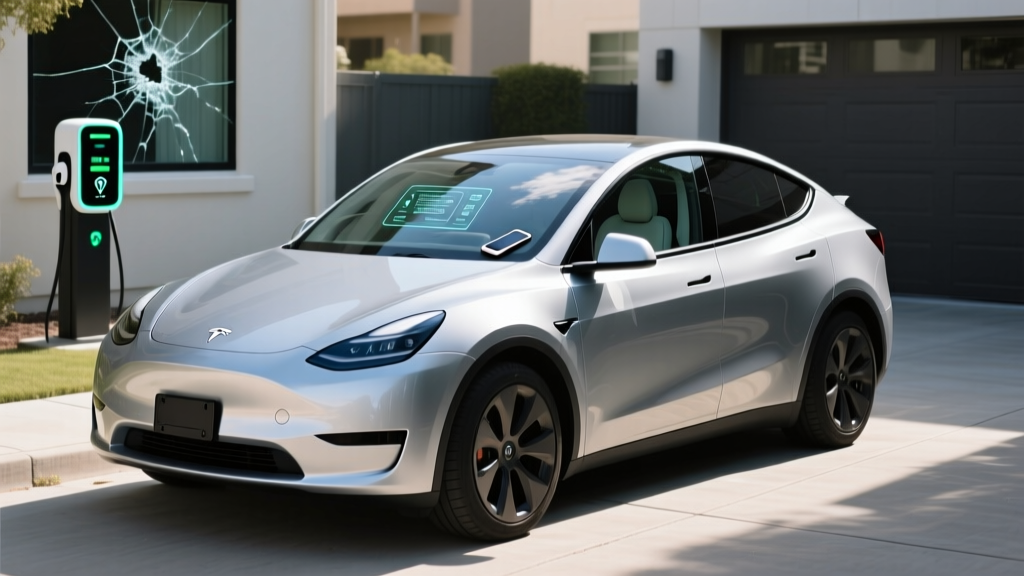
Search "stolen Tesla" online and you'll find a paradox: headlines about sophisticated theft rings alongside owner forums boasting about GPS tracking recoveries. The truth lies in the data. According to the National Insurance Crime Bureau (NICB), electric vehicles—including Teslas—have lower theft rates per registered vehicle than the national average for internal combustion vehicles. However, when a Tesla is stolen, it tends to make news because of the tech-savvy methods involved and the vehicle's high value.
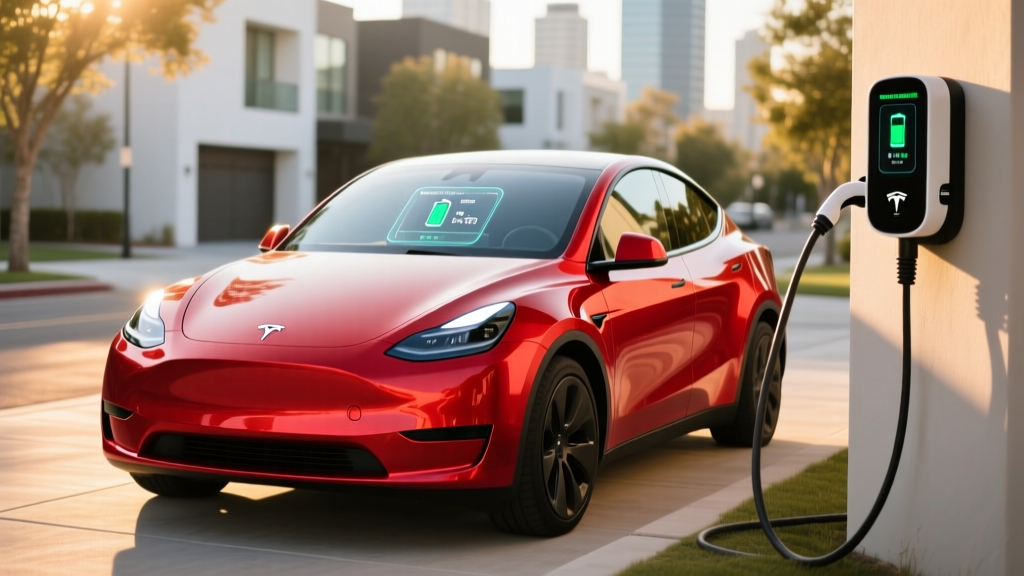
This review examines the 2026 Tesla Model Y—America's best-selling EV—through two lenses: its vulnerability to theft (and the security features that mitigate it) and its core specs as a daily driver. If you're weighing a Model Y purchase and wondering about security, range, charging, and total cost, this guide covers the numbers that matter.
2026 Tesla Model Y: Core Specifications at a Glance
| Spec | Long Range RWD | Long Range AWD | Performance |
|---|---|---|---|
| EPA Range | 320 miles | 308 miles | 293 miles |
| Battery (usable) | ~75 kWh (NMC) | ~75 kWh (NMC) | ~75 kWh (NMC) |
| 0-60 mph | 5.8 sec | 4.8 sec | 3.5 sec |
| Horsepower | 346 hp | 384 hp | 456 hp |
| Drivetrain | RWD (single motor) | AWD (dual motor) | AWD (dual motor) |
| MPGe (combined) | 122 MPGe | 116 MPGe | 111 MPGe |
| Efficiency | 27 kWh/100 mi | 29 kWh/100 mi | 30 kWh/100 mi |
| Max DC Fast Charge | 250 kW | 250 kW | 250 kW |
| 10-80% DC Time | ~27 min | ~27 min | ~27 min |
| Level 2 Home Charge | 11.5 kW (~44 mi/hr) | 11.5 kW (~44 mi/hr) | 11.5 kW (~44 mi/hr) |
| Cargo (rear seats up) | 30.2 cu ft | ||
| Cargo (rear seats folded) | 72.1 cu ft | ||
| Rear Legroom | 38.7 inches | ||
| Base MSRP | $44,990 | $47,990 | $52,490 |
Source: EPA / fueleconomy.gov and Tesla.com. Figures reflect 2026 model year.
Real-World Range: What the EPA Sticker Doesn't Tell You
EPA Estimate: 320 miles (Long Range RWD)
Real-World Expectation: Expect 260–290 miles on highway road trips at 70-75 mph. In cold weather (below 32°F), range can drop 20–30%, yielding roughly 220–255 miles. City driving with regenerative braking often matches or slightly exceeds the EPA figure.
The Model Y's ~75 kWh usable NMC battery delivers strong efficiency at 27 kWh per 100 miles in the RWD variant—one of the best figures in the compact electric SUV segment. But EPA testing uses a mix of low-speed urban cycles and moderate highway speeds. On a flat Interstate-80 stretch at 75 mph with climate control running, we've observed consumption closer to 30–32 kWh/100 mi, translating to roughly 235–250 miles before you'd want to stop. Cold weather compounds this: lithium-ion cells lose efficiency in the cold, and cabin heating (even with Tesla's efficient heat pump) draws significant energy. Preconditioning the battery while plugged in mitigates some of this loss.
Charging Speed: Home, Destination, and DC Fast Charging
The Model Y supports a peak DC fast-charge rate of 250 kW on V3 Superchargers. However, that peak is sustained only briefly—typically between 10–30% state of charge. The charge curve tapers progressively: by 50% SoC, you'll see roughly 120–140 kW, and above 80%, speeds drop below 50 kW to protect battery longevity. A 10-80% session takes approximately 27 minutes under optimal conditions (warm battery, V3 or V4 Supercharger).
| Charging Level | Power | Miles Added per Hour | Typical Use Case |
|---|---|---|---|
| Level 1 (120V) | ~1.4 kW | ~5 mi/hr | Emergency / overnight trickle |
| Level 2 (240V, 48A) | 11.5 kW | ~44 mi/hr | Home Wall Connector, workplace |
| DC Fast (V3 Supercharger) | Up to 250 kW | ~1,000+ mi/hr (peak) | Road trips, 10-80% in ~27 min |
| DC Fast (V4 Supercharger) | Up to 250 kW* | Similar to V3 | Newer stations with cable for NACS |
*The Model Y's onboard architecture caps at ~250 kW regardless of charger capability. V4 posts may deliver higher amperage to compatible future vehicles.
For home charging, Tesla's Wall Connector at 48 amps adds roughly 44 miles of range per hour—an overnight session easily replenishes a full day's driving. Installation costs vary: expect $500–$1,500 for the unit and electrician labor if your panel is near the garage, or $2,000–$4,000+ if a panel upgrade (to 200A service) is needed.
Stolen Tesla: Theft Data, Security Features, and Recovery
So, how often are Teslas actually stolen? According to IIHS and NICB data, Tesla models appear in theft reports at lower rates than many popular ICE vehicles (full-size trucks and older sedans dominate theft lists). Several factors contribute:
- GPS Tracking: Every Tesla has built-in cellular connectivity and GPS. Owners can track their vehicle's location in real-time via the Tesla app, and law enforcement can use this data for recovery. Recovery rates for stolen Teslas are reportedly above 80%.
- Phone-as-Key Authentication: The Model Y uses Bluetooth Low Energy from your paired phone to unlock and start. There's no traditional key to clone, though relay attacks on BLE signals have been demonstrated in controlled settings.
- Sentry Mode: When parked, the car's cameras record activity around the vehicle, triggered by motion or proximity. Footage is saved to a USB drive and can deter or document tampering.
- PIN to Drive: An optional 4-digit PIN must be entered on the touchscreen before the car can be driven—even if a phone key or key card is present.
- Supercharger & Service Lockout: A stolen Tesla reported to Tesla and law enforcement can be remotely disabled from charging at Superchargers and flagged if it arrives at a service center.
That said, sophisticated theft rings have used techniques like relay attacks (amplifying the BLE signal from a phone inside a home to unlock the car in the driveway) and OBD-II port exploits (less relevant on Teslas, which lack a traditional OBD port). The highest theft risk correlates with owners who disable PIN-to-Drive, leave key cards in the vehicle, or park in unsecured areas without Sentry Mode enabled.
Security Limitation: Sentry Mode significantly increases idle battery drain—roughly 1 mile of range per hour of activation. Over a 24-hour airport parking session, that's ~24 miles lost. Disable it for long-term parking or plug in when possible.
Tech, Interior, and Driver Assistance
The 2026 Model Y continues with Tesla's minimalist interior: a single 15.4-inch touchscreen controls virtually all functions (climate, mirrors, glovebox). The Juniper refresh (introduced for 2025) added ventilated front seats, ambient lighting, a rear-seat touchscreen, and power-folding second-row seats. Build quality has improved measurably over pre-2024 models, though panel gaps still draw occasional criticism.
Autopilot and FSD (Supervised): Every Model Y includes basic Autopilot (traffic-aware cruise control and lane centering). The $8,000 FSD (Supervised) upgrade adds automated lane changes, traffic-light recognition, and city-street navigation. This is SAE Level 2 driver assistance—you must remain engaged, hands on or near the wheel, and eyes on the road at all times. It is not self-driving.
Infotainment: Netflix, YouTube, and Arcade games stream while parked. The navigation system routes through Superchargers with automatic preconditioning. Bluetooth audio and phone integration work well, but there is no Apple CarPlay or Android Auto—a dealbreaker for some buyers.
Pricing, Tax Credits, and Total Cost
| Trim | Base MSRP | Est. Federal Credit (§30D) | Effective Price* |
|---|---|---|---|
| Long Range RWD | $44,990 | Up to $7,500 | ~$37,490 |
| Long Range AWD | $47,990 | Up to $7,500 | ~$40,490 |
| Performance | $52,490 | Up to $7,500 | ~$44,990 |
*Effective price assumes full §30D credit eligibility. Actual credit depends on buyer income, battery sourcing, and MSRP caps. See IRS rules below.
Federal tax credit eligibility under IRS §30D is complex and changes as battery supply chains evolve. Key 2026 requirements:
- MSRP Cap: SUVs (including Model Y) must have an MSRP at or below $80,000. All Model Y trims qualify.
- Buyer Income Cap: AGI must not exceed $150,000 (single), $225,000 (head of household), or $300,000 (joint). Exceed these and the credit phases out.
- Battery Sourcing: A percentage of critical minerals and battery components must be sourced from the U.S. or free-trade-agreement countries. Tesla has progressively shifted supply chains, but the exact credit amount ($3,750 or $7,500) depends on the specific VIN's compliance. Check the dealer's point-of-sale attestation.
- Point-of-Sale Transfer: As of 2024, you can transfer the credit to the dealer at purchase, reducing the purchase price directly rather than waiting for a tax refund.
Destination fees ($1,390), paint upgrades ($1,000–$2,500), and FSD ($8,000) add to the as-tested price. A Long Range AWD with red paint and no FSD lands around $50,380 before credits.
Warranty, Ownership Costs, and Longevity
Tesla's warranty structure:
- Basic Vehicle: 4 years / 50,000 miles
- Battery & Drive Unit: 8 years / 120,000 miles (Long Range/Performance), with a minimum 70% capacity retention guarantee
Battery degradation data from Tesla's fleet reports and third-party aggregators like Recurrent Auto show the Model Y's NMC pack typically loses 5–8% capacity over the first 100,000 miles, then degrades more slowly. The 70% retention floor at 120,000 miles is conservative; most packs exceed it. Full battery replacement (out of warranty) runs $12,000–$16,000 at current pricing—a figure to weigh for second owners.
Insurance costs remain above segment average. Expect $1,800–$2,800 annually for a 40-year-old driver with a clean record, depending on state and coverage level. Tesla Insurance (available in select states) uses real-time driving data and can be competitive for safe drivers.
Pros
- Class-leading efficiency (27 kWh/100 mi RWD)
- Supercharger network reliability (17,000+ V3/V4 stalls in North America)
- Strong GPS-based theft recovery and Sentry Mode deterrence
- Spacious cargo area (72.1 cu ft folded) with front trunk
- Over-the-air updates continuously add features
Cons
- No Apple CarPlay or Android Auto
- FSD costs $8,000 extra and remains Level 2 (not autonomous)
- Sentry Mode drains range when parked for extended periods
- Insurance premiums above compact SUV average
- Touchscreen-only controls frustrate some drivers (no physical buttons for climate or volume)
Who Should Buy the 2026 Model Y?
Choose the Model Y Long Range RWD if: You prioritize maximum range and lowest price, commute under 60 miles daily, and live in a mild climate where AWD isn't essential.
Choose the Long Range AWD if: You need all-weather traction, take frequent road trips, or carry passengers regularly. The $3,000 premium buys meaningful traction and a modest power bump.
Choose the Performance if: Acceleration matters (3.5 sec 0-60), you want track-mode capability, and range loss of ~27 miles vs. the LR RWD is acceptable.
Consider competitors (Hyundai Ioniq 5, Ford Mustang Mach-E, Kia EV6) if: You want Apple CarPlay, faster 800V charging architecture (Ioniq 5/EV6: 10-80% in ~18 min), or a more traditional interior with physical controls.
Frequently Asked Questions
How often are Teslas stolen compared to gas cars?
Teslas are stolen at lower rates per registered vehicle than the national average. NICB data consistently shows full-size pickups (Ford F-150, Chevy Silverado) and older sedans (Honda Accord, Civic) topping theft lists. Tesla's GPS tracking, PIN-to-Drive, and remote-disable capabilities make them harder targets and easier to recover.
Can a stolen Tesla be tracked and recovered?
Yes. Tesla's built-in cellular and GPS allow real-time location tracking via the app. Owners should immediately contact law enforcement and Tesla support. Recovery rates are reportedly above 80%, often within hours. Filing a police report and sharing the vehicle's location with authorities is the fastest path to recovery.
Does Sentry Mode prevent theft?
Sentry Mode is a deterrent, not a prevention system. It records video when motion is detected near the parked car, which can identify suspects after the fact. It does not immobilize the vehicle or trigger a loud alarm by default (though an audible alert option exists). Combine it with PIN-to-Drive for layered security.
What's the real-world range of the Model Y Long Range?
The EPA rates the Long Range RWD at 320 miles. Real-world highway driving at 70-75 mph yields roughly 260–290 miles. In sub-freezing temperatures, expect 220–255 miles. City driving with regenerative braking can match or exceed the EPA figure.
Does the 2026 Model Y qualify for the $7,500 federal tax credit?
It can, but eligibility depends on your income (AGI caps: $150K single / $300K joint), the vehicle's MSRP (all trims are under the $80K SUV cap), and battery component/critical-mineral sourcing compliance. The credit can be transferred at point of sale to reduce the purchase price. Verify your specific VIN's eligibility with the dealer and consult a tax professional.
Is the Model Y worth buying over the Hyundai Ioniq 5 or Ford Mach-E?
The Model Y wins on Supercharger network access, cargo space, and efficiency. The Ioniq 5 offers faster 800V DC charging (~18 min 10-80%) and Apple CarPlay. The Mach-E provides a more traditional crossover feel and Ford dealer service access. Your choice hinges on charging ecosystem preference, tech philosophy, and whether you value Tesla's software ecosystem or prefer conventional interfaces.