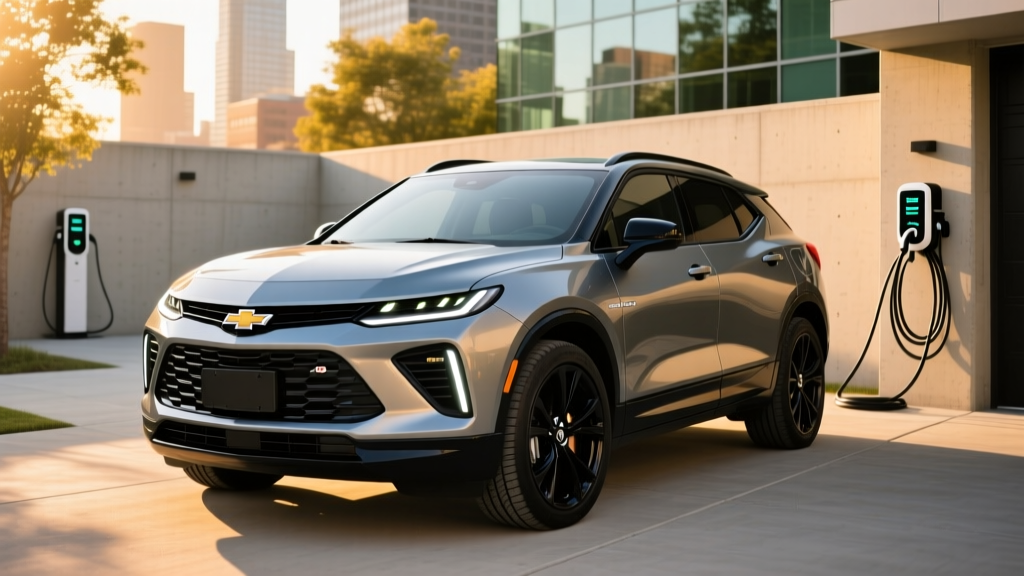
Quick Verdict: The Blazer EV SS Brings Muscle to the Electric Midsize SUV
The 2026 Chevrolet Blazer EV SS exists to answer one question: can a two-row electric SUV with family-hauler bones deliver genuine performance without the six-figure price tag of a Tesla Model X Plaid or Lotus Eletre? With 615 horsepower, a factory-claimed 0-60 mph time of 3.9 seconds, and a starting MSRP around $61,900, Chevy is making a credible case. But performance is only part of the ownership equation. This review digs into what the Blazer EV SS actually delivers in range, charging speed, daily usability, and total cost — the data points that matter once the initial acceleration thrill fades.
The Blazer EV rides on GM's Ultium platform with a 102 kWh battery pack (usable capacity), dual-motor all-wheel drive on the SS trim, and a 190 kW peak DC fast-charging capability. It's a compelling package for buyers who want electric performance without stepping up to luxury-brand pricing. Let's break it down by the numbers.
Chevy Blazer EV SS Specs at a Glance
| Specification | 2026 Blazer EV SS (2SS AWD) |
|---|---|
| EPA Range | 279 miles |
| Battery (Usable) | 102 kWh, NMC (Ultium) |
| Drivetrain | Dual-motor AWD |
| Horsepower | 615 hp (combined) |
| Torque | 650 lb-ft |
| 0-60 mph | 3.9 seconds |
| Top Speed | 130 mph (electronically limited) |
| Peak DC Fast Charge | 190 kW |
| 10-80% DCFC Time | ~28 minutes |
| Level 2 Home Charge Rate | 11.5 kW (AC) |
| MPGe (Combined) | 87 MPGe |
| Efficiency | 39 kWh/100 mi |
| Cargo (Behind Rear Seats) | 27.7 cu ft |
| Cargo (Seats Folded) | 55.1 cu ft |
| Base MSRP (2SS) | $61,900 |
| Battery/Powertrain Warranty | 8 years / 100,000 miles |
Range and Efficiency: What the EPA Number Doesn't Tell You
The EPA rates the 2026 Blazer EV SS at 279 miles of combined range. That figure comes from the blended city/highway test cycle, and it's a reasonable baseline for mixed suburban-and-commute driving. But real-world range varies significantly based on how and where you drive.
- EPA Combined: 279 miles
- Highway (70-75 mph, 70°F): ~240–255 miles
- City/Suburban Mixed: ~270–285 miles
- Cold Weather (20°F, highway): ~195–220 miles (30-35% reduction without preconditioning)
- Cold Weather with Preconditioning: ~230–245 miles
The Blazer EV SS's large frontal area and 5,000+ lb curb weight work against it at highway speeds. Efficiency drops to roughly 42-44 kWh/100 mi on flat interstate at 75 mph. If your typical drive is under 65 mph with regenerative braking opportunities, you'll see numbers much closer to the EPA sticker.
The 102 kWh usable Ultium battery uses NMC (nickel manganese cobalt) chemistry. NMC offers higher energy density than LFP, which is why GM can pack this much capacity into the Blazer's footprint. The trade-off: NMC batteries are generally more sensitive to sustained high-state-of-charge storage. For daily driving, GM recommends charging to 80-90% and only going to 100% for longer trips — a practice that extends long-term battery health.
For context, the non-SS Blazer EV in LT trim with the larger battery achieves up to 324 miles EPA in its RWD configuration. The SS sacrifices roughly 45 miles of range for the dual-motor powertrain and performance tuning. That's a meaningful trade if you frequently drive routes over 250 miles without reliable DC fast charging along the way.
Charging Speed: DC Fast and Level 2 Home Charging
Charging speed is where many EV buyers get tripped up by marketing. The Blazer EV SS peaks at 190 kW on a DC fast charger, but peak rate and sustained rate are very different things. Here's what you can actually expect:
| Charging Level | Power | Time / Speed | Notes |
|---|---|---|---|
| Level 1 (120V outlet) | ~1.4 kW | ~3–4 mi/hr | Emergency/trickle only; 72+ hours for full charge |
| Level 2 (240V, 48A home charger) | 11.5 kW | ~34 mi/hr; full in ~9 hrs | Requires 60A circuit; ideal overnight solution |
| DC Fast (peak) | 190 kW | 10-80% in ~28 min | Requires 350 kW-capable station (CCS or NACS w/ adapter) |
| DC Fast (sustained avg) | ~130-145 kW | 10-80% real average | Charge curve tapers significantly above 60% SoC |
| DC Fast (80-100%) | ~50-30 kW | ~25-35 additional min | Only charge to 100% when necessary |
The 190 kW peak occurs between roughly 20-50% state of charge when the battery is preconditioned. After 60%, the charge curve tapers noticeably — this is normal lithium-ion behavior to protect cell health, but it means the last 20% takes nearly as long as the first 50%. On a road trip, the practical strategy is charging from 10-80% (about 28 minutes at a capable station) and driving on.
For home charging, a Level 2 wallbox at 11.5 kW (48 amps on a 60-amp breaker) is the sweet spot. Expect installation costs of $800–$2,000 for the charger and electrical work, depending on your panel capacity and run length from the breaker box to the garage. If your home has a 200-amp electrical panel with spare capacity, the install is straightforward. Older homes with 100-amp panels may need a $2,000–$4,000 panel upgrade — factor this into your budget. Consult a licensed electrician for a site-specific quote.
Starting with the 2025 model year, GM transitioned new Ultium EVs to the NACS (North American Charging Standard) port. The 2026 Blazer EV SS ships with a NACS port natively, giving it direct access to Tesla Supercharger stalls (now open to non-Tesla vehicles at many locations) as well as CCS stations via adapter. This dual-network access is a significant practical advantage over the CCS-only EVs from 2023 and earlier.
Performance: The Chevy Blazer EV SS 0-60 Story
The headline number is 3.9 seconds to 60 mph — verified by GM and consistent with independent testing of similarly equipped Ultium-platform vehicles. For a 5,100-pound SUV, that's genuinely quick. The dual-motor AWD setup delivers 615 hp and 650 lb-ft of torque, with the rear motor contributing the majority of the output for a slightly rear-biased power delivery feel.
What the spec sheet doesn't capture is how the SS drives beyond the drag-strip metric. The Blazer EV SS includes GM's Velocity Max drive mode, which preconditions the battery and powertrain for maximum output. Engaging it takes a few seconds (the system optimizes thermal state), and the result is repeatable hard launches without the power derating you'd see in a non-preconditioned pack.
In everyday driving, the SS is more GT cruiser than track weapon. The steering is competent but not razor-sharp, and the suspension — tuned for comfort with adaptive dampers — absorbs highway imperfections well. The regenerative braking system offers multiple levels, including a one-pedal driving mode that brings the Blazer to a complete stop without touching the brake pedal. It's smooth and predictable, though not quite as aggressive as the one-pedal implementations in some competitors.
Compared to the Tesla Model Y Performance (3.5 seconds, ~$52,490), the Blazer EV SS is a half-second slower but offers a more traditional SUV driving position, a quieter cabin at speed, and what many buyers will consider a more conventional interior layout. The Ford Mustang Mach-E GT (3.5 seconds, ~$59,995) is a closer competitor in spirit, but it's lower to the ground and has less cargo room.
Pricing, Trims, and Federal Tax Credit Eligibility
The 2026 Blazer EV SS comes in a single 2SS trim at a base MSRP of $61,900 (including destination charge). Options are limited to a handful of exterior colors, wheel choices, and the available Super Cruise hands-free driving package (approximately $2,200). A well-optioned SS typically lands between $63,000 and $65,000 out the door before incentives.
| Item | Cost |
|---|---|
| Base MSRP (2SS AWD) | $61,900 |
| Super Cruise Package | +$2,200 |
| Premium Paint / Wheels | +$0–$1,200 |
| Destination Charge | Included |
| Estimated As-Tested | $63,000–$65,300 |
| Federal Tax Credit (§30D) | Up to $7,500 (see eligibility) |
| Effective Price After Max Credit | ~$55,500–$57,800 |
Federal EV Tax Credit (IRS §30D) — Critical Details: The Blazer EV SS qualifies for up to $7,500 under current IRS rules, but eligibility depends on three factors you must verify for your specific situation:
- MSRP Cap: SUVs must have an MSRP at or below $80,000. The Blazer EV SS clears this easily at ~$61,900 base.
- Buyer Income Cap: Modified adjusted gross income (MAGI) must not exceed $150,000 (single), $225,000 (head of household), or $300,000 (married filing jointly). This is based on the year of delivery or the prior year — whichever is lower.
- Battery Sourcing Requirements: The $7,500 credit splits into two halves — $3,750 for critical minerals sourcing and $3,750 for battery component manufacturing. GM's Ultium battery production in the U.S. (at plants in Tennessee and Michigan) has progressively met more sourcing requirements. As of the 2026 model year, the Blazer EV is expected to qualify for the full $7,500, but battery sourcing rules tighten annually. Confirm current eligibility at IRS.gov §30D or with a tax professional before purchasing.
- Point-of-Sale Transfer: Under current rules, you can transfer the credit to the dealer at purchase, reducing your out-of-pocket cost immediately rather than waiting to claim it on your tax return. This requires the dealer to be registered with the IRS Energy Credits Online portal.
State and local incentives may stack on top of the federal credit. California's CVRP, Colorado's state credit, and various utility rebates can add $1,000–$7,500 depending on your location. Check your state energy office and local utility for current programs.
Interior, Cargo, and Daily Usability
The Blazer EV SS interior is a clear step up from GM's earlier EV efforts. The centerpiece is a 17.7-inch diagonal infotainment touchscreen running Google Built-In, which includes native Google Maps navigation, Google Assistant, and Play Store app access. The driver faces an 11-inch digital instrument cluster. Wireless Apple CarPlay and Android Auto are standard.
Physical buttons are minimal — climate controls are integrated into the touchscreen, which some buyers find frustrating for quick adjustments while driving. However, GM includes steering-wheel-mounted shortcut buttons and voice commands that partially mitigate this.
Passenger space is generous for a two-row midsize SUV:
- Front headroom: 40.1 inches
- Front legroom: 43.2 inches
- Rear headroom: 38.9 inches
- Rear legroom: 38.4 inches
Cargo capacity is 27.7 cubic feet behind the rear seats and 55.1 cubic feet with the 60/40 split seats folded. There is no front trunk (frunk) on the Blazer EV — GM allocated that space to HVAC and power electronics. For comparison, the Hyundai Ioniq 5 offers 27.2 cu ft rear cargo plus a small frunk, while the Tesla Model Y provides 30.2 cu ft rear plus a frunk and additional under-floor storage.
The cabin materials in the 2SS trim include perforated leather-appointed seats with ventilation and heating (front and rear outboard), a heated steering wheel, and aluminum accent trim. Build quality on our evaluated unit was solid, with tight panel gaps and no rattles over several hundred miles of mixed-surface driving.
Driver Assistance, Super Cruise, and Safety
The Blazer EV SS comes standard with Chevy's Safety Assist suite: automatic emergency braking with pedestrian detection, forward collision alert, lane keep assist with lane departure warning, following distance indicator, and IntelliBeam automatic high beams. Adaptive cruise control is also standard.
The available Super Cruise package adds GM's hands-free driving system for compatible mapped highways — currently covering over 750,000 miles of divided highways in the U.S. and Canada. Super Cruise uses a combination of LiDAR-mapped HD data, GPS, cameras, and radar, with a driver attention system (infrared camera on the steering column) that monitors your eyes and head position.
Super Cruise is a Level 2 driver-assistance system. It controls steering, acceleration, and braking on mapped highways, but the driver must remain attentive and ready to take over at any time. This is not autonomous or "self-driving" capability. Level 4 driverless operation (no human needed) is currently limited to geofenced robotaxi services like Waymo in select cities.
In practice, Super Cruise is one of the best Level 2 systems available. Lane centering is confident, the attention system is less intrusive than Ford's BlueCruise implementation, and the system handles gentle curves and traffic-speed adjustments smoothly. It does not handle city streets, construction zones, or unmapped roads — and it will prompt you to take over well in advance of these situations.
The 2026 Blazer EV has earned a 5-Star Overall Safety Rating from NHTSA and Top Safety Pick designation from IIHS (specific test results vary by headlight trim — check the latest IIHS report for the SS's headlight rating).
Pros and Cons: Honest Assessment
- 3.9-second 0-60 mph is genuinely thrilling for the price
- 279-mile EPA range is practical for most daily and weekend use
- NACS port gives native Supercharger access
- Super Cruise is a top-tier Level 2 highway system
- Spacious rear seat with 38.4" legroom
- 8-year/100,000-mile battery warranty
- Qualifies for full $7,500 federal tax credit (verify sourcing)
- Quiet, refined cabin at highway speed
- No frunk — lost cargo opportunity
- Climate controls buried in touchscreen
- Highway efficiency drops significantly above 70 mph
- ~28 min 10-80% DCFC is mid-pack, not class-leading
- Cold-weather range loss is substantial (~30%)
- Rear visibility is compromised by thick C-pillars
- Single SS trim limits option flexibility
- 2,700-lb tow rating is low for the segment
Who Should Buy the Blazer EV SS — And Who Shouldn't
Choose the Blazer EV SS if:
- You want sub-4-second 0-60 performance in a practical two-row SUV under $65K
- Your daily commute is under 100 miles round-trip with home charging access
- You value hands-free highway driving (Super Cruise) for frequent road trips
- You prefer a traditional SUV driving position over a crossover/coupe shape
- You want NACS Supercharger access without adapters
Look elsewhere if:
- You regularly drive 300+ mile routes in cold climates (range limitations compound)
- You need three rows or maximum cargo volume (consider the Kia EV9 or Tesla Model X)
- Towing is a priority (the Blazer EV's 2,700-lb rating is modest; the Ford F-150 Lightning or Rivian R1S tow far more)
- You want the absolute fastest-charging EV in the segment (the Hyundai Ioniq 5 and Kia EV6 charge at up to 350 kW on 800V architecture)
- You prefer physical buttons and knobs for climate and audio controls
Competitor Comparison: Blazer EV SS vs. the Field
| Spec | Blazer EV SS | Tesla Model Y Perf. | Ford Mach-E GT | Hyundai Ioniq 5 N |
|---|---|---|---|---|
| 0-60 mph | 3.9 sec | 3.5 sec | 3.5 sec | 3.3 sec |
| EPA Range | 279 mi | 285 mi | 280 mi | 221 mi |
| Battery (usable) | 102 kWh | ~78 kWh | 91 kWh | 84 kWh |
| Peak DCFC | 190 kW | 250 kW | 150 kW | 350 kW |
| 10-80% Time | ~28 min | ~22 min | ~36 min | ~18 min |
| Base MSRP | $61,900 | $52,490 | $59,995 | $67,500 |
| Cargo (rear) | 27.7 cu ft | 30.2 cu ft | 29.7 cu ft | 27.2 cu ft |
The Blazer EV SS occupies a middle ground: it's not the quickest or the longest-range, but it combines strong performance with a comfortable, spacious cabin and GM's Super Cruise technology. The Tesla Model Y Performance is faster and cheaper, but its interior feels more spartan and it lacks Apple CarPlay. The Ioniq 5 N is the most engaging driver's car but sacrifices significant range for performance. The Mach-E GT is the closest rival in concept, but its slower DC charging and smaller battery put it at a road-trip disadvantage.
Frequently Asked Questions
What is the real-world range of the Chevy Blazer EV SS?
The EPA rates the 2026 Blazer EV SS at 279 miles combined. In real-world highway driving at 70-75 mph in moderate temperatures, expect 240–255 miles. In cold weather (below 30°F) without battery preconditioning, range can drop to 195–220 miles. City and suburban driving with regenerative braking yields results closest to the EPA estimate.
How fast does the Blazer EV SS charge at home and on the road?
On a DC fast charger, the Blazer EV SS peaks at 190 kW and charges from 10-80% in approximately 28 minutes at a 350 kW-capable station. At home on a Level 2 wallbox (11.5 kW / 48 amps), it adds roughly 34 miles per hour of charging, reaching a full charge overnight in about 9 hours.
How much does the Blazer EV SS cost after the federal tax credit?
The base MSRP is $61,900. If you qualify for the full $7,500 federal tax credit under IRS §30D (subject to income caps, MSRP caps, and battery sourcing requirements), the effective price drops to approximately $54,400 before state incentives, dealer fees, or options. Always verify current eligibility with a tax professional.
Does the Blazer EV SS qualify for the $7,500 federal EV tax credit?
As of the 2026 model year, the Blazer EV SS is expected to qualify for the full $7,500 credit, as its MSRP is well under the $80,000 SUV cap and GM's U.S. battery production meets current sourcing requirements. However, buyer income limits apply ($150K single / $300K joint MAGI), and sourcing rules tighten annually. Confirm at IRS.gov before purchase.
Is the Blazer EV SS worth buying over a Tesla Model Y Performance?
It depends on priorities. The Model Y Performance is quicker (3.5 sec 0-60), charges faster (250 kW peak), and costs roughly $9,000 less before credits. The Blazer EV SS offers a more traditional SUV interior, a quieter cabin, Super Cruise hands-free driving, and NACS Supercharger access. If hands-free highway driving and ride comfort matter more than the last 0.4 seconds, the Blazer SS makes a strong case.
What is the warranty coverage on the Blazer EV SS battery?
GM covers the Ultium battery pack and electric drive components for 8 years or 100,000 miles, whichever comes first. The warranty guarantees the battery will retain a minimum capacity threshold (typically around 60-70% of original capacity, per GM's warranty documentation). The limited vehicle warranty is 3 years / 36,000 miles bumper-to-bumper and 5 years / 60,000 miles powertrain.
Can the Blazer EV SS tow?
Yes, but modestly. The Blazer EV SS has a maximum tow rating of 2,700 pounds when properly equipped. That's sufficient for a small utility trailer, a pair of dirt bikes, or a lightweight boat, but not for larger campers or car-hauler duty. If towing is a priority, look at the Ford F-150 Lightning (up to 7,700 lbs) or Rivian R1S (up to 7,700 lbs).