The Short Answer on Spellrock Electric Boats
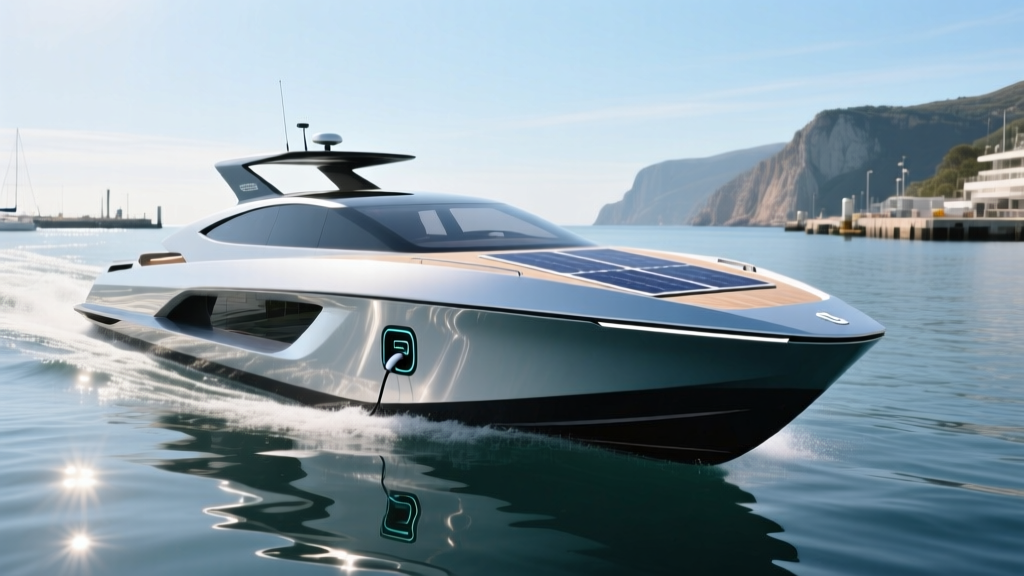
If you've been searching for Spellrock electric boats, here's what you need to know right away: "Spellrock" does not correspond to a recognized electric boat manufacturer in the marine industry as of early 2026. The most prominent names in electric and hybrid marine vessels include brands like Candela, X Shore, Arc Boats, Frauscher, and Navier. It's possible the name is a misspelling, a very small custom builder, or a regional brand without broad distribution.
More importantly, AutoEdgeView covers electric and hybrid cars, trucks, and SUVs — not marine vessels, e-bikes, or off-road vehicles. If you landed here while researching electrified transportation, this guide will give you a thorough, data-driven breakdown of what buying and owning an EV actually costs in 2026, so you can make a confident decision on four wheels.
Why EV Buyers End Up Searching for Electric Boats (and What to Do Next)
The electrification wave has expanded well beyond cars. Electric outboard motors from companies like Torqeedo and Flux Marine, plus fully electric dayboats, have generated real buzz. But the purchase calculus for an electric boat is fundamentally different from an electric car:
- No federal §30D tax credit — the IRS clean vehicle credit applies to highway-capable four-wheeled vehicles, not watercraft.
- No EPA range sticker — marine range depends on hull design, water conditions, and speed in ways that don't map to automotive testing.
- Charging infrastructure — marinas with shore power exist, but DC fast charging for boats is virtually nonexistent.
If your goal is to reduce fossil-fuel dependence and lower operating costs, an electric car or plug-in hybrid is the far more mature, financially supported, and practical path in 2026. Let's break down exactly what that looks like.
EV vs. Gas Car: The Real Cost Comparison in 2026
Let's compare a mainstream EV against a comparable gas car using concrete, current figures. We'll use the 2026 Hyundai Ioniq 6 SE (one of the most efficient EVs on the market) against the 2026 Toyota Camry LE (a top-selling gas sedan).
| Metric | 2026 Hyundai Ioniq 6 SE (EV) | 2026 Toyota Camry LE (Gas) |
|---|---|---|
| Base MSRP | $38,650 | $29,595 |
| Federal Tax Credit (§30D) | Up to $7,500 (if eligible) | $0 |
| Effective Purchase Price | ~$31,150 | $29,595 |
| EPA Combined Efficiency | 140 MPGe / 26 kWh/100mi | 32 MPG combined |
| EPA Range / Tank | 361 miles (77.4 kWh battery) | ~448 miles (14.5 gal tank) |
| Annual Fuel/Energy Cost (15,000 mi) | ~$540 (home charging at $0.16/kWh) | ~$1,547 (gas at $3.30/gal) |
| 5-Year Fuel/Energy Total | ~$2,700 | ~$7,735 |
| Annual Maintenance | ~$300 | ~$650 |
| 5-Year Maintenance Total | ~$1,500 | ~$3,250 |
| Estimated 5-Year Insurance | ~$9,500 | ~$7,800 |
| 5-Year Total Cost of Ownership | ~$44,850 | ~$48,380 |
Sources: fueleconomy.gov, IRS §30D guidelines. Insurance estimates via industry averages. Tax credit eligibility depends on buyer income, vehicle MSRP caps, and battery sourcing requirements.
Key Takeaway
Even with a ~$9,000 higher sticker price, the Ioniq 6 comes out roughly $3,500 ahead over five years thanks to dramatically lower energy and maintenance costs — and that's without the tax credit. If you qualify for the full $7,500 §30D credit, the EV pulls ahead by over $11,000.
Real-World Ownership: What No Sticker Tells You
Spec sheets are useful, but EV ownership is defined by daily logistics. Here's what first-time buyers need to plan for:
Home Charging Access Is Everything
Over 80% of EV charging happens at home. A Level 2 home charger (240V, typically 32–48 amps / 7.7–11.5 kW) adds roughly 25–44 miles of range per hour of charging. Installation costs vary widely:
- Simple install (panel nearby, no upgrade): $500–$1,200 for electrician labor + $300–$700 for the charger unit.
- Panel upgrade needed (older home, 100A service): $1,500–$3,000 additional for a 200A panel upgrade.
- No home charging? You'll depend on public Level 2 and DC fast chargers, which cost 2–4× more per kWh than home electricity and add time to your routine.
If you can't install a home charger — say you live in an apartment or park on the street — a plug-in hybrid (PHEV) like the Toyota RAV4 Prime (42 miles electric-only range, 38 MPG gas) may be a smarter choice than a full EV.
Cold Weather Cuts Range — Plan for It
Lithium-ion batteries lose efficiency in cold temperatures. In sub-freezing conditions (20°F / -7°C), expect 15–30% range reduction depending on the vehicle and whether it uses a heat pump. The Ioniq 6's 361-mile EPA range might drop to 260–300 miles in a Midwest winter. Vehicles with heat pumps (Hyundai, Tesla, BMW) fare better than those relying on resistive heating.
Charging Speed Isn't Just About Peak kW
A vehicle that advertises "350 kW DC fast charging" doesn't sustain that rate. The charge curve tapers significantly above 80% state of charge to protect the battery. What matters is the 10–80% time:
- Hyundai Ioniq 6 (800V architecture): peaks at ~240 kW, 10–80% in ~18 minutes
- Tesla Model 3 Highland: peaks at ~250 kW, 10–80% in ~25 minutes
- Ford Mustang Mach-E: peaks at ~150 kW, 10–80% in ~35 minutes
Always check the 10–80% time, not the peak kW number. And remember: kW is power (how fast energy flows), while kWh is energy (how much the battery holds). Confusing these is the most common EV buyer mistake.
Federal Tax Credit: The §30D Rules You Actually Need to Know
The federal clean vehicle credit isn't a guaranteed $7,500 for every EV buyer. Under current IRS rules, you must clear several hurdles:
- Income caps: Adjusted gross income must be ≤$150,000 (single), ≤$225,000 (head of household), or ≤$300,000 (joint).
- MSRP caps: Vans/SUVs/pickups must be under $80,000 MSRP; sedans and other vehicles under $55,000.
- Battery sourcing: Increasing percentages of critical minerals and battery components must be sourced from the U.S. or free-trade-agreement partners. This disqualifies some otherwise eligible models.
- Point-of-sale transfer: As of 2024, you can transfer the credit to the dealer at purchase, reducing your out-of-pocket cost immediately rather than waiting until tax filing.
Always verify current eligibility on the IRS website or with a tax professional before assuming you'll receive the credit. Rules have shifted year over year, and some popular models have moved on and off the eligible list.
Common EV Misconceptions — Myth vs. Fact
| Myth | Fact (with data) |
|---|---|
| "EV batteries need replacing every few years." | Federal law mandates battery warranties of at least 8 years / 100,000 miles. Most NMC and LFP batteries retain 85–90% capacity at 150,000 miles based on fleet data from Tesla and Hyundai. |
| "EVs are worse for the environment because of electricity generation." | Even on a coal-heavy U.S. grid average, EVs produce 50–70% fewer lifecycle emissions than comparable gas cars (Union of Concerned Scientists, EPA data). The grid gets cleaner every year; a gas car never does. |
| "There aren't enough chargers for road trips." | The U.S. had over 45,000 public DC fast-charging ports as of late 2025 (AFDC). Tesla's Supercharger network — now open to NACS-equipped Ford, GM, Rivian, and Hyundai vehicles — adds 20,000+ reliable fast chargers to that total. |
| "EVs cost more to insure, so savings disappear." | EV insurance is typically 15–25% higher due to repair costs, but annual fuel savings of $800–$1,200 usually offset the premium difference within 1–2 years. |
| "I need 400+ miles of range." | The average American drives 37 miles per day (FHWA). A 250-mile EV covers 95%+ of daily driving with home charging. You only need extreme range for road trips — where DC fast charging fills the gap. |
Your Decision Framework: EV, PHEV, or Gas?
Choose a Battery EV (BEV) If:
- You can install a Level 2 charger at home (or already have 240V access)
- Your daily commute is under 80 miles round-trip
- You take road trips 2–4 times per year and can plan DC fast-charging stops
- You want the lowest per-mile operating cost and minimal maintenance
- You qualify for the §30D credit or your state offers additional EV incentives
Choose a Plug-In Hybrid (PHEV) If:
- You can't reliably charge at home but want some electric-only driving
- You frequently drive 300+ miles in a day and don't want to plan charging stops
- You want electric commuting (25–45 miles) with gas-engine flexibility for weekends
- Models like the RAV4 Prime (42 mi EV / 38 MPG), Jeep Wrangler 4xe (22 mi EV / 20 MPG), or Toyota Prius Prime (44 mi EV / 52 MPG) fit your needs
Stick With Gas (or Wait) If:
- You live in an apartment with zero charging access and no workplace charging
- You regularly tow heavy loads (trailers, boats — yes, even electric ones) over long distances
- Your budget is under $25,000 and the used EV market in your area is thin
- You drive fewer than 5,000 miles per year (fuel savings won't offset the EV premium)
Frequently Asked Questions
Does AutoEdgeView review electric boats like Spellrock or others?
No. AutoEdgeView exclusively covers electric and hybrid cars, trucks, SUVs, and the charging infrastructure that supports them. Electric boats, personal watercraft, e-bikes, and RVs fall outside our editorial scope. For marine EV reviews, look to publications like Boat International, Electrek's marine section, or Yachting World.
What's the cheapest way to get into an EV in 2026?
The most affordable new EVs include the Chevrolet Equinox EV (~$33,000 base, eligible for the full $7,500 credit, bringing it to ~$25,500) and the Nissan Leaf S (~$29,000, though credit eligibility varies by battery sourcing). On the used market, the §25E used EV credit offers up to $4,000 (30% of sale price, capped) on vehicles priced at $25,000 or less from a dealer.
How long do EV batteries actually last?
Data from Tesla's 2024 Impact Report shows their fleet retains approximately 85% of original capacity at 200,000 miles. Hyundai and Kia back their EV batteries with a 10-year/100,000-mile warranty. LFP (lithium iron phosphate) batteries — used in the Tesla Model 3 RWD and some Ford models — offer even longer cycle life (3,000+ cycles vs. ~1,500–2,000 for NMC), though with slightly lower energy density.
Can I charge an EV from a regular household outlet?
Yes, but slowly. A standard 120V outlet (Level 1) delivers about 1.4 kW, adding roughly 3–5 miles of range per hour. That's 36–60 miles overnight — enough for light commuters but inadequate for larger batteries or heavy daily use. A 240V Level 2 charger is the practical standard for EV ownership.
Is it true that EVs depreciate faster than gas cars?
EV depreciation has been steeper than gas cars in recent years, driven by rapid price cuts on new models (especially Tesla), improving tech making older models feel dated, and buyer uncertainty about battery longevity. However, this is improving as the market matures. Buying a 2–3-year-old EV can be an excellent value play — you let the first owner absorb the depreciation hit.