Quick Verdict: Is the Specialized Globe Haul ST Worth It?
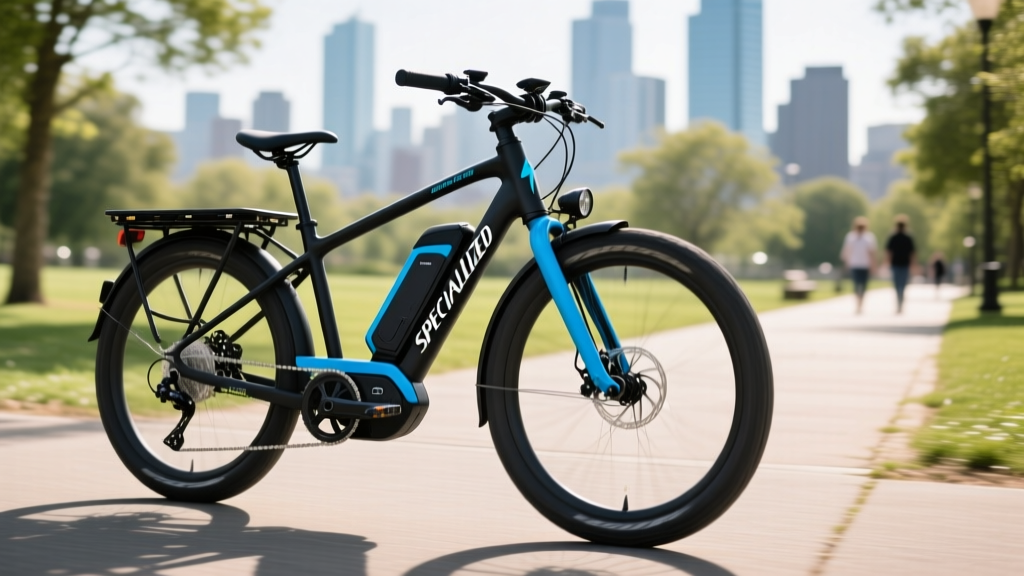
The Specialized Globe Haul ST is a single-speed, throttle-capable electric cargo bike priced at $3,499 with a 700Wh battery delivering roughly 40–60 miles of real-world range. It's built for urban cargo hauling — groceries, kids, gear — not for speed or long-distance commuting. If your daily trips are under 15 miles round-trip and you want to replace a second car for errands, it pays for itself in roughly 18 months of avoided gas and parking costs. If you need highway speeds, 200-mile range, or live in a charging desert, you need an EV car, not an e-bike.
Note: The Globe Haul ST is a Class 2 electric bicycle — not an electric vehicle in the automotive sense. AutoEdgeView is covering it here because readers cross-shopping e-cargo bikes against second-car EVs need honest, data-driven guidance. This guide applies EV-ownership analysis rigor to the cargo e-bike category.
Specs at a Glance: What You're Actually Buying
| Spec | Value |
|---|---|
| MSRP | $3,499 |
| Motor | Rear hub, 500W nominal |
| Battery | 700Wh (lithium-ion) |
| Claimed Range | Up to 60 mi (eco/pedal-assist) |
| Real-World Range (cargo-loaded) | ~30–45 mi with 100+ lbs payload |
| Top Speed (throttle) | 20 mph (Class 2) |
| Top Speed (pedal-assist) | 20 mph (Class 2 limit) |
| Drivetrain | Single-speed |
| Max Payload | 419 lbs (rider + cargo) |
| Weight | ~76 lbs (without battery removal) |
| Charging | Standard 120V wall outlet, ~4 hours 0–100% |
| Federal EV Tax Credit (§30D) | Not eligible — e-bikes don't qualify |
The 700Wh battery is the core energy spec. Think of watt-hours (Wh) the same way you'd think of kilowatt-hours (kWh) in a car: it's the total energy stored. At 700Wh (0.7 kWh), the Haul ST holds roughly 1/100th the energy of a Tesla Model Y's 75 kWh pack — which makes sense given the vehicle's weight and speed are also a fraction of a car's.
Real-World Range: What 700Wh Actually Gets You
Specialized advertises up to 60 miles, but that figure assumes flat terrain, a lighter rider, minimal cargo, and the lowest pedal-assist setting. Real-world numbers look different:
- Commuting solo, flat city streets, PAS 2: 45–55 miles
- 100 lbs of cargo (groceries, one child), mixed terrain: 30–40 miles
- Full payload (200-lb rider + 200 lbs cargo), hills: 20–30 miles
- Cold weather (below 40°F): Expect 15–25% range reduction — same lithium-ion physics that affect EV cars
This mirrors what we see with EVs: EPA range stickers are best-case. The Haul ST is no different. If your daily round-trip errand run is 10 miles with 80 lbs of groceries, you'll charge every 3–4 days. If you're doing 20-mile delivery routes loaded, you're charging daily.
Cost Breakdown: Haul ST vs. Gas Car vs. EV Car
The real purchase question isn't "is this a good e-bike?" — it's "does this replace my second car?" Here's a concrete 5-year cost comparison assuming 3,000 miles/year of local errand driving:
| Cost Factor | Globe Haul ST | Gas Car (30 MPG) | Used EV (e.g., Bolt EUV) |
|---|---|---|---|
| Purchase Price | $3,499 | $0 (already owned) | ~$18,000 |
| Fuel/Energy (5 yrs) | ~$175 (electricity at $0.15/kWh) | ~$5,750 (gas at $3.50/gal) | ~$1,750 (electricity) |
| Maintenance (5 yrs) | ~$750 (tires, brake pads, chain) | ~$3,500 (oil, brakes, tires, filters) | ~$1,500 (tires, cabin filter, wipers) |
| Insurance (5 yrs) | $0–$600 (optional e-bike coverage) | ~$7,500 | ~$7,500 |
| Parking (5 yrs, urban) | $0 | ~$3,000+ | ~$3,000+ |
| 5-Year Total | ~$4,424–$5,024 | ~$19,750+ | ~$31,750+ |
The Haul ST saves roughly $14,000–$15,000 over five years compared to using a gas car for the same local trips. Even against a used EV, the e-bike saves over $26,000 — primarily because insurance, registration, and parking vanish. The math is compelling if your use case fits.
Common Misconceptions About Cargo E-Bikes
| Myth | Fact |
|---|---|
| "It qualifies for the $7,500 federal EV tax credit." | E-bikes do not qualify under IRS §30D. Some states and cities offer separate e-bike rebates ($300–$1,500) — check energy.gov or your local utility. |
| "I can ride it in the rain and never worry." | The Haul ST is water-resistant, not waterproof. Sustained heavy rain degrades electronics over time. Store it indoors or under cover. |
| "Single-speed means it's hard to pedal without battery." | At 76 lbs, pedaling a dead-battery Haul ST up any incline is genuinely difficult. Budget your charge — range anxiety is real on e-bikes too. |
| "It replaces a car entirely." | It replaces a car for local trips under ~15 miles in fair weather. Highway trips, extreme weather, and long distances still require a car. |
| "Charging is free." | At $0.15/kWh national average, a full 0.7 kWh charge costs about $0.11. Not free, but trivially cheap — roughly $35/year at daily charging. |
Charging & Ownership Practicalities
Charging the Globe Haul ST is the easiest part of ownership. The 700Wh battery charges on any standard 120V household outlet — no Level 2 installation, no electrician visit, no panel upgrade. A full 0–100% charge takes approximately 4 hours using the included charger.
Key ownership considerations:
- Storage: At 76 lbs, you need ground-floor or garage storage. Carrying it up apartment stairs is impractical. Battery removal lightens the frame by ~7 lbs for transport.
- Security: Cargo e-bikes are high-theft targets. Budget $150–$300 for a U-lock plus chain, and consider GPS tracking (Abus, Kryptonite, or Apple AirTag hidden in the frame).
- Winter riding: Battery range drops 15–25% below 40°F. Store the battery indoors and insert it just before riding. Tires lose grip on ice — studded tires ($80–$120/pair) are a worthwhile upgrade in snow-belt states.
- Maintenance cadence: Expect brake pad replacement every 1,500–2,000 miles (cargo weight accelerates wear), chain replacement every 2,000–3,000 miles, and tire replacement every 2,500–4,000 miles. A local bike shop can handle all of this — no dealership network required.
- Software/firmware: Specialized pushes firmware updates via the Mission Control app. Keep Bluetooth updated; occasional motor-controller bugs have been patched post-launch.
Decision Framework: Should You Buy the Globe Haul ST?
Buy the Globe Haul ST if:
- Your daily errand/commute trips are under 15 miles round-trip
- You have secure ground-floor storage (garage, shed, or fenced yard)
- You want to eliminate a second car for grocery runs, school drop-offs, and local trips
- You live in a city or suburb with bike lanes or low-traffic routes
- You're comfortable riding in fair to moderate weather (not heavy snow/ice)
Skip it and consider a used EV (Bolt, Model 3, Ioniq 5) if:
- You regularly drive more than 20 miles one-way for errands or commute
- You need climate-controlled, enclosed transport for children year-round
- You live in an area with harsh winters and no protected bike infrastructure
- You have no secure ground-floor storage and live on an upper floor
- You need highway-speed capability (45+ mph roads are unsafe on an e-bike)
Consider a different e-cargo bike if:
- You need multiple gears for hilly terrain (look at the RadWagon 5 or Tern GSD with multi-speed drivetrains)
- You need a longer range without cargo compromise (Tern GSD offers dual-battery options up to 1,000Wh)
- You want a step-through frame with a lower standover height for shorter riders
First-Time E-Bike Buyer Essentials
If this is your first electric bicycle purchase, here's what the car-buying mindset won't prepare you for:
- No dealership network. Specialized sells through authorized bike dealers, not auto dealers. Warranty work goes through a local bike shop. Confirm your nearest authorized dealer before purchasing.
- No registration, title, or license required. Class 2 e-bikes (throttle up to 20 mph) are treated as bicycles in most US states. You don't need insurance, a license plate, or a driver's license — though helmet laws vary by state and age.
- Theft risk is higher than cars. E-bikes are stolen at alarming rates in urban areas. Unlike cars, they have no VIN-tracking recovery network. Invest in physical security and optional e-bike insurance (providers like Velosurance or Sunday Insurance offer policies from $100–$300/year).
- No federal tax credit. The IRS §30D clean vehicle credit applies only to four-wheeled vehicles meeting specific MSRP, income, and battery-sourcing requirements. E-bikes are excluded. However, check your state — Colorado, California, and several cities offer direct e-bike rebates of $300–$1,500.
- Range is highly variable. Unlike EPA-rated EV cars, e-bike range depends enormously on cargo weight, terrain, assist level, and temperature. Plan for the worst-case scenario (loaded, hilly, cold) and size your trips accordingly.
Frequently Asked Questions
How long does the Globe Haul ST battery last before replacement?
Lithium-ion e-bike batteries typically retain 80% capacity after 500–800 full charge cycles. At daily charging, that's roughly 2–3 years before noticeable range reduction. A replacement battery from Specialized costs approximately $500–$700. Store the battery at 40–60% charge if not riding for extended periods to slow degradation — the same principle that applies to EV car batteries.
Can I ride the Globe Haul ST without the battery installed?
Yes, but the single-speed drivetrain and 76-lb frame make it unpleasant on any incline. On flat ground, it's rideable but sluggish. Always plan your trips to preserve at least 10–15% charge for the return trip.
How does the Globe Haul ST compare to a RadWagon or Tern GSD?
The RadWagon 5 (~$1,999) offers a lower entry price with a 5-speed drivetrain but less refined motor integration. The Tern GSD (~$5,000–$6,500) is the premium option with a Bosch mid-drive motor, dual-battery capability, and a 200-kg (440-lb) payload rating — it's the closest thing to a true car replacement in the category. The Haul ST sits between them: simpler, lighter, and throttle-capable, but single-speed limits its versatility on steep hills.
Is the Globe Haul ST safe for carrying children?
Yes, with the appropriate accessories. Specialized offers a rear passenger kit with a seat, foot pegs, and a harness rated for children. Always use helmets, and be aware that Class 2 e-bikes are legal on most bike paths but not all — check local regulations. The 419-lb max payload accommodates an adult rider plus one child with cargo.
What's the real cost per mile to operate?
At $0.15/kWh and a 0.7 kWh battery yielding ~40 real-world miles per charge, your energy cost is roughly $0.003 per mile — about one cent per three miles. Compare that to a 30-MPG gas car at $3.50/gallon ($0.12/mile) or even an efficient EV like the Chevy Bolt at $0.04/mile. The e-bike is 10–40x cheaper per mile to fuel.