Why SpaceX's Cybertruck Fleet Matters for Private Buyers
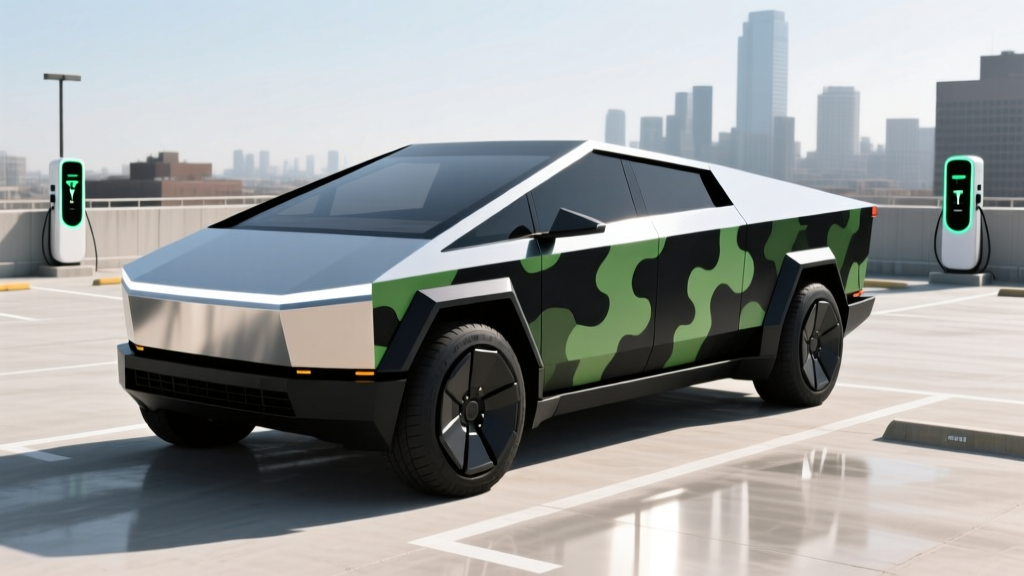
When reports surfaced that SpaceX had deployed a fleet of Tesla Cybertrucks across its Starbase facility in Boca Chica, Texas, the move raised eyebrows beyond the EV community. For prospective Cybertruck buyers, these corporate purchases signal something valuable: real-world durability validation under extreme operational conditions. SpaceX vehicles endure salt air, heavy towing, and 24/7 utilization — the kind of stress test no manufacturer-sponsored review can replicate.
This guide dissects what the 2026 Tesla Cybertruck lineup actually delivers for private buyers, using the same specs, pricing, and ownership economics that inform fleet purchasing decisions.
Range, Battery, and Real-World Efficiency
Real-World Expectation: 280-310 miles highway at 70 mph; 240-270 miles in cold weather (below 32°F). Heavy towing can reduce range by 40-60%.
The 2026 Cybertruck lineup uses a ~123 kWh usable battery pack with NMC (nickel manganese cobalt) chemistry, prioritizing energy density over the cycle-life advantages of LFP cells. This choice makes sense for a truck platform where range and towing capability outweigh the 1,000+ cycle longevity that LFP offers in commuter vehicles.
| Specification | AWD | Cyberbeast |
|---|---|---|
| EPA Range | 340 miles | 320 miles |
| Battery Capacity | ~123 kWh (NMC) | ~123 kWh (NMC) |
| Efficiency | 2.0 kWh/mi (50 MPGe) | 2.1 kWh/mi (48 MPGe) |
| 0-60 mph | 3.9 seconds | 2.6 seconds |
| Horsepower | 600 hp | 845 hp |
| Drivetrain | Dual-Motor AWD | Tri-Motor AWD |
| Towing Capacity | 11,000 lbs | 11,000 lbs |
| Payload | 2,500 lbs | 2,500 lbs |
Efficiency hovers around 2.0-2.1 kWh per mile, translating to roughly 50 MPGe combined. For context, that's less efficient than a Rivian R1T (around 70 MPGe) but comparable to the Ford F-150 Lightning extended-range. The Cybertruck's angular stainless-steel exoskeleton creates substantial aerodynamic drag at highway speeds, which is why real-world highway range falls 15-20% short of the EPA sticker.
Charging Speed: 800V Architecture in Practice
The Cybertruck's 800-volt electrical architecture enables peak DC fast-charging rates up to 350 kW at compatible V4 Superchargers. However, sustained charge rates tell a different story.
| Charging Method | Power | Speed / Time |
|---|---|---|
| DC Fast Charge (peak) | 350 kW | 10-80% in ~15 minutes (V4 Supercharger) |
| DC Fast Charge (sustained avg) | ~220 kW | 10-80% in ~20 minutes (typical) |
| Level 2 Home (48A) | 11.5 kW | ~37 miles per hour |
| Level 2 Home (80A) | 19.2 kW | ~62 miles per hour |
| Level 1 (120V) | 1.4 kW | ~3-4 miles per hour |
The 10-80% time of 15 minutes assumes optimal battery preconditioning and a V4 Supercharger delivering sustained 350 kW. In practice, most public DC chargers cap at 150-250 kW, extending that window to 20-25 minutes. The charge curve tapers significantly above 80% state of charge — expect the final 20% to take as long as the first 70%.
For home charging, the Cybertruck's onboard charger accepts up to 19.2 kW on a hardwired 80-amp Level 2 circuit. Most buyers opt for the Tesla Wall Connector on a 60-amp breaker (48 amps continuous), delivering 11.5 kW and roughly 37 miles of range per hour. A full overnight charge easily replenishes daily driving.
Pricing, Trims, and Federal Tax Credit Eligibility
| Trim | MSRP | Federal Credit Eligible? | Effective Price (with credit) |
|---|---|---|---|
| AWD | $79,990 | Yes (if income/sourcing rules met) | $72,490 |
| Cyberbeast | $99,990 | Yes (if income/sourcing rules met) | $92,490 |
Under IRS §30D rules, the Cybertruck qualifies for the full $7,500 federal tax credit because it meets the MSRP cap for pickup trucks ($80,000 limit), and Tesla's battery sourcing has progressively aligned with critical-minerals and battery-component requirements. However, buyer eligibility depends on modified adjusted gross income limits:
- $300,000 for joint filers
- $225,000 for heads of household
- $150,000 for single filers
The point-of-sale transfer option allows buyers to apply the credit as an immediate discount rather than waiting for tax filing. Confirm current-year eligibility on the IRS website before purchase, as battery-sourcing requirements tighten annually.
Cargo, Passenger Space, and Practical Utility
The Cybertruck's 6-foot bed offers 67 cubic feet of cargo volume with the tonneau cover closed, plus a front trunk (frunk) providing an additional 7 cubic feet. The bed's motorized retractable cover is rated to support 300 pounds, functioning as a roof rack platform.
Interior dimensions accommodate five passengers:
- Front legroom: 41.3 inches
- Rear legroom: 38.2 inches
- Front headroom: 40.2 inches
- Rear headroom: 37.8 inches
The rear seat is genuinely usable for adults on longer trips — a weakness in some midsize truck competitors. However, the steeply raked windshield and low roofline create a more car-like seating position than traditional trucks, which some buyers appreciate and others find disorienting.
Technology, Driver Assistance, and Notable Drawbacks
The 18.5-inch center touchscreen runs Tesla's latest infotainment stack, including native navigation with real-time Supercharger routing, streaming services, and vehicle controls. The Cybertruck's steer-by-wire system eliminates the mechanical connection between steering wheel and wheels, enabling variable steering ratios that reduce lock-to-lock turns to under one full rotation at low speeds.
Autopilot and Full Self-Driving (Supervised) require continuous driver engagement. The driver must keep hands on the wheel and eyes on the road at all times. These are driver-assistance systems, not autonomous driving.
Tesla's Autopilot comes standard with adaptive cruise control, lane centering, and automatic emergency braking. Full Self-Driving (Supervised) adds automatic lane changes, traffic light recognition, and city-street navigation, but remains a Level 2 system requiring full driver attention.
- Stainless steel body panels show fingerprints and smudges constantly
- Steer-by-wire requires adaptation; some drivers report initial disorientation
- No Apple CarPlay or Android Auto (Tesla's ecosystem only)
- Panel gap consistency remains a concern on early-production units
- Insurance premiums run 20-30% higher than comparable trucks
Who Should Buy the Cybertruck?
The Cybertruck fits buyers who need genuine truck capability (11,000-lb towing, 2,500-lb payload) but prioritize performance and tech over traditional truck styling. It excels as:
- Performance truck: 2.6-second 0-60 (Cyberbeast) rivals supercars
- Towing platform: Integrated trailer brake controller, 240V bed outlet
- Tech-forward daily driver: Over-the-air updates, Supercharger network access
- Off-road capable: 16 inches ground clearance, adaptive air suspension
It's less ideal for buyers who value traditional truck ergonomics, need a proven work-fleet vehicle with long-term parts availability, or prioritize maximum efficiency over performance.
- Class-leading acceleration and performance
- 350 kW peak charging on V4 Superchargers
- Stainless steel exoskeleton resists dents
- 11,000-lb towing with integrated trailer tech
- Access to Tesla's reliable Supercharger network
- Polarizing design not universally appealing
- Steer-by-wire learning curve
- Real-world highway range 15-20% below EPA
- Higher insurance costs
- Limited service center capacity for body repairs
Frequently Asked Questions
What is the real-world range of the Cybertruck?
Expect 280-310 miles on highway trips at 70 mph, dropping to 240-270 miles in freezing temperatures. Towing a 7,000-lb trailer can reduce range to 150-180 miles.
How fast does the Cybertruck charge?
At a V4 Supercharger, 10-80% takes roughly 15 minutes at peak 350 kW. On typical 150-250 kW public chargers, plan for 20-25 minutes. Home Level 2 charging adds 37-62 miles per hour depending on amperage.
Does the Cybertruck qualify for the federal EV tax credit?
Yes, both trims qualify for the $7,500 credit if you meet IRS income limits ($150K single, $300K joint) and the vehicle's battery sourcing meets current-year critical-minerals requirements. Verify eligibility at irs.gov before purchase.
Is the Cybertruck worth buying vs. Rivian R1T or F-150 Lightning?
Choose Cybertruck if you prioritize acceleration, Tesla's Supercharger network, and cutting-edge tech. Choose R1T for superior off-road capability and more conventional ergonomics. Choose F-150 Lightning for proven fleet support, lower starting price, and traditional truck familiarity.
What's the biggest drawback of owning a Cybertruck?
Beyond the polarizing styling, the main ownership friction points are insurance costs (20-30% above comparable trucks), steer-by-wire adaptation, and limited body-shop capacity for stainless-steel panel repairs. Tesla's mobile service handles most mechanical issues, but collision damage requires specialized facilities.