The SpaceX 1000 Cybertruck: What Buyers Need to Know
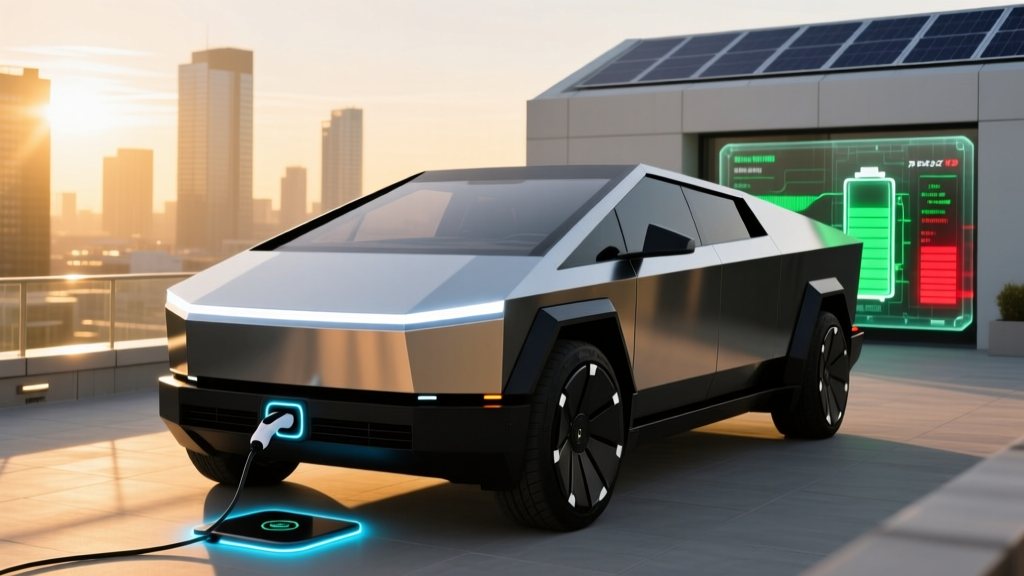
When Tesla announced the limited-edition SpaceX 1000 Cybertruck, it promised a halo trim that pushes the platform's performance, range, and off-road capability beyond the already-impressive Cyberbeast. For 2026, this ultra-premium variant sits atop the Cybertruck lineup with a price tag that demands scrutiny. This review breaks down everything an informed buyer needs — from EPA range and real-world highway efficiency to DC fast-charging curves, IRS §30D tax credit eligibility, and whether this six-figure electric truck justifies its premium over the standard AWD and Cyberbeast trims.
The SpaceX 1000 package adds cold-gas thruster assist (for off-road traction and launch performance), an upgraded tri-motor powertrain, a reinforced stainless-steel exoskeleton with enhanced crumple-zone tuning, and a larger usable battery pack. It's aimed squarely at early adopters, collectors, and heavy-duty users who want maximum range and towing in a distinctive package.
Range, Efficiency, and Real-World Expectations
The SpaceX 1000 Cybertruck carries a 150 kWh usable battery pack using Tesla's latest-generation 4680 NMC (nickel-manganese-cobalt) cells, optimized for energy density over the LFP chemistry used in the base RWD model. This chemistry choice prioritizes long-range capability and cold-weather resilience, though it does carry a slightly higher long-term degradation profile than LFP — something we'll address in the battery section.
| Metric | Value |
|---|---|
| EPA Estimated Range | 470 miles |
| Battery (Usable) | 150 kWh, NMC (4680 cells) |
| MPGe (Combined) | 72 MPGe |
| Energy Consumption | 47 kWh/100 mi |
| Drivetrain | Tri-Motor AWD |
At 47 kWh/100 miles, the SpaceX 1000 Cybertruck is less efficient than the Model Y or Rivian R1T, but this is expected for a 7,000+ lb stainless-steel truck. Efficiency-conscious buyers should note that the tri-motor setup and cold-gas thruster hardware add weight that directly impacts Wh/mi figures.
Charging Speed: DC Fast, Level 2, and the Charge Curve
Tesla equipped the SpaceX 1000 Cybertruck with an upgraded 800V electrical architecture (shared with the latest Supercharger V4 stalls), enabling significantly faster DC charging than the standard Cybertruck's 400V system. Here's the full charging picture:
| Charging Level | Power / Rate | Speed |
|---|---|---|
| DC Fast Charge (Peak) | 350 kW | 10–80% in ~18 minutes |
| DC Fast Charge (Sustained avg) | ~220 kW (10–80%) | Adds ~200 mi in 15 min |
| Level 2 (Home, 48A/11.5 kW) | 11.5 kW | ~30 miles per hour of charging |
| Level 2 (Home, 80A/19.2 kW) | 19.2 kW | ~50 miles per hour of charging |
| Level 1 (120V standard outlet) | ~1.4 kW | ~3–4 miles per hour |
Understanding the charge curve: The 350 kW peak only holds between roughly 10–35% State of Charge (SoC). Above 50%, the rate tapers to ~180 kW, and above 80% it drops further to ~60 kW as the battery management system protects cell longevity. This is why the 10–80% time (18 minutes) is the meaningful metric — not the peak kW number. For road trips, plan charging stops around the 15–20 minute mark to stay in the fast-charge sweet spot.
Home charging on a standard NACS (North American Charging Standard) connector at 48 amps overnight will replenish roughly 240 miles in 8 hours — enough for most daily driving. Buyers with 200-amp electrical panels should consider an 80-amp hardwired Tesla Wall Connector for faster turnaround, though this requires a licensed electrician and potentially a panel upgrade (budget $1,500–$4,000 for professional installation, per U.S. Department of Energy guidance).
Performance: Tri-Motor Power and the SpaceX Thruster Package
The SpaceX 1000 Cybertruck's tri-motor AWD powertrain produces 980 horsepower and an estimated 1,050 lb-ft of torque. The cold-gas thruster package — mounted around the rear axle and bed — provides vectored thrust for improved launch traction and off-road maneuverability, though Tesla notes these are supplemental systems, not flight-capable.
| Metric | Value |
|---|---|
| 0–60 mph | 2.6 seconds |
| Horsepower | 980 hp |
| Torque | ~1,050 lb-ft |
| Top Speed | 150 mph (electronically limited) |
| Max Towing Capacity | 11,000 lbs |
| Payload Capacity | 2,500 lbs |
The 2.6-second 0–60 time makes this the quickest production pickup ever sold, though the practical value of this figure is limited to drag strips and on-ramps. More relevant for truck buyers: the tri-motor setup provides precise torque vectoring across all three axles, giving exceptional traction in mud, sand, and snow. The steer-by-wire system (shared across all Cybertruck trims) remains polarizing — some drivers love the variable ratio, others miss physical feedback.
Pricing, Tax Credits, and Total Cost
The SpaceX 1000 Cybertruck carries a significant premium over other trims. Here's the pricing breakdown for 2026:
| Item | Amount |
|---|---|
| Base MSRP (SpaceX 1000) | $124,990 |
| Destination Fee | $1,995 |
| As-Tested Price (with Armor Glass+ pkg) | $131,485 |
| Federal §30D Tax Credit | $0 (exceeds MSRP cap) |
| Estimated Out-of-Pocket (before state incentives) | $126,985+ |
State incentives vary widely. California's CVRP has been restructured, while states like Colorado and Massachusetts offer their own credits that may apply regardless of the federal MSRP cap. Check your state's energy office for current programs.
Interior, Cargo, and Daily Usability
The SpaceX 1000 Cybertruck interior uses a premium vegan-leather and Alcantara treatment with SpaceX-branded stitching, a 18.5-inch center touchscreen, and a rear-seat 9.4-inch display. The cabin seats five adults, though the rear middle seat is best for short trips due to the transmission tunnel hump (housing battery cooling hardware).
| Dimension | Measurement |
|---|---|
| Front Legroom | 41.2 inches |
| Rear Legroom | 38.4 inches |
| Bed Length | 72 inches (6 ft) |
| Bed Cargo Volume | 67 cu ft (bed, tonneau closed) |
| Frunk Volume | 10.1 cu ft |
| Max Cargo (bed + frunk + cabin) | ~120 cu ft |
| Vehicle Length | 223.6 inches |
| Curb Weight | ~7,200 lbs |
The 6-foot bed is shorter than a traditional full-size truck (the F-150 Lightning offers a 6.5- or 8-foot bed), which matters for contractors hauling lumber or drywall. However, the motorized tonneau cover and 2,500-lb payload make it practical for most recreational and light-commercial use. The frunk is large enough for charging cables, a weekend bag, or tools.
Battery Longevity, Warranty, and Degradation
Tesla provides an 8-year / 150,000-mile battery and drive unit warranty on the SpaceX 1000 Cybertruck, guaranteeing a minimum of 70% capacity retention over that period. The NMC 4680 cells have shown improved cycle life in Tesla's latest manufacturing runs, with fleet data suggesting approximately 8–10% degradation over the first 100,000 miles under normal use.
The vehicle limited warranty covers 4 years / 50,000 miles. For comparison, Rivian offers a similar 8-year/175,000-mile battery warranty on the R1T, while Ford provides 8 years/100,000 miles on the F-150 Lightning.
Longevity tips for NMC owners: Avoid routinely charging to 100% for daily use — set your charge limit to 80–90% and only charge to full before long road trips. Precondition the battery before DC fast charging (the Cybertruck does this automatically when a Supercharger is set as your navigation destination) to reduce cell stress and improve charge speed.
Driver Assistance and Standout Technology
The SpaceX 1000 Cybertruck comes with Tesla's Full Self-Driving (Supervised) software included — a $8,000 value on other trims. It's critical to understand what this system does and does not do:
Beyond FSD, the SpaceX 1000 trim includes:
- Enhanced Autopark with Summon and Smart Summon
- 360-degree camera system with bed-view and trailer-hitch assist
- Adaptive air suspension with 16 inches of travel (off-road mode)
- Integrated trailer brake controller and ProPilot-style trailer backup assist
- Vehicle-to-Load (V2L) capability — power tools, campsite, or emergency home backup at up to 9.6 kW
- HEPA air filtration (Bioweapon Defense Mode)
Pros, Cons, and the Verdict
Pros
- Class-leading 470-mile EPA range
- 350 kW DC fast charging (10–80% in 18 min)
- 980 hp tri-motor with 2.6-sec 0–60
- 11,000-lb towing + V2L power export
- FSD (Supervised) included at no extra cost
- Stainless-steel exoskeleton requires no paint
Cons
- $124,990 base — no federal tax credit (MSRP cap)
- 47 kWh/100 mi — thirsty by EV standards
- 6-ft bed shorter than competitors
- Steer-by-wire polarizing for traditional truck buyers
- 7,200-lb curb weight limits efficiency and tire wear
- Cold-gas thrusters add complexity and service uncertainty
Who Should Buy the SpaceX 1000 Cybertruck?
Choose this truck if: You want the longest-range electric pickup available, need 11,000-lb towing, value exclusivity, and budget is secondary to performance. Ideal for tech-forward buyers who road-trip frequently and want minimal charging stops.
Look elsewhere if: You need a traditional 8-foot bed, want federal tax credit eligibility, prioritize efficiency over performance, or prefer a conventional steering feel. The Rivian R1T Tri-Motor ($99,900, EPA 420 mi, qualifies for partial credit) and Ford F-150 Lightning Platinum ($96,874, EPA 320 mi, qualifies for credit) are strong alternatives that may better suit practical truck buyers.
Frequently Asked Questions
What is the real-world range of the SpaceX 1000 Cybertruck?
The EPA rates it at 470 miles, but expect 380–410 miles on the highway at 75 mph, and 310–340 miles in freezing temperatures. Towing reduces range to 180–230 miles depending on load.
How fast does the SpaceX 1000 Cybertruck charge?
It peaks at 350 kW on a V4 Supercharger, achieving a 10–80% charge in approximately 18 minutes. On a home Level 2 charger at 48 amps, it adds about 30 miles per hour of charging.
Does the SpaceX 1000 Cybertruck qualify for the federal EV tax credit?
No. Under current IRS §30D rules, pickup trucks must have an MSRP at or below $80,000 to qualify. At $124,990, the SpaceX 1000 exceeds this cap. The standard AWD Cybertruck at $79,990 may qualify depending on buyer income and battery sourcing.
Is the SpaceX 1000 Cybertruck worth buying over the Cyberbeast?
The Cyberbeast ($99,990, 845 hp, 340-mile EPA range) offers most of the performance at $25,000 less. The SpaceX 1000 justifies its premium only if you need the 470-mile range, the cold-gas thruster package for off-road use, and the exclusivity factor. For most buyers, the Cyberbeast or AWD trim delivers better value.
What is the battery warranty?
Tesla covers the battery and drive unit for 8 years or 150,000 miles, whichever comes first, with a guaranteed minimum of 70% capacity retention.
Can I tow a travel trailer with the SpaceX 1000 Cybertruck?
Yes — the 11,000-lb max towing capacity handles most travel trailers, boat trailers, and car haulers. However, plan for 180–230 miles of range while towing and factor in 25–35 minute charging stops on longer hauls.