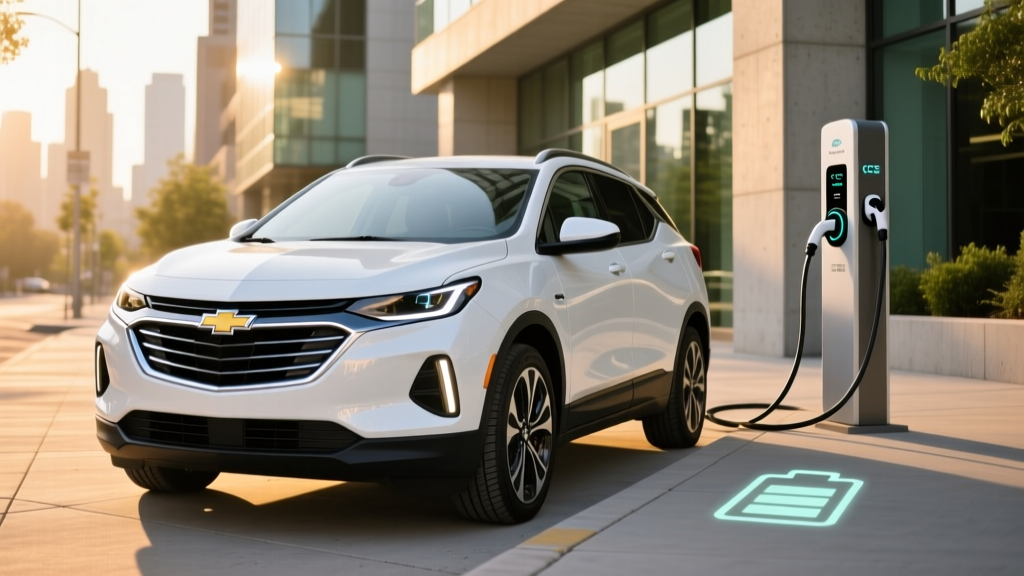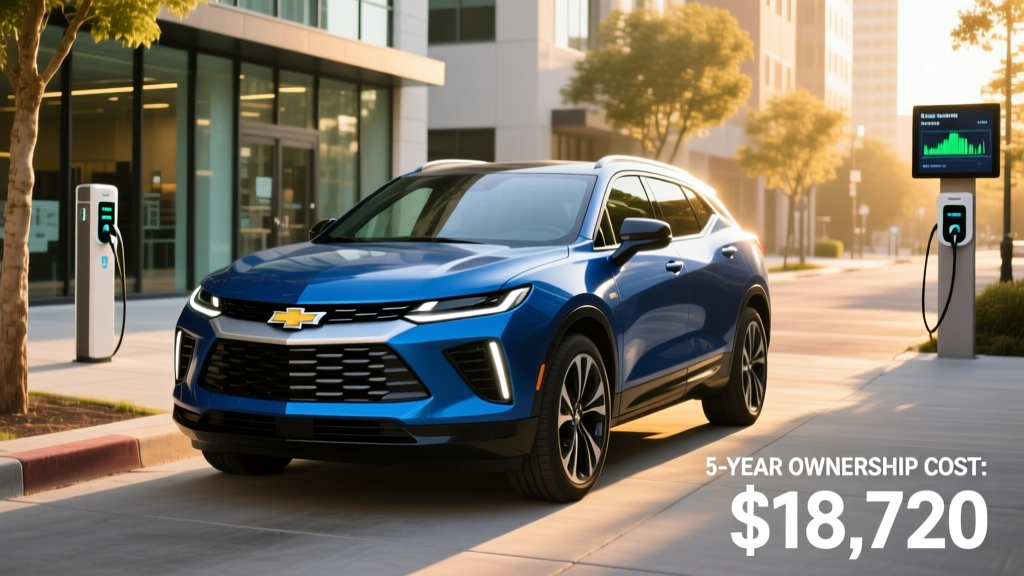
If you're researching Chevy Blazer EV September 2025 deals, you're likely weighing aggressive dealer incentives against the long-term economics of owning a midsize electric SUV. The Blazer EV has had a turbulent path — from its delayed launch to software recalls — but Chevrolet's pricing adjustments and federal incentive eligibility make it a compelling proposition for buyers who understand the full cost picture.
This guide goes beyond the sticker price. We break down the real 5-year total cost of ownership, current §30D tax credit eligibility, charging-versus-gas math, insurance realities, and depreciation trends so you can evaluate whether a Blazer EV deal actually pencils out.
2026 Chevy Blazer EV: Current Pricing and Deal Landscape
As of late 2025, Chevrolet has restructured the Blazer EV lineup for the 2026 model year with three primary trims. Here's where MSRPs stand before any incentives:
| Trim | Drivetrain | Battery (usable kWh) | EPA Range | MSRP |
|---|---|---|---|---|
| LT (FWD) | Front-Wheel Drive | 85 kWh (NMC) | 293 mi | $44,600 |
| RS (AWD) | Dual-Motor AWD | 102 kWh (NMC) | 324 mi | $52,200 |
| SS (AWD) | Dual-Motor AWD | 102 kWh (NMC) | 293 mi | $60,400 |
September 2025 deals have centered on dealer-level discounts of $1,500–$3,000 off MSRP on in-stock units, combined with GM's loyalty cash for existing GM owners (typically $500–$1,000). Chevrolet has also intermittently offered 0% APR financing for 48 months on well-qualified buyers. When stacking these with the federal tax credit (detailed below), effective pricing on the LT trim has dipped below $35,000 in best-case scenarios.
Federal Tax Credit: Does the Blazer EV Qualify for §30D?
The federal EV tax credit under IRS §30D offers up to $7,500, but eligibility depends on multiple intersecting requirements. Here's the checklist for the 2026 Blazer EV:
- MSRP Cap: The Blazer EV (classified as an SUV) must have an MSRP ≤ $80,000. All current trims qualify. ✓
- Buyer Income Cap: Modified AGI must not exceed $150,000 (single), $225,000 (head of household), or $300,000 (joint). Check your prior-year or current-year tax return — whichever is lower. ✓ (if you qualify)
- Battery Component Sourcing: At least 70% of battery components must be manufactured or assembled in North America for the full $3,750 half-credit. GM's Ultium cells are produced at U.S. plants (Lansing, MI; Spring Hill, TN). ✓
- Critical Minerals Sourcing: At least 60% of critical minerals must be sourced from the U.S. or a free-trade-agreement country for the other $3,750. This requirement has tightened annually — verify with your dealer that the specific VIN qualifies for the full $7,500. (Confirm per VIN)
- Final Assembly: Vehicle must undergo final assembly in North America. The Blazer EV is assembled in Ramos Arizpe, Mexico. ⚠️ Verify current eligibility — Mexico-assembled vehicles may still qualify under USMCA provisions, but IRS guidance has evolved.
- Point-of-Sale Transfer: You can transfer the credit to the dealer at purchase, reducing your out-of-pocket cost immediately rather than waiting for a tax refund. This effectively acts as a down payment reduction.
Critical caveat: The final-assembly-in-North-America requirement has been a moving target. While Ramos Arizpe is technically in Mexico, the USMCA framework has allowed certain Mexico-assembled EVs to qualify. However, IRS rules for 2026 have tightened scrutiny. Always verify your specific VIN's eligibility on the DOE's qualifying vehicle list before signing paperwork. A dealer's verbal assurance is not binding.
For a buyer in the 22% marginal tax bracket purchasing a Blazer EV LT at $44,600, a $7,500 point-of-sale transfer reduces the effective price to $37,100 — a meaningful difference that reshapes the ownership math entirely.
5-Year Total Cost of Ownership: The Full Picture
Comparing the Blazer EV RS (AWD, $52,200 MSRP) against a gasoline equivalent — the 2026 Chevy Blazer 3LT AWD (2.0T, ~$43,500 MSRP) — reveals the true economics. We assume 15,000 miles/year, $0.14/kWh home charging, $3.50/gallon regular unleaded, and a 5-year hold period.
| Cost Category | Blazer EV RS (AWD) | Blazer Gas 3LT (AWD) | 5-Year Difference |
|---|---|---|---|
| Purchase Price (after §30D credit) | $44,700 | $43,500 | +$1,200 |
| Fuel/Energy (75,000 mi total) | $3,675 | $10,500 | −$6,825 |
| Maintenance | $1,800 | $4,200 | −$2,400 |
| Insurance (5-year total) | $11,500 | $9,250 | +$2,250 |
| Depreciation (est. residual value) | $22,350 (50% retained) | $23,925 (55% retained) | +$1,575 |
| Total 5-Year Net Cost | $61,325 | $67,425 | EV saves ~$6,100 |
Charging Cost vs. Gas: The Per-Mile Math
The Blazer EV's efficiency varies by trim and driving style. The FWD LT achieves approximately 3.0 mi/kWh (roughly 100 MPGe combined), while the AWD RS delivers about 2.7 mi/kWh (90 MPGe). Let's compare against the gas Blazer's EPA-rated 24 MPG combined.
| Scenario | Blazer EV RS | Blazer Gas (24 MPG) |
|---|---|---|
| Cost per mile (home charging at $0.14/kWh) | $0.049/mi | — |
| Cost per mile (gas at $3.50/gal) | — | $0.146/mi |
| Cost per mile (DC fast charging at $0.40/kWh) | $0.148/mi | — |
| Annual fuel cost (15,000 mi, home) | $735 | $2,188 |
| Annual fuel cost (15,000 mi, DCFC-heavy) | $2,222 | $2,188 |
The Blazer EV supports up to 190 kW peak DC fast charging on the 102 kWh battery, achieving a 10–80% charge in approximately 30 minutes. On the 85 kWh pack, peak rate is around 150 kW with a similar 10–80% time. Note that sustained charging rates taper significantly above 80% SoC — plan road-trip stops to 80% for optimal time efficiency.
Level 2 home charging (11.5 kW onboard charger) adds approximately 34 miles of range per hour, meaning a full overnight charge from 20% to 100% takes about 7–8 hours — easily achievable during sleep.
Maintenance Savings: Where EVs Genuinely Win
Electric drivetrains eliminate the most common maintenance items that plague ICE vehicles. Over 75,000 miles, here's what you won't be paying for:
| Maintenance Item | Gas Blazer Cost (75k mi) | Blazer EV Cost (75k mi) |
|---|---|---|
| Oil changes (conventional interval) | $750–$1,125 | $0 |
| Transmission fluid service | $200–$350 | $0 |
| Spark plugs | $300–$500 | $0 |
| Brake pads (front + rear) | $600–$900 | $0–$200 (regen extends life 2–3×) |
| Engine air filter | $75–$150 | $0 (cabin filter only) |
| Coolant flush | $150–$250 | $0 (sealed thermal system) |
| Tire rotation (both) | $250–$375 | $250–$375 |
| Cabin air filter (both) | $150–$250 | $150–$250 |
| Wiper blades, misc. (both) | $100–$200 | $100–$200 |
| Total Estimated | $2,575–$4,100 | $500–$1,025 |
Regenerative braking is the unsung hero here. By using the electric motors to decelerate, the Blazer EV's friction brakes see dramatically less wear. Many EV owners report original brake pads lasting 80,000–120,000 miles. However, the Blazer EV's heavier curb weight (~4,800–5,200 lbs depending on trim) means tire wear is slightly accelerated compared to lighter vehicles — budget for tire replacement at 35,000–45,000 miles.
The Blazer EV's battery and electric drivetrain are covered by GM's 8-year/100,000-mile warranty (whichever comes first), with a guaranteed capacity retention threshold of 70%. The bumper-to-bumper warranty is 3 years/36,000 miles.
Insurance Costs: The Uncomfortable Truth
EV insurance premiums run 15–25% higher than comparable gas vehicles, and the Blazer EV is no exception. Several factors drive this:
- Higher repair costs: EV-specific components (battery packs, power electronics, high-voltage wiring) require specialized technician training and OEM parts. Collision repairs involving the battery enclosure often trigger total-loss thresholds due to safety protocols.
- Higher vehicle values: Even after incentives, the Blazer EV's MSRP exceeds the gas Blazer, leading to higher comprehensive and collision premiums.
- Repair network limitations: Fewer body shops have EV-certified technicians, increasing labor rates and repair timelines, which insurers price into premiums.
- Weight and performance: The AWD Blazer EV RS produces 288 hp (and the SS delivers 557 hp), and the vehicle's mass contributes to higher collision-severity estimates.
For a 40-year-old driver with a clean record, expect annual premiums of approximately $2,100–$2,500 for the Blazer EV RS, compared to $1,700–$2,000 for the gas Blazer 3LT. That's a $400–$500/year gap, or $2,000–$2,500 over five years.
Cost-mitigation tips: Shop quotes from insurers with dedicated EV programs (GEICO, Progressive, and Liberty Mutual have competitive EV rates in many states). Bundling home and auto, maintaining a clean record, and opting for higher deductibles can narrow the gap. Some insurers offer discounts for garage-parked EVs due to lower theft risk.
Depreciation and Resale Value Trends
EV depreciation has been volatile. Early-model EVs suffered steep drops due to battery-degradation fears and rapid price cuts on new models. The Blazer EV entered the market during a period of intense price competition — Tesla's Model Y cuts and aggressive new entrants compressed used-EV values across the board in 2024–2025.
Current projections for the Blazer EV:
- Year 1: 15–20% depreciation (typical for new vehicles, exacerbated by the Blazer EV's rocky software launch reputation)
- Year 3: 35–45% cumulative depreciation
- Year 5: 45–55% cumulative depreciation (approximately 45–55% residual value)
For comparison, the gas Blazer AWD holds approximately 50–58% of its value at year 5. The EV's depreciation disadvantage is roughly 5–8 percentage points, translating to $1,500–$2,500 in additional value loss on a $52,000 vehicle.
Factors working in the Blazer EV's favor: GM's Ultium battery platform is shared across many models (supporting long-term parts availability), the 8-year/100,000-mile battery warranty transfers to second owners, and the growing NACS charging standard (the Blazer EV uses the CCS connector but adapters are available) may stabilize demand. Factors working against it: the vehicle's early-production software issues and the rapid pace of new EV introductions that make 2024–2025 models feel dated quickly.
State, Local, and Utility Incentives
Beyond the federal §30D credit, many buyers can stack additional savings:
- California: The Clean Fuel Rebate program has offered up to $1,000 (income-dependent), and some air districts provide additional point-of-sale rebates of $1,500–$4,000 for lower-income buyers.
- Colorado: State tax credit of up to $5,000 for EVs with MSRP under $80,000 (income-dependent, phased structure).
- Utility rebates: Many utilities offer $250–$1,000 rebates for home Level 2 charger installation, and some provide reduced EV time-of-use electricity rates that can lower charging costs by 20–40%.
- HOV lane access: Several states (CA, CO, FL, GA, MD, NJ, NY, VA, and others) offer single-occupant HOV lane access for EVs — a non-monetary benefit worth significant time savings for commuters.
- Property tax exemptions: States like Connecticut and New Jersey exempt EVs from certain sales or property taxes, saving 5–7% on purchase price.
A Colorado buyer purchasing the Blazer EV LT could potentially stack: $7,500 federal credit + $5,000 state credit + $500 utility charger rebate = $13,000 in total incentives, dropping the effective price below $32,000. These scenarios are jurisdiction-specific and often income-dependent — consult a tax professional for your situation.
Frequently Asked Questions
How much does it really cost to own a Chevy Blazer EV over 5 years?
With the full $7,500 federal tax credit, home charging, and typical insurance, the Blazer EV RS (AWD) costs approximately $61,000–$63,000 in total net cost over 5 years (including purchase, energy, maintenance, insurance, and depreciation). Without the tax credit, expect $68,000–$70,000. Compare this to the gas Blazer AWD at roughly $67,000–$69,000. The EV wins if you qualify for incentives and charge at home.
Do I qualify for the $7,500 federal EV tax credit on the Blazer EV?
Eligibility requires: MSRP under $80,000 (all Blazer EV trims qualify), buyer income under $150K single/$300K joint, battery components and critical minerals meeting North American/FTA-country sourcing thresholds, and final assembly in North America. The Blazer EV's Mexico assembly has been a gray area — verify your specific VIN on the DOE's qualifying list at fueleconomy.gov before committing. The credit can be transferred to the dealer at point of sale for an immediate price reduction.
How much do I actually save on fuel and maintenance versus gas?
With home charging at $0.14/kWh, the Blazer EV costs approximately $0.05/mile in energy versus $0.15/mile for gasoline — saving roughly $1,365/year at 15,000 miles. Maintenance savings add another $400–$600/year from eliminated oil changes, spark plugs, and extended brake life. Combined annual savings: approximately $1,750–$2,000, or $8,750–$10,000 over 5 years. However, if you rely on expensive public DC fast charging, fuel savings narrow or disappear entirely.
Are EVs more expensive to insure than gas cars?
Yes, typically 15–25% more expensive. The Blazer EV's insurance premium runs approximately $400–$500/year higher than the gas Blazer due to higher repair costs (specialized EV components), higher vehicle values, and a smaller network of certified repair shops. Over 5 years, this adds $2,000–$2,500 in additional cost. Shop multiple insurers — some have dedicated EV programs with more competitive rates.
How well does the Chevy Blazer EV hold its resale value?
The Blazer EV is projected to retain approximately 45–55% of its value after 5 years, which is 5–8 percentage points below the gas Blazer. Early-production software issues and rapid EV market evolution have pressured used values. The 8-year/100,000-mile transferable battery warranty provides some resale support. If resale value is a top priority, consider leasing instead of purchasing to transfer depreciation risk to the lessor.
What are the best Chevy Blazer EV deals in September 2025?
Current deals include dealer discounts of $1,500–$3,000 off MSRP on in-stock units, GM loyalty cash of $500–$1,000 for existing owners, and promotional 0% APR financing for 48 months on qualified buyers. When combined with the $7,500 federal tax credit (if eligible), effective pricing on the LT trim has reached approximately $34,000–$36,000. Always negotiate based on out-the-door price and confirm VIN-specific tax credit eligibility before signing.