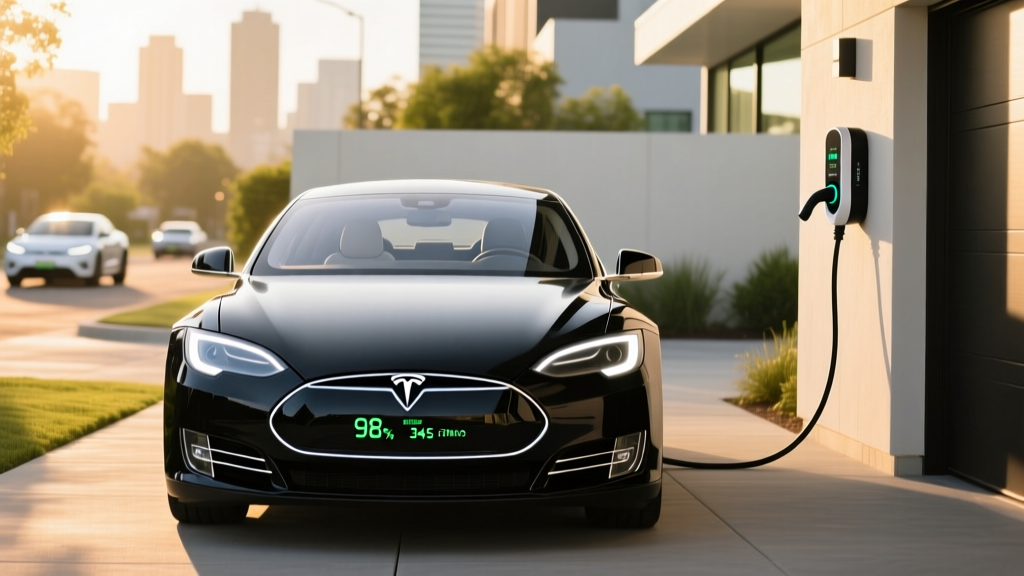
The Quick Answer: Is a Solo Electric Vehicle Worth It?
If you drive alone most days, cover under 40 miles daily, and have access to home or workplace Level 2 charging, a solo electric vehicle is one of the most cost-efficient transportation choices available in 2026. A compact EV like the Chevrolet Equinox EV (EPA 319 miles, starting ~$33,600) or Nissan Leaf (EPA 212 miles, ~$28,140) costs roughly $0.04–$0.06 per mile to fuel on home electricity versus $0.12–$0.16 per mile for a comparable gas car at $3.40/gallon. Over five years and 60,000 miles, that's $4,800–$6,000 in fuel savings alone — before factoring in near-zero maintenance. The catch: if you lack home charging, regularly drive over 250 miles between stops, or live in extreme cold climates without a heat-pump-equipped model, the math shifts considerably.
What Exactly Is a Solo Electric Vehicle?
The term "solo electric vehicle" doesn't describe a specific vehicle class — it describes an ownership pattern. It's a battery-electric vehicle (BEV) used primarily by one driver, without frequent passengers, for commuting, errands, and occasional road trips. This matters because single-occupant driving changes the cost-benefit calculus of EV ownership in several ways:
- Smaller vehicles suffice. You don't need a three-row SUV. Compact crossovers, hatchbacks, and sedans — which tend to be lighter, more efficient, and cheaper — fit the bill perfectly.
- Range requirements shrink. The average American one-way commute is roughly 16 miles, according to FHWA data. That means even a modest 200-mile EPA range covers over six days of driving before needing a charge.
- Charging is simpler. One driver means predictable schedules. Plug in overnight at home, wake up to a full battery every morning — no coordinating with family members for gas station stops.
Solo EV vs Gas Car: The Real Cost Breakdown
Let's put concrete numbers behind the comparison. Below is a five-year total cost of ownership (TCO) estimate for a solo driver covering 12,000 miles annually in a compact EV versus a comparable gasoline compact car.
| Category | Compact EV (e.g., Equinox EV 2LT) | Gas Compact (e.g., Honda Civic) |
|---|---|---|
| Purchase price (base MSRP) | $33,600 | $24,250 |
| Federal tax credit (§30D) | −$7,500 (if eligible) | $0 |
| Effective purchase price | $26,100 | $24,250 |
| Fuel/energy (60,000 mi) | $2,700 (home charging @ $0.14/kWh) | $7,560 (@ 33 MPG, $3.40/gal) |
| Maintenance (5 years) | $1,200 | $3,500 |
| Insurance (5 years) | $9,600 | $7,800 |
| Estimated depreciation | $10,200 | $8,900 |
| Total 5-year cost | $49,800 | $52,010 |
Key takeaway: Even with a higher sticker price and typically higher insurance premiums, the EV comes out roughly $2,200 ahead over five years — and that gap widens if you qualify for the full §30D federal tax credit. Note that §30D eligibility in 2026 depends on MSRP caps ($55,000 for cars, $80,000 for SUVs/trucks), buyer income limits ($150K single / $300K joint AGI), and battery critical-mineral and component sourcing requirements. Always verify current-year rules on IRS.gov or consult a tax professional before assuming eligibility.
Best Solo Electric Vehicle Categories for 2026
Not every EV suits the solo driver equally. Here's how the main categories stack up with exact specs:
Budget Hatchbacks: Maximum Efficiency, Minimum Cost
The Nissan Leaf SV Plus remains one of the most affordable new EVs: 212 miles EPA range, 60 kWh usable battery (NMC chemistry), 214 hp, 0–60 in ~6.5 seconds, and DC fast charging at up to 100 kW (CHAdeMO connector, 10–80% in ~45 minutes). At roughly $28,140 before incentives, it's ideal for solo commuters who rarely road-trip. The CHAdeMO connector is a real limitation — DC fast-charging infrastructure for CHAdeMO has thinned considerably as CCS and NACS dominate.
Compact Crossovers: The Sweet Spot
The Chevrolet Equinox EV 2LT (319 miles EPA, 85 kWh usable NMC battery, 213 hp, 0–60 in ~7.8 seconds, peak DC charging at 150 kW with 10–80% in ~32 minutes) hits the balance most solo buyers want: enough range for weekend trips, NACS native compatibility for Supercharger access, and a price that can clear the §30D MSRP cap. Expect real-world highway range closer to 260–280 miles at 70 mph, and roughly 220–240 miles in freezing temperatures — the Equinox EV lacks a heat pump, which increases cabin-heating energy draw in cold climates.
Premium Sedans: For the Tech-Focused Solo Driver
The Tesla Model 3 Long Range (363 miles EPA, ~82 kWh NMC battery, 346 hp, 0–60 in 4.2 seconds, peak 250 kW DC charging, 10–80% in ~25 minutes) offers the best efficiency-per-mile in its class at roughly 25 kWh/100mi. Solo drivers benefit from Tesla's Supercharger network reliability and the included Autopilot (SAE Level 2 — you must remain fully engaged; this is not self-driving). Starting around $42,490, it exceeds the §30D cap for sedans, so the federal credit is unavailable unless you lease (which may qualify under §45W commercial credit passed through by the lessor).
Real-World Ownership: What First-Time Solo EV Buyers Must Know
Home Charging Is the Foundation
Over 80% of EV charging happens at home. For a solo driver, a Level 2 home charger (240V, typically 32–48 amps delivering 7.7–11.5 kW) adds roughly 25–44 miles of range per hour of charging. That means an overnight session of 6–8 hours fully replenishes even a 300+ mile battery. Budget $500–$1,200 for the charger unit and $800–$2,500 for professional electrician installation, depending on your panel capacity and wiring distance. If your electrical panel is maxed out at 100 amps, a panel upgrade to 200 amps can add $1,500–$3,000 — get a quote from a licensed electrician before committing.
Public Charging: Plan, Don't Panic
For road trips exceeding your battery's range, DC fast charging is your tool. Understanding the charge curve matters: a vehicle rated for "250 kW peak" only sustains that rate briefly, typically between 10–30% state of charge (SoC). Above 80% SoC, charging slows dramatically to protect battery longevity. This is why manufacturers quote 10–80% times rather than 0–100%. For a solo driver on a road trip, the practical rhythm is: drive 2–3 hours, stop for 20–30 minutes at a DC fast charger, repeat.
Cold Weather Cuts Range — Here's By How Much
In sustained temperatures below 32°F, expect 20–35% range reduction depending on the vehicle. LFP (lithium iron phosphate) batteries, found in some Tesla Model 3 RWD and base trims from other manufacturers, experience slightly more cold-weather loss than NMC chemistries but offer longer cycle life and lower cost. Vehicles equipped with a heat pump — standard on Hyundai Ioniq 5, Tesla Model 3, and Kia EV6 — recover some of that loss by heating the cabin more efficiently than resistive heaters.
| Myth | Fact |
|---|---|
| "EV batteries need replacing every few years." | Federal law mandates battery warranties of at least 8 years/100,000 miles. Real-world degradation data shows most NMC and LFP packs retain 85–92% capacity after 100,000 miles. Full replacement costs $8,000–$18,000 but is rarely needed within typical ownership periods. |
| "I'll be stranded with no charging stations." | The U.S. has over 190,000 public charging ports as of early 2026 (AFDC). However, rural corridors and apartment-dweller access remain genuine gaps — plan routes on long trips. |
| "EVs cost more to insure, so they're not worth it." | EV insurance premiums run 10–25% higher on average due to repair costs and parts pricing. But fuel and maintenance savings typically offset this within 2–3 years. |
| "I need a 300+ mile range EV." | If your daily drive is under 40 miles and you charge at home, even a 150-mile range EV covers 95%+ of your driving. Reserve long-range models for road-trip-heavy lifestyles. |
Your Decision Framework: Should You Buy a Solo Electric Vehicle?
Choose a Solo EV If:
- You have access to Level 2 home or workplace charging (non-negotiable for convenience).
- Your daily driving is under 60 miles round-trip (covers most commuters easily).
- You qualify for the §30D tax credit or a state incentive, narrowing the upfront price gap.
- You want to eliminate oil changes, transmission fluid, spark plugs, and most brake wear (regen braking extends pad life to 80,000+ miles in many cases).
- You value a quiet, smooth, instant-torque driving experience for solo commutes.
Stick With Gas or Consider a Hybrid If:
- You live in an apartment or street-park with no charging access and no workplace charging available.
- You regularly drive 250+ miles in a single day through areas with sparse DC fast-charging infrastructure.
- You live in a region with extreme cold (sustained sub-zero °F) and cannot garage the vehicle — range loss compounds with cabin heating demands.
- Your budget is under $25,000 and you need a new vehicle — the used EV market offers options, but new gas compacts remain cheaper upfront.
Consider a PHEV (Plug-In Hybrid) As a Bridge If:
- You want electric commuting (25–40 miles electric-only range on models like the Toyota RAV4 Prime) but need gas-engine flexibility for frequent long trips without charging stops.
Frequently Asked Questions
What is the cheapest solo electric vehicle available new in 2026?
The Nissan Leaf S starts around $28,140 with 149 miles of EPA range. The Chevrolet Equinox EV starts near $33,600 with 319 miles. After the §30D credit (if eligible), effective prices can drop to roughly $20,640 and $26,100 respectively — making them highly competitive with gas compacts.
How much does it cost to charge a solo EV at home per month?
Driving 1,000 miles per month in an EV averaging 3.5 miles per kWh requires roughly 286 kWh. At the U.S. residential average of ~$0.16/kWh (early 2026), that's about $46/month — compared to roughly $103/month for a 33 MPG gas car at $3.40/gallon. Rates vary significantly by state and utility time-of-use plans.
Do I need a Level 2 charger at home, or is a standard outlet enough?
Level 1 charging (120V standard outlet) delivers about 1.0–1.4 kW, adding roughly 3–5 miles of range per hour. For a solo driver covering under 30 miles daily, Level 1 can technically suffice overnight. But Level 2 (240V) charges 6–10x faster, enables preconditioning for DC fast charging, and is strongly recommended for any EV owner. Most solo drivers find Level 1 frustratingly slow within the first month.
How long do EV batteries actually last for a single owner?
Modern NMC and LFP battery packs are engineered for 1,500–3,000+ full charge cycles before reaching 80% state of health. For a solo driver charging once or twice weekly, that translates to well over 150,000 miles. The 8-year/100,000-mile federal warranty mandate provides a safety net. Real-world fleet data from sources like fueleconomy.gov and owner surveys show most packs retain 88–93% capacity at the 100,000-mile mark under normal use.
Is a solo electric vehicle practical for road trips?
Yes, with planning. A 300-mile-range EV with 150+ kW DC fast charging capability lets you add ~150–200 miles in a 20–25 minute stop. Apps like A Better Routeplanner and built-in vehicle navigation (Tesla, GM Ultium-based vehicles, Hyundai/Kia) route you through compatible chargers automatically. The trade-off is roughly 20–30 extra minutes per 250 miles versus a gas car — a meaningful difference on 600+ mile drives.