Quick Answer: What Is the Smurf EV?
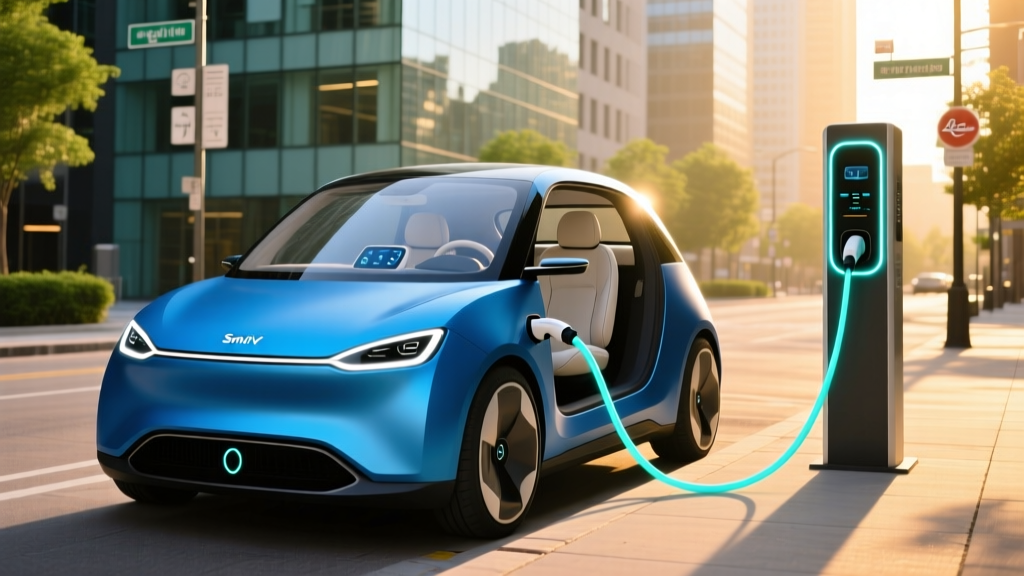
The "Smurf EV" is a colloquial name applied to small, colorful micro-electric vehicles (micro-EVs) and neighborhood electric vehicles (NEVs) — typically low-speed, short-range commuter pods imported from overseas manufacturers or produced by niche domestic startups. As of 2026, no major automaker sells a vehicle officially branded as the "Smurf EV." If you've seen the term on social media, it most often refers to vehicles like the Changli Nemeca, the Microlino, or similar ultra-compact electric city cars. These typically offer 40–75 miles of EPA-equivalent range, top speeds of 25–45 mph, and prices between $3,000 and $18,000 before incentives. They are best suited for short urban commutes, campus use, or gated-community driving — not highway travel.
What You're Actually Looking At: Micro-EVs and NEVs Defined
Before spending money on anything marketed as a "Smurf EV," understand the vehicle classification you're dealing with. Most fall into one of two categories:
- Neighborhood Electric Vehicles (NEVs) / Low-Speed Vehicles (LSVs): Federally regulated to a top speed of 20–25 mph. Legal on roads with speed limits up to 35 mph in most states. No crash-testing required by NHTSA. Examples: GEM e2, Changli Nemeca.
- Micro-EVs (enclosed, higher-speed): Some imported models claim 40–50 mph top speeds and 60+ mile ranges. These occupy a regulatory gray area in the US — they may not meet FMVSS safety standards and could be restricted from public roads entirely. The Microlino (sold in Europe) is an example that has not received US homologation as of 2026.
The critical distinction: an NEV is not a car. It lacks airbags, crumple zones, stability control, and the crash structure of any highway-legal vehicle. If a seller tells you a $4,000 "Smurf EV" is a full replacement for a Honda Civic or Chevrolet Bolt, that is factually incorrect.
Specs at a Glance: Smurf-Class EVs vs. Real EVs vs. Gas Cars
Here's how typical micro-EVs compare against a mainstream battery-electric vehicle and a conventional gas compact car on the metrics that matter:
| Spec | Typical "Smurf" Micro-EV (NEV) | 2026 Chevrolet Bolt EV (2LT) | 2026 Honda Civic (Gas, Sport) |
|---|---|---|---|
| EPA Range / Tank Range | 40–75 mi (estimated) | 259 mi (EPA) | ~400 mi (35 MPG × 12.4 gal) |
| Battery / Fuel Capacity | 5–12 kWh (LFP typical) | 65 kWh (NMC, usable) | 12.4 gal gasoline |
| Top Speed | 25–45 mph | 93 mph (electronically limited) | ~130 mph |
| 0–30 mph | 6–10 sec | ~2.8 sec (to 30 mph) | ~3.2 sec (to 30 mph) |
| Charging / Refuel Time | 6–10 hrs (120V Level 1 only) | ~18 min 10–80% DC fast (peak 115 kW) | ~3 min at gas station |
| Base MSRP | $3,000–$18,000 | $28,400 | $26,500 |
| Federal Tax Credit (§30D) | Not eligible (NEV/LSV class) | Up to $7,500 (eligibility varies) | Not eligible |
| NHTSA Crash Tested | No | Yes (5-star overall) | Yes |
| Highway Legal | No (roads ≤35 mph only) | Yes | Yes |
Sources: fueleconomy.gov for Bolt and Civic data; NHTSA LSV regulations (49 CFR §571.500) for NEV classification.
Real-World Costs: Purchase, Charging, Insurance, and Maintenance
Micro-EVs are cheap to buy, but the full ownership picture is more nuanced. Here's a 5-year cost projection for a typical "Smurf-class" NEV compared to a Bolt EV and a gas Civic, assuming 8,000 miles/year (the realistic ceiling for an NEV given its speed/range limits):
| Cost Category (5-Year) | Micro-EV / NEV ($10,000 purchase) | Chevrolet Bolt EV | Honda Civic (Gas) |
|---|---|---|---|
| Purchase Price (after credits) | $10,000 (no §30D credit) | $20,900 (after $7,500 credit, if eligible) | $26,500 |
| Fuel / Electricity | $360 (0.25 kWh/mi × $0.18/kWh) | $2,340 (0.30 kWh/mi × $0.18/kWh × 40k mi) | $5,140 (30 MPG avg × $3.85/gal × 40k mi) |
| Maintenance | $400 (tires, brake pads, cabin filter) | $1,200 (tires, wipers, cabin filter, coolant check) | $3,500 (oil changes, filters, brakes, transmission fluid) |
| Insurance | $2,500 (specialty NEV policies vary widely) | $6,500 ($1,300/yr avg) | $5,800 ($1,160/yr avg) |
| Depreciation | $7,000 (70% — resale market is thin) | $8,000 (~38% over 5 years) | $9,500 (~36% over 5 years) |
| Total 5-Year Cost | $20,260 | $38,940 | $50,440 |
Key takeaways from these numbers:
- The NEV wins on raw cost — but only because you're driving 8,000 miles/year at 25 mph on surface streets. If you need to drive 15,000+ miles/year or use highways, the NEV is not an option at all.
- Depreciation on micro-EVs is brutal. There is virtually no established used market for a $4,000 Changli. Expect to lose 60–80% of your purchase price within three years.
- Insurance is surprisingly expensive relative to vehicle value because specialty NEV insurers have limited actuarial data and small risk pools.
- The Bolt EV is the real value champion when you factor in highway capability, safety, range, and the federal tax credit. Per the IRS §30D guidelines, eligibility depends on MSRP caps ($55,000 for sedans), buyer income limits ($150K single / $300K joint), and battery-critical-mineral sourcing requirements — always verify current-year rules.
Charging Reality: What "Smurf EV" Owners Actually Deal With
Most micro-EVs charge exclusively on Level 1 (120V household outlet) at roughly 0.8–1.5 kW. There is no DC fast charging, and Level 2 (240V) support is rare or nonexistent in the sub-$10,000 segment.
Here's what that means in practice:
- Full charge from empty: 6–12 hours on a standard wall outlet.
- Miles added per hour of charging: roughly 5–10 miles, depending on the vehicle's efficiency.
- No public charging compatibility: You cannot pull up to an Electrify America or Tesla Supercharger station. These vehicles use standard NEMA 5-15 plugs or proprietary connectors — not CCS, NACS, or CHAdeMO.
This is the single biggest ownership friction point. If you drive 30 miles round-trip and deplete 40% of a 10 kWh battery, you need 4+ hours plugged in before you can make that trip again. For a single-commute household with overnight charging access, this works. For anyone needing flexibility or multiple trips per day, it becomes a serious constraint.
Cold-weather reality: LFP batteries (common in this segment) lose roughly 15–25% of their usable capacity in freezing temperatures, and most micro-EVs lack active thermal management or heat pumps. A "60-mile range" NEV in January in Minnesota may deliver 35–40 miles in practice.
Common Misconceptions — Myth vs. Fact
| Myth | Fact |
|---|---|
| "It qualifies for the $7,500 federal EV tax credit." | NEVs and LSVs do not qualify for the §30D Clean Vehicle Credit. The IRS requires the vehicle to be a highway-capable, four-wheeled motor vehicle with a GVWR under 14,000 lbs and specific battery sourcing. Most micro-EVs fail multiple requirements. |
| "I can drive it on any road." | NEVs are federally restricted to roads with speed limits of 35 mph or below. States may further restrict them. Driving an NEV on a 45-mph arterial is illegal and dangerous. |
| "It's as safe as a Smart car." | The Smart Fortwo was NHTSA crash-tested and had airbags, ABS, and a steel safety cell. A $4,000 NEV has none of these. In any collision with a full-size vehicle, the NEV occupant is severely disadvantaged. |
| "The battery will last as long as a Tesla's." | Major OEM batteries (NMC/LFP from CATL, LG, Panasonic) are warrantied for 8 years/100,000 miles with 70%+ capacity retention. Micro-EV batteries are often unbranded cells with no published warranty, no active thermal management, and faster degradation — expect meaningful range loss within 3–5 years. |
| "I can get parts and service anywhere." | There is no dealer network for most micro-EV brands. Parts may ship from overseas with 4–8 week lead times. Most mainstream mechanics will not service them. |
Decision Framework: Should You Buy a Smurf-Class EV?
Choose a Micro-EV / NEV If:
- Your daily driving is under 25 miles round-trip, entirely on roads with speed limits ≤35 mph.
- You live in a warm climate (minimal cold-weather range loss).
- You have guaranteed overnight access to a standard 120V outlet near your parking spot.
- This is a secondary vehicle — you already own or have access to a highway-capable car for longer trips.
- You accept that this vehicle has no crash protection comparable to a real car and treat it accordingly.
- You're comfortable with limited resale value and no dealer support network.
Choose a Mainstream EV (Bolt, Model 3, Ioniq 5, Equinox EV) If:
- You need to drive on highways or roads above 35 mph at any point.
- You need to carry more than two people or any significant cargo.
- You want NHTSA crash-test ratings, airbags, and modern safety features (AEB, lane-keeping, blind-spot monitoring).
- You want DC fast charging capability for road trips or same-day multi-trip flexibility.
- You want to claim the federal tax credit (up to $7,500, subject to IRS §30D rules).
- You care about resale value and long-term parts/service availability.
Choose a Hybrid (Prius, Accord Hybrid) If:
- You don't have reliable home charging access.
- You regularly drive long distances or in extreme cold.
- You want EV-like city efficiency without range or charging concerns.
- Your budget is under $30,000 and you need one vehicle to do everything.
Frequently Asked Questions
Is there an official vehicle called the "Smurf EV"?
No. As of 2026, no major or minor automaker sells a vehicle officially named the "Smurf EV." The term is an internet nickname applied to small, colorful micro-EVs and NEVs — most commonly the Changli Nemeca and similar imported electric pods. Always verify the actual manufacturer, model name, and DOT/NHTSA compliance before purchasing.
How much does a Smurf-class micro-EV actually cost to run per mile?
At the US average residential electricity rate of ~$0.18/kWh and a typical micro-EV efficiency of 250 Wh/mile, your energy cost is approximately $0.045 per mile. Compare this to a 30 MPG gas car at $3.85/gallon (~$0.128/mile) and a mainstream EV like the Bolt at 300 Wh/mile (~$0.054/mile). The micro-EV is the cheapest per mile — but the savings are small in absolute terms (~$660/year vs. gas at 8,000 miles/year).
Can I charge a micro-EV at a public charging station?
No. Public Level 2 (J1772) and DC fast (CCS/NACS/CHAdeMO) connectors are not compatible with NEVs and most micro-EVs. These vehicles charge from a standard 120V household outlet using an included cord. You are entirely dependent on home or workplace outlet access.
What happens if the battery dies in a micro-EV — can I replace it?
Replacement is possible but often uneconomical. A new battery pack for a typical NEV costs $1,500–$3,500 installed — which can represent 30–80% of the vehicle's original purchase price. Unlike mainstream EVs, there are no standardized battery modules or certified replacement networks. Factor this into your total cost of ownership.
Do I need a driver's license to operate an NEV?
In most US states, yes — a valid driver's license is required to operate a low-speed vehicle on public roads. Some states have additional registration, insurance, and VIN requirements. Check your state's DMV regulations before purchasing, as rules vary significantly.
What's the first thing a first-time EV buyer should know?
The most important thing is this: home charging access determines whether an EV works for you more than any other factor. If you can install a Level 2 (240V) home charger — even for a mainstream EV — daily ownership is seamless and fuel costs drop dramatically. If you cannot charge at home, a plug-in hybrid (PHEV) or conventional hybrid is usually a better first step than a full BEV. For micro-EVs specifically, a 120V outlet near your parking spot is the minimum requirement — without it, ownership is impractical.
Editorial note: This guide references general micro-EV/NEV market data as of 2026. Specific model specs, pricing, and regulatory status change frequently. Always verify current FMVSS compliance, state registration requirements, and IRS tax credit eligibility before purchasing any vehicle.