The Verdict on the Smart Fortwo Electric Drive in 2026
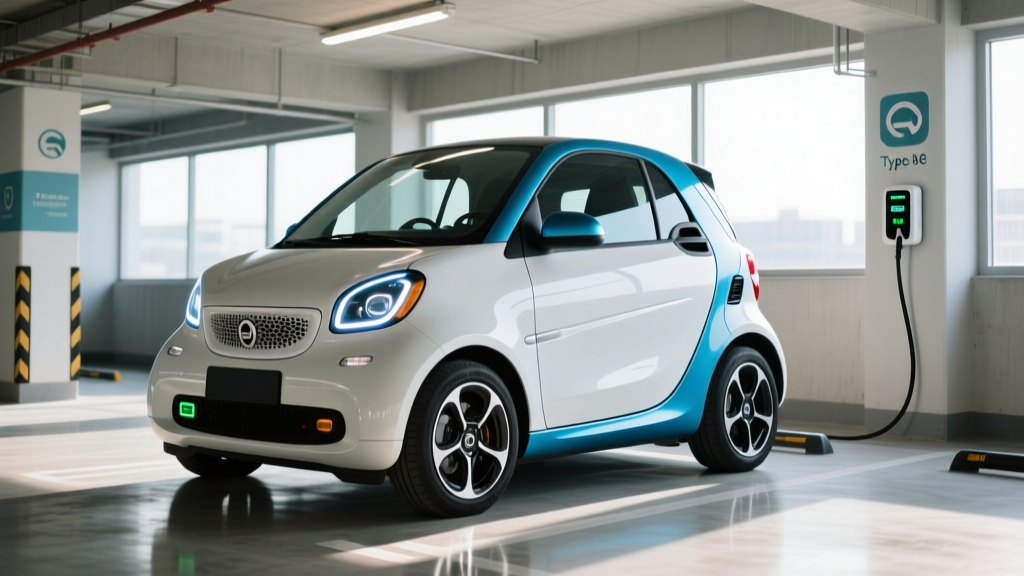
The Smart Car Fortwo Electric Drive (sold as the EQ Fortwo in later years) is a discontinued two-seat micro-EV with an EPA-estimated 58 miles of range from its 17.6 kWh battery. In 2026, it exists only on the used market, typically priced between $6,000 and $11,000 depending on model year and mileage. It works as a dedicated city runabout for buyers with reliable home Level 2 charging and short, predictable commutes. It does not work for highway driving, cold-climate commuters without garage parking, or anyone who needs more than two seats. Smart officially exited the U.S. market after the 2019 model year, so dealer support and parts availability are limited.
What You're Actually Buying: Specs and Real-World Range
Mercedes-Benz (Smart's parent company) sold the Fortwo Electric Drive in the U.S. across two main generations: the third-gen (2013–2015, badged "Electric Drive") and the fourth-gen (2017–2019, eventually badged "EQ Fortwo"). Here are the numbers that matter:
| Specification | 3rd Gen (2013–2015) | 4th Gen (2017–2019) |
|---|---|---|
| Battery (usable) | 17.6 kWh (NMC) | 17.6 kWh (NMC) |
| EPA Range | 68 miles | 58 miles |
| Real-World Range (city, mild weather) | ~55–65 miles | ~48–55 miles |
| Real-World Range (highway or cold) | ~38–48 miles | ~32–42 miles |
| Motor Output | 55 kW (74 hp) | 60 kW (80 hp) |
| 0–60 mph | ~11.5 seconds | ~11.4 seconds |
| Top Speed | 78 mph (electronically limited) | 81 mph (electronically limited) |
| Level 2 AC Charging (max) | 3.3 kW (optional 6.6 kW on later models) | 7.2 kW |
| DC Fast Charging | Not available | Not available |
| 10–80% Charge Time (Level 2) | ~3.5 hrs (3.3 kW) / ~1.75 hrs (6.6 kW) | ~1.75 hrs (7.2 kW) |
| MPGe (combined, EPA) | 107 MPGe | 108 MPGe |
| Cargo Volume | 7.8 cu ft | 9.2 cu ft |
EPA Sticker vs. Reality
The 4th-gen EQ Fortwo's EPA estimate of 58 miles assumes mixed city/highway driving in moderate temperatures. In practice, expect 48–55 miles during warm-weather city driving with regenerative braking doing most of the work. On a 65 mph highway stretch, range drops to approximately 38–42 miles due to the Fortwo's poor aerodynamics and small battery. In freezing temperatures (below 32°F), lithium-ion chemistry slows and cabin heating draws from the battery — plan for 32–40 miles of usable range. This car has no heat pump; it uses resistive heating, which is a significant energy draw.
EV vs. Gas Smart Fortwo: Which Costs Less to Run?
The gas-powered Smart Fortwo (discontinued in the U.S. after 2017) used a turbocharged 1.0L three-cylinder engine rated at 32 MPG combined per fueleconomy.gov. Here's how the economics compare over five years of ownership at 10,000 miles/year:
| Cost Factor | Electric Drive (Used) | Gas Fortwo (Used) |
|---|---|---|
| Purchase Price (avg. used) | $8,500 | $7,000 |
| Annual Fuel/Energy (10k mi/yr) | ~$330/yr (at $0.14/kWh) | ~$1,094/yr (at $3.50/gal, 32 MPG) |
| 5-Year Fuel/Energy Total | $1,650 | $5,470 |
| Maintenance (5-year est.) | ~$600 (tires, cabin filter, brake fluid) | ~$2,200 (oil, filters, spark plugs, belts) |
| Insurance (avg. annual) | ~$1,100/yr | ~$1,050/yr |
| 5-Year Total Cost of Ownership | ~$16,250 | ~$19,970 |
The Electric Drive saves roughly $3,700 over five years in fuel and maintenance, more than offsetting its slightly higher purchase price. The savings widen if your electricity rate is below the national average or if you have access to free workplace or municipal charging. However, these numbers assume the battery remains healthy — a degraded pack changes the equation entirely.
Real Costs of Ownership: Battery Health, Insurance, and the Parts Problem
Battery Degradation and Replacement
The 17.6 kWh NMC battery in both generations is now 7–13 years old. NMC chemistry typically retains 80–85% of original capacity after 8 years under normal use, but calendar aging matters as much as cycle count. Expect a used Fortwo ED to have 75–88% state of health (SoH) depending on climate history and charging habits. A car stored in Phoenix heat will show more degradation than one garaged in Portland.
Replacement battery costs are the elephant in the room. Mercedes-Benz does not publish a retail price for the Fortwo ED traction battery, and with Smart's U.S. exit, sourcing a replacement is difficult. Independent EV shops report $4,000–$7,000 for a refurbished or salvaged pack including labor — potentially approaching the car's entire value. Before buying, request a battery health diagnostic from a Mercedes-Benz dealer or an EV-specialist shop that can read the battery management system's SoH data.
Insurance Considerations
Insurance for the Fortwo ED is generally modest (averaging $1,000–$1,300/year) because the car is low-value and low-speed. However, some insurers add a surcharge for EVs due to specialized repair requirements. Get quotes from at least three carriers before committing.
The Smart/Mercedes Support Reality
Smart exited the U.S. market after 2019. Mercedes-Benz dealers were the authorized service network, and many have since dropped Smart-specific diagnostic tools and parts inventories. Body panels, the onboard charger, and EV-specific components may require sourcing from European parts suppliers or salvage yards. This is the single biggest ownership risk that doesn't show up in a cost calculator.
Charging at Home and in Public: What You Need to Know
The Fortwo Electric Drive has no DC fast-charging capability. Every charge happens at Level 1 (120V household outlet) or Level 2 (240V). Here's what that looks like in practice:
| Charging Level | Power (kW) | Miles Added per Hour | Full Charge Time (0–100%) |
|---|---|---|---|
| Level 1 (120V, 12A) | ~1.4 kW | ~5 miles/hr | ~12–13 hours |
| Level 2 (240V, 3.3 kW — 3rd gen base) | 3.3 kW | ~12 miles/hr | ~5.5 hours |
| Level 2 (240V, 7.2 kW — 4th gen) | 7.2 kW | ~25 miles/hr | ~2.5 hours |
Home charging is essentially mandatory. At Level 1 speeds, a full overnight charge (10 hours) gives you roughly 50 miles — barely adequate for most commutes. A Level 2 home charger is the practical minimum for daily use. Installation of a 240V/32A circuit typically costs $800–$2,000 depending on panel capacity and wiring distance, per licensed electrician estimates. If your home electrical panel is maxed out (common in older homes with 100A service), a panel upgrade to 200A can add $1,500–$3,500.
Public Level 2 chargers (ChargePoint, EVgo, Blink) work fine with the Fortwo's J1772 connector, but at 3.3 kW or 7.2 kW, you'll be parked for 2–5 hours for a meaningful charge. This car is not a road-trip vehicle. There is no CCS, NACS, or CHAdeMO port — you cannot use any DC fast charger.
Federal Tax Credits and Used EV Incentives
The Smart Fortwo Electric Drive is no longer sold new, so the new-vehicle §30D federal tax credit does not apply. However, the IRS Used Clean Vehicle Credit (also called the §25E credit) may apply if you buy from a licensed dealer:
- Credit amount: 30% of the sale price, up to a maximum of $4,000
- Vehicle price cap: Sale price must be $25,000 or less (virtually all used Fortwo EDs qualify)
- Buyer income caps (modified AGI): $75,000 single / $112,500 head of household / $150,000 joint
- Dealer requirement: Must be purchased from a licensed dealer (private-party sales do not qualify)
- Model year requirement: Vehicle must be at least two model years old (all Fortwo EDs qualify)
- Point-of-sale transfer: You can transfer the credit to the dealer for an immediate price reduction
On an $8,500 Fortwo ED purchased from a qualifying dealer, the credit would be 30% × $8,500 = $2,550, bringing your effective cost to approximately $5,950. Verify current-year eligibility on IRS.gov and consult a tax professional, as rules and income thresholds are subject to legislative change.
Common Misconceptions About the Smart Fortwo ED
| Myth | Fact |
|---|---|
| "It's unsafe because it's so small." | The 4th-gen Fortwo earned a tridion safety cell with eight airbags. However, the IIHS did not crash-test it, and NHTSA ratings are limited. Physics still favors larger vehicles in multi-vehicle collisions. |
| "I can fast-charge it on road trips." | No DC fast-charging hardware exists on any Fortwo ED. Maximum charge rate is 7.2 kW AC. Road trips require multi-hour Level 2 stops. |
| "The battery will last forever." | NMC batteries degrade with time and heat. A 10-year-old pack at 80% SoH gives you roughly 46 real-world miles. Budget for eventual replacement. |
| "Any mechanic can fix it." | EV-specific components (onboard charger, BMS, electric motor) require Mercedes-Benz/Smart diagnostic tools. Independent EV shops are your best bet post-U.S. exit. |
| "It qualifies for the full $7,500 tax credit." | The new-vehicle §30D credit does not apply to discontinued models. The used-vehicle §25E credit caps at $4,000 and has income limits. |
Decision Framework: Should You Buy a Used Smart Fortwo Electric Drive?
Buy It If:
- Your one-way commute is under 20 miles and stays on surface streets
- You have garage or dedicated parking with Level 2 charging access
- You live in a mild climate (rarely below 30°F) or have heated garage parking
- This is a second vehicle — you have a gas or long-range EV for trips
- You find one under $8,000 with a verified battery SoH above 85%
- You value ultra-low running costs (~$0.03/mile on electricity) and easy city parking
Skip It If:
- Your commute exceeds 25 miles one-way or includes sustained highway driving
- You rely on street parking with no reliable charging access
- You live in a cold climate and this would be your only vehicle
- You need to carry more than one passenger or any significant cargo
- You're uncomfortable with limited dealer support and potential parts delays
- You want a vehicle that holds resale value — Smart Fortwo depreciation is steep
Better Alternatives to Consider
If the Fortwo ED's limitations give you pause, several used EVs in the $8,000–$18,000 range offer substantially more range, practicality, and service infrastructure:
- Nissan Leaf (2018+, 40 kWh): ~150-mile EPA range, widely available, CHAdeMO DC fast charging. Battery degradation is a known issue but well-documented.
- Chevrolet Bolt EV (2017–2019): ~238-mile EPA range, CCS DC fast charging, room for five. Post-recall battery replacements make some examples very attractive.
- BMW i3 (2017+, 33 kWh): ~114-mile EPA range, unique construction, optional range-extender gasoline engine for added flexibility.
- Fiat 500e (2017–2019): ~84-mile EPA range, similarly city-focused but with four seats (technically) and better dealer support through Stellantis.
Frequently Asked Questions
What's the real-world range of a used Smart Fortwo Electric Drive?
In warm city driving, expect 48–55 miles from a 4th-gen (2017–2019) model with a healthy battery. Highway driving at 65+ mph drops this to 38–42 miles. In freezing weather with cabin heat, plan for 32–40 miles. The 3rd-gen (2013–2015) models with higher original EPA ratings may deliver slightly more when new, but age-related battery degradation narrows the gap.
How long does the Smart Fortwo ED battery last?
NMC lithium-ion batteries typically retain 75–88% capacity after 8–12 years depending on climate and charging habits. The original battery warranty was 8 years/100,000 miles (covering defects and excessive degradation), but most examples are now outside that window. A pre-purchase battery health check is essential.
Can I charge a Smart Fortwo Electric Drive at a Tesla Supercharger?
No. The Fortwo ED uses a J1772 connector for AC charging only and has no DC fast-charging port. Tesla Superchargers deliver DC power via NACS (or CCS with adapter) — neither is compatible. You can use any J1772 Level 2 public charger.
Is the Smart Fortwo ED a good first EV?
It can work as a first EV only if your driving is exclusively short urban trips, you have home charging, and you understand the car's range ceiling. For most first-time EV buyers, a used Chevrolet Bolt EV or Nissan Leaf offers far more versatility at a comparable price.
How much does it cost to charge a Smart Fortwo ED at home?
A full charge from empty uses about 17.6 kWh. At the U.S. average residential rate of ~$0.14/kWh, that's approximately $2.46 per full charge, or about $0.04 per mile. Compare this to a gas car at 30 MPG and $3.50/gallon: $0.12 per mile. You'll save roughly $0.08 per mile on energy.
What happens if the battery fails out of warranty?
Replacement costs range from $4,000 to $7,000 for a refurbished pack including labor, based on independent EV shop estimates. Given the car's used market value of $6,000–$11,000, a battery failure could total the vehicle economically. This is the primary financial risk of ownership.