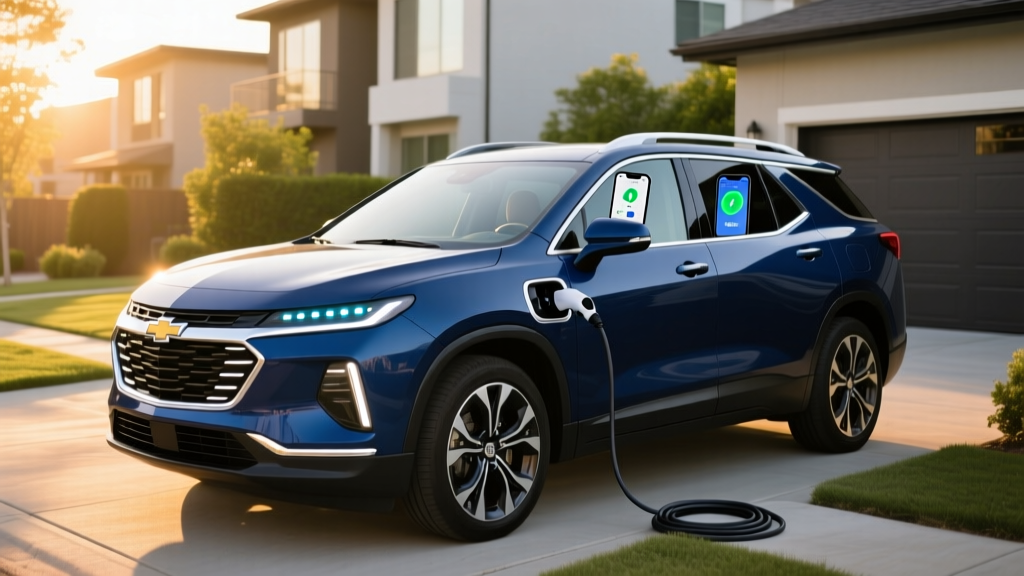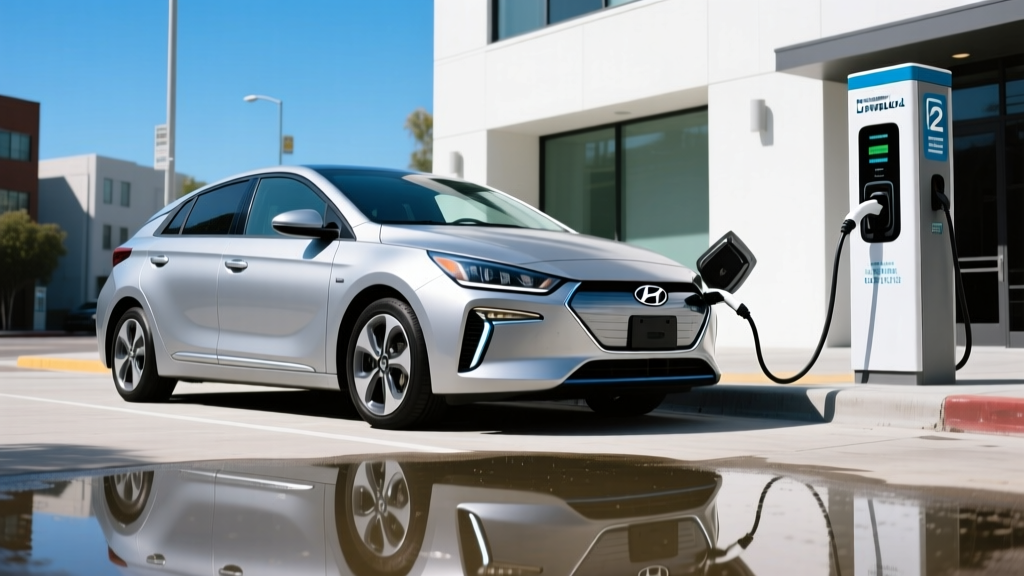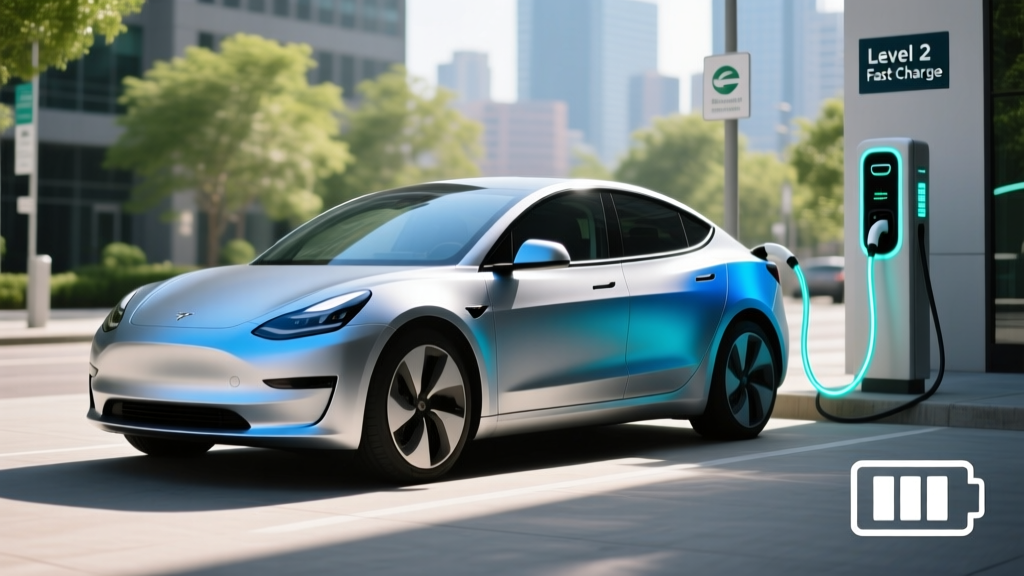
Smart EVs aren't just about zero tailpipe emissions—they're about intelligent features that optimize range, charging, and ownership costs. But "smart" doesn't automatically mean "right for you." Before committing $35,000-$70,000+, you need concrete answers about real-world range (not EPA stickers), home charging feasibility, total cost of ownership, and whether your driving patterns actually benefit from electrification.
Quick Answer: Is a Smart EV Right for You?
Yes, if: You have home charging access, drive under 300 miles daily, and can access the $7,500 federal tax credit (income ≤$150k single/$300k joint, vehicle MSRP ≤$55k cars/$80k SUVs).
Consider a hybrid instead if: You lack reliable home charging, regularly drive 400+ miles in rural areas, or live in extreme cold climates without garage parking.
Wait if: Your budget is under $30k and you can't access used-EV credits—current new smart EVs start around $32,000 before incentives.
What Makes an EV "Smart" in 2026?
Smart EV technology goes beyond battery-electric propulsion. Modern smart EVs integrate:
- Adaptive thermal management: Heat pumps and battery preconditioning that optimize range in cold weather (reducing typical 20-30% winter range loss to 10-15% in models like the Hyundai Ioniq 5 and Tesla Model Y)
- Intelligent route planning: Navigation systems that factor in charging stops, battery state-of-charge, elevation changes, and real-time charger availability
- Over-the-air updates: Continuous improvements to efficiency, charging curves, and driver-assistance features without dealer visits
- Vehicle-to-load (V2L): Power outlets that let you run appliances or tools from your EV's battery (standard on Ford F-150 Lightning, Hyundai Ioniq 5)
- Advanced driver assistance: SAE Level 2 systems like Tesla Autopilot, Ford BlueCruise, and GM Super Cruise—though these require constant driver supervision and are not "self-driving"
But smart features don't eliminate the fundamental EV ownership realities: you still need charging access, you'll face range reduction in cold weather and at highway speeds, and upfront costs remain higher than comparable gas vehicles.
Smart EV vs Gas Car: The Real Cost Comparison
Let's compare a popular smart EV—the 2026 Hyundai Ioniq 5 SEL (MSRP $45,500, EPA 303 miles, 77.4 kWh battery)—against a similarly equipped gas crossover like the 2026 Toyota RAV4 XLE (MSRP $32,500, EPA 30 MPG combined).
| Cost Category | Hyundai Ioniq 5 SEL (EV) | Toyota RAV4 XLE (Gas) |
|---|---|---|
| Purchase Price (MSRP) | $45,500 | $32,500 |
| Federal Tax Credit (§30D) | -$7,500 (if eligible) | $0 |
| Effective Purchase Price | $38,000 | $32,500 |
| Fuel/Energy (5 years, 75,000 mi) | $4,500 (home charging @ $0.14/kWh) | $9,375 (@ $3.75/gal, 30 MPG) |
| Maintenance (5 years) | $1,200 (tire rotation, cabin filter, brake fluid) | $3,500 (oil changes, filters, brakes, transmission fluid) |
| Insurance (5-year avg) | $9,500 (EV premium ~15-20% higher) | $7,800 |
| Total 5-Year Cost | $53,200 | $53,175 |
| Cost Per Mile | $0.71 | $0.71 |
Key insight: The Ioniq 5 breaks even with the RAV4 over 5 years only if you qualify for the full $7,500 tax credit and charge primarily at home. Without the credit, the EV costs ~$7,500 more. Public DC fast charging at $0.40-$0.50/kWh would increase your energy costs to $7,000-$8,500 over 5 years, eliminating the fuel savings advantage.
Source: EPA Fuel Economy for official range and MPGe ratings; IRS §30D tax credit rules for current eligibility requirements.
Real-World Range: What the EPA Sticker Doesn't Tell You
EPA range estimates assume moderate temperatures (65-75°F), mixed city/highway driving at 55-65 MPH, and minimal climate control use. Real-world conditions tell a different story.
2026 Hyundai Ioniq 5 SEL Range Reality Check
EPA Sticker: 303 miles (77.4 kWh battery, 3.9 mi/kWh)
Real-World Expectations:
- Summer highway (75 MPH, 85°F): ~250-270 miles (10-15% reduction from aerodynamic drag and AC use)
- Winter highway (75 MPH, 25°F): ~200-220 miles (25-35% reduction from battery chemistry limitations and cabin heating)
- City driving (35-45 MPH, moderate temps): ~290-310 miles (regen braking maximizes efficiency)
- Mountain driving (elevation changes): Varies widely; uphill segments consume 2-3x more energy, but downhill regen recovers 40-60%
Charging curve reality: The Ioniq 5 peaks at 240 kW DC fast charging but only sustains that rate from 10-40% state-of-charge. From 40-80%, it tapers to 150-180 kW. Total 10-80% time: ~18 minutes. Expect 25-30 minutes for a realistic highway stop including plugging in and payment.
Cold weather is the biggest range killer. Lithium-ion batteries (both NMC and LFP chemistries) experience increased internal resistance below 40°F, reducing usable capacity. Smart EVs with heat pumps (Ioniq 5, Tesla Model Y, Ford Mustang Mach-E) mitigate this better than resistive heaters, but you'll still lose 15-30% range in sub-freezing temperatures unless you precondition the battery while plugged in.
Home Charging: The Make-or-Break Factor
Home charging access determines whether an EV saves you money or costs you more. Here's the hierarchy:
| Level | Power (kW) | Miles Added Per Hour | Typical Use Case | Cost Per kWh |
|---|---|---|---|---|
| Level 1 (120V outlet) | 1.4-1.9 kW | 3-5 miles | Overnight top-up, PHEVs, low daily mileage | $0.12-0.18 (home) |
| Level 2 (240V home charger) | 7.2-11.5 kW | 25-40 miles | Daily home charging, full EVs | $0.12-0.18 (home) |
| DC Fast Charging | 50-350 kW | 150-1,000+ miles | Road trips, apartment dwellers | $0.35-0.55 (public) |
Level 2 home charging is essential for most EV owners. A typical installation costs $1,200-$2,500:
| Component | Cost Range | Notes |
|---|---|---|
| Level 2 charger hardware | $400-$800 | ChargePoint Home Flex, Tesla Wall Connector, Emporia Vue |
| Electrician labor (240V circuit) | $600-$1,500 | Depends on panel location, wire run distance |
| Electrical panel upgrade (if needed) | $1,500-$3,000 | Required if you have a 100-amp panel or insufficient capacity |
| Permit and inspection | $100-$300 | Varies by municipality |
| Total (typical install) | $1,200-$2,500 | Panel upgrade pushes total to $2,700-$5,500 |
If you live in an apartment, condo, or street-parking situation without charging access, you'll rely on public DC fast charging at $0.40-$0.50/kWh—2.5-3x the cost of home charging. This eliminates the fuel-cost advantage over gas vehicles and adds 30-60 minutes per week to your "refueling" time. Consider a plug-in hybrid (PHEV) like the Toyota RAV4 Prime (42 miles electric-only range, 38 MPG gas) instead.
Federal Tax Credit: The $7,500 Question
The IRS §30D clean vehicle credit offers up to $7,500 for new EVs, but eligibility is restrictive. As of 2026, you must meet all of these requirements:
- Income caps: Modified adjusted gross income ≤$150,000 (single), $225,000 (head of household), $300,000 (joint)
- Vehicle MSRP caps: ≤$55,000 for sedans/wagons, ≤$80,000 for SUVs/pickups/vans
- Battery sourcing: Percentage of critical minerals and battery components must be sourced from the U.S. or free-trade-agreement countries (thresholds increase annually; 2026 requirements are stricter than 2024)
- Final assembly: Vehicle must be assembled in North America
- Point-of-sale transfer: You can transfer the credit to the dealer for an immediate price reduction (new for 2024+), but you must file IRS Form 8936 to confirm eligibility or repay the credit
Reality check: Many popular smart EVs don't qualify for the full $7,500 due to battery-sourcing rules. As of early 2026, qualifying models include certain trims of the Tesla Model Y, Ford F-150 Lightning, and Chevrolet Equinox EV—but the list changes frequently as manufacturers adjust supply chains. Always verify current eligibility on fueleconomy.gov before purchasing.
Smart EV Decision Framework: If X, Then Y
Should You Buy a Smart EV?
IF you have home charging access (garage/driveway with 240V outlet capability) AND drive under 300 miles daily AND qualify for the $7,500 tax credit:
→ THEN a smart EV like the Hyundai Ioniq 5, Tesla Model Y, or Ford Mustang Mach-E will likely save you money over 5 years and provide a superior driving experience.
IF you lack home charging OR regularly drive 400+ miles in rural areas with sparse charging infrastructure:
→ THEN consider a plug-in hybrid (PHEV) like the Toyota RAV4 Prime or Jeep Wrangler 4xe. You'll get 30-50 miles of electric range for daily commuting plus gas flexibility for road trips.
IF you live in extreme cold (sub-10°F winters) AND lack garage parking for battery preconditioning:
→ THEN expect 30-40% range loss in winter. Either choose an EV with a heat pump and 350+ mile EPA range, or stick with a hybrid.
IF your budget is under $30,000 AND you don't qualify for the $4,000 used-EV credit:
→ THEN wait 1-2 years for more affordable models (Chevrolet Bolt successor, next-gen Tesla Model 2) or consider a certified pre-owned EV with battery health verification.
IF you're attracted to "self-driving" features like Tesla FSD or GM Super Cruise:
→ THEN understand these are SAE Level 2 driver-assist systems requiring constant supervision. True Level 4 autonomous vehicles (Waymo, Zoox) are only available in limited robotaxi service areas, not for personal purchase.
Common Smart EV Misconceptions: Myth vs Fact
| Myth | Fact |
|---|---|
| "EVs have 400+ mile range like gas cars" | Most smart EVs have 250-350 mile EPA range. Only the Lucid Air (516 mi) and Tesla Model S (405 mi) exceed 400 miles, and both cost $80,000+. Real-world highway range is 10-20% lower. |
| "EV batteries need replacement every 5-8 years" | Modern EV batteries are warrantied for 8 years/100,000 miles (10 years/150,000 in California and CARB states) with guaranteed 70% capacity retention. Most retain 85-90% capacity after 100,000 miles based on Tesla and Hyundai data. |
| "Charging takes too long" | Home Level 2 charging adds 25-40 miles per hour—plug in overnight and wake up full. DC fast charging adds 150-250 miles in 20-30 minutes for road trips. You'll spend less total time "refueling" than with gas if you charge at home. |
| "EVs are worse for the environment due to battery mining" | Lifecycle emissions studies (Union of Concerned Scientists, ICCT) show EVs produce 50-70% fewer emissions than gas cars over 150,000 miles, even accounting for battery manufacturing and grid electricity mix. The break-even point is typically 15,000-30,000 miles. |
| "EVs are unreliable" | EVs have far fewer moving parts than gas cars (no engine, transmission, exhaust system). Consumer Reports data shows EVs have 30-50% lower maintenance costs. However, some models (early Ford Mustang Mach-E, VW ID.4) had software and build-quality issues—reliability varies by manufacturer. |
| "I can't take road trips in an EV" | The Tesla Supercharger network (17,000+ U.S. stations) and growing CCS networks (Electrify America, EVgo) cover major highways. A 600-mile trip takes 9-10 hours including 2-3 charging stops of 20-30 minutes each. Plan routes using A Better Routeplanner or PlugShare. |
Smart EV FAQ: First-Time Buyer Questions
What's the difference between kW and kWh?
kW (kilowatts) measures power—the rate at which energy flows. A 150 kW DC fast charger delivers energy quickly. kWh (kilowatt-hours) measures energy capacity—like gallons in a gas tank. A 77 kWh battery holds 77 kWh of energy. Think of kW as "gallons per minute" at the pump and kWh as "tank size."
Do EVs really save money on maintenance?
Yes. EVs eliminate oil changes ($40-80 every 5,000-10,000 miles), transmission fluid ($150-300 every 30,000-60,000 miles), and exhaust system repairs ($500-2,000). Regenerative braking extends brake pad life to 100,000+ miles. Expect to pay for tire rotation ($50-100 every 7,500 miles), cabin air filter ($30-60 every 15,000-20,000 miles), and brake fluid flush ($100-150 every 2-3 years). Total 5-year maintenance: $1,000-$1,500 vs $3,000-$4,000 for gas cars.
Will my EV battery degrade quickly?
Modern EV batteries degrade 1-2% per year under normal use. After 5 years, expect 90-95% of original capacity; after 10 years, 80-90%. Extreme heat (sustained 95°F+), frequent DC fast charging, and regularly charging to 100% or below 20% accelerate degradation. Best practice: charge to 80% daily, use DC fast charging only for road trips, and precondition the battery in extreme temperatures.
What if I need to replace the battery?
Full battery replacement costs $10,000-$20,000 depending on capacity, but it's rare. Most manufacturers warranty batteries for 8 years/100,000 miles with guaranteed 70% capacity retention. If your battery falls below that threshold within the warranty period, the manufacturer replaces it at no cost. Independent battery repair shops can now replace individual degraded modules for $2,000-$5,000 instead of the full pack.
Are smart EVs safe in crashes?
Yes. EVs consistently earn top ratings from NHTSA and IIHS. The battery pack's low placement creates a low center of gravity, reducing rollover risk. High-strength battery enclosures protect cells in crashes. However, EVs are heavier than comparable gas cars (the Ioniq 5 weighs 4,400 lbs vs the RAV4's 3,600 lbs), which increases stopping distances and tire wear. Post-crash, first responders are trained to handle high-voltage systems safely.
Can I tow with a smart EV?
Some smart EVs can tow, but range drops dramatically. The Ford F-150 Lightning can tow 10,000 lbs, but expect range to drop 40-50% when towing at highway speeds. The Hyundai Ioniq 5 is rated for 2,300 lbs (light trailers only). If you tow frequently, a hybrid truck or a larger-battery EV (Rivian R1T, Tesla Cybertruck) is more practical.
What about insurance costs?
EV insurance premiums are 15-25% higher than comparable gas cars due to higher repair costs (specialized parts, high-voltage system training) and greater vehicle values. The Ioniq 5 averages $1,900/year vs $1,550/year for the RAV4. Shop quotes from Geico, Progressive, and State Farm—some offer EV-specific discounts. Tesla's in-house insurance uses real-time driving data and can be 10-20% cheaper for safe drivers.
Smart EVs offer genuine advantages—lower operating costs, instant torque, advanced features—but they're not universally the right choice. Your decision should hinge on charging access, driving patterns, budget, and climate. Use the framework above to evaluate whether a smart EV fits your life, not just the marketing.