Quick Answer: What Does the Electric UPS Truck Mean for Everyday EV Buyers?
UPS operates over 1,000 electric delivery trucks across North America and Europe as of 2026, primarily using custom-built Class 5–6 battery-electric vehicles from manufacturers like Workhorse, Lightning eMotors, and Freightliner. The electric UPS truck fleet demonstrates that EVs can handle demanding stop-and-go duty cycles, but it also exposes the same challenges consumer EV buyers face: depot (home) charging infrastructure costs, cold-weather range reduction of 20–30%, and higher upfront purchase prices offset by lower per-mile operating costs. For individual buyers, the fleet data confirms that EVs save $0.08–$0.15 per mile on energy versus gas equivalents when charged at home, but require reliable Level 2 access to realize those savings.
Why the Electric UPS Truck Matters to Consumer EV Shoppers
You might wonder why a delivery fleet matters when you're shopping for a personal EV. The answer is scale and stress-testing. UPS runs its electric trucks through some of the most punishing duty cycles in commercial driving: 150–250 stops per day, constant acceleration and regenerative braking, extreme weather, and tight delivery windows. When an electric UPS truck can survive that environment, it validates the battery chemistry, thermal management, and motor durability that consumer EVs share.
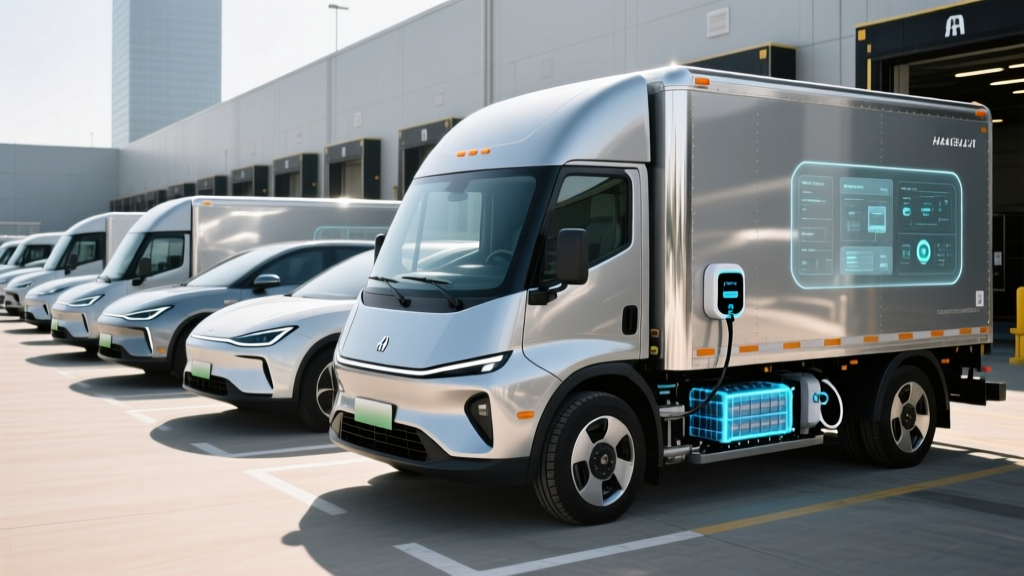
UPS began deploying electric delivery vehicles in earnest around 2018, and by 2026 has accumulated millions of real-world miles across multiple vehicle platforms. Their fleet includes:
- Workhorse E-Gen (Class 5, ~100-mile range, 76 kWh NMC battery)
- Lightning eMotors Class 5 (~150-mile range, 120 kWh NMC battery)
- Freightliner eM2 (Class 6, ~155-mile EPA range, 150 kWh usable NMC battery)
- BrightDrop Zevo 600 (GM subsidiary, ~250-mile range, 165 kWh Ultium NMC battery)
These are not consumer vehicles you can buy, but the battery packs, electric motors, and charging systems share the same fundamental engineering as a Ford F-150 Lightning, Chevrolet Silverado EV, or Rivian R1T. The lessons UPS has learned about charging logistics, battery degradation, and total cost of ownership translate directly to your garage.
Electric UPS Truck vs. Gas Delivery Van: The Cost Breakdown
UPS has publicly stated that its electric trucks achieve an equivalent of roughly 0.5–0.7 kWh per mile in urban stop-and-go delivery routes. Let's compare that to a comparable diesel or gasoline step van:
| Metric | Electric UPS Truck (Class 5–6) | Gas/Diesel Step Van (Equivalent) |
|---|---|---|
| Energy/Fuel Cost per Mile | $0.07–$0.11 (at $0.14/kWh depot rate) | $0.22–$0.30 (at $3.80/gal diesel, 7–8 MPG) |
| Maintenance Cost per Mile | $0.04–$0.06 | $0.10–$0.15 |
| Upfront Vehicle Cost | $150,000–$200,000 | $80,000–$110,000 |
| Lifetime Fuel/Energy Savings (200k mi) | — | $30,000–$40,000 more expensive |
| Charging/Fueling Infrastructure | $15,000–$50,000 per depot charger | Minimal (existing fuel stations) |
| Typical Daily Range Needed | 70–120 miles | 70–120 miles |
| Regenerative Braking Savings | 30–50% less brake wear | Standard brake replacement cycle |
The math for a consumer EV mirrors this pattern at a smaller scale. A 2026 Ford F-150 Lightning (extended-range, 131 kWh usable, EPA 320 miles) costs roughly $0.04–$0.06 per mile to charge at home at the national average of $0.16/kWh. A gas F-150 at 20 MPG combined costs $0.19 per mile at $3.80/gallon. That's a per-mile energy savings of $0.13–$0.15 — consistent with what UPS sees at fleet scale.
Charging Logistics: What UPS Teaches About Home Charging
UPS's biggest operational challenge with electric trucks hasn't been the vehicles — it's been the charging infrastructure. Each depot requires multiple 50–150 kW DC fast chargers or overnight Level 2 stations (19.2 kW per vehicle). The company has had to coordinate with utilities on transformer upgrades, demand charges, and load management software.
For a consumer, the parallel is your home electrical panel. Here's what first-time EV buyers often underestimate:
| Home Charging Component | Typical Cost Range | Notes |
|---|---|---|
| Level 2 Charger (240V, 32–48A) | $350–$750 | ChargePoint Home Flex, Wallbox Pulsar Plus, Tesla Wall Connector |
| Electrician Labor (standard install) | $500–$1,500 | Varies by run length from panel to garage |
| Electrical Panel Upgrade (200A) | $1,500–$4,000 | Required if existing panel is 100A or near capacity |
| Permit & Inspection | $50–$300 | Varies by municipality |
| Total (no panel upgrade) | $900–$2,550 | Most common scenario for homes built after 2000 |
| Total (with panel upgrade) | $2,400–$6,550 | Common in older homes with 100A service |
UPS solved this at scale with depot-level infrastructure and utility partnerships. You solve it with a licensed electrician and a realistic assessment of your panel's headroom. If your home has a 200-amp panel with available capacity, a Level 2 install is straightforward. If you're running a 100-amp panel with an electric dryer, oven, and AC already drawing on it, expect a panel upgrade — and budget for it before you buy the EV.
Real-World Range: What Fleet Data Confirms About Cold Weather and Highway Driving
UPS operates electric trucks in Chicago winters, Arizona summers, and Seattle rain. Their fleet data aligns with what consumer EV owners report:
Real-World Range vs. EPA Sticker: What to Actually Expect
EPA-rated range is measured under controlled laboratory conditions. In real-world driving:
- City stop-and-go (moderate temps): Expect 95–105% of EPA range. Regenerative braking recaptures energy, often exceeding the sticker estimate.
- Highway driving (70+ mph, moderate temps): Expect 75–85% of EPA range. Aerodynamic drag dominates at speed.
- Cold weather (below 32°F / 0°C): Expect 60–80% of EPA range, depending on cabin heating use and whether the vehicle has a heat pump. Battery chemistry slows in cold, and resistive heating is energy-intensive.
- Cold weather + highway: Expect 55–70% of EPA range — the worst-case scenario for any EV.
UPS has reported 20–30% range reduction in northern-climate winter operations. This is not a defect — it's physics. Lithium-ion batteries lose efficiency below freezing, and cabin/freight-area heating draws from the same battery.
For a consumer buying a 2026 EV with an EPA rating of 300 miles, plan for roughly 250 miles of usable highway range in good weather and 200 miles in winter. If your daily commute is 40 miles round-trip, even worst-case winter range leaves a comfortable buffer. If you regularly drive 200+ miles one-way, you need to plan charging stops and accept that winter will tighten your margins.
Battery Longevity: Fleet Mileage vs. Consumer Warranties
One of the most valuable data points from the electric UPS truck fleet is battery degradation under heavy use. UPS trucks routinely accumulate 30,000–50,000 miles per year — far more than the average consumer vehicle's 12,000–15,000 miles. Yet fleet operators report that modern NMC and LFP battery packs retain 85–92% of original capacity after 150,000 miles when managed with proper thermal conditioning and charge-window discipline (keeping SoC between 20–80% for daily use).
Consumer EV battery warranties reflect this durability:
- Federal mandate (EPA): All EV batteries must carry a minimum 8-year/100,000-mile warranty against defects and excessive capacity loss.
- Hyundai/Kia: 10 years / 100,000 miles
- Tesla: 8 years / 100,000–150,000 miles (varies by model), with a 70% capacity retention threshold
- Ford: 8 years / 100,000 miles, 70% retention threshold
- GM (Ultium): 8 years / 100,000 miles
The key term is capacity retention threshold — typically 70%. If your battery degrades below 70% of original capacity within the warranty period, the manufacturer must repair or replace it. In practice, most modern packs degrade 1–2% per year under normal use, meaning a 300-mile EV will still deliver roughly 270+ miles of range after 8 years.
Common Misconceptions About EV Ownership (Fleet Data Corrects These)
| Myth | What Electric UPS Truck Fleet Data Actually Shows |
|---|---|
| "EV batteries won't last more than 5 years" | UPS electric trucks with NMC packs are exceeding 150,000 miles with 85%+ capacity retention. Consumer packs share the same chemistry and thermal management. |
| "EVs are worse in cold weather" | Range drops 20–30% in freezing temps — real and measurable. But UPS continues winter operations by planning routes within reduced range and preconditioning batteries at the depot. Consumer EVs with heat pumps (Hyundai, Tesla, BMW) lose less range than older resistive-heating models. |
| "Charging takes too long for real work" | UPS charges overnight at depots on Level 2 (19.2 kW), adding ~60–80 miles per hour. For consumer use, overnight Level 2 charging at home (7–11 kW) fully replenishes most EVs in 6–10 hours — while you sleep. DC fast charging (150–350 kW) handles road trips, adding 150–250 miles in 20–30 minutes. |
| "EVs are more expensive to own overall" | Higher purchase price is real. But per-mile energy and maintenance costs are 50–70% lower. Break-even typically occurs at 60,000–100,000 miles depending on local electricity and gas prices. Federal §30D tax credit (up to $7,500) reduces the upfront gap — subject to MSRP caps, income limits, and battery sourcing rules (IRS §30D rules). |
| "The grid can't handle everyone driving EVs" | UPS coordinates charging with utility demand-response programs. Most consumer EVs charge overnight when grid load is lowest. A study by the DOE found that most US homes can add a Level 2 charger without grid-level infrastructure upgrades, though local transformer capacity can be a bottleneck in dense neighborhoods. |
Decision Framework: Should You Buy an EV Based on What Fleet Operators Know?
Choose an EV If:
- You have home charging access (garage or driveway with a 240V outlet or the ability to install one). This is the single biggest factor in EV satisfaction. Without it, you're dependent on public charging, which costs 2–4x more per kWh and is less reliable.
- Your daily driving is under 80 miles round-trip. This covers ~85% of American commutes and means even a modest-range EV (250 miles EPA) will handle your week with nightly home charging and a large buffer.
- You plan to keep the vehicle 5+ years. The higher upfront cost is offset by per-mile savings that compound over time. Break-even is typically 60,000–100,000 miles.
- You live in a moderate or warm climate, or you're willing to accept 20–30% winter range loss and plan accordingly.
- You qualify for the §30D federal tax credit (up to $7,500 for new EVs, subject to MSRP caps of $55,000 for cars / $80,000 for SUVs and trucks, buyer income limits of $150K single / $300K joint, and critical-mineral/battery-sourcing requirements that vary by model year).
Choose a Hybrid or PHEV Instead If:
- You cannot install home charging (apartment, street parking, no garage). A hybrid (HEV) like the Toyota RAV4 Hybrid requires no plug and delivers 40 MPG combined without behavioral change.
- You regularly drive 300+ miles between stops in areas with sparse DC fast-charging infrastructure (rural Great Plains, parts of the Mountain West). A PHEV like the Toyota RAV4 Prime (42 miles electric-only, then 38 MPG on gas) gives you electric commuting with gas flexibility.
- You tow frequently. EV towing range drops 40–50% under load. A hybrid truck like the Ford F-150 PowerBoost (22 MPG combined, 11,000-lb towing) may be more practical than an EV for heavy towing.
- Your budget is under $30,000 and you can't access the used-EV credit (§25E, up to $4,000 on vehicles under $25,000). The used EV market is growing, but new EV pricing still starts around $30,000 (Chevrolet Equinox EV, Nissan Leaf).
What a First-Time EV Buyer Should Know Before Purchasing
Based on what fleet operators like UPS have demonstrated at scale, here are the practical realities every first-time EV buyer should internalize:
- Budget for home charging installation before you buy the car. Get an electrician quote first. A $1,500–$3,000 install is normal; a $5,000+ panel upgrade is a signal to reconsider timing or vehicle choice.
- Buy more range than you think you need. If your worst-case day is 150 miles, target a 300+ mile EPA-rated vehicle. This gives you buffer for winter, highway driving, battery degradation, and detours. The price gap between a 250-mile and 300-mile trim is often $3,000–$5,000 — worth it for the flexibility.
- Understand kW vs. kWh. kW (kilowatts) is the rate of power — how fast you charge. kWh (kilowatt-hours) is the battery capacity — how much energy it holds. A 77 kWh battery charged at 11 kW (Level 2) takes roughly 7 hours from empty. The same battery at 150 kW (DC fast charger) can go from 10–80% in about 25 minutes.
- Check §30D eligibility for your specific vehicle and income. Not every EV qualifies. The IRS maintains a list of eligible vehicles, and the battery sourcing requirements have tightened significantly through 2026. Always verify at irs.gov before relying on the credit in your budget.
- Test the regenerative braking. Most EVs offer adjustable regen, from coasting (low) to one-pedal driving (high). This recaptures kinetic energy during deceleration and is why EVs are so efficient in stop-and-go traffic — the same reason UPS chose them for urban delivery.
- Factor in insurance costs. EV insurance premiums are typically 10–25% higher than comparable gas vehicles due to higher repair costs (especially battery replacement). Get a quote before finalizing your purchase decision.
5-Year Cost of Ownership: EV vs. Gas vs. Hybrid
| Cost Category (5 years / 75,000 mi) | EV (e.g., 2026 Hyundai Ioniq 5, $42,000 MSRP) | Gas (e.g., 2026 Toyota RAV4, $32,000 MSRP) | Hybrid (e.g., 2026 RAV4 Hybrid, $35,000 MSRP) |
|---|---|---|---|
| Purchase Price (after incentives) | $34,500 (assuming $7,500 §30D credit) | $32,000 | $35,000 |
| Fuel/Energy (75,000 miles) | $2,800 (home charging at $0.16/kWh, 3.5 mi/kWh) | $9,500 (25 MPG at $3.80/gal) | $5,400 (40 MPG at $3.80/gal) |
| Maintenance | $1,200 (no oil changes, less brake wear) | $3,000 (oil, filters, brakes, belts) | $2,500 (similar to gas, slightly less brake wear) |
| Insurance (5 years) | $8,500 | $6,800 | $7,000 |
| Home Charger Install | $2,000 | $0 | $0 |
| Total 5-Year Cost | $49,000 | $51,300 | $49,900 |
The EV wins on operating costs but pays more upfront and in insurance. The hybrid splits the difference with no charging requirement. Your optimal choice depends on home charging access, daily mileage, and how long you plan to keep the vehicle.
Frequently Asked Questions
Does UPS use Tesla electric trucks?
No. UPS has tested Tesla Semis in limited pilot programs, but its primary electric delivery fleet consists of Class 5–6 step vans from Workhorse, Lightning eMotors, Freightliner, and BrightDrop (a GM subsidiary). The Tesla Semi is a Class 8 tractor-trailer designed for long-haul freight, which is a different use case than UPS's local delivery routes.
How much does it cost to charge an electric UPS truck?
At a typical depot electricity rate of $0.10–$0.14/kWh and energy consumption of 0.5–0.7 kWh per mile, an electric UPS truck covering 100 miles per day costs roughly $5–$10 in electricity daily. The equivalent diesel truck at 7 MPG and $3.80/gallon would cost $54 in fuel for the same distance — a 5–10x difference in energy cost per mile.
Can I buy the same electric truck that UPS uses?
No. The vehicles in UPS's electric fleet (BrightDrop Zevo, Workhorse E-Gen, Freightliner eM2) are commercial Class 5–6 trucks not available to retail consumers. However, the underlying battery and powertrain technology is shared with consumer EVs. If you want a consumer electric truck, the closest equivalents are the Ford F-150 Lightning (EPA 230–320 miles, starting ~$55,000), Chevrolet Silverado EV (EPA 340–400 miles, starting ~$55,000), or Rivian R1T (EPA 270–410 miles, starting ~$70,000).
Do electric UPS trucks have range anxiety on their routes?
UPS designs routes around the vehicle's known range. A truck with a 150-mile practical range is assigned to routes covering 70–100 miles, leaving a 30–50% buffer. This is the same approach consumer EV owners should take: know your real-world range (not just the EPA sticker), plan routes within it, and keep a buffer for detours and weather. Fleet data from fueleconomy.gov and manufacturer testing confirms that route planning eliminates range anxiety for both fleets and individuals.
What happens to electric UPS truck batteries when they degrade?
UPS and other fleet operators typically repurpose degraded EV batteries for stationary energy storage (backup power, grid peak-shaving) before recycling. Consumer EV batteries follow the same lifecycle. When a battery drops below 70% capacity — typically after 150,000–200,000+ miles — it still holds substantial energy for less demanding applications. Full recycling recovers 90%+ of lithium, cobalt, nickel, and copper for new battery production.
Is the §30D tax credit still available in 2026?
Yes, the federal §30D new clean vehicle credit remains available in 2026, offering up to $7,500 for qualifying new EVs and PHEVs. However, eligibility depends on multiple factors: the vehicle's MSRP must not exceed $55,000 (cars) or $80,000 (SUVs/trucks/vans), buyer modified adjusted gross income must not exceed $150,000 (single) or $300,000 (joint), and the vehicle must meet critical-mineral and battery-component sourcing requirements that have tightened each year since 2023. The credit can be transferred to the dealer at point of sale as an immediate price reduction. Always verify current eligibility at irs.gov and consult a tax professional for your specific situation.