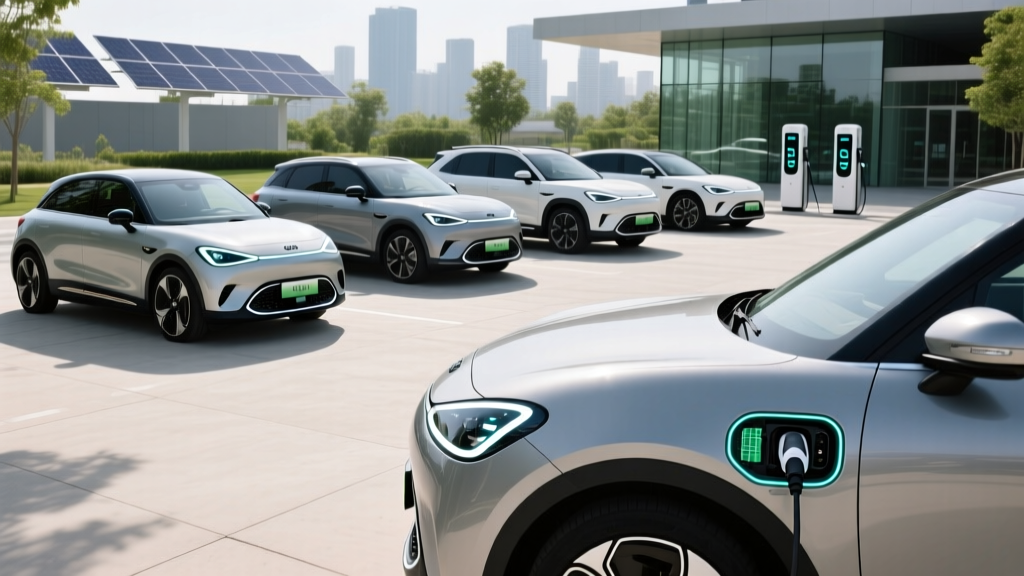
Quick Answer: The Smart brand's only current electric vehicle sold in the U.S. is the Smart #1 (pronounced "Number One"), a subcompact crossover built by a Mercedes-Benz/Geely joint venture. It offers an EPA-estimated 228 miles of range, a 66 kWh NMC battery, and 268 horsepower starting at $32,900 before incentives. It's a competent urban EV for solo drivers or couples, but its limited DC fast-charge speed (150 kW peak, ~30 min 10–80%) and sparse dealer network make it a niche pick. Smart no longer sells the two-seat Fortwo EV in the U.S. — that model was discontinued after 2019.
What Smart Cars Electric Options Exist Today?
If you're searching for "smart cars electric," you may be thinking of the tiny two-seat Smart Fortwo Electric Drive that zipped around cities a decade ago. That car is gone from the U.S. market. Mercedes-Benz, Smart's parent company, ended Fortwo sales stateside in 2019 after poor volume and a limited 58-mile range that couldn't compete with modern EVs.
What replaced it is a fundamentally different vehicle: the Smart #1, a five-door subcompact crossover roughly the size of a Volvo EX30 or Mini Countryman. It rides on Geely's SEA (Sustainable Experience Architecture) platform — the same underpinning used by the Volvo EX30 and Zeekr X — and is manufactured in China.
For the 2026 model year, Smart offers the #1 in two trims:
| Spec | Smart #1 Pro+ | Smart #1 Pulse |
|---|---|---|
| Base MSRP | $32,900 | $37,500 |
| Drivetrain | RWD, single motor | AWD, dual motor |
| Horsepower | 268 hp | 422 hp |
| 0–60 mph | 6.7 sec | 4.4 sec |
| Battery (usable) | 66 kWh, NMC | 66 kWh, NMC |
| EPA Range | 228 mi | 210 mi |
| Peak DC Charge | 150 kW | 150 kW |
| 10–80% DC Time | ~30 min | ~30 min |
| Level 2 Charge Rate | 22 kW (AC) | 22 kW (AC) |
| Battery Warranty | 8 yr / 100,000 mi | 8 yr / 100,000 mi |
The 22 kW AC onboard charger is a standout — most rivals in this class cap at 11 kW, meaning a full Level 2 home charge takes roughly 3.5 hours in the Smart #1 versus 6–7 hours in competitors. That's a genuine advantage for apartment dwellers relying on shared Level 2 stations or anyone who wants to top up quickly at a workplace charger.
Smart #1 vs. Gas and Hybrid Alternatives
The Smart #1 competes less with other EVs and more with premium subcompact crossovers. Here's how it stacks up against gas and hybrid alternatives buyers commonly cross-shop:
| Metric | Smart #1 Pro+ (EV) | Toyota Corolla Cross Hybrid (HEV) | Honda HR-V (Gas) |
|---|---|---|---|
| Base MSRP | $32,900 | $29,245 | $26,400 |
| EPA Efficiency | 111 MPGe combined | 42 MPG combined | 28 MPG combined |
| Fuel/Energy Cost per Year | ~$550 | ~$1,300 | ~$1,750 |
| 0–60 mph | 6.7 sec | 7.5 sec | 8.3 sec |
| Annual Maintenance | ~$300 | ~$500 | ~$550 |
| Tailpipe Emissions | None | Low | Moderate |
| Federal Tax Credit | Up to $7,500* | None | None |
*Federal EV tax credit eligibility under IRS §30D depends on battery sourcing, buyer income caps ($150K single / $300K joint), and MSRP limits ($55K for SUVs). The Smart #1's China-built battery may not meet critical-mineral or component sourcing thresholds for the full $7,500. Verify current eligibility at irs.gov before purchasing.
The math is straightforward: the Smart #1 costs roughly $3,650 more upfront than the Corolla Cross Hybrid before incentives, but saves about $750/year in fuel and $200/year in maintenance. If you qualify for even a partial federal credit — say $3,750 — the EV breaks even at purchase and pulls ahead immediately. Without the credit, payback takes roughly 3.8 years at 12,000 miles annually.
Real-World Range and Charging: What EPA Numbers Don't Tell You
EPA Sticker: 228 miles (Pro+ RWD)
Real-World Expectation: ~185–205 miles on highway road trips at 70+ mph; ~155–175 miles in freezing temperatures (below 32°F). City driving with regenerative braking can exceed the EPA estimate, reaching 240+ miles in mild weather.
The Smart #1's 66 kWh NMC (nickel manganese cobalt) battery is smaller than the 72–77 kWh packs in rivals like the Hyundai Ioniq 5 or Tesla Model Y. That translates directly to less range, but the trade-off is a lighter vehicle (roughly 4,050 lbs) that handles more nimbly in urban environments.
On DC fast charging, the 150 kW peak rate is adequate but not class-leading. The EPA and real-world testing show the charge curve tapers significantly above 60% state of charge (SoC). Expect:
- 10–60%: ~18 minutes at sustained 130–150 kW
- 60–80%: ~12 additional minutes as power drops to 80–100 kW
- 80–100%: ~25+ additional minutes (trickle charging to protect the NMC cells)
If you regularly road-trip, plan for 30-minute stops every 170–180 miles to stay in the efficient charging zone. That's 2–3 stops on a 500-mile trip — manageable but noticeably slower than vehicles on 800V architectures (Hyundai Ioniq 5, Kia EV6) that charge 10–80% in 18 minutes.
The True Cost of Owning a Smart #1
| 5-Year Cost Category | Smart #1 Pro+ | Toyota Corolla Cross Hybrid |
|---|---|---|
| Purchase Price (after est. credit) | $29,150* | $29,245 |
| Fuel / Electricity (5 yr) | $2,750 | $6,500 |
| Maintenance (5 yr) | $1,500 | $2,500 |
| Insurance (5 yr avg) | $9,500 | $7,200 |
| Depreciation (est.) | $14,500 | $10,800 |
| Total 5-Year Cost | $57,400 | $56,245 |
*Assumes $3,750 partial federal credit. Insurance estimates based on national averages for subcompact EVs; get a personalized quote before purchasing — EV insurance premiums vary significantly by state and carrier.
The biggest ownership surprise for first-time EV buyers is insurance. EV premiums run 15–25% higher than comparable gas vehicles, driven by expensive battery replacement costs and specialized repair requirements. The Smart #1, as a niche import with limited body-shop familiarity in the U.S., may push premiums toward the higher end of that range.
Depreciation is the other wildcard. Smart has minimal brand equity in the U.S. post-Fortwo, and Chinese-built EVs face uncertain resale values amid shifting tariff policies. If you plan to keep the car 8+ years, depreciation matters less. If you trade every 3 years, a Toyota or Honda hybrid will almost certainly retain more value.
Common Misconceptions About Smart Electric Cars
| Myth | Fact |
|---|---|
| "Smart still sells the tiny two-seat electric car." | The Fortwo EV was discontinued in the U.S. after 2019. The current Smart #1 is a 5-seat crossover. |
| "EV batteries need replacing every few years." | The Smart #1's NMC battery carries an 8-year/100,000-mile warranty guaranteeing at least 70% capacity retention. Real-world NMC degradation averages 10–15% over 8 years based on data from similar Geely-platform vehicles. |
| "You can't drive an EV in cold weather." | You can, but expect 20–30% range loss below freezing. The Smart #1 includes a heat pump (standard on Pulse, optional on Pro+) that reduces HVAC energy draw by ~30% compared to resistive heating. |
| "Charging takes hours everywhere." | Level 1 (120V household outlet) adds ~4 miles/hour — slow. But a Level 2 home charger at 22 kW fully replenishes the 66 kWh battery in ~3.5 hours. DC fast charging adds ~120 miles in 15 minutes. |
| "Every EV qualifies for the $7,500 tax credit." | Federal §30D credits require meeting battery-sourcing, MSRP, and buyer-income thresholds. China-assembled batteries face strict critical-mineral rules. Always check fueleconomy.gov for the latest eligible-vehicle list. |
Who Should (and Shouldn't) Buy a Smart #1
Choose the Smart #1 if:
- You want a premium-feeling subcompact EV under $35,000 and don't need 300+ miles of range
- Your daily commute is under 60 miles round-trip and you have access to Level 2 charging at home or work
- You value the 22 kW AC onboard charger for fast top-ups on public Level 2 stations
- You want distinctive styling and Mercedes-Benz infotainment design language without paying Mercedes prices
Look elsewhere if:
- You take frequent road trips over 250 miles — the 150 kW DC charge rate and 228-mile range mean more stops and longer waits than an Ioniq 5 or Model Y
- You live in a region with no Smart dealer nearby — the U.S. dealer network is limited to roughly 30+ locations as of 2026, concentrated in coastal metros
- You need maximum cargo space — the #1 offers 22.1 cu ft behind the rear seats, less than a Honda HR-V's 24.4 cu ft
- Resale value is a priority — Smart's thin U.S. footprint means uncertain long-term depreciation
What First-Time EV Buyers Should Know Before Choosing Smart
If the Smart #1 is your entry into electric ownership, prepare for these practical realities:
Home charging is essential for convenience. A Level 2 home charger (240V, 40-amp circuit) costs $500–$800 for equipment plus $800–$2,000 for professional installation by a licensed electrician, depending on whether your electrical panel needs an upgrade. Without home charging, you'll rely on public Level 2 and DC fast chargers — workable but more expensive ($0.30–$0.50/kWh public vs. $0.12–$0.18/kWh residential) and less convenient.
Service and parts availability is limited. Unlike Tesla's 400+ service centers or Hyundai's 800+ dealers, Smart's U.S. service footprint is small. Confirm there's an authorized service center within 30 miles of your home before purchasing. Routine maintenance is minimal (cabin air filter, brake fluid, tire rotation), but collision repair may require shipping parts from overseas.
Tire wear accelerates on EVs. The Smart #1's instant torque and ~4,050-lb curb weight eat through tires 20–30% faster than a comparable gas vehicle. Budget $800–$1,200 for a set of four replacement tires every 30,000–40,000 miles.
Preconditioning matters. The Smart #1 allows you to precondition the battery via the app before arriving at a DC fast charger. This warms the NMC cells to optimal temperature and can shave 5–8 minutes off your 10–80% charge time, especially in cool weather. Use it every time.
Frequently Asked Questions
Is the Smart Fortwo EV still available?
No. Smart discontinued the Fortwo Electric Drive in the U.S. after the 2019 model year. The only Smart vehicle currently sold in the U.S. is the #1 subcompact crossover, starting at $32,900.
Does the Smart #1 qualify for the federal EV tax credit?
Possibly, but likely not the full $7,500. Under current IRS §30D rules, the vehicle must meet battery-component and critical-mineral sourcing requirements, and the buyer must fall under income caps ($150K single / $300K joint). Because the Smart #1 is assembled in China with a Geely-sourced battery, it may qualify for a partial credit ($3,750) if it meets one of the two sourcing thresholds but not both. Always verify on fueleconomy.gov before purchasing.
How long does it take to charge the Smart #1 at home?
With a Level 2 (240V) home charger and the Smart #1's 22 kW onboard charger, a full 0–100% charge takes approximately 3.5 hours. On a standard 120V household outlet (Level 1), expect roughly 4 miles of range per hour of charging — a full charge would take over 55 hours and is only practical for emergency top-ups.
What is the real-world highway range of the Smart #1?
Expect approximately 185–205 miles at sustained highway speeds (70–75 mph) in mild weather (60–80°F). In freezing conditions, range drops to roughly 155–175 miles. Around-town driving with frequent regenerative braking can exceed the 228-mile EPA estimate.
Is the Smart #1 a good first EV?
It can be, if you have home Level 2 charging access, a short commute, and a nearby Smart dealer for service. Its compact size, quick acceleration, and premium interior make it appealing. However, buyers who road-trip frequently, lack home charging, or live far from a Smart service center may be better served by a more established EV brand with wider infrastructure support, such as Hyundai, Tesla, or Chevrolet.