Smart #1 Premium Electric Crossover: The Ultimate Urban EV Review
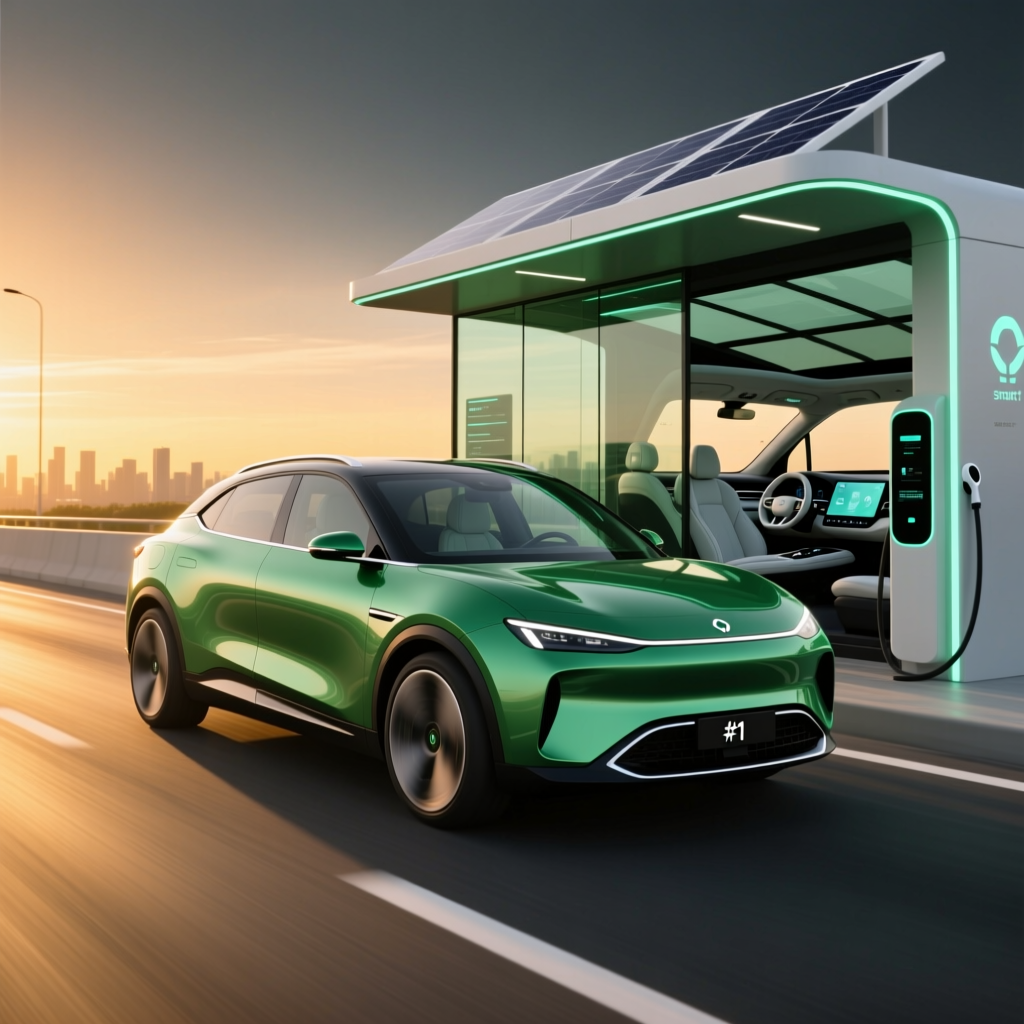
The automotive landscape has witnessed a remarkable evolution in the compact electric vehicle segment, and few nameplates represent this shift as dramatically as smart. Once synonymous with tiny, two-seater microcars designed for navigating the tightest European cobblestone streets, the brand has undergone a radical transformation. Born from a joint venture between Mercedes-Benz and Geely, the current generation of smart vehicles targets a broader, more discerning audience. The smart #1 Premium electric crossover stands at the forefront of this revival, offering a compelling blend of premium design, cutting-edge technology, and urban-focused practicality.
As cities grow denser and emission regulations become stricter, the demand for premium compact electric SUVs has skyrocketed. Buyers are no longer willing to sacrifice luxury, range, or tech just to secure a smaller footprint. In our comprehensive review, we put the smart #1 Premium through its paces, evaluating everything from its real-world urban range and charging capabilities to its meticulously crafted interior and driving dynamics. Whether you are comparing it against rivals in our best compact electric SUVs list or simply looking for the perfect daily commuter, this deep dive covers everything you need to know.
Real-World Range & Efficiency
When evaluating any electric vehicle, range anxiety remains a primary concern for prospective buyers. The smart #1 Premium is equipped with a 66 kWh ternary lithium-ion (NMC) battery pack, strategically mounted low in the chassis to optimize the center of gravity. On the official WLTP testing cycle, the smart #1 Premium achieves an impressive rating of up to 273 miles (440 kilometers). However, as many EV enthusiasts know, WLTP figures often lean optimistic compared to real-world conditions and stricter testing standards.
While official EPA guidelines and ratings can vary based on regional availability and specific testing methodologies, independent real-world testing aligned with EPA standards suggests a combined range of approximately 225 to 235 miles. But where the smart #1 truly excels is in the urban environment. Stop-and-go traffic, which traditionally drains the fuel tanks of internal combustion engines, actually plays to the strengths of this electric crossover. The aggressive regenerative braking system allows for near one-pedal driving, recapturing kinetic energy during deceleration and feeding it back into the battery.
During our urban testing loop, which included heavy traffic, frequent red lights, and speeds rarely exceeding 45 mph, the smart #1 Premium consistently outperformed its combined range estimates, easily stretching past the 250-mile mark on a single charge. The vehicle's advanced thermal management system also plays a crucial role here, preconditioning the battery to ensure optimal efficiency regardless of whether you are navigating a sweltering summer heatwave or a freezing winter morning. For a deeper understanding of how weather impacts your daily commute, be sure to check out our complete EV range and efficiency guide.
Aerodynamics also contribute significantly to the vehicle's efficiency. Despite its boxy, crossover silhouette, the smart #1 features active grille shutters, flush door handles, and carefully sculpted air curtains that minimize drag. This meticulous attention to aerodynamic efficiency ensures that highway cruising doesn't deplete the battery at an alarming rate, making it a viable option for weekend getaways outside the city limits.
Charging Speed & Infrastructure Compatibility
The true test of an urban EV is not just how far it can go, but how seamlessly it integrates into a driver's charging routine. The smart #1 Premium shines brilliantly in this department, offering a dual-threat charging setup that caters to both rapid highway top-ups and slow destination charging. On a DC fast charger, the vehicle supports peak charging speeds of up to 150 kW. Under optimal conditions, this allows the battery to replenish from 10% to 80% state of charge in roughly 30 minutes.
While 150 kW is respectable and entirely adequate for a vehicle of this size, the standout feature of the smart #1 Premium is its onboard AC charger. Unlike many competitors that cap out at 7 kW or 11 kW, the Premium trim boasts a massive 22 kW three-phase AC onboard charger. This is an absolute game-changer for urban dwellers who rely on public destination chargers, workplace charging stations, or shopping center EV points. What might take a competitor six hours to charge on a 22 kW public post will take the smart #1 Premium just three hours, making it incredibly easy to top up the battery while running errands or sitting at the office.
For home charging, assuming you have a standard 7 kW or 11 kW wallbox installed, a full overnight charge from empty to 100% takes between 7 and 9 hours. The vehicle's navigation system is fully integrated with charging infrastructure databases, automatically routing you through available chargers and preconditioning the battery upon approach to ensure maximum charging speeds upon arrival. For more tips on setting up your home charging ecosystem, visit our ultimate EV charging guide.
Interior Design, Comfort & Technology
Stepping inside the smart #1 Premium reveals a cabin that punches well above its weight class, bearing the unmistakable hallmark of Mercedes-Benz design influence. The interior is a masterclass in modern minimalism mixed with premium luxury. Soft-touch materials, quilted leatherette seating, and metallic accents are ubiquitous, creating an environment that feels significantly more expensive than its subcompact dimensions might suggest.
The centerpiece of the dashboard is a stunning 12.8-inch floating central touchscreen. Powered by a Qualcomm Snapdragon 8155 chip, the infotainment system is incredibly responsive, featuring crisp graphics and a highly customizable user interface. The system supports wireless Apple CarPlay and Android Auto, alongside a native suite of connected services. A unique touch is the inclusion of an AI-powered virtual assistant, represented by a customizable animated fox avatar, which handles voice commands for climate control, navigation, and media playback with surprising accuracy.
Ambient lighting plays a massive role in the cabin's atmosphere. The smart #1 Premium features a 64-color ambient lighting system that wraps around the dashboard, door panels, and center console. It can even sync with the audio system to pulse to the beat of your music or change colors based on the driving mode selected. Above, a massive panoramic glass roof floods the cabin with natural light, enhancing the sense of space. Fortunately, the roof includes a powered sunshade, a crucial omission in many modern EVs that often leads to overheated cabins in the summer.
Despite its compact exterior footprint, the smart #1 offers surprisingly generous rear legroom, comfortably accommodating two tall adults. However, spatial compromises had to be made somewhere, and that is most evident in the cargo area. The rear trunk offers roughly 320 liters of space with the seats up, which is adequate for weekly groceries but falls short of some rivals. Folding the rear seats down expands this to a more usable 980 liters. Notably, the vehicle lacks a front trunk (frunk), as the space under the hood is occupied by the HVAC components and the 12-volt battery. To see how it stacks up against luxury rivals, explore our roundup of the best EV interiors on the market.
Driving Dynamics & Urban Performance
Behind the wheel, the smart #1 Premium delivers a driving experience tailored specifically for the concrete jungle, though it possesses enough punch to make highway merging effortless. The rear-mounted electric motor produces 200 kW (268 horsepower) and 253 lb-ft of torque. This rear-wheel-drive layout propels the crossover from 0 to 60 mph in a brisk 6.7 seconds, providing the instant, lag-free acceleration that EV drivers have come to love.
The steering is light, precise, and exceptionally well-weighted for low-speed maneuvers. Combined with a remarkably tight turning circle of just 10.9 meters, the smart #1 is a master of U-turns, parallel parking, and navigating narrow alleyways. The suspension tuning leans heavily toward comfort; it absorbs potholes, speed bumps, and broken pavement with a maturity that belies its short wheelbase. However, this comfort-biased setup does mean that the vehicle exhibits a noticeable amount of body roll when pushed hard through twisty canyon roads. It is not a sports car, and it does not pretend to be one.
Noise, vibration, and harshness (NVH) levels are exceptionally well-managed. The cabin remains a quiet sanctuary even at highway speeds, thanks to extensive sound deadening and aerodynamic optimization. The regenerative braking system offers multiple levels of intensity, adjustable via steering wheel paddles, allowing drivers to tailor the deceleration feel to their exact preference. Whether you prefer the coasting feel of a traditional automatic or the aggressive bite of full one-pedal driving, the smart #1 adapts to your style seamlessly.
Ownership Costs, Warranty & Value
Beyond the initial purchase price, the total cost of ownership dictates the true value of any electric vehicle. The smart #1 Premium is positioned as a premium offering, and its pricing reflects that, sitting comfortably above mainstream compact EVs but undercutting luxury German alternatives. When factoring in fuel savings, reduced maintenance requirements, and potential tax incentives, the long-term financial proposition becomes highly attractive.
Maintenance costs are minimal. Without an internal combustion engine, there are no oil changes, spark plugs, or timing belts to worry about. The regenerative braking system also significantly reduces wear and tear on the physical brake pads, often allowing them to last well past 100,000 miles. The vehicle is backed by a comprehensive warranty package, including a standard 8-year or 100,000-mile warranty on the high-voltage battery, guaranteeing it will retain at least 70% of its original capacity. For more insights on long-term battery health, read our analysis on EV battery degradation and longevity.
Insurance premiums for the smart #1 Premium are generally in line with the segment average, though the use of premium materials and advanced sensor suites can make collision repairs slightly more expensive than budget-oriented alternatives. Overall, the smart #1 Premium offers a compelling value proposition for urban professionals who demand luxury, tech, and brand prestige without stepping up to a full-size luxury SUV.
Pros & Cons
Pros
- Class-leading 22 kW AC onboard charger for rapid destination charging.
- Exceptional urban efficiency and regenerative braking capabilities.
- Premium, Mercedes-influenced interior with high-quality materials.
- Tight turning radius and light steering make it perfect for city parking.
- Highly responsive Snapdragon-powered infotainment system.
Cons
- Cargo space is limited compared to some segment rivals.
- Lack of a front trunk (frunk) reduces overall utility.
- Suspension tuning prioritizes comfort over sporty handling.
- Premium pricing may push budget-conscious buyers toward mainstream alternatives.
Key Specifications Comparison
How does the smart #1 Premium stack up against its closest competitors in the premium compact EV space? Below is a comparison table highlighting key specifications against the Volvo EX30 and the MINI Countryman SE.
| Specification | smart #1 Premium | Volvo EX30 (Single Motor) | MINI Countryman SE |
|---|---|---|---|
| Battery Capacity | 66 kWh (NMC) | 69 kWh (NMC) | 66.5 kWh (NMC) |
| Estimated Range (Combined) | ~230 miles | ~265 miles | ~235 miles |
| Motor Output | 268 hp / 253 lb-ft | 268 hp / 253 lb-ft | 215 hp / 243 lb-ft |
| 0-60 mph | 6.7 seconds | 5.1 seconds | 7.4 seconds |
| Max DC Charging | 150 kW | 153 kW | 130 kW |
| Max AC Charging | 22 kW | 11 kW | 11 kW |
| Cargo Volume (Rear Seats Up) | 320 Liters | 318 Liters | 460 Liters |
Frequently Asked Questions
Is the smart #1 available in the United States?
As of the current generation's rollout, the smart #1 is primarily targeted at European, Asian, and select Middle Eastern markets. While there is ongoing speculation and high demand for the brand's return to North America, official EPA certifications and dealership networks for the US market are still in the developmental phases. Buyers in unsupported regions often look to alternatives like the Volvo EX30 or the Hyundai Kona Electric while waiting for official market expansion.
How long does it take to charge the smart #1 Premium at home?
Charging times at home depend entirely on your installed equipment. Using a standard household outlet (Level 1), a full charge can take several days and is only recommended for emergency top-ups. With a dedicated Level 2 home wallbox rated at 7 kW, a full 0-100% charge takes roughly 9.5 hours. If you have access to an 11 kW three-phase home setup, that time drops to approximately 6 hours, easily accommodating overnight charging routines.
Does the smart #1 have a frunk (front trunk)?
No, the smart #1 does not feature a front trunk. The space beneath the hood is utilized by the vehicle's power electronics, HVAC system, and the 12-volt auxiliary battery. While this is a missed opportunity for extra secure storage, the 320-liter rear cargo bay and the under-floor storage compartment help mitigate the lack of a frunk for most daily urban tasks.
How does the smart #1 compare to the Volvo EX30?
Both vehicles share underlying architectural DNA thanks to Geely's involvement, but they cater to slightly different tastes. The Volvo EX30 leans heavily into Scandinavian minimalism and offers a slightly longer range and faster straight-line acceleration. However, the smart #1 Premium counters with a more traditional, luxury-focused interior layout, a physical instrument cluster option, and the massive advantage of a 22 kW AC onboard charger, making it the superior choice for drivers who rely heavily on public AC charging infrastructure.
What driver assistance features are included?
The smart #1 Premium comes loaded with an advanced ADAS (Advanced Driver Assistance Systems) suite. This includes adaptive cruise control with stop-and-go functionality, lane-keeping assist, blind-spot monitoring, and a 360-degree surround-view camera. The 360-degree camera is particularly invaluable for urban parking, providing a high-definition, bird's-eye view of the vehicle's surroundings to prevent curb rash and low-speed collisions.