Quick Answer: What Is the Smallest EV in the USA?
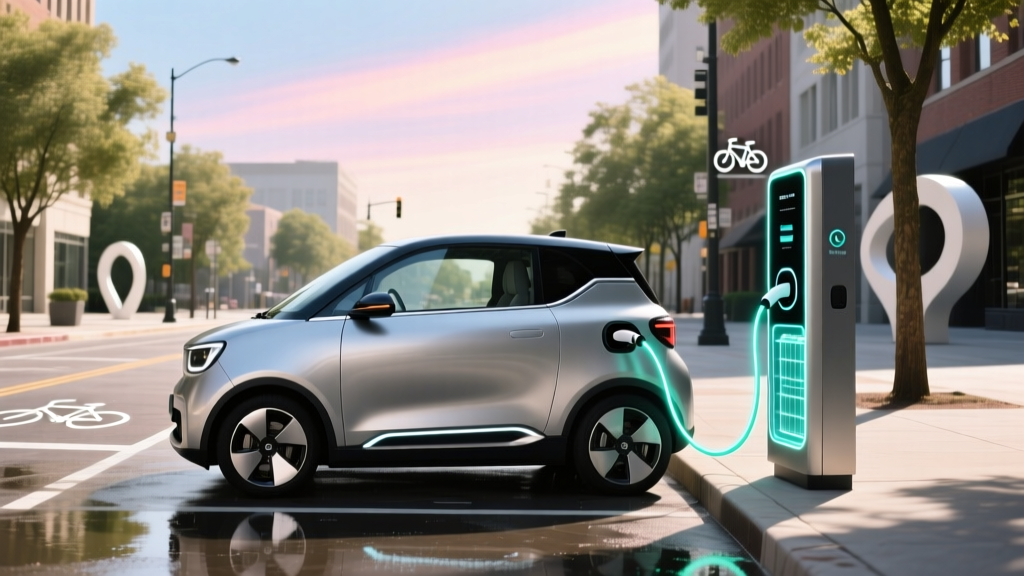
As of 2026, the smallest battery-electric vehicles (BEVs) sold new in the United States are the Mini Cooper SE (159.8 inches long, 114-mile EPA range, ~$30,900 MSRP) and the Fiat 500e (142.9 inches long, 149-mile EPA range, ~$32,500 MSRP). Both are subcompact hatchbacks designed for city driving and tight parking. If you include a slightly larger crossover, the Nissan Leaf (176.4 inches, 212-mile range, ~$28,140) remains the most affordable small EV. Buyers should pair these with realistic expectations: real-world highway range drops 15–25% below EPA stickers, and cold climates can cut range by 30% or more.
Why Buyers Search for the Smallest EV in the USA
Urban drivers face a distinct set of constraints: street parking measured in inches, congested commutes under 40 mph, and a need for tight turning radii. A smaller EV solves these problems while offering lower purchase prices and reduced charging costs compared to larger electric SUVs. For many city dwellers, a 100–150 mile range is sufficient because daily driving rarely exceeds 30 miles round-trip, and overnight home charging replenishes the battery fully.
However, the smallest EVs carry trade-offs. Limited cargo space, modest DC fast-charging speeds, and reduced highway comfort mean these cars work best as dedicated urban runabouts or as a second vehicle in a multi-car household. If you regularly drive more than 120 miles in a single day or need to carry passengers and gear, a compact crossover like the Chevrolet Equinox EV or Hyundai Kona Electric is a better fit.
The Contenders: 2026 Small EVs Compared
| Model | Length (in) | EPA Range | Battery (kWh usable) | Peak DC Charge (kW) | 10–80% Time | 0–60 mph | Base MSRP |
|---|---|---|---|---|---|---|---|
| Fiat 500e (Red) | 142.9 | 149 mi | 37.3 kWh (NMC) | 85 kW | ~35 min | 8.5 sec | $32,500 |
| Mini Cooper SE | 159.8 | 114 mi | 28.9 kWh (NMC) | 95 kW | ~28 min | 7.3 sec | $30,900 |
| Nissan Leaf SV Plus | 176.4 | 212 mi | 59 kWh (NMC) | 100 kW | ~40 min | 6.9 sec | $28,140 |
| Hyundai Kona Electric SEL | 171.5 | 261 mi | 64.8 kWh (NMC) | 100+ kW | ~43 min | 7.8 sec | $32,975 |
Sources: fueleconomy.gov, manufacturer press sites. Real-world highway range is typically 15–25% lower than EPA estimates; cold weather (below 32°F) can reduce range by 20–40% depending on cabin heating use and whether the vehicle has a heat pump.
Real-World Range: What the EPA Sticker Doesn't Tell You
EPA vs. Reality: The Mini Cooper SE carries a 114-mile EPA range. In real-world testing at sustained highway speeds of 65–70 mph, expect approximately 85–95 miles before needing to charge. In winter conditions with temperatures below freezing, that figure can drop to 70–80 miles. The Fiat 500e's 149-mile EPA rating translates to roughly 115–130 miles on the highway and 90–110 miles in cold weather.
These numbers matter because they define your practical driving radius. A Mini Cooper SE owner in Phoenix might comfortably make a 90-mile round trip on a single charge in summer, while the same driver in Minneapolis in January would need to plan for charging stops on a 60-mile round trip. If your daily commute plus errands regularly exceed 80 miles, the Nissan Leaf's 212-mile EPA range provides a much more comfortable buffer.
Charging Realities for Small EVs
Small EVs typically have smaller batteries, which means they charge faster at home but may charge slower at public DC fast-charging stations compared to larger EVs with bigger packs.
| Charging Level | Power (kW) | Mini Cooper SE (miles/hr) | Fiat 500e (miles/hr) | Nissan Leaf (miles/hr) |
|---|---|---|---|---|
| Level 1 (120V household) | 1.2–1.4 kW | ~4 mi/hr | ~5 mi/hr | ~5 mi/hr |
| Level 2 (240V home/public) | 7.2–11 kW | ~25–35 mi/hr | ~30–40 mi/hr | ~30–40 mi/hr |
| DC Fast Charge | 50–100 kW | ~120–180 mi/hr (peak) | ~100–160 mi/hr (peak) | ~120–200 mi/hr (peak) |
Home charging is the backbone of small EV ownership. A Level 2 home charger (240V, typically 32–48 amps) will fully replenish any of these vehicles overnight in 4–8 hours. Installation costs range from $500–$1,500 if your electrical panel has capacity, or $2,000–$4,000+ if a panel upgrade is needed. Renters and apartment dwellers without home charging access face a harder equation: relying on public Level 2 chargers or DC fast-charging adds time, cost, and unpredictability.
Note: kW (kilowatts) measures charging power — how fast energy flows. kWh (kilowatt-hours) measures battery capacity — how much energy the battery stores. A 95 kW charge rate filling a 28.9 kWh battery is like a firehose filling a bucket; the rate tapers as the battery approaches full.
Cost Breakdown: Small EV vs. Gas Subcompact
Let's compare a 5-year ownership scenario for the Mini Cooper SE against a gasoline equivalent, the Mini Cooper hardtop (gas), assuming 12,000 miles/year, $0.14/kWh home electricity, $3.50/gallon gas, and no major maintenance surprises.
| Category | Mini Cooper SE (EV) | Mini Cooper Gas (ICE) |
|---|---|---|
| Base MSRP | $30,900 | $29,900 |
| Estimated §30D Tax Credit | $0–$3,750* | $0 |
| 5-Year Fuel/Energy Cost | $2,520 (home charging) | $7,000 (gasoline) |
| 5-Year Maintenance | ~$1,200 | ~$3,000 |
| 5-Year Insurance (est.) | ~$7,500 | ~$6,500 |
| 5-Year Total Cost | ~$42,120 (with $3,750 credit) | ~$46,400 |
*The IRS §30D tax credit for new EVs in 2026 depends on battery component and critical mineral sourcing, buyer income caps ($150K single / $300K joint), and MSRP limits ($55K for cars). The Mini Cooper SE's credit eligibility varies by model year and sourcing — check the latest IRS guidance or consult a tax professional. Point-of-sale transfer is available if eligible.
The EV wins on fuel and maintenance savings — roughly $4,480 less in fuel and $1,800 less in maintenance over five years. However, EV insurance premiums run 10–20% higher on average due to repair costs and battery replacement risk. If you cannot charge at home and must rely on public DC fast-charging at $0.35–$0.50/kWh, your energy costs rise to $6,300–$9,000 over five years, narrowing or eliminating the savings advantage.
Common Misconceptions About Small EVs
| Myth | Fact |
|---|---|
| "Small EVs are too slow for highway merging." | The Mini Cooper SE hits 0–60 in 7.3 seconds and delivers instant torque — faster off the line than most gas subcompacts. Highway passing is confident up to ~80 mph. |
| "The battery will need replacing in 5 years." | Modern NMC batteries degrade roughly 1–2% per year under normal use. After 8 years, expect ~85–90% of original capacity. All models listed carry an 8-year/100,000-mile battery warranty (minimum 70% capacity retention per federal mandate). |
| "You can't road-trip a small EV." | You can, but it requires planning. The Mini Cooper SE's 95 kW DC fast-charging adds ~70 miles in 20 minutes. A 300-mile trip means two charging stops — feasible but slower than a gas car. |
| "Small EVs qualify for the full $7,500 tax credit." | Credit amounts in 2026 range from $3,750 to $7,500 depending on battery sourcing compliance. Many small EVs with globally sourced cells qualify for $3,750 (half credit). Always verify current-year rules at irs.gov. |
Decision Framework: Is a Small EV Right for You?
Choose a small EV (Mini Cooper SE, Fiat 500e) if:
- Your daily driving is under 60 miles round-trip
- You have access to Level 2 home or workplace charging
- You live in a mild-to-moderate climate (less cold-weather range loss)
- You need a second car for commuting, or your primary car for city-only use
- You value easy parking and low running costs over cargo space and long-distance capability
Choose a compact EV crossover (Nissan Leaf, Kona Electric, Equinox EV) if:
- Your daily driving exceeds 80 miles or includes frequent highway trips
- You live in a cold climate where range loss of 30%+ is common
- You need back-seat passenger space or more than 15 cu ft of cargo volume
- You plan regular road trips of 200+ miles and want fewer charging stops
- You want a single vehicle that handles both city and highway duty
Consider a PHEV or hybrid instead if:
- You lack reliable home or workplace charging
- Your driving patterns are highly variable (some days 20 miles, other days 400)
- You live in an area with sparse public charging infrastructure
- You want EV-like city efficiency without range anxiety on long trips
What First-Time EV Buyers Should Know
1. Home charging access is the single biggest ownership factor. If you can install a Level 2 charger at home, daily EV ownership is effortless — plug in at night, wake up with a full battery. If you cannot charge at home, evaluate your local public charging network before buying. Apps like PlugShare or ChargePoint show nearby station locations, connector types, and user-reported reliability.
2. Understand the charge curve. DC fast-charging speeds are not constant. A vehicle that peaks at 95 kW may only sustain that rate between 10–50% State of Charge (SoC), then taper to 40–50 kW above 80%. This is why manufacturers quote 10–80% charging times rather than 0–100%. Charging the final 20% can take as long as the first 80%.
3. Cold weather reduces range and slows charging. Lithium-ion batteries are less efficient below 40°F. Vehicles with heat pumps (like the Kona Electric) lose less range than those with resistive heaters. Preconditioning the battery while plugged in — warming it before you drive or charge — mitigates some of this loss.
4. Insurance costs more. EV insurance premiums average 10–20% higher than equivalent gas cars. Get quotes before purchasing to avoid surprises.
5. Tax credits are not guaranteed. The §30D credit has income caps, MSRP limits, and battery-sourcing requirements that change annually. Verify eligibility for the specific model year and trim you intend to buy. The credit can be transferred to the dealer at point of sale, reducing your out-of-pocket cost immediately — but only if you qualify.
Frequently Asked Questions
Is the Mini Cooper SE still the smallest EV available in the USA for 2026?
Yes, among new vehicles. The Fiat 500e is slightly shorter in length but similar in overall footprint. Both are sub-160-inch hatchbacks. No smaller BEV (such as a Smart EQ Fortwo, discontinued in the US) is currently sold new.
Can I use a small EV as my only car?
It depends on your driving patterns. If your longest regular trip is under 100 miles and you have home charging, yes. If you frequently drive 200+ miles, carry passengers, or live in extreme cold, a larger EV or PHEV is more practical.
Do small EVs cost less to insure than larger EVs?
Generally yes, but EV insurance still runs higher than gas equivalents. The Mini Cooper SE and Fiat 500e typically cost $1,200–$1,800/year to insure depending on your location, driving record, and coverage level — roughly 10–15% more than their gas counterparts.
What happens if the battery degrades below 70% capacity?
Federal law mandates that EV batteries carry a warranty of at least 8 years / 100,000 miles. If your battery drops below 70% of original capacity within that period, the manufacturer must repair or replace it at no cost. In practice, most modern NMC batteries retain 85–90% capacity at 8 years under normal use.
Are small EVs safe in crashes?
Small cars have less mass and crumple zone than larger vehicles, which affects crash outcomes. Check IIHS and NHTSA ratings for specific models. The Nissan Leaf has historically performed well in crash tests; check current ratings for the Mini Cooper SE and Fiat 500e, as smaller vehicles may receive lower scores in some categories.