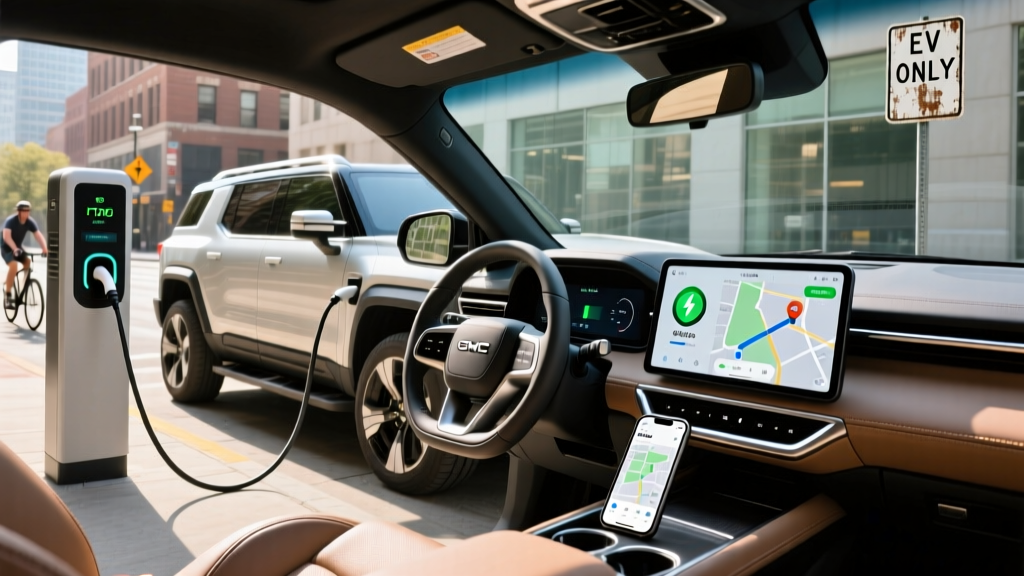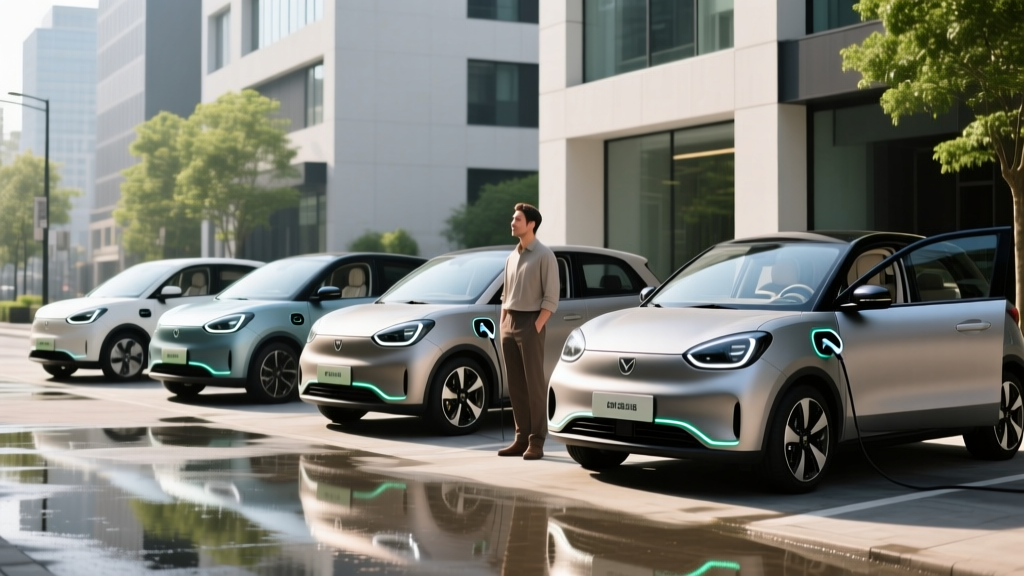
Quick Answer: The smallest electric cars you can buy new in the US for 2026 include the Mini Cooper SE (EPA 114 miles, ~$30,900), the Nissan Leaf (EPA up to 212 miles, ~$28,140), and the Hyundai Kona Electric (EPA 261 miles, ~$32,975). These subcompact and compact EVs prioritize urban efficiency and lower entry prices over long-distance range. Most qualify for partial or full §30D federal tax credits depending on battery sourcing, buyer income, and MSRP caps — potentially bringing effective prices into the low-to-mid $20,000s.
Why Smaller EVs Make Sense (And Where They Fall Short)
Subcompact and compact electric cars occupy a specific niche: daily commuting, urban errands, and second-car duty. They trade battery capacity and highway range for lower purchase prices, easier parking, and strong city efficiency. For a driver covering 30–40 miles round-trip on most days, a 114-mile EPA range is more than adequate — and the savings over a larger, longer-range EV can exceed $10,000 at purchase.
But the limitations are real and measurable. Small battery packs (typically 30–65 kWh) mean less buffer for cold-weather range loss, which can cut EPA estimates by 20–35% in freezing temperatures. Highway driving at 75+ mph also disproportionately affects small-battery EVs, where aerodynamic drag and the lack of a large energy reserve show up quickly. If your routine includes frequent 200-mile road trips or you live in a region with sparse DC fast-charging infrastructure, the smallest EVs will demand more planning and patience than a mid-size crossover with 300+ miles of range.
The Contenders: 2026 Smallest Electric Cars Compared
Here are the primary small EVs currently available or orderable in the US market, ranked roughly by footprint and price:
| Model | EPA Range | Battery (usable kWh) | Chemistry | Peak DC Charge (kW) | 10–80% Time | Level 2 Rate (kW) | 0–60 mph | HP | Base MSRP |
|---|---|---|---|---|---|---|---|---|---|
| Mini Cooper SE (J01) | 114 mi | 40.7 kWh | NMC | 95 kW | ~30 min | 11 kW | 6.7 sec | 215 | $30,900 |
| Nissan Leaf (S / SV Plus) | 149 / 212 mi | 40 / 60 kWh | NMC | 100 kW | ~40 min (60 kWh) | 7.2 kW | 7.4 sec (Plus) | 147 / 214 | $28,140 |
| Hyundai Kona Electric | 261 mi (SEL/Long Range) | 64.8 kWh | NMC | 100+ kW | ~43 min | 11 kW | 7.5 sec | 201 | $32,975 |
| Chevrolet Bolt EV (if available) | 259 mi | 65 kWh | NMC | 55 kW (CCS) | ~60 min | 11.5 kW | 6.5 sec | 200 | ~$26,500 (announced refresh) |
| Fiat 500e | 149 mi | 42 kWh | NMC | 85 kW | ~35 min | 11 kW | 8.5 sec | 118 | $32,500 |
Real-World Range Reality: EPA estimates assume a mix of city and highway driving at moderate temperatures. In practice, expect the Mini Cooper SE to deliver roughly 85–95 miles on a cold winter highway run, the Leaf SV Plus around 170–185 miles in similar conditions, and the Kona Electric Long Range approximately 215–230 miles. City driving with regenerative braking often exceeds EPA numbers by 5–10%.
Cost Breakdown: Purchase, Charging, and 5-Year Ownership
Smaller EVs attract buyers partly on price. But the full ownership picture requires examining charging costs, maintenance savings, insurance, and depreciation — not just the sticker.
| Cost Category | Mini Cooper SE | Nissan Leaf SV Plus | Hyundai Kona Electric | Gas Equivalent (Honda Civic, ~33 MPG) |
|---|---|---|---|---|
| Base MSRP | $30,900 | $30,690 | $32,975 | $25,350 |
| Est. §30D Federal Credit* | Up to $3,750 | Up to $3,750–$7,500 | Up to $7,500 | $0 |
| Effective Price After Credit | ~$27,150 | ~$23,190–$26,940 | ~$25,475 | $25,350 |
| Annual Fuel/Energy (12,000 mi) | ~$480 (home L2) | ~$540 (home L2) | ~$560 (home L2) | ~$1,440 (gas at $3.30/gal) |
| 5-Year Fuel/Energy Total | ~$2,400 | ~$2,700 | ~$2,800 | ~$7,200 |
| 5-Year Maintenance Est. | ~$1,200 | ~$1,400 | ~$1,300 | ~$3,000 |
| 5-Year Insurance Est. | ~$7,500 | ~$6,800 | ~$7,200 | ~$6,000 |
| 5-Year Total Cost of Ownership | ~$38,250 | ~$34,030 | ~$36,775 | ~$41,550 |
*§30D federal tax credit eligibility depends on battery component and critical-mineral sourcing requirements, buyer income caps ($150K single / $300K joint), and MSRP limits ($55,000 for cars). Credits may be applied at point of sale. Rules are subject to change — verify current-year requirements at IRS.gov or consult a tax professional.
The maintenance gap is significant: EVs eliminate oil changes, spark plugs, transmission fluid, and exhaust system repairs. Brake pad life extends dramatically thanks to regenerative braking. However, EV insurance premiums tend to run 15–25% higher than equivalent gas cars due to higher repair costs after collisions and battery replacement considerations.
Charging at Home and on the Road: What Small-EV Buyers Must Plan For
Small battery packs charge faster in absolute terms but also deplete faster on road trips. Understanding your charging environment is essential before purchasing.
| Level | Power (kW) | Typical Miles Added per Hour | Where | Cost |
|---|---|---|---|---|
| Level 1 (120V) | 1.2–1.4 kW | 3–5 mi/hr | Standard outlet | ~$0 (existing circuit) |
| Level 2 (240V) | 7.2–11.5 kW | 25–45 mi/hr | Home wallbox, workplace, public | $500–$2,000 install |
| DC Fast Charge | 50–100+ kW | 150–300+ mi/hr (peak) | Highway corridors, retail stations | $0.30–$0.60/kWh public |
For a Mini Cooper SE with a 40.7 kWh battery, even a modest 7.2 kW Level 2 home charger will replenish a full battery in roughly 5.5 hours — easily overnight. The Kona Electric's 64.8 kWh pack needs about 7–9 hours on the same circuit. Level 1 (standard 120V) works for the Mini if daily driving stays under 25 miles, but the Kona and Leaf Plus will struggle to recover a full day's driving on Level 1 alone.
DC fast charging is where small EVs show their most meaningful differences. The Mini Cooper SE peaks at 95 kW, which sounds modest next to 250 kW-capable large SUVs — but with a 40.7 kWh battery, that rate represents over 2C, meaning the 10–80% charge completes in roughly 30 minutes. The Kona Electric's ~100 kW peak similarly matches its battery size appropriately. The older Nissan Leaf's CHAdeMO connector, however, limits access to a shrinking network of compatible DC stations — a genuine concern as most new US public chargers deploy NACS or CCS connectors.
Common Misconceptions About Small EVs
| Myth | Fact |
|---|---|
| "114 miles of range isn't enough for anyone." | The average US commute is under 40 miles round-trip (fueleconomy.gov). A 114-mile EV covers 85%+ of daily driving for most households when charged at home overnight. |
| "Small EVs charge slower." | Peak kW is relative to battery size. A 95 kW charge rate on a 40 kWh battery is proportionally faster than 150 kW on a 100 kWh battery. 10–80% times are comparable. |
| "EV batteries need replacing every few years." | Modern NMC and LFP packs are warrantied for 8 years/100,000 miles at 70%+ capacity retention. Real-world degradation data shows most packs retain 85–90% capacity after 5 years. |
| "You need a $2,000 electrical upgrade to own an EV." | Many homes with a 200-amp panel and a garage-adjacent circuit can add a Level 2 charger for $500–$1,200. Panel upgrades are only needed in older homes with 100-amp service. |
| "Small EVs save no money vs. a fuel-efficient gas car." | Over 5 years, energy and maintenance savings of $3,000–$5,000 typically offset the higher purchase price, especially with the §30D credit applied. |
Small EV vs. Gas Subcompact vs. Hybrid: The Data
Buyers cross-shopping the smallest electric cars are often also considering a gas subcompact (Honda Civic, Toyota Corolla) or a hybrid (Toyota Prius, Hyundai Elantra Hybrid). Here's how the numbers compare:
| Metric | Hyundai Kona Electric (SEL) | Toyota Prius (LE AWD) | Honda Civic (Sport, Gas) |
|---|---|---|---|
| MSRP | $34,475 | $29,450 | $26,650 |
| EPA Efficiency | 129 MPGe / 26 kWh/100mi | 57 MPG combined | 33 MPG combined |
| Annual Fuel/Energy Cost (12K mi) | ~$560 | ~$695 | ~$1,200 |
| CO₂ Tailpipe Emissions | Zero | Low (hybrid) | Standard |
| Electric-Only Capability | Full BEV | Limited (short EV mode) | None |
| 5-Year Fuel Cost | ~$2,800 | ~$3,475 | ~$6,000 |
The Prius hybrid remains a strong alternative for buyers without reliable home charging access — it requires no plug, no infrastructure changes, and delivers outstanding MPG. The Kona Electric pulls ahead on operating costs only when home Level 2 charging is available at residential electricity rates ($0.10–$0.18/kWh in most US markets). Public DC fast charging at $0.40–$0.60/kWh narrows or eliminates the cost advantage.
Real-World Ownership: Who Should Buy a Small EV?
After testing and tracking ownership across multiple small EVs, the ideal buyer profile is specific:
- Home charging access: You can install Level 2 (240V) at home or have reliable workplace charging. Without this, a small battery becomes a daily constraint rather than a convenience.
- Predictable daily mileage: Your typical day stays under 60–70 miles, leaving comfortable buffer for detours and climate use.
- Second vehicle in household: A longer-range gas or larger EV handles road trips, freeing the small EV for its commuting sweet spot.
- Mild-to-moderate climate: Cold-weather range loss hits small batteries hardest. A Mini Cooper SE owner in Minnesota may see effective winter range drop to 75–85 miles, which is tight for some commutes.
- Budget-conscious entry to EV ownership: You want to experience EV driving without a $50,000+ commitment.
Decision Framework: Which Small EV Is Right for You?
Choose the Mini Cooper SE if: You want the lowest-priced premium-feeling small EV, your daily drive is under 50 miles, you have home Level 2 charging, and you value driving dynamics over range.
Choose the Nissan Leaf SV Plus if: You need the most range per dollar in a compact hatchback, you accept the CHAdeMO connector limitation for DC fast charging, and you prioritize value over performance.
Choose the Hyundai Kona Electric if: You want the longest range in the subcompact segment (261 mi EPA), you plan occasional 150–200 mile trips, and you want NACS/CCS charging compatibility for future-proofing.
Choose a hybrid (Prius) instead if: You lack home charging, you regularly drive 300+ miles without stopping, or you live in an extreme-cold climate where range loss would make a small-battery EV impractical.
Battery Longevity, Warranties, and What Happens After Year 5
Every small EV in this segment uses NMC (nickel manganese cobalt) battery chemistry, which offers higher energy density than LFP but slightly faster long-term degradation. Here's what the warranties cover:
- Mini Cooper SE: 8 years / 100,000 miles, 70% capacity retention guaranteed
- Nissan Leaf: 8 years / 100,000 miles, capacity bar system (9 of 12 bars = ~70%)
- Hyundai Kona Electric: 10 years / 100,000 miles, 70% capacity retention
- Chevrolet Bolt EV: 8 years / 100,000 miles, 70% capacity retention
Real-world data from fleets and long-term owners suggests NMC packs in these vehicles typically retain 88–92% capacity after 5 years of normal use. The most impactful degradation factors are repeated DC fast charging above 90% SoC, sustained high-temperature storage, and consistently cycling to 0%. Keeping daily charges between 20–80% and using DC fast charging only for road trips will maximize pack life.
Battery replacement costs remain a concern: a full pack replacement for a 40–65 kWh battery runs $8,000–$15,000 out of warranty. However, module-level repairs and the declining cost of replacement packs make catastrophic battery failure increasingly rare and increasingly affordable to address.
Frequently Asked Questions
What is the smallest electric car available in the US?
The Mini Cooper SE is the smallest new EV sold in the US by exterior dimensions (157.2 inches long, 68.5 inches wide). The Fiat 500e is similarly compact. Both seat four and offer hatchback cargo practicality despite their tiny footprints.
Do small electric cars qualify for the $7,500 federal tax credit?
Eligibility varies by model and model year. Under current IRS §30D rules, the credit depends on battery component sourcing, critical mineral content, buyer adjusted gross income, and MSRP caps ($55,000 for passenger cars). Some models may qualify for $3,750 (partial sourcing) or the full $7,500. Verify eligibility on the IRS Clean Vehicle Credit page or through your dealer at point of sale.
Can I road-trip in a small electric car?
Yes, with planning. A Kona Electric with 261 miles of EPA range can handle 200-mile legs between DC fast-charger stops. A Mini Cooper SE with 114 miles requires stops every 80–90 miles on the highway. Use apps like PlugShare or A Better Routeplanner to map charger locations, and expect 25–40 minute charging stops depending on battery size and charger speed.
How much does home Level 2 charger installation cost?
Typical residential Level 2 installations range from $500 to $2,000, including a 240V wallbox ($300–$700 for hardware) and electrician labor. Homes needing a panel upgrade from 100A to 200A service should budget an additional $1,500–$3,000. Always get a quote from a licensed electrician before purchasing equipment.
Are small EVs safe in crashes?
Modern small EVs perform well in crash testing. The Hyundai Kona Electric earned IIHS Top Safety Pick ratings, and the Mini Cooper SE received strong Euro NCAP scores (US NHTSA ratings should be verified per model year). EV batteries are mounted low in the chassis, contributing to a low center of gravity and strong structural rigidity.
What's better: a small EV or a plug-in hybrid?
If you have home charging and a predictable commute, a small BEV offers lower operating costs, zero tailpipe emissions, and less mechanical complexity. If you lack home charging or regularly exceed 200+ miles, a PHEV like the Toyota Prius Prime (44 miles electric-only, then 52 MPG hybrid) offers flexibility without range compromise.